



الصفحة 3
الصفحة 3

Good laboratory practice : The why and the how
The GLP regulations have developed from rules on how to exactly document the planning, conduct and reporting of toxicity studies to a quality system for the management of a multitude of study types, from the simple determination of a physical/chemical parameter to the most complex field studies or ecotoxicology studies. At the same time the term “Good Laboratory Practice” has become somewhat of a slogan with the aim to characterise any reliably conducted laboratory work.

Fundamentals of operational risk management : Understanding and implementing effective tools, policies and frameworks
Threats to an organization's operations, such as fraud, IT disruption or poorly designed products, could result in serious losses. Understand the key components of effective operational risk management with this essential book for risk professionals and students. Outlines how to implement a sound operational risk management framework which is embedded in day-to-day business activities. It covers the main operational risk tools including categorisation, risk and control self-assessment and scenario analysis, and explores the importance of risk appetite and tolerance.

Four seasons (Restaurant series design)
يهدف مشروع تصميم مطعم الفصول الأربعة إلى تقديم تجربة حسية متكاملة تعكس أجواء الفصول المختلفة داخل فضاء داخلي مبتكر ينقسم المطعم إلى أربعة أقسام، يمثل كل منها فصلاً من فصول السنة حيث تم تصميم كل قسم بعناية ليحاكي عناصر الفصل من حيث الألوان، الإضاءة، الخامات، والأجواء العامة. يتميز المشروع بإمكانية تجربة العيش في أجواء فصل معين في غير موسمه مما يخلق تجربة فريدة للزوار يعتمد التصميم على دمج العناصر الطبيعية والتقنيات الحديثة لخلق بيئة غامرة توفر الراحة والاستمتاع البصري والحسي. يركز المشروع على الجانب الوظيفي والجمالي في آنٍ واحد. مع مراعاة معايير التصميم الداخلي الحديثة الابتكار في تقديم المساحات التفاعلية.

Food Safety Culture : Creating a Behavior-Based Food Safety Management System
Food safety awareness is at an all time high, new and emerging threats to the food supply are being recognized, and consumers are eating more and more meals prepared outside of the home. Accordingly, retail and foodservice establishments, as well as food producers at all levels of the food production chain, have a growing responsibility to ensure that proper food safety and sanitation practices are followed, thereby, safeguarding the health of their guests and customers. Achieving food safety success in this changing environment requires going beyond traditional training, testing, and inspectional approaches to managing risks. It requires a better understanding of organizational culture and the human dimensions of food safety. To improve the food safety performance of a retail or foodservice establishment, an organization with thousands of employees, or a local community, you must change the way people do things. You must change their behavior. In fact, simply put, food safety equals behavior.

Food safety and toxicology : Present and future perspectives
Safety assurance of consumer goods has become a global challenge. The presence of natural and synthetic contaminants in food compromises food safety and poses a risk to public health. Discusses biological and chemical food contaminants, predictive and detection methods of food toxicants, survival mechanism of food pathogens, legislation on microbial contaminants to prevent public health risks and strategies to mitigate contamination.
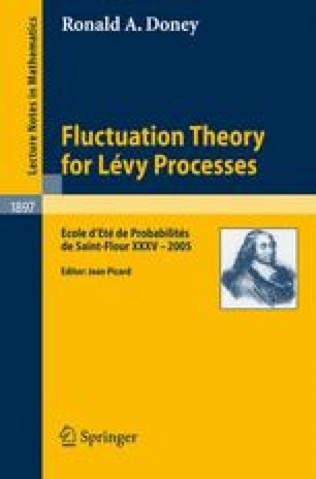
Fluctuation Theory for Lévy Processes : Ecole d'Eté de Probabilités de Saint-Flour XXXV - 2005
Lévy processes, i.e. processes in continuous time with stationary and independent increments, are named after Paul Lévy, who made the connection with infinitely divisible distributions and described their structure. They form a flexible class of models, which have been applied to the study of storage processes, insurance risk, queues, turbulence, laser cooling, ... and of course finance, where the feature that they include examples having "heavy tails" is particularly important. Their sample path behaviour poses a variety of difficult and fascinating problems

Financial Compensation for Victims of Catastrophes : A Comparative Legal Approach
Some countries have created a specific fund solution; others follow a generous ad hoc approach whereby large amounts of compensation are made available on an ex post basis. This book shall pay attention to all of these seemingly quite different solutions. Experts from different countries report on the way catastrophes are dealt with in their particular jurisdiction from the angle of tort law, social security, insurance or alternative compensation mechanisms such as compensation funds. Various possible remedies for victims are critically discussed; attention is also paid to the economic analysis of law.

Finance for Food : Towards New Agricultural and Rural Finance
Reflects the current state of discussion about agricultural and rural finance in developing and transition countries. It provides insight into specific themes, such as commodity value chains, farm banking, risk management in agricultural banking, structured finance, crop insurance, mobile banking, and how to increase effectiveness in rural finance. Case studies illustrate various aspects of agricultural and rural finance in developing economies. The book is based on one of the yearly financial Sector Development Symposia held by the KfW Development Bank.

Extremes in Nature : An Approach Using Copulas
The study of the statistics of extreme events is an essential first step in the mitigation of natural catastrophies, that often cause severe economic losses worldwide. This book is about the theoretical and practical aspects of the statistics of Extreme Events in Nature. Most importantly, this is the first text in which Copulas are introduced and used in Geophysics. Several topics are fully original, and show how standard models and calculations can be improved by exploiting the opportunities offered by Copulas. In addition, new quantities useful for design and risk assessment are introduced. Practicioners in all research areas of Geosciences and extreme events (including Finance and Insurance, closely related to natural disasters) will definitely benefit from the new Copula-approach outlined in the book.

European Tort Law 2006
The European Tort Law Yearbook provides a comprehensive overview of the latest developments in tort law in Europe. It contains reports on most EU Member States, including the new Member States the Czech Republic, Estonia, Hungary, Latvia, Lithuania, Poland, Slovakia and Slovenia. Furthermore, the Yearbook provides contributions from Norway and Switzerland, an overview of the developments in the field of EU law as well as a paper on Romanian tort law. In conclusion, a comparative summary reviews the essential aspects of all reports.

European Tort Law 2004
The European Tort Law Yearbook provides a comprehensive overview of the latest developments in tort law in Europe. It contains reports on the developments in most EU Member States, including the new Member States the Czech Republic, Estonia, Hungary, Latvia, Lithuania, Poland, Slovakia and Slovenia – as well as Norway and Switzerland. Furthermore, an overview of the developments in the field of EU law is provided. In conclusion, a comparative report reviews the essential aspects of all reports. The reports are written by scholars from the respective jurisdictions. Focusing on the year 2004, the authors critically report on important court decisions, present new legislation and provide a literature overview. In addition to the national reports, several essays on key topics in the field of tort law are included, most of which focus on questions of strict liability.

Essentials of Excel VBA, Python, and R Vol. I : Financial statistics and portfolio analysis
Teaches statistical analyses and research methods utilizing business case studies and financial data, with the applications of Excel VBA, Python and R. Each chapter engages the reader with sample data drawn from individual stocks, stock indices, options, and futures. Now in its second edition, it has been expanded into two volumes, each of which is devoted to specific parts of the business analytics curriculum. To reflect the current age of data science and machine learning, the used applications have been updated from Minitab and SAS to Python and R.

Equazioni a derivate parzial I : Complementi ed esercizi
La presente raccolta di problemi ed esercizi nasce dall'esperienza maturata durante il corso di Equazioni a Derivate Parziali (EDP), tenuto nell'ambito delle lauree di primo e secondo livello presso il Politecnico di Milano. Il volume è diviso in due parti; nei primi quattro capitoli l'obiettivo è l'uso di tecniche classiche, come la separazione delle variabili, il principio di massimo o le trasformate di Laplace e Fourier, per risolvere problemi di diffusione, trasporto e vibrazione. Il quinto capitolo invita a familiarizzare con i risultati di base negli spazi di Hilbert, nella teoria delle distribuzioni (o funzioni generalizzate) di Schwartz e in quella degli spazi di Sobolev più comuni. Il sesto ed ultimo capitolo riguarda la formulazione variazionale o debole dei più importanti problemi iniziali e/o al bordo per equazioni ellittiche e di evoluzione. L'introduzione ad ogni capitolo contiene una sintesi degli strumenti teorici più utilizzati.

EQ-5D concepts and methods : a developmental history
The EuroQol Group is an international, cross-disciplinary group set up in 1987 to investigate issues related to the valuation of health. This book presents a series of papers from the early 1990s that illustrate the aspects of the development of EQ-5D including: the descriptive system, self-rated health, valuation issues, and semantic issues. Read less

Enhancing the Dissolution Rate of Atorvastatin by Solid Dispersion Technique
In the last few decades, solid dispersion (SD) technology had been studied as an approach to produce an amorphous carrier to enhance the solubility, dissolution rate, and bioavailability of poorly water-soluble drugs. The use of suitable carrier and methodology in the preparation of SDs play a significant role in the biological behavior of the SDs. Atorvastatin is a statin group HMG-CoA reductase inhibitor drug that is commonly used to adverse cardiovascular events and to lower blood total cholesterol and LDL-cholesterol. the solubility of atorvastatin in water is very low (0.1 mg mL− 1), which results in reduced bioavailability. In order to enhance its solubility, we have prepared solid dispersions (SDs) of atorvastatin at different drug: polymer ratios (1:2, 1:10, 1:20,1:25 and 1:40), using polyethylene glycol 6000 as polymer and different preparation methods (co-precipitate and melting methods) The characterization of the SDs was performed using differential scanning calorimetry (DSC), Fourier transform infrared spectroscopy (FTIR) The solubility of AT was improved by the incorporation PEG6000.

Engineering Design : A Systematic Approach
Engineering Design (3rd edition) describes a systematic approach to engineering design. The authors argue that such an approach, applied flexibly and adapted to a particular task, is essential for successful product development. The design process is first broken down into phases and then into distinct steps, each with its own working methods. The third edition of this internationally-recognised text is enhanced with new perspectives and the latest thinking. These include extended treatment of product planning; new sections on organisation structures, simultaneous engineering, leadership and team behaviour; and updated chapters on quality methods and estimating costs. New examples have been added and existing ones extended, with additions on design to minimise wear, design for recycling, mechanical connections, mechatronics, and adaptronics.

Engineering and Managing Software Requirements
This book provides an exploration of key issues in requirements engineering, the book is organized in three parts. Part 1 presents surveys of state-of-the art requirements engineering process research along with critical assessments of existing models, frameworks and techniques. Part 2 addresses key areas in requirements engineering, such as market-driven requirements engineering, goal modeling, requirements ambiguity, and others. Part 3 concludes the book with articles that present empirical evidence and experiences from practices in industrial projects. Its broader perspective gives this book its distinct appeal and makes it of interest to both researchers and practitioners, not only in software engineering but also in other disciplines such as business process engineering and management science.

Energiya—Buran : The Soviet Space Shuttle
In Energiya-Buran: the Soviet Space Shuttle, the authors describe the long development path of the Soviet space shuttle system, consisting of the Energiya rocket and the Buran orbiter. The program eventually saw just one unmanned flight in November 1988 before the end of the Cold War and the collapse of the Soviet Union sealed its fate. After a Foreword provided by lead Buran test pilot Igor Volk, the authors look at the experience gradually accumulated in high-speed aeronautics with the development of various Soviet rocket planes and intercontinental cruise missiles between the 1930s to 1950s and the study of several small spaceplanes in the 1960s. Next the authors explain how the perceived military threat of the US Space Shuttle led to the decision in February 1976 to build a Soviet equivalent, and explore the evolution of the design until it was frozen in 1979.

Endurance time excitation functions : Intensifying dynamic loads for seismic analysis and design
Seismic assessment and earthquake-resistant design are essential applications of earthquake engineering for achieving seismic safety for buildings, bridges, infrastructure, and many other components of the built environment. The Endurance Time Method (ETM) is used for seismic analysis of simple and complex structural systems and civil engineering infrastructure as well as producing optimal and cost-effective structural and detail designs. ETM is a relatively new approach to seismic assessment and design of structures. It has developed into a versatile tool in the field, and its practical applications are expected to increase greatly in the near future.
Empowered Enterprise Risk Management : Theory and Practice
In this book, two experts on the topic raise the question of why many ERM programmes end up as box-checking silos with almost no connection to important decision-making processes, whereas others are empowered and end up having a profound impact on the firm’s culture, governance structures, and strategy process. The book establishes a path to empowered ERM by drawing on insights from theory and hard-won lessons from practice.
