



الصفحة 3
الصفحة 3
Branded content : The fateful merging of media and marketing
This is a critical study of the changing relationship between media and marketing communications in the digital age. It examines the growth of content funded by brands, including brands’ own media, native advertising, and the integration of branded content across film, television, journalism and publishing, online, mobile, and social media.

Biomedical applications and toxicity of nanomaterials
Covers the recent trends on the biological applications of nanomaterials, methods for their preparation, and techniques for their characterization. Further, the book examines the fundamentals of nanotoxicity, methods to assess the toxicity of engineered nanomaterials, approaches to reduce toxicity during synthesis. It also provides an overview of the state of the art in the application of Artificial intelligence-based methodologies for evaluation of toxicity of drugs and nanoparticles. The book further discusses nanocarrier design, routes of various nanoparticle administration, nano based drug delivery systems, and the toxicity challenges associated with each drug delivery method. It presents the latest advances in the interaction of nanoparticles with the cellular environment and assess nanotoxicity of these engineered nanoparticles. The book also explores the comparative and mechanistic genotoxicity assessment of the nanomaterials. This book is useful source of information for industrial practitioners, policy makers, and other professionals in the fields of toxicology, medicine, pharmacology, food, and drugs.
Artificial Intelligence, Business and Civilization : Our Fate Made in Machines
Looks at what exactly artificial intelligence is, how it can be classified, how it differentiates from other concepts such as machine learning, big data, blockchain, or the Internet-of-Things, and how it has evolved and might evolve over time.
Artificial intelligence in the financial services industry
Today, the financial services sector is facing a period of rapid disruption and innovation, and artificial intelligence (AI) is at the heart of these changes. Artificial intelligence can be used to gather enormous amounts of data, detect abnormalities, and solve complex problems. Financial institutions are already experimenting extensively with AI strategies to enhance and streamline financial institutions, BSA and AML compliance, CRA requirements, fraud detection, and real estate valuations, all while reducing cost levels. This book looks at how artificial intelligence is affecting the financial services industry.
Artificial intelligence in dentistry
Provides an introduction to next-generation applications and technologies for improving diagnostic accuracy and prediction of treatment outcomes in dentistry through the use of artificial intelligence (AI) and machine learning (ML). The authors attempt to bridge the gap between dental research and global health outcomes, as well as provide a comprehensive guide to general and clinical aspects of dental and oral health issues and the etiology, prevalence, assessment, and management of these conditions.
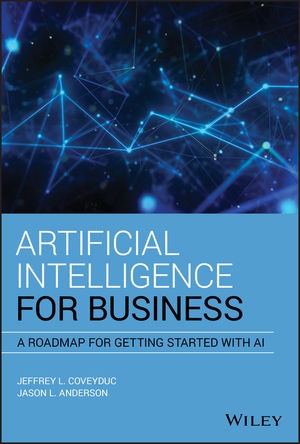
Artificial intelligence for business : A roadmap for getting started with AI
Artificial Intelligence for Business: A Roadmap for Getting Started with AI will provide the reader with an easy to understand roadmap for how to take an organization through the adoption of AI technology. It will first help with the identification of which business problems and opportunities are right for AI and how to prioritize them to maximize the likelihood of success. Specific methodologies are introduced to help with finding critical training data within an organization and how to fill data gaps if they exist.
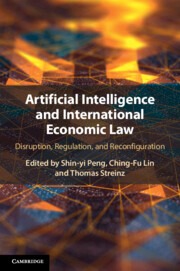
Artificial Intelligence and International Economic Law : Disruption, Regulation, and Reconfiguration
This book was finalized while countries around the world were still confronting a global public health crisis caused by the COVID-19 pandemic. Many came to rely on digital services as an infrastructure for social interaction and professional endeavors, including academic and educational work. The pandemic seems to have precipitated a further shift towards digital technologies and artificial intelligence. It is our hope that this book will contribute to an informed discussion about the relevance of and implications for international economic law beyond the pandemic"

Applications of artificial intelligence, big data and internet of things in sustainable development
Focuses on different algorithms and models related to AI, big data and IoT used for various domains. It enables the reader to have a broader and deeper understanding of several perspectives regarding the dynamics, challenges, and opportunities for sustainable development using artificial intelligence, big data and IoT. Applications of Artificial Intelligence, Big Data and Internet of Things (IoT) in Sustainable Development focuses on IT-based advancements in multidisciplinary fields such as healthcare, finance, bioinformatics, industrial automation, and environmental science.
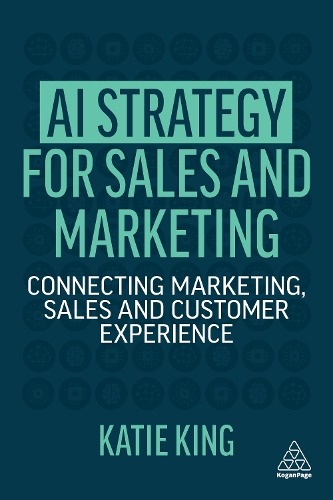
AI Strategy for sales and marketing : Connecting marketing, sales and customer experience
AI Strategy for Sales and Marketing presents a framework for understanding how AI can boost customer-centricity and sales by creating a connected strategy that delivers value today and into the future. Supported by practical tips and advice throughout, it covers topics including personalization, upskilling, customer experience for both on and offline shopping channels and the importance of using AI responsibly to create consumer trust.
AI in marketing : Applications, insights, and analysis
AI in marketing equips students with the knowledge to understand the impact of artificial intelligence (AI) on marketing strategies, processes, and activities, empowering them to navigate the AI-driven marketing landscape confidently. divided into four parts, it provides a comprehensive exploration of AI's transformative role in marketing. the first part lays the groundwork, offering foundational insights into the intersection of AI and marketing. Part II explores the various applications of AI in marketing, and the tools marketers use to optimize their processes and deliver enhanced customer experiences. the third part focuses on leveraging AI for consumer insights, enabling marketers to craft data-driven strategies. the final part examines ethical considerations and the pedagogical integration of AI into marketing education.
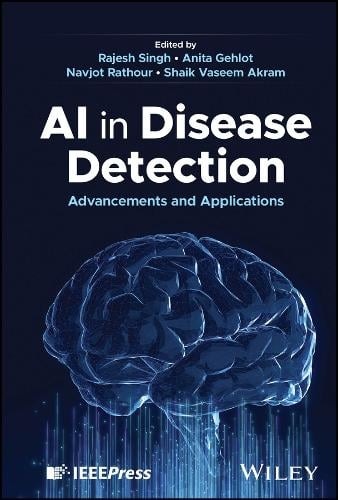
AI in disease detection : Advancements and applications
Discusses the integration of artificial intelligence to revolutionize disease detection approaches, with case studies of AI in disease detection as well as insight into the opportunities and challenges of AI in healthcare as a whole. The book explores a wide range of individual AI components such as computer vision, natural language processing, and machine learning as well as the development and implementation of AI systems for efficient practices in data collection, model training, and clinical validation.
AI in banking : Practical applications and case studies
Delves into the application of AI from theory to practice, offering detailed insights into AI project design and code implementation across eleven business scenarios in four major sectors: retail banking, e-banking, bank credit, and tech operations. it provides hands-on examples of various technologies, including automatic machine learning, integrated learning, graph computation, recommendation systems, causal inference, generative adversarial networks, supervised learning, unsupervised learning, computer vision, reinforcement learning, fuzzy control, automatic control, speech recognition, semantic understanding, bayesian networks, edge computing, and more. this book stands as a rare and practical guide to AI projects in the banking industry.
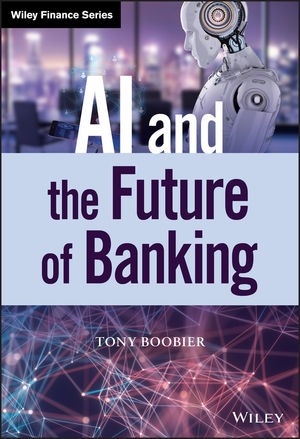
AI and the future of banking
Across its entire breadth and depth, the banking industry is at the forefront of investigating Advanced Analytics and AI technology for use in a broad range of applications, such as customer analytics and providing wealth advice for clients. AI and the Future of Banking provides new and established banking industry professionals with the essential information on the implications of data and analytics on their roles, responsibilities and personal career development.
Advanced Trends in ICT for Innovative Business Management
Contains a collection of scientific chapters addressing the emerging trends in IT and telecommunications, as well as the issues that accompany them in business. It addresses issues in cyber applications, ICT solutions and innovative cyber know-how, and demonstrates how high-tech IT communications resources can be used to improve business production, sales and service strategies, supply chains and logistics.
Advanced mathematical science for mobility society
The automotive industry has made steady progress in technological innovations under the names of Connected Autonomous-Shared-Electric (CASE) and Mobility as a Service (MaaS). Needless to say, mathematics and informatics are important to support such innovations. As the concept of cars and movement itself is diversifying, they are indispensable for grasping the essence of the future mobility society and building the foundation for the next generation. This book contains three main contents. 1. Mathematical models of flow 2. Mathematical methodsfor huge data and network analysis 3. Algorithm for mobility society The first one discusses mathematical models of pedestrian and traffic flow, as they are important for preventing accidents and achieving efficient transportation.

Advanced materials in smart building skins for sustainability : From nano to macroscale
Demonstrates the importance of smart and dynamic building skins in in sustainable buildings / Provides the scientific basis for integration of nanoscale materials in building envelopes with enhanced performance / Illustrates engineering solution and design process incorporating advanced materials in applications of building skins. / Updates readers on the key areas of smart building skins embodied in the novel advanced materials with unique structures and smart properties that enable multiple functions in energy efficiency, solar harvesting, and environmental greenness. It synergistically integrates the topics and knowledge of material design and experimental studies, theoretical analyses of building energy-saving mechanisms and solar energy utilization, and new design methodologies and processes taking advanced materials into account at different scales - from nano to the macroscale.
Achieving organizational agility, intelligence, and resilience through information systems
Presents the latest scholarly research on the widespread integration of technological innovations around the globe and examines how organizational agility, intelligence and resilience interprets, affects, and improves the entrepreneurship around the globe
Acceptance and Usage of Technology through the Digital User Experience
Sheds light on the challenges and solutions for companies when dealing with the online consumer on social media and in the era of Web 4.0. It investigates the digital transformation in terms of customer experience, customer empowerment, resistance, influencer marketing, and trust. The volume shows how consumers perceive, react and behave towards brands’ digital marketing strategies in addition to the barriers, constraints, advantages and modes of action of online consumers.

3D printing in oral & maxillofacial surgery
A comprehensive guide to 3D printing and 3D bioprinting methods and their application in oral and maxillofacial surgeries. Among the 3D printing methods considered are fused deposition modeling, selective laser sintering, photopolymer jetting, powder binder printing, and stereolithography, while the coverage of 3D bioprinting encompasses inkjet, microextrusion, and laser techniques. In each case, the relevance of the technique to oral and maxillofacial surgery is explained. In addition, the available inks and bioinks for 3D printing are reviewed. The roles of soft and hard tissue printing in oral and maxillofacial tissue engineering and the use of 3D printing in multi- and interfacial tissue engineering are then examined in depth. The particular value of 3D printing in the treatment of critically sized defects is discussed separately. Finally, up-to-date information is provided on guided tissue/bone regeneration using 3D printing. The book will be of interest to both oral and maxillofacial surgeons and biomedical engineers.
