



الصفحة 3
الصفحة 3
Differential Evolution Algorithm with Type-2 Fuzzy Logic for Dynamic Parameter Adaptation with Application to Intelligent Control
This book focuses on the fields of fuzzy logic, bio-inspired algorithm, especially the differential evolution algorithm and also considering the fuzzy control area. The main idea is that these two areas together can help solve various control problems and to find better results. In this book, the authors test the proposed method using five benchmark control problems. First, the water tank, temperature, mobile robot, and inverted pendulum controllers are considered. For these 4 problems, experimentation was carried out using a Type-1 fuzzy system and an Interval Type-2 system. The last control problem was the D.C. motor, for which the experiments were performed with Type-1, Interval Type-2, and Generalized Type-2 fuzzy systems. When we use fuzzy systems combined with the differential evolution algorithm, we can notice that the results obtained in each of the controllers are better and with increasing uncertainty, the results are even better. For this reason, the authors consider in this book the proposed method using fuzzy systems and the differential evolution algorithm to improve the fuzzy controllers’ behavior in complex control problems.

Diagnosis of Process Nonlinearities and Valve Stiction : Data Driven Approaches
In this book, Higher Order Statistical (HOS) theory is used to develop indices for detecting and quantifying signal non-Gaussianity and nonlinearity. These indices, together with specific patterns in the mapping of process output and controller output are used to diagnose the causes of poor control loop performance.

Decoupling Control
Decoupling or non-interactive control has attracted considerable research attention since the 1960s when control engineers started to deal with multivariable systems. The theory and design techniques for decoupling control have now, more or less matured for linear time-invariant systems, yet there is no single book which focuses on such an important topic. The present monograph fills this gap by presenting a fairly comprehensive and detailed treatment of decoupling theory and relevant design methods. Decoupling control under the framework of polynomial transfer function and frequency response settings, is included as well as the disturbance decoupling problem. The emphasis here is on special or relatively new compensation schemes such as (true and virtual) feedforward control and disturbance observers, rather than use of feedback control alone. The results are presented in a self-contained way and only the knowledge of basic linear systems theory is assumed of the reader.

Current Trends in Nonlinear Systems and Control : In Honor of Petar Kokotovic and Turi Nicosia
This volume is covering many topics in control theory and several different applications. The variety of their research is reflected in this book, which includes contributions from leading experts in the field ranging from mathematics to laboratory experiments.

Control Systems Theory and Applications for Linear Repetitive Processes
After motivating examples, this monograph gives substantial new results on the analysis and control of linear repetitive processes. These include further applications of the abstract model based stability theory which, in particular, shows the critical importance to the dynamics developed of the structure of the initial conditions at the start of each new pass, the development of stability tests and performance bounds in terms of so-called 1D and 2D Lyapunov equations. It presents the development of a major bank of results on the structure and design of control laws, including the case when there is uncertainty in the process model description, together with numerically reliable computational algorithms. Finally, the application of some of these results in the area of iterative learning control is treated --- including experimental results from a chain conveyor system and a gantry robot system.

Control problems for conservation laws with traffic applications: modeling, analysis, and numerical methods
Conservation and balance laws on networks have been the subject of much research interest given their wide range of applications to real-world processes, particularly traffic flow. This open access monograph is the first to investigate different types of control problems for conservation laws that arise in the modeling of vehicular traffic. Four types of control problems are discussed - boundary, decentralized, distributed, and Lagrangian control - corresponding to, respectively, entrance points and tolls, traffic signals at junctions, variable speed limits, and the use of autonomy and communication. Because conservation laws are strictly connected to Hamilton-Jacobi equations, control of the latter is also considered.
Control of Nonlinear Dynamical Systems : Methods and Applications
This book is devoted to new methods of control for complex dynamical systems and deals with nonlinear control systems having several degrees of freedom, subjected to unknown disturbances, and containing uncertain parameters. Various constraints are imposed on control inputs and state variables or their combinations. The book contains an introduction to the theory of optimal control and the theory of stability of motion, and also a description of some known methods based on these theories.

Control of nonlinear and hybrid process systems : Designs for uncertainty, constraints and time-delays
The book includes many detailed examples which can be easily modified by a control engineer to be tailored to a specific application. This book is useful for researchers in control systems theory, graduate students pursuing their degree in control systems and control engineers.

Control and Scheduling Codesign : Flexible Resource Management in Real-Time Control Systems
Recent evolutionary advances in information and communication technologies give rise to a new environment for Real Time Control Systems. This book is a monograph that covers our recent and original results in this direction.

Continuous-Time Systems
The book systematically covers major foundations of the systems theory. First, the quantitative and qualitative methods of systems description are presented along with the stability analysis. The representation of linear time-invariant systems in the time domain is provided using the convolution, ordinarily differential equations (ODEs), and state space. In the frequency domain, these systems are analyzed using the Fourier and Laplace transforms. The linear time-varying systems are represented using the general convolution, ODEs, and state space. The nonlinear time-invariant systems are described employing the Taylor and Volterra series expansions, ODEs, state space, and approximate methods such as averaging, equivalent linearization, and describing function. Finally, the representation of nonlinear time-varying systems is given using the Taylor and Volterra series, ODEs, modulation functions method, and state space modelling.

Contemporary Sociological Theory : An Integrated Multi-Level Approach
This book covers the major theoretical orientations that have been influential in American sociology since the mid-twentieth century. These include symbolic interaction, phenomenological sociology and ethnomethodology, social exchange and rational choice theories, sociology of emotions, functionalism and neofunctionalism, conflict and critical theory, selected feminist theories, structuration theory, systems theory, sociobiology, selected sociology of culture perspectives, and major themes from postmodern orientations.

Constrained Control and Estimation : An Optimisation Approach
Using the principal tools of prediction and optimisation, this work gives the examples of how to deal with constraints, placing emphasis on model predictive control. It contains results that combine a number of methods, enabling you to build on your background in estimation theory, linear control, stability theory and state-space methods.

Computer Aided Systems Theory – EUROCAST 2007 ; 11th International Conference on Computer Aided Systems Theory, Las Palmas de Gran Canaria, Spain, February 12-16, 2007, Revised Selected Papers
This book presented formal approaches, Computation and Simulation in Modelling Biological Systems, Intelligent Information Processing, Computers in Education, Grid Computing, Applied Formal Verification, Cellular Automata, Computer Vision, Heuristic Problem So.

Computer Aided Systems Theory – EUROCAST 2005 ; 10th International Conference on Computer Aided Systems Theory, Las Palmas de Gran Canaria, Spain, February 7-11, 2005, Revised Selected Papers
The concept of CAST, computer aided systems Theory, was introduced by F. Pichler of Linz in the late 1980s to include those computer theoretical and practical developments used as tools to solve problems in system science. It was considered as the third component (the other two being CAD and CAM) that would provide for a complete picture of the path from computer and systems sciences to practical developments in science and engineering. Selected papers were published as Springer Lecture Notes in Computer Science vols. 410, 585, 763, 1030, 1333, 1728, 2178 and 2809 and in several special issues of Cybernetics and Systems: an lnternational
Mathematical Methods in Robust Control of Linear Stochastic Systems
Linear stochastic systems are successfully used to provide mathematical models for real processes in fields such as aerospace engineering, communications, manufacturing, finance and economy. This monograph presents a useful methodology for the control of such stochastic systems with a focus on robust stabilization in the mean square, linear quadratic control, the disturbance attenuation problem, and robust stabilization with respect to dynamic and parametric uncertainty.

Making Healthcare Safe : The Story of the Patient Safety Movement
This unique and engaging open access title provides a compelling and ground-breaking account of the patient safety movement in the United States, told from the perspective of one of its most prominent leaders, and arguably the movement’s founder, Lucian L. Leape, MD. Covering the growth of the field from the late 1980s to 2015, Dr. Leape details the developments, actors, organizations, research, and policy-making activities that marked the evolution and major advances of patient safety in this time span. In addition, and perhaps most importantly, this book not only comprehensively details how and why human and systems errors too often occur in the process of providing health care, it also promotes an in-depth understanding of the principles and practices of patient safety, including how they were influenced by today’s modern safety sciences and systems theory and design. Indeed, the book emphasizes how the growing awareness of systems-design thinking and the self-education and commitment to improving patient safety, by not only Dr. Leape but a wide range of other clinicians and health executives from both the private and public sectors, all converged to drive forward the patient safety movement in the US.
Linear Systems Control : Deterministic and Stochastic Methods
Modern control theory and in particular state space or state variable methods can be adapted to the description of many different systems because it depends strongly on physical modeling and physical intuition. The laws of physics are in the form of differential equations and for this reason, this book concentrates on system descriptions in this form. This means coupled systems of linear or nonlinear differential equations. The physical approach is emphasized in this book because it is most natural for complex systems. It also makes what would ordinarily be a difficult mathematical subject into one which can straightforwardly be understood intuitively and which deals with concepts which engineering and science students are already familiar.
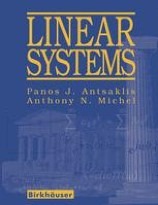
Linear Systems
Linear systems theory plays a broad and fundamental role in electrical, mechanical, chemical and aerospace engineering, communications, and signal processing. A thorough introduction to systems theory with emphasis on control is presented in this self-contained textbook. The book examines the fundamental properties that govern the behavior of systems by developing their mathematical descriptions. Linear time-invariant, time-varying, continuous-time, and discrete-time systems are covered. Rigorous development of classic and contemporary topics in linear systems, as well as extensive coverage of stability and polynomial matrix/fractional representation, provide the necessary foundation for further study of systems and control.
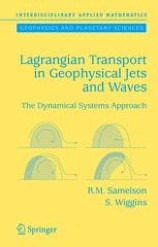
Lagrangian Transport in Geophysical Jets and Waves : The Dynamical Systems Approach
This book provides an accessible introduction to a new set of methods for the analysis of Lagrangian motion in geophysical flows. These methods were originally developed in the abstract mathematical setting of dynamical systems theory, through a geometric approach to differential equations. Despite the recent developments in this field and the existence of a substantial body of work on geophysical fluid problems in the dynamical systems and geophysical literature, this is the first introductory text that presents these methods in the context of geophysical fluid flow. The book is organized into seven chapters; the first introduces the geophysical context and the mathematical models of geophysical fluid flow that are explored in subsequent chapters. The second and third cover the simplest case of steady flow, develop basic mathematical concepts and definitions, and touch on some important topics from the classical theory of Hamiltonian systems. The fundamental elements and methods of Lagrangian transport analysis in time-dependent flows that are the main subject of the book are described in the fourth, fifth, and sixth chapters. The seventh chapter gives a brief survey of some of the rapidly evolving research in geophysical fluid dynamics that makes use of this new approach. Related supplementary material, including a glossary and an introduction to numerical methods, is given in the appendices.
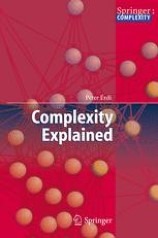
Complexity Explained
This book explains why complex systems research is important in understanding the structure, function and dynamics of complex natural and social phenomena. It illuminates how complex collective behavior emerges from the parts of a system, due to the interaction between the system and its environment.
