



الصفحة 3
الصفحة 3

Nanomedicine : Innovations, applications, and breakthroughs in the quest for health and medicine's future
Revolutionizing healthcare, by providing innovative solutions to some of the most challenging issues in medicine. This book provides an in-depth overview of nanoscale materials and devices that are advancing diagnostics, therapeutics, and personalized care in medical field. It focuses on nanomedicine’s impact on vaccine efficacy as well as innovative diagnosis and therapy for various type of cancer while addressing concerns about safety and toxicity. It examines how nanotechnology is enhancing drug delivery by precisely targeting medicines to specific cells or tissues, thereby increasing treatment efficacy with reduced side effects. Explores how nanoparticles are advancing medical imaging for earlier and more accurate disease detection, and how nanosensors allow real-time biomarker monitoring for faster and more reliable diagnoses. Additionally, it explores nanomedicine's role in managing cardiovascular diseases, improving bone health through nano-extracellular vesicles, and regenerative medicine, including ongoing clinical trials and ethical considerations.

Nanomaterials in clinical therapeutics : Synthesis and applications
Nanotechnology-based applications is a rapidly growing field encompassing a diverse range of disciplines that impact our daily lives. Nanotechnology is being used to carry out large-scale reactions in practically every field of biotechnology and healthcare. The incredible progress being made in these applications is particularly true for the healthcare sector, where they are used in cancer detection and treatment, medical implants, tissue engineering, and so forth. Expansions in this discipline are expected to continue in the future, resulting in the creation of a variety of life-saving medical technology and treatment procedures.

Nanomaterials for Application in Medicine and Biology
This volume contains research reports presented during the NATO Advanced Research Workshop (ARW) “Materials for Application in Medicine and Biology” held in Bonn, Germany, from October 4 to 6, 2006 at the center of advanced european studies and research (caesar). The application of nanomaterials in medicine and biology can be understood as the gathering and use of our current knowledge on nanoscale features of b- logical systems in order to learn how to design nanodevices for biomedical uses.

Nanoelectronics and Photonics : From Atoms to Materials, Devices, and Architectures
Nanoelectronics and Photonics: From Atoms to Materials, Devices, and Architectures provides a description of the core elements and challenges of advanced and future information technology. By linking the materials physics and chemistry at the atomic scale with device and circuit design and performance requirements, tutorial chapters from leaders in the field present a coherent picture of theoretical and experimental research efforts and technology development in this highly interdisciplinary area.

Nano- and Micromaterials
The future focus of nanotechnology will be on realizing new functions over greater scales. This book describes the creation of nano- and microscale structures and functions by controlling temperature, light, pressure, or carrier injections. It covers novel nano-integration technologies such as quantum-well devices possilbe by utilizing, for example, the self-organization of surface nanostructures and optically or pressure-induced phase transitions, micro machines using microstereolithography, as well as new techniques of laser spectroscopy and new computational methods for estimating atomic and electronic structures and their functions on the nano- and microscales.

Multi-Source National Forest Inventory : Methods and Applications
The book describes in detail the full MS-NFI process, and the input data used – including field data, satellite images, and digital map data, as well as coarse-scale variation of forest variables. It also presents comprehensive information on the types of outputs which can be derived, including maps and statistics, describing, for example, stock volumes and development, dominant tree species, age-class distribution, and large and small-scale variation. The book will provide an invaluable resource for those involved in forest inventory, including government departments and bodies involved in forest policy, management and monitoring, forest managers, and researchers and graduate students interested in forest inventory, modelling and analysis. It will find an additional market among those interested in Earth observation, ecology and broader areas of environmental and natural resource management.

Multiscale processes in the earth’s magnetosphere : From interball to cluster ; Proceedings of the NATO ARW on Multiscale Processes in the Earth's Magnetosphere: From Interball to Cluster, Prague, Czech Republic from 9 to 12 September 2003
The past forty years of space research have seen a substantial improvement in our understanding of the Earth’s magnetosphere and its coupling with the solar wind and interplanetary magnetic ?eld (IMF). The magnetospheric str- ture has been mapped and major processes determining this structure have been de?ned. However, the picture obtained is too often static. We know how the magnetosphere forms via the interaction of the solar wind and IMF with the Earth’s magnetic ?eld. We can describe the steady state for various upstream conditions but do not really understand the dynamic processes leading from one state to another. The main dif?culty is that the magnetosphere is a comp- cated system with many time constants ranging from fractions of a second to days and the system rarely attains a steady state. Two decades ago, it became clear that further progress would require multi-point measurements. Since then, two multi-spacecraft missions have been launched — INTERBALL in 1995/96 and CLUSTER II in 2000. The objectives of these missions d- fered but were complementary: While CLUSTER is adapted to meso-scale processes, INTERBALL observed larger spatial and temporal scales. However, the number of papers taking advantage of both missions simul- neously is rather small.

Multiscale Problems in the Life Sciences : From Microscopic to Macroscopic
The aim of this volume that presents Lectures given at a joint CIME and Banach Center Summer School, is to offer a broad presentation of a class of updated methods providing a mathematical framework for the development of a hierarchy of models of complex systems in the natural sciences, with a special attention to Biology and Medicine. Mastering complexity implies sharing different tools requiring much higher level of communication between different mathematical and scientific schools, for solving classes of problems of the same nature. Today more than ever, one of the most important challenges derives from the need to bridge parts of a system evolving at different time and space scales, especially with respect to computational affordability. As a result the content has a rather general character; the main role is played by stochastic processes, positive semigroups, asymptotic analysis, kinetic theory, continuum theory and game theory.

Multiscale Optimization Methods and Applications
One general strategy for dealing with a large or difficult problem is to partition it into smaller ones, which are hopefully much easier to solve, and then work backwards towards the solution of original problem, using a solution from a previous level as a starting guess at the next level.The topics of the chapters selected for this volume are focused on the development of new solution methodologies, including general multilevel solution techniques, for tackling difficult, large-scale optimization problems that arise in science and industry. Applications presented in the book include but are not limited to the circuit placement problem in VLSI design, a wireless sensor location problem, optimal dosages in the treatment of cancer by radiation therapy, and facility location.

Multi-scale Modelling for Structures and Composites
Numerous applications of rod structures in civil engineering, aircraft and spacecraft confirm the importance of the topic. On the other hand the majority of books on structural mechanics use some simplifying hypotheses; these hypotheses do not allow to consider some important effects, In this connection the asymptotic analysis of equations of mathematical physics, the equations of elasticity in rod structures (without these hypotheses and simplifying assumptions being imposed) is undertaken in the present book.

Multiscale Modeling in Epitaxial Growth
Epitaxy is a very active area of theoretical research since several years. It is experimentally well-explored and technologically relevant for thin film growth. Recently powerful numerical techniques in combination with a deep understanding of the physical and chemical phenomena during the growth process offer the possibility to link atomistic effects at the surface to the macroscopic morphology of the film. The goal of this book is to summarize recent developments in this field, with emphasis on multiscale approaches and numerical methods. It covers atomistic, step-flow, and continuum models and provides a compact overview of these approaches. It also serves as an introduction into this highly active interdisciplinary field of research for applied mathematicians, theoretical physicists and computational materials scientists.

Multiscale Modeling and Simulation of Composite Materials and Structures
Multiscale Modeling and Simulation of Composite Materials and Structures presents the state of the art in multiscale modeling and simulation techniques for composite materials and structures. The text focuses on the structural and functional properties of engineering composites and the sustainable high performance of components and structures. With contributions from leading experts in the field, Multiscale Modeling and Simulation of Composite Materials and Structures proves to be an invaluable resource for researchers, graduate students and engineers in the field of Composite Materials.
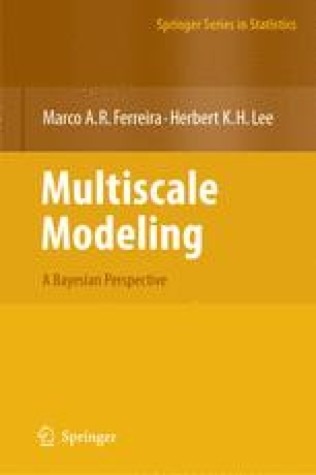
Multiscale Modeling : A Bayesian Perspective
The book is aimed at statisticians, applied mathematicians, and engineers working on problems dealing with multiscale processes in time and/or space, such as in engineering, finance, and environmetrics. The book will also be of interest to those working on multiscale computation research. The main prerequisites are knowledge of Bayesian statistics and basic Markov chain Monte Carlo methods. A number of real-world examples are thoroughly analyzed in order to demonstrate the methods and to assist the readers in applying these methods to their own work. To further assist readers, the authors are making source code (for R) available for many of the basic methods discussed herein.

Multiscale Methods in Science and Engineering
Multiscale problems naturally pose severe challenges for computational science and engineering. The smaller scales must be well resolved over the range of the larger scales. Challenging multiscale problems are very common This volume is an overview of current mathematical and computational methods for problems with multiple scales with applications in chemistry, physics and engineering.

Multiscale Methods : Averaging and Homogenization
This introduction to multiscale methods gives readers a broad overview of the many uses and applications of the methods. The book begins by setting the theoretical foundations of the subject area, and moves on to develop a unified approach to the simplification of a wide range of problems which possess multiple scales, via perturbation expansions; differential equations and stochastic processes are studied in one unified framework. The book concludes with an overview of a range of theoretical tools used to justify the simplified models derived via the perturbation expansions.

Multiscale fatigue crack initiation and propagation of engineering materials ; Structural integrity and microstructural worthiness : Fatigue crack growth behaviour of small and large bodies
This book elucidates the correlation of fatigue crack growth data to multiscale cracking, particularly to the understanding of micrographs influenced by mechanical disturbance and thermodynamic variables. Attention is given to the interpretation of test data by fatigue crack growth rate using two empirical parameters in consistence with the fracture control methodology currently used by industry.

Multiscale Dissipative Mechanisms and Hierarchical Surfaces : Friction, Superhydrophobicity, and Biomimetics
Multiscale Dissipative Mechanisms and Hierarchical Surfaces covers the rapidly developing topics of hierarchical surfaces, roughness-induced superhydrophobicity and biomimetic surfaces. The research in these topics has been progressing rapidly in the recent years due to the advances in the nanosciences and surfaces science and due to potential applications in nanotechnology. The first in its field, this monograph provides a comprehensive review of these subject and presents the background introduction as well as recent and new results in the area.

Multiscale Biomechanics and Tribology of Inorganic and Organic Systems : In memory of Professor Sergey Psakhie
This book gathers authoritative contributions concerning multiscale problems in biomechanics, geomechanics, materials science and tribology. It is written in memory of Sergey Grigorievich Psakhie to feature various aspects of his multifaceted research interests, ranging from theoretical physics, computer modeling of materials and material characterization at the atomic scale, to applications in space industry, medicine and geotectonics, and including organizational, psychological and philosophical aspects of scientific research and teaching as well

Multi-Scale Approaches in Drug Discovery : From Empirical Knowledge to In silico Experiments and Back
Drug discovery is an expensive, time-consuming process and the modern drug discovery community is constantly challenged not only with discovering novel bioactive agents to combat resistance from known diseases and fight against new ones, but to do so in a way that is economically effective. Advances in both experimental and theoretical/computational methods envisage that the greatest challenges in drug discovery can be most successfully addressed by using a multi-scale approach, drawing on the specialties of a whole host of different disciplines. Multi-Scale Approaches to Drug Discovery furnishes chemists with the detail they need to identify drug leads with the highest potential before isolating and synthesizing them to produce effective drugs with greater swiftness than classical methods may allow. This significantly speeds up the search for more efficient therapeutic agents.

Multiphase Flow Dynamics 3 : Turbulence, Gas Absorption and Release, Diesel Fuel Properties
Volume 3 is devoted to selected Chapters of the multiphase fluid dynamics that are important for practical applications. The state of the art of the turbulence modeling in multiphase flows is presented. As introduction, some basics of the single-phase boundary layer theory including some important scales and flow oscillation characteristics in pipes and rod bundles are presented. Then the scales characterizing the dispersed flow systems are presented. The description of the turbulence is provided at different level of complexity: simple algebraic models for eddy viscosity, algebraic models based on the Boussinesq hypothesis, modification of the boundary layer share due to modification of the bulk turbulence, modification of the boundary layer share due to nucleate boiling. Then the role of the following forces on the matematical description of turbulent flows is discussed: the lift force, the lubrication force in the wall boundary layer, and the dispersion force.
