



الصفحة 3
الصفحة 3

Computer Insecurity : Risking the System
Security is one of the most significant issues facing the owners and users of computer systems in the Internet age, and recent years have convincingly illustrated that the problem is increasing in both scale and cost. Computer Insecurity: Risking the System approaches its topic from the perspective of vulnerability – how can your system be attacked? Covering technical issues and human factors, the comprehensively researched text makes reference to numerous real-life security incidents, which help to provide persuasive practical evidence of the problems and the impacts that result. Key issues covered include: • the problem of computer insecurity • the need to raise security awareness • common failings that compromise protection • the attack and exploitation of systems • considerations in responding to the threats
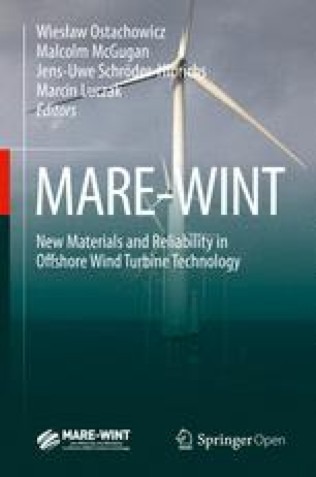
MARE-WINT : New Materials and Reliability in Offshore Wind Turbine Technology
This book provides a holistic, interdisciplinary overview of offshore wind energy, and is a must-read for advanced researchers. Topics, from the design and analysis of future turbines, to the decommissioning of wind farms, are covered. The scope of the work ranges from analytical, numerical and experimental advancements in structural and fluid mechanics, to novel developments in risk, safety & reliability engineering for offshore wind. The core objective of the current work is to make offshore wind energy more competitive, by improving the reliability, and operations and maintenance (O&M) strategies of wind turbines.
Mandibular Implant Prostheses
Combines up-to-date clinical and research information that will help clinicians to advance their theoretical and clinical knowledge on mandibular implant overdentures. Furthermore, it describes treatment considerations for geriatric populations, covering all relevant aspects from physiology to treatment planning and patient management in the surgical and prosthetic phases.
Managing Risk and Information Security : Protect to Enable
Examine the evolving enterprise security landscape and discover how to manage and survive risk. While based primarily on the author’s experience and insights at major companies where he has served as CISO and CSPO, the book also includes many examples from other well-known companies and provides guidance for a management-level audience. Managing Risk and Information Security provides thought leadership in the increasingly important area of enterprise information risk and security. It describes the changing risk environment and why a fresh approach to information security is needed. Because almost every aspect of an enterprise is now dependent on technology not only for internal operations but increasing as a part of product or service creation, the focus of IT security must shift from locking down assets to enabling the business while managing and surviving risk. This edition discusses business risk from a broader perspective, including privacy and regulatory considerations. It describes the increasing number of threats and vulnerabilities and offers strategies for developing solutions. These include discussions of how enterprises can take advantage of new and emerging technologies—such as social media and the huge proliferation of Internet-enabled devices—while minimizing risk.
Management of Intentional and Accidental Water Pollution
The goals of the workshop included a discussion of the state of the science in identification of new research and approaches for water pollution events and communication of the management of water pollution and sustainability of water resources. Critical to management of accidental and intentional pollution events is the assessment of the risk, an understanding of the hazards and lessons learned from events which may lead to preventative management and control strategies. Public health protection will ultimately be improved by the ability to develop management frameworks which are flexible and adaptable to the specific region, country or watershed problems and concerns and allow for prioritization in the decision making. The integration of scientific information regarding the types of hazards the environmental fate of the chemical/biological, exposure pathways and human and ecosystem impacts may be implemented from both a qualitative or descriptive approach or using a more classical quantitative risk assessment paradigm. Thus the frameworks for assessing the risk and managing the risk may be seen as preventive, early warning and responsive.
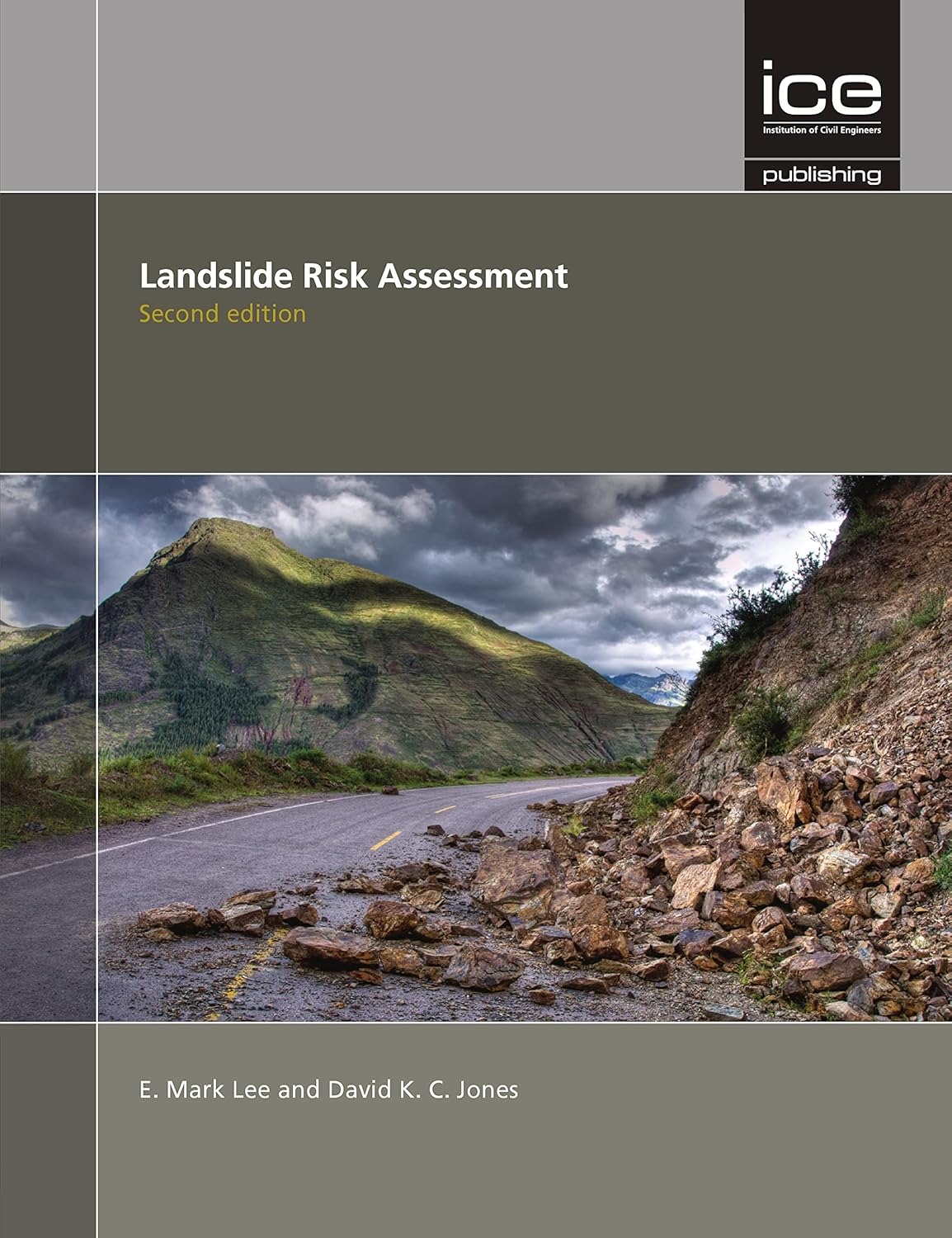
Landslide Risk Assessment ; 2nd ed.
Provides guidance to practitioners on establishing the likelihood and extent to which future slope failures could adversely impact society and affect people and property. The only book to focus on risk and landslides, using examples from across the globe, Landslide Risk Assessment examines a variety of approaches to landslide risk assessment and management, introducing the key challenges that practitioners will need to overcome: estimating the probability and consequences of landsliding, combining these to develop a measure of the risk, and making the transition between risk assessment and risk management.
Landslide risk assessment
Over the past decade there has been a gradual shift away from simply relying on engineering solutions to individual landslide problems, to the use of a variety of strategies to manage the problems over a broad area. Such alternative strategies include the use of building codes, land use planning controls, preventing water leakage, early warning systems and insurance schemes. This book addresses these developments and provides a multidisciplinary perspective on landslide management.

ITI treatment guide, Vol.14 : Immediate implant placement and loading-single or multiple teeth requiring replacement
Outlines the current literature on immediate implant placement and immediate loading and elaborates on our understanding of the biology surrounding tooth extraction and osseointegration that underpin these treatment concepts. The importance of patient and site selection in conjunction with comprehensive treatment planning is highlighted and a risk assessment tool to aid decision making is provided. All key aspects of both the surgical and loading procedures are described in order to provide protocols that optimize the final treatment outcome. This volume also presents 9 step-by-step clinical cases performed by experts in the field, and typical complications of immediate implants are discussed, along with recommendations on how these can be prevented.

IT Security Controls : A Guide to Corporate Standards and Frameworks
Gives an overview of the major standards and frameworks, and a proposed architecture to meet them. The book identifies and describes the necessary controls and processes that must be implemented in order to secure your organization's infrastructure. The book proposes a comprehensive approach to the implementation of IT security controls with an easily understandable graphic implementation proposal to comply with the most relevant market standards (ISO 27001, NIST, PCI-DSS, and COBIT) and a significant number of regulatory frameworks from central banks across the World (European Union, Switzerland, UK, Singapore, Hong Kong, India, Qatar, Kuwait, Saudi Arabia, Oman, etc.). You will learn: Understand corporate IT security controls, including governance, policies, procedures, and security awareness Know cybersecurity and risk assessment techniques such as penetration testing, red teaming, compliance scans, firewall assurance, and vulnerability scans Understand technical IT security controls for unmanaged and managed devices, and perimeter controls Implement security testing tools such as steganography, vulnerability scanners, session hijacking, intrusion detection, and more
Comparative risk assessment and environmental decision making
Decision making in environmental projects is typically a complex and confusing process characterized by trade-offs between socio-political, environmental, and economic impacts. Comparative Risk Assessment (CRA) is a methodology applied to facilitate decision making when various activities compete for limited resources. CRA has become an increasingly accepted research tool and has helped to characterize environmental profiles and priorities on the regional and national level. CRA may be considered as part of the more general but as yet quite academic field of multi-criteria decision analysis (MCDA). Considerable research in the area of MCDA has made available methods for applying scientific decision theoretical approaches to multi-criteria problems, but its applications, especially in environmental areas, are still limited. The papers show that the use of comparative risk assessment can provide the scientific basis for environmentally sound and cost-efficient policies, strategies, and solutions to our environmental challenges.
Chernobyl - What Have We Learned? : The Successes and Failures to Mitigate Water Contamination Over 20 Years
Twenty million people have been exposed to Chernobyl radionuclides through the Dnieper River aquatic pathways. This book presents a 20-year historical overview and comprehensive study results of the aquatic environment affected by the 1986 Chernobyl nuclear accident. During this time, many water quality management practices and countermeasures were enacted. The book presents in-depth analyses of these water remediation actions, using current science and mathematical modeling, and discusses why some were successful, but many others failed. The chapter entitled Where Do We Go From Here? incorporates a comprehensive discussion of the planned New Safe Confinement (NSC) structure to cover the Chernobyl plant. The book closes with a summary and conclusions drawn from these analyses, making it a valuable reference tool for the future. This book will be of interest to engineers, scientists, decision-makers, and those involved in radiation protection and radioecology, environmental protection and risk assessment, water remediation and mitigation measures, and radioactive waste disposal. In addition, the detailed, almost day-to-day, emergency responses to the Chernobyl accident described in this book will also be useful to people developing emergency and long-term responses to accidental or intentional (by terrorists) releases of radionuclides, toxic chemicals and biological agents.
Chemistry and Safety of Acrylamide in Food
Specifically covered are the following aspects: exposure from the environment and the diet; biomarkers of exposure; risk assessment; epidemiology; mechanism of formation in food; biological alkylation of amino acids, peptides, proteins, and DNA by acrylamide and its epoxide metabolite glycidamide; neurotoxicity, reproductive toxicity, and carcinogenicity; protection against adverse effects; and possible approaches to reducing levels in food. Cross-fertilization of ideas among several disciplines in which an interest in acrylamide has developed, including food science, pharmacology, toxicology, and medicine, will provide a better understanding of the chemistry and biology of acrylamide in food, and can lead to the development of food processes to decrease the acrylamide content of the diet.
Chemicals as Intentional and Accidental Global Environmental Threats
The book contains fields of ecology, chemistry, medicine, epidemiology, public health, toxicology, risk assessment, environmental protection and management, modelling, environmental remediation technologies came together to discuss the chemicals threats for the global environment. The intentional or accidental release of chemicals into environment poses a global threat to public health and security.

Business continuity management : A practical guide to organizational resilience and ISO 22301
Business continuity management and resilience are critical to maintaining a healthy business, but many organizations either do nothing (leaving themselves exposed to disruption), take short cuts (leaving major gaps) or fail to properly engage senior stakeholders. This book is a straightforward guide to delivering an effective business continuity capability, including practical solutions built from the author's personal experience managing hundreds of projects in a variety of business settings.
Buildings for Education: A Multidisciplinary Overview of The Design of School Buildings
This book presents theoretical and practical research relating to the vast, publicly financed program for the construction of new schools and the reorganization of existing educational buildings in Italy.
Big data and artificial intelligence in digital finance : Increasing personalization and trust in digital finance using big data and AI
This book presents how cutting-edge digital technologies like Machine Learning, Artificial Intelligence (AI), and Blockchain are set to disrupt the financial sector. The book illustrates how recent advances in these technologies facilitate banks, FinTechs, and financial institutions to collect, process, analyze, and fully leverage the very large amounts of data that are nowadays produced and exchanged in the sector. To this end, the book also introduces some of the most popular Big Data, AI and Blockchain applications in the sector, including novel applications in the areas of Know Your Customer (KYC), Personalized Wealth Management and Asset Management, Portfolio Risk Assessment, as well as variety of novel Usage-based Insurance applications based on Internet-of-Things data.
Assessing Environmental Risk of Oil Spills with ERA Acute : A New Methodology
This book introduces readers to a new methodology for assessing the risks to the marine environment following accidental oil spills. The methodology will soon be implemented on the Norwegian Continental Shelf and will be complemented by guidelines for its use in a regulatory framework.
Assessing and Managing Earthquake Risk : Geo-scientific and Engineering Knowledge for Earthquake Risk Mitigation: developments, tools, techniques
This book points out the need of a multidisciplinary approach in the field of risk assessment and management. It provides an overview of the problems, approaches and common practices directly related to earthquake risk mitigation and, in particular, to the preparation of earthquake emergency plans. Written by a team of specialists from different disciplines, the authors worked together extensively in order to create unity and continuity in the text as a whole. Each topic is illustrated with examples of actual applications taken from the bibliography – including websites with available relevant information. Case studies and information on some relevant international projects are given.
Aquaponics Food Production Systems : Combined Aquaculture and Hydroponic Production Technologies for the Future
This book, written by world experts in aquaponics and related technologies, provides the authoritative and comprehensive overview of the key aquaculture and hydroponic and other integrated systems, socio-economic and environmental aspects. Aquaponic systems, which combine aquaculture and vegetable food production offer alternative technology solutions for a world that is increasingly under stress through population growth, urbanisation, water shortages, land and soil degradation, environmental pollution, world hunger and climate change.

Antifouling Paint Biocides
This volume describes the state-of-the-art advances regarding antifouling paint biocides and provides thorough evaluation of research and information on major topics such as occurrence and levels, environmental fate, analytical techniques and methods for the monitoring and control, environmental modeling, ecotoxicological effects and risk assessment placing emphasis on the knowledge acquired over the last 10 years. The contamination of the aquatic environment by antifouling compounds has been a topic of increasing importance during the last few years. The major classes of antifouling active biocides are discussed including the old-fashioned organotin compounds, the modern organic booster biocides and the promising naturally occurring antifoulant products. Therefore, the reader will get a balanced view of this developing field. Chapters were written by leading experts in their field who critically surveyed all the major areas of progress. This volume is an important resource and can constitute a good grounding in the field of antifouling paint biocides.
