



الصفحة 3
الصفحة 3

Modern hospice design : The architecture of palliative and social care
Takes cognisance of the new conditions of social care in the 21st century, principally in the UK, Europe and North America. It does so with regard to the development of new building types, but also in response to new philosophies of palliative care and the status of the elderly and the dying. At its core is a public discussion of a philosophy of design for providing care for the elderly and the vulnerable, taking the importance of architectural aesthetics, the use of quality materials, the porousness of design to the wider world, and the integration of indoor and outdoor spaces as part of the overall care environment.

Modern construction envelopes
Using current examples by renowned architects, Watts presents the constructive and material-related details. It is based on a text, photos, and standardized detail drawings, as well as 3D representations of the components

Modelling in Mechanical Engineering and Mechatronics : Towards Autonomous Intelligent Software Models
Modelling in Mechanical Engineering and Mechatronics presents a model-centred approach focusing on distributed development and use of autonomous intelligent software models, particularly the efficiency of the models, and their interaction and integration into distributed autonomous intelligent systems. In order to systematise the available knowledge, a domain ontology is presented; a subset of which is used to create a modelling theory based on knowledge and experience in the areas of software engineering, mechanical engineering and mechatronics. This holistic view of modelling explains the purpose and the essence of modelling, as well as the benefits that are to be expected. It discusses the relations to other branches of engineering and science and as a result, it demonstrates strategies, methods and tools for unleashing the full power of modelling.

Modelling and Simulation : Exploring Dynamic System Behaviour
Modelling and Simulation: Exploring Dynamic System Behaviour provides the reader with a balanced and integrated presentation of the modelling and simulation activity for both Discrete Event Dynamic Systems (DEDS) and Continuous Time Dynamic Systems (CTDS). This book presents the fundamentals necessary to understand the many important facets of the modeling and simulation methodology.
Modelling and Reasoning with Vague Concepts
This volume outlines a formal representation framework for modelling and reasoning with vague concepts in Artificial Intelligence. The new calculus has many applications, especially in automated reasoning, learning, data analysis and information fusion. This book gives a rigorous introduction to label semantics theory, illustrated with many examples, and suggests clear operational interpretations of the proposed measures. It also provides a detailed description of how the theory can be applied in data analysis and information fusion based on a range of benchmark problems.

Modelli Dinamici Discreti = Discrete Dynamic Models
Discrete mathematical modeling is one of the driving factors in modern mathematics research, and has played a role of synthesis between different disciplines, becoming a tool for qualitative and quantitative analysis in applied sciences. This volume provides an introduction to the analysis of discrete dynamic systems, following a modeling approach. An examination of a wide range of examples, models, and motivations drawn from Biology, Demography, Engineering and Economics, is followed by the presentation of the tools for the study of linear and non-linear scalar dynamical systems, with particular attention to stability analysis. The linear difference equations are studied in detail and an elementary introduction to the Z and DFT transforms is provided. One chapter is devoted to the study of bifurcations and chaotic dynamics. One-step vector dynamical systems and the applications of Markov chains are the subject of three chapters.

Modélisation et statistique spatiales = Spatial modeling and statistics
Spatial statistics are undergoing significant development due to their use in many fields: earth sciences, environment and climatology, epidemiology, econometrics, image analysis, etc. This book presents the main spatial models used as well as their statistics for the three types of data: geostatistics (observation on a continuous domain), data on a discrete network, point data. The objective is to present in a concise but mathematically complete way the most classical models (second order and variogram; software model and Gibbs-Markov field; point processes) as well as their simulation by MCMC algorithm. Then comes the presentation of statistical tools useful for their study.

Modeling with Itô Stochastic Differential Equations
This modeling procedure is thoroughly explained and illustrated for randomly varying systems in population biology, chemistry, physics, engineering, and finance. Introductory chapters present the fundamental concepts of random variables, stochastic processes, stochastic integration, and stochastic differential equations. These concepts are explained in a Hilbert space setting which unifies and simplifies the presentation. Computer programs, given throughout the text, are useful in solving representative stochastic problems. Analytical and computational exercises are provided in each chapter that complement the material in the text.
Modeling and Using Context ; 5th International and Interdisciplinary Conference, CONTEXT 2005, Paris, France, July 5-8, 2005, Proceedings
Context is of crucial importance for research and applications in many disciplines, as evidenced by many workshops, symposia, seminars, and conferences on specific aspects of context. The International and Interdisciplinary Conference on Modeling and Using Context (CONTEXT), the oldest conference series focusing on context, provides a unique interdisciplinary emphasis, bringing together participants from a wide range of disciplines, including artificial intelligence, cognitive science, computer science, linguistics, organizational science, philosophy, psychology, ubiquitous computing, and application areas such as medicine and law, to discuss and report on context-related research and projects. Previous CONTEXT conferences were held in Rio de Janeiro, Brazil (1997), Trento, Italy (1999, LNCS 1688), Dundee, UK (2001, LNCS 2116), and Palo Alto, USA (2003, LNCS 2680). CONTEXT 2005 was held in Paris, France during July 5–8, 2005. There was a strong response to the CONTEXT 2005 Call for Papers, with 120 submissions received. A careful review process assessed all submissions, with each paper first reviewed by the international Program Committee, and then reviewer discussions were initiated as needed to assure that the final decisions carefully considered all aspects of each paper. Reviews of submissions by the Program Chairs were supervised independently and anonymously, to assure fair consideration of all work. Out of the 120 submissions, 23 were selected as full papers for oral presentation, and 20 were selected as full papers for poster presentation. These outstanding papers are presented in this proceedings.
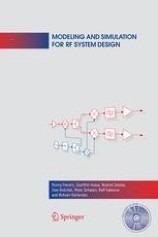
Modeling and Simulation for RF System Design
The focus of Modeling and Simulation for RF System Design lies on RF specific modeling and simulation methods and the consideration of system and circuit level descriptions. It contains application-oriented training material for RF designers which combines the presentation of a mixed-signal design flow.
Modeling and Management of Fuzzy Semantic RDF Data
Presents the latest research findings in fuzzy RDF data modeling and management. Fuzziness widely exist in many data and knowledge intensive applications. With the increasing amount of metadata available, efficient and scalable management of massive semantic data with uncertainty is of crucial importance. This book goes to great depth concerning the fast-growing topic of technologies and approaches of modeling and managing fuzzy metadata with Resource Description Framework (RDF) format. Its major topics include representation of fuzzy RDF data, fuzzy RDF graph matching, query of fuzzy RDF data, and persistence of fuzzy RDF data in diverse databases. The objective of the book is to provide the state-of-the-art information to researchers, practitioners, and postgraduates students who work on the area of big data intelligence and at the same time serve as the uncertain data and knowledge engineering professional as a valuable real-world reference.
Model-Based Software and Data Integration ; 1st International Workshop, MBSDI 2008, Berlin, Germany, April 1-3, 2008. Proceedings
The First International Workshop on Model-Based Software and Data Integ- tion (MBSDI 2008), was ourfrst event of this kind in a forthcoming series of activities at TU Berlin, where a scientifc discussion and exchange forum was provided for both academic and industrial researchers. We aimed at researchers, engineersand practitionerswho focus onadvanced, model-basedsolutions inthe area of software and information integration and interoperability. As withevery beginning, the resonanceonour callsin today's overfoodingof workshops was somewhat unpredictable, and we did not really know how many paper submissions to expect. We were nicely surprised, considering the rather short lead time to organize the meeting and the very specialized and focused topic.

Model-Based Reasoning in Science, Technology, and Medicine
The volume is based on the papers that were presented at the international conference Model-Based Reasoning in Science and Medicine (MBR’06 China), held at Sun Yat-sen University, Guangzhou, P.R. China in July 2006. The presentations given at the conference explored how scientific thinking uses models and explanatory reasoning to produce creative changes in theories and concepts. Some addressed the problem of model-based reasoning in technology, and stressed the issue of technological innovation and medical reasoning. The various contributions of the book are written by interdisciplinary researchers who are active in the area of creative reasoning in science and technology: the most recent results and achievements about the topics above are illustrated in detail in the papers.
Model Driven Architecture and Ontology Development
Gaševic and his co-authors try to fill this gap by covering the subject of MDA application for ontology development on the Semantic Web. Part I of their book describes existing technologies, tools, and standards like XML, RDF, OWL, MDA, and UML. Part II presents the first detailed description of OMG’s new ODM (Ontology Definition Metamodel) initiative, a specification which is expected to be in the form of an OMG language like UML. Finally, Part III is dedicated to applications and practical aspects of developing ontologies using MDA-based languages.
Model Checking Software ; Vol. 3925 ; 13th International SPIN Workshop, Vienna, Austria, March 30 - April 1, 2006, Proceedings
he name “SPIN” refers both to a workshopon model checking and to a famous model checking tool. The SPIN workshop is an annual forum for practitioners and researchersinterested in state space-based techniques for the validation and analysis of software and hardware systems, including communication protocols. It focuses on techniques based on explicit representations of state spaces, as implemented in the SPIN model checker or other tools, and techniques based on a combination of explicit representations with other representations. The SPIN model checker has proven to be particularly suited for the analysis of concurrent asynchronous systems. The workshop aims to encourage interaction and exchange of ideas with all related areas in software engineering.

Model Checking Software ; Vol. 3639 : 12th International SPIN Workshop, San Francisco, CA, USA, August 22-24, 2005, Proceedings
Constitutes the refereed proceedings of the 12th International SPIN workshop on Model Checking Software, SPIN 2005, held in San Francisco, USA in August 2005. The papers are organized in topical sections on state representation and abstraction, dealing with concurrency, dealing with complex data, checking temporal properties, and more.

Model and Mathematics : From the 19th to the 21st Century
This book collects the historical and medial perspectives of a systematic and epistemological analysis of the complicated, multifaceted relationship between model and mathematics, ranging from, for example, the physical mathematical models of the 19th century to the simulation and digital modelling of the 21st century. The aim of this anthology is to showcase the status of the mathematical model between abstraction and realization, presentation and representation, what is modeled and what models.

Modal Array Signal Processing : Principles and Applications of Acoustic Wavefield Decomposition
Many applications of acoustic signal processing, such as teleconferencing and surveillance systems, require an estimate of several parameters present in the observed acoustic wavefield. The most important parameters are the number as well as the location of active acoustic sources. This book deals with the problem of detecting and localizing multiple simultaneously active wideband acoustic sources by applying the notion of wavefield decomposition using circular and spherical microphone arrays. The decomposed wavefield representation is used to serve as a basis for so-called modal array signal processing algorithms, which have the significant advantage over classical array signal processing algorithms that they inherently support multiple wideband acoustic sources. A rigorous derivation of modal array signal processing algorithms for unambiguous source detection and localization as well as performance evaluations by means of measurements using an actual real-time capable implementation are discussed.

Mobile response ; 1st International Workshop on mobile information technology, for emergency response, mobile response 2007, Sankt Augustin, Germany, February 22-23, 2007. Revised Selected Papers
This book constitutes the thoroughly refereed post-proceedings of the First International Workshop on Mobile Information Technology for Emergency Response, MobileResponse 2007 held in Sankt Augustin, Germany in February 2007.

Mobile forensics : The file format handbook : Common file formats and file systems used in mobile devices
This book summarizes knowledge about several file systems and file formats commonly used in mobile devices. In addition to the fundamental description of the formats, there are hints about the forensic value of possible artefacts, along with an outline of tools that can decode the relevant data.
