



الصفحة 3
الصفحة 3

Foundation 3ds Max 8 Architectural Visualization
Welcome to the world of 3D architectural visualizations using the most powerful and versatile 3D software package on the planet: 3ds Max. In just the last few years, the visualization industry has arguably become the fastest-growing 3D industry, and may soon overtake all others in total number of users. Just as the use of computer-aided design became the norm for nearly all architectural, engineering, and construction firms in the 1990s, 3D visualizations have become standard practice today. This book takes you through the challenge of learning one of the most complex computer programs ever created, by way of easy-to-follow tutorials and instruction. It specifically focuses on those parts of the program you need to know to produce stunning architectural visualizations.

Forecasting and Assessing Risk of Individual Electricity Peaks
The overarching aim of this open access book is to present self-contained theory and algorithms for investigation and prediction of electric demand peaks. A cross-section of popular demand forecasting algorithms from statistics, machine learning and mathematics is presented, followed by extreme value theory techniques with examples.

Field Guide to Meteors and Meteorites
Imagine the unique experience of being the very first person to hold a newly-found meteorite in your hand – a rock from space, older than Earth! "Weekend meteorite hunting" with magnets and metal detectors is becoming ever more popular as a pastime, but of course you can’t just walk around and pick up meteorites in the same way that you can pick up seashells on the beach. Those fragments that survived the intense heat of re-entry tend to disguise themselves as natural rocks over time, and it takes a trained eye – along with the information in this book – to recognize them.

Fare astronomia con piccoli telescopi = Are astronomy with small telescopes
Giant tools are not necessarily required to produce scientifically valid results in the field of astronomy. Even the amateur with a small telescope, with a diameter of only 8-9 cm, can contribute to the science of the sky by making useful observations of the Sun, the Moon, planets, comets, asteroids, double or variable stars, nebulae and star clusters. The manual of M.K. Gainer explains what the minimum equipment is (a small telescope, a computer, a simple digital camera), how to use it, and what are the appropriate techniques to be adopted in the observations. It also offers schemes for interpreting and reducing the collected data, as well as forms to be filled in and sent to international collection centers.

Extrasolar Planets : Saas Fee Advanced Course 31
Research on extrasolar planets is one of the exciting fields of activity in astrophysics, from early speculations on the existence of planets orbiting other stars to the first discoveries and characterization of extrasolar planets. This book talks about this breakthrough as the result of a growing interest of a large community of researchers.

Extracting Accountability : Engineers and Corporate Social Responsibility
The growing movement toward corporate social responsibility (CSR) urges corporations to promote the well-being of people and the planet rather than the sole pursuit of profit. In Extracting Accountability, Jessica Smith investigates how the public accountability of corporations emerges from the everyday practices of the engineers who work for them. Focusing on engineers who view social responsibility as central to their profession, she finds the corporate context of their work prompts them to attempt to reconcile competing domains of accountability—to formal guidelines, standards, and policies; to professional ideals; to the public; and to themselves.

Exploring the Moon : The Apollo Exped.s
the book develops the scientific theme of lunar geology, and therefore will be of use as background reading for undergraduate students of planetary sciences. In addition, with the prospect of a resumption of human missions, it will help journalists understand what Apollo achieved after the 'flags and footprints' of the Apollo 11 landing in July1969 and will commemorate the fortieth anniversary of that momentous event.

Expanding Horizons in Bioethics
What are the resources and needs, the strengths and the vulnerabilities of patients, of society, or of nature? How do we evaluate the societal potential of scientific discovery? It is fairly well assured that we are influencing the terms of existence of many inhabitants of this planet, from flora to fauna to humans. Moreover, history has shown that while technologies can be used neutrally, they can be (and have been) used to the great benefit – or the great detriment – of human life and the fate of the world as a whole. How various types of knowledge and technological ability will be deployed is up to us, individually and collectively. How such information and ability should be deployed, and for what reasons, are questions at the core of bioethical inquiry. These are the "expanding horizons in bioethics" to which this volume refers. This volume is comprised of fourteen essays. It is a rare gathering of scholarly opinion, featuring well-known experts from a diversity of disciplines. The topics addressed are of immediate concern to the public. The essays ask questions about human nature, genetic technologies, reproductive rights, human subjects research, and environmental issues – all in provocative and challenging new ways. Yet the themes that emerge throughout the volume are of enduring interest to anyone concerned about the interactions of scientific development, ethics, and society. This volume is of interest to students and teachers of bioethics and related topics, as well as to professionals working in these disciplines.

Exoplanets : Detection, Formation, Properties, Habitability
This edited, multi-author volume will be an invaluable introduction and reference to all key aspects in the field of exoplanet research. The reviews cover: Detection methods and properties of known exoplanets, Detection of extrasolar planets by gravitational microlensing. The formation and evolution of terrestrial planets in protoplanetary and debris disks. The brown dwarf-exoplanet connection. Formation, migration mechanisms and properties of hot Jupiters. Dynamics of multiple exoplanet systems. Doppler exoplanet surveys. Searching for exoplanets in the stellar graveyard. Formation and habitability of extra solar planets in multiple star systems. Exoplanet habitats and the possibilities for life. Moons of exoplanets: habitats for life.

Exercises in Environmental Physics
Exercises in Environmental Physics covers the essential topics in university courses in environmental physics including: Energy and the environment / Fluid mechanics / Evapotranspiration, soil physics and groundwater hydrology / Pollution / Ocean and atmospheric physics / The planet in space This is the first book specifically devoted to exercises on the application of physics to describe the environment including the human impact. It is a valuable tool for students to develop skills in the manipulation of physical concepts and methods while learning environmental science. The exercises are drawn from the author's teaching experience and the need for stimulating practice problems in various environmental physics courses. A chapter on mathematical methods used in the book supplements the material.

Evaluation of the use of medicine plants in cancer treatment
Turmeric (Curcuma longa) and ginger (Zingiber officinale) have been widely studied for their potential anticancer effects, primarily due to the bioactive compounds curcumin and gingerol. Both compounds exhibit significant therapeutic properties, including anti-inflammatory, antioxidant, pro-apoptotic, and anti-angiogenic activities, which target key pathways implicated in cancer progression, such as NF-κB, STAT-3, and mTOR. Through these mechanisms, curcumin and gingerol inhibit tumor growth, reduce metastasis, and enhance the efficacy of conventional cancer treatments.

Environmental Risk Assessment : Quantitative Measures, Anthropogenic Influences, Human Impact
The world is a dirty place and getting dirtier all the time. The reasons for this ever-increasing lack of cleanliness are not hard to find, being basically caused by the actions of the six billion people who inhabit the planet. The needs of the people for air, water, food, housing, clothing, heating, materials, oil, gas, minerals, metals, chemicals, and so forth have, over the centuries, given rise to a variety of environmental problems that have been exacerbated or been newly created by the industrialization of the world, the increase in population, and the increase in longevity of the population. The costs of cleaning even fractions of the known environmental problems are truly enormous, as detailed in the volume Environmental Risk Analysis (I. Lerche and E. Paleologos, 2001, McGraw-Hill). The chances of causing new environmental problems, and their associated costs of clean up, are equally challenging in terms of anthropogenic influences and also of the natural environmental problems that can be triggered by humanity.

Encyclopedia of medicinal plants
This compilation reports different therapeutic plant species, most ordinarily utilized by native persons throughout the planet. The botanical term, family name, dialect name, partly utilized, and the use of the plants have been mentioned in this work. This encyclopedia presents a rundown of restorative plants generally used for relieving disorders, their bioactive elements, and their means of operation.

Encyclopedia of Geomagnetism and Paleomagnetism
Consisting of more than 300 articles written by ca 200 leading experts, this authoritative reference encompasses the entire fields of Geomagnetism and Paleomagnetism in a single volume. It describes in fine detail at an assessable level the state of the current knowledge and provides an up-to-date synthesis of the most basic concepts. As such, it will be an indispensable working tool not only for geophysicists and geophysics students but also for geologists, physicists, atmospheric and environmental scientists, and engineers.

Emerging Economic Models for Sustainable Businesses : A Practical Approach
Analyses economic models that look at value propositions, creation and capture with ‘People, Planet and Profit’ deeply embedded in each stage of the value chain. The contributions bring out the interplay between new standards, evaluation frameworks, technology innovation and other emerging tools to show how they create a sustainable business. For this, they lean on learnings from successful sustainable businesses. Business leaders will find that this book provides deep insights on improving their existing sustainable practices, and speeding up the transition from linear to circular, narrow stakeholder driven to community driven.
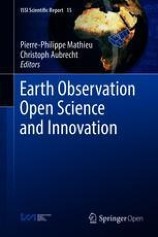
Earth Observation Open Science and Innovation
The digital transformation is revolutionizing our ability to monitor our planet and transforming the way we access, process and exploit Earth Observation data from satellites.This book reviews these megatrends and their implications for the Earth Observation community as well as the wider data economy. It provides insight into new paradigms of Open Science and Innovation applied to space data, which are characterized by openness, access to large volume of complex data, wide availability of new community tools, new techniques for big data analytics such as Artificial Intelligence, unprecedented level of computing power, and new types of collaboration among researchers, innovators, entrepreneurs and citizen scientists. In addition, this book aims to provide readers with some reflections on the future of Earth Observation, highlighting through a series of use cases not just the new opportunities created by the New Space revolution, but also the new challenges that must be addressed in order to make the most of the large volume of complex and diverse data delivered by the new generation of satellites.

Dynamics of extended celestial bodies and rings
Taking both a theoretical and observational perspective, this book is an introduction to recent developments in the field of celestial mechanics. It emphasizes the application to extended celestial bodies and devotes much attention to rotational aspects. In particular, it explains the state of art for accurate modelling of the rotation of celestial bodies such as the Earth, the Moon, and Mercury, which involves principles related to hydrodynamics and geodesy. Comparisons between the light curves of the asteroids and their rotational state are made and spatial techniques leading to the determination of the Earth's gravitational field are explained. Also, the book provides a general overview of the collisional processes in the solar system and of the dynamics of the rings. It is addressed to graduate students and researchers in space sciences and celestial dynamics.

Dynamical Oceanography
This textbook provides a mathematical introduction to the theory of large-scale ocean circulation and is accessible for readers with an elementary knowledge of mathematics and physics, including continuum mechanics and solution methods for ordinary differential equations. The book consists of four parts. Part I (chapters 1 - 4) is a very brief introduction to ocean circulation and the mathematical formulation of the governing equations of ocean flows. In addition, concepts are introduced that are necessary to describe and understand large-scale ocean currents. In part II (chapters 5 - 10), the theory of mid-latitude wind-driven ocean circulation is presented. Part III (chapters 11 - 12) focuses on the understanding of equatorial currents and El Nino. In the last part IV, chapters 13 - 16, the theory of planetary scale flows is presented, covering topics such as the thermocline problem, the Antarctic Circumpolar Current, the stability of the thermohaline circulation and the Arctic Ocean circulation.

Dynamic planet : Monitoring and understanding a dynamic planet with geodetic and oceanographic tools
This book presents a set of papers on IAG Symposium, held on Cairns, Australia, 22-26 August, 2005

Dynamic planet : Mercury in the context of its environment
We are in a time of transition in our understanding of Mercury. Of particular interest here is the emerging picture of the planet as a system, with interactions between interior, surface, exosphere, and magnetosphere that have influenced and constrained the evolution of each part of the system. This book will present the planet in the context of its surroundings.
