



الصفحة 3
الصفحة 3

Green human resource management research : Issues, trends, and challenges
This book, engaging SDGs 4 and 8, among others, examines green HRM from a variety of perspectives. Divided into three sections, it explores the process of human resource acquisition, the connection between green HRM practice and employee behavior, and international perspectives of green HRM.

Governance : Systemic foundation and framework
Instead of yet another theory on good governance, this book presents a substantiation of contemporary notions. It builds on the theoretical foundations for taking an overall perspective on social contexts and culminates in a systemic framework that captures social structures based on first principles of viability and sustainability. The framework at hand enables applicants to view social contexts holistically while at the same time envisioning a rich picture of what leverages the implementation of social purposes beyond the boxes of the professional disciplines: social structures can be assessed, strengths and weaknesses identified and measures arrived at. Ultimately, the required structures can be tailor-made to align forces for a joint implementation of purposes. Conventional static hierarchies can be deployed into dynamic social organisms capable of developing and adapting continuously according to the opportunities and challenges faced.

Global Pathways to Education : Cultural Spheres, Networks, and International Organizations
The research presented in this volume is a wide-ranging analysis and explanation of the dynamics of emergence, diffusion, and change in relation to state education systems. The chapters offer an empirical investigation into whether the global diffusion of Western-rational educational content and organizational forms occurs as expected by neoinstitutionalist theory, or whether culturally specific developmental paths dominate in different parts of the world.

Geomatics Solutions for Disaster Management
Natural and anthropogenic disasters have caused a large number of victims and significant social and economic losses in the last few years. There is no doubt that the risk prevention and disaster management sector needs drastic measures and improvements in order to decrease damage and save lives of inhabitants. Effective utilization of satellite positioning, remote sensing, and GIS in disaster monitoring and management requires research and development in numerous areas: data collection, access and delivery, information extraction and analysis, management and their integration with other data sources (airborne and terrestrial imagery, GIS data, etc.), data standardization, organizational and legal aspects of sharing of remote sensing information. This book provides researchers and practitioners with a good overview of what is being developed in this topical area.

Fundamentals of operational risk management : Understanding and implementing effective tools, policies and frameworks
Threats to an organization's operations, such as fraud, IT disruption or poorly designed products, could result in serious losses. Understand the key components of effective operational risk management with this essential book for risk professionals and students. Outlines how to implement a sound operational risk management framework which is embedded in day-to-day business activities. It covers the main operational risk tools including categorisation, risk and control self-assessment and scenario analysis, and explores the importance of risk appetite and tolerance.

Fundamentals of clinical research : Bridging medicine, statistics and operations
The scope of clinical research is to evaluate the effect of a treatment on the evolution of a disease in the human species.The treatment can be pharmacological, surgical, psychological/behavioral or organizational/logistic. The disease, intended as an impairment of a state of well-being or a condition capable of provoking such impairment over time, can be universally accepted as such (e.g. a cancer or a bone fracture) or perceived as such only by limited groups of individuals in a given cultural context (e.g. hair loss or weight gain). The course of the disease that ones wishes to change can be the one with no intervention or, more frequently, the one observed with the available treatment. The evaluation of the effect of a treatment on the course of a disease is a lengthy process, which progresses in increasingly complex stages.

Fundamentals of business-to-business marketing : Mastering business markets
Gives a comprehensive overview of the key principles of business marketing. The reader will be introduced into methods and theories in order to understand business markets and marketing better. Not only are the principles of business marketing addressed, But also deep knowledge of organizational buying and market research on business markets. The book sets the stage for developing marketing programs for business markets in their different facets.

From Purchasing to Supply Management : A Study of the Benefits and Critical Factors of Evolution to Best Practice
For more than 20 years, researchers and practitioners claimed a transition from traditional purchasing to strategic supply management. However, very few companies actually have been able to make this transition happen. Given the fact that most of the actual practices applied by world-class companies are well known, the question remains why so many companies failed along the way. What does it take to overcome the barriers of purchasing evolution - and what are the benefits?

Foundations of landscape architecture : Integrating form and space using the language of site design
Illustrates the importance of spatial language. It introduces concepts, typologies, and rudimentary principles of form and space. Including designs for projects such as parks, campuses, and memorials, this text provides the core concepts necessary for designers to shape functional landscapes. Additionally, chapters discuss organizational and spatial design structures based on orthogonal forms, angular forms, and circular forms.

Foundation models for natural language processing : pre-trained language models integrating media
Covers basic natural language processing models, pre-trained language models BERT, GPT, and sequence-to-sequence converters, as well as the concepts of self-attention and context-sensitive embedding. Various approaches to improving these models are then discussed, such as expanding the pre-training parameters, increasing the length of input texts, or incorporating additional knowledge. An overview of the best performing models is then provided for about twenty application areas, e.g., question answering, translation, story generation, dialogue systems, image generation from text, etc. For each application area, the strengths and weaknesses of existing models are discussed, and an overview of further developments is provided. In addition, links to freely available code are provided. The concluding chapter summarizes the economic opportunities, risk mitigation, and potential developments of AI.
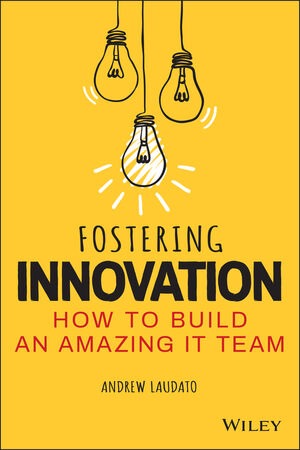
Fostering innovation : How to build an amazing IT team
In Fostering Innovation: How to Build an Amazing IT Team, accomplished technology strategist, executive, and leader Andrew Laudato delivers an eye-opening exploration of how to design, build, staff, and run a high-performing IT department. The book is filled with universally applicable strategies and techniques that can transform any IT team into an all-star cast perfectly aligned with your organization’s objectives.

Formal Approaches to Agent-Based Systems ; 3rd International Workshop, FAABS 2004, Greenbelt, MD, April 26-27, 2004, Revised Selected Papers
The 3rd Workshop on Formal Approaches to Agent-Based Systems (FAABS-III) was held at the Greenbelt Marriott Hotel (near NASA Goddard Space Flight Center) in April 2004 in conjunction with the IEEE Computer Society. The first FAABS workshop was help in April 2000 and the second in October 2002. Interest in agent-based systems continues to grow and this is seen in the wide range of conferences and journals that are addressing the research in this area as well as the prototype and developmental systems that are coming into use. Our third workshop, FAABS-III, was held in April, 2004. This volume contains the revised papers and posters presented at that workshop. The Organizing Committee was fortunate in having significant support in the planning and organization of these events, and were privileged to have wor- renowned keynote speakers Prof. J Moore (FAABS-I), Prof. Sir Roger Penrose (FAABS-II), and Prof. John McCarthy (FAABS-III), who spoke on the topic of se- aware computing systems, auguring perhaps a greater interest in autonomic computing as part of future FAABS events. We are grateful to all who attended the workshop, presented papers or posters, and participated in panel sessions and both formal and informal discussions to make the workshop a great success. Our thanks go to the NASA Goddard Space Flight Center, Codes 588 and 581 (Software Engineering Laboratory) for their financial support and to the IEEE Computer Society (Technical Committee on Complexity in Computing) for their sponsorship and organizational assistance.

Food Safety Culture : Creating a Behavior-Based Food Safety Management System
Food safety awareness is at an all time high, new and emerging threats to the food supply are being recognized, and consumers are eating more and more meals prepared outside of the home. Accordingly, retail and foodservice establishments, as well as food producers at all levels of the food production chain, have a growing responsibility to ensure that proper food safety and sanitation practices are followed, thereby, safeguarding the health of their guests and customers. Achieving food safety success in this changing environment requires going beyond traditional training, testing, and inspectional approaches to managing risks. It requires a better understanding of organizational culture and the human dimensions of food safety. To improve the food safety performance of a retail or foodservice establishment, an organization with thousands of employees, or a local community, you must change the way people do things. You must change their behavior. In fact, simply put, food safety equals behavior.

Financial management and risk analysis strategies for business sustainability
Financial Management and Risk Analysis Strategies for Business Sustainability proposes a series of practical and theoretical perspectives on how the business world has to evolve to adapt to the new situation the world has reached due to undeniable climate change forcing businesses to redefine their productive processes and internal organization. Topics highlighted include financial management procedures, corporate social responsibility, risk analysis, financial literacy, and innovation in sustainability and sustainable development. areas.

Fallibility at Work : Rethinking Excellence and Error in Organizations
This book addresses how organizations can deal with human fallibility in order to create space for excellence at work. Some mistakes in work settings put lives at risk, while others create openings for innovative breakthroughs. In order to deal constructively with fallibility, an organization needs a communication climate where it is normal to voice opinions, admit mistakes, and ask for help in critical situations. The book builds on interviews with practitioners in healthcare, aviation, IT, public governance, and industry. It connects narratives from these fields with theories from organizational psychology and philosophy, as well as from positive organizational scholarship. In the final chapter, an overall ethics of fallibility at work is outlined. Fallibility at Work contributes to research in multiple academic disciplines, but also reaches out to practitioners who are interested in the connections between error and excellence in organizations.

Fabbriche, sistemi, organizzazioni : Storia dell'ingegneria industriale = Factories, systems, organizations : A history of industrial engineering
This book examines the origin of the technological and organizational challenges of industry in Europe and the United States and the stages of its theoretical formulation; the creation of the figure of the industrial engineer between the nineteenth and twentieth centuries; and the elaboration of the technological disciplines and of the language and of the fundamental concepts (system, automation, control, optimization, network) of modern industrial engineering. Divided into three chronologically organized parts, each chapter is accompanied by readings, bibliographic information for in-depth study and illustrative sheets of historical, biographical aspects (relating to some great engineers, scientists and philosophers), terminological and mathematical-technical aspects.

Exploring Resilience : A Scientific Journey from Practice to Theory
Resilience has become an important topic on the safety research agenda and in organizational practice. Most empirical work on resilience has been descriptive, identifying characteristics of work and organizing activity which allow organizations to cope with unexpected situations. Fewer studies have developed testable models and theories that can be used to support interventions aiming to increase resilience and improve safety. In addition, the absent integration of different system levels from individuals, teams, organizations, regulatory bodies, and policy level in theory and practice imply that mechanisms through which resilience is linked across complex systems are not yet well understood. Scientific efforts have been made to develop constructs and models that present relationships; however, these cannot be characterized as sufficient for theory building. There is a need for taking a broader look at resilience practices as a foundation for developing a theoretical framework that can help improve safety in complex systems.

Evidence-Based Management : How to Use Evidence to Make Better Organizational Decisions
Evidence-based management has evolved with the goal of improving the quality of decision-making by using critically evaluated evidence from multiple sources - organizational data, professional expertise, stakeholder values and scientific literature. This book sets out and explains the specific skills needed to gather, understand and use evidence to make better-informed organizational decisions.
Evaluating the organizational impact of health care information systems
Evaluating the Organizational Impact of Health Care Information Systems, Second Edition, is heavily updated and revised from its First Edition, which is entitled Evaluating Health Care Information Systems: Methods and Applications. The much-needed Second Edition is a guide for evaluating the organizational impacts of computer systems in health care institutions. It provides a practical guide for determining the appropriate questions to ask based on underlying models of change and the most effective methods available. An introduction to various methods is provided, as well as appendices containing survey instruments usable in research and evaluation, computer programs for data analyses, and other evaluation resources. The book provides a critical overview of current research and evaluation to date with numerous bibliographic references from health care and other fields. The methods and instruments described are applicable to a wide variety of other organizations that utilize information technology and they emphasize the importance of clearly specifying the purpose of the evaluation, recognizing assumptions about organizational change and using a multi-method approach to system evaluation. The material presented is drawn from a variety of social and health science disciplines in order to integrate the study of information system with social science theory and methods. Chapter highlights include Cognitive Approaches to Evaluation, Computer Simulation as an Evaluation Tool, and Research and Evaluation: Future Directions.

ERP Systems and Organisational Change : A Socio-technical Insight
ERP (Enterprise Resource Planning) systems are now the backbone of the information systems in public and private sector organisations. This book provides a unique and comprehensive insight into ERP systems, from both a social and a technical viewpoint.
