



الصفحة 3
الصفحة 3

Cyber Security : Critical Infrastructure Protection
Focus on critical infrastructure protection. The chapters present detailed analysis of the issues and challenges in cyberspace and provide novel solutions in various aspects. The first part of the book focus on digital society, addressing critical infrastructure and different forms of the digitalization, strategic focus on cyber security, legal aspects on cyber security, citizen in digital society, and cyber security training. The second part focus on the critical infrastructure protection in different areas of the critical infrastructure. The chapters cover the cybersecurity situation awareness, aviation and air traffic control, cyber security in smart societies and cities, cyber security in smart buildings, maritime cyber security, cyber security in energy systems, and cyber security in healthcare. The third part presents the impact of new technologies upon cyber capability building as well as new challenges brought about by new technologies. These new technologies are among others are quantum technology, firmware and wireless technologies, malware analysis, virtualization.

Crisis Reporters, Emotions, and Technology : An Ethnography
This book explores the emotional labour of crisis reporters in an original style that combines fictional and factual narrative. Exploring how journalists make sense of their emotional experience and development in relation to their professional ideology, it illustrates how media professionals learn to think and act within crisis situations. Drawing on in-depth interviews with journalists reporting on wars, terror attacks and natural disasters, the book rethinks traditional concepts in journalistic thought. Finally, it reflects on the specific, contemporary vulnerabilities of industry professionals, including the impact of new technologies, specific forms of precarity, and a particular strain of cynicism central to the industry. Combining comprehensive, empirical research with the fictional narrative of a journalist protagonist, Crisis Reporters, Emotions and Technology establishes an innovative approach to academic storytelling.

Consumer driven electronic transformation : Applying new technologies to enthuse consumers and transform the supply chain
The Symposia have become important, unique - casions in the international calendar of business research. The papers c- lected here, first presented in Athens, represent an important contribution to the research literature of modern business. The wide-scale institutional development of collaborative practices in the European consumer goods business began in 1994 with the creation of ECR (“Efficient Consumer Response”) Europe, a joint initiative of ma- facturers and retailers working together to improve the quality and p- formance of the value chain. At the heart of ECR was a business envir- ment characterised by dramatic advances in information technology, shifts in consumer demand, and the increasing movements of goods across int- national borders. This new reality required a fundamental reconsideration of the most effective way of delivering the right products to consumers at the right price.

Cone beam computed tomography : Oral and maxillofacial diagnosis and applications
Cone Beam Computed Tomography helps the reader understand how CBCT machines operate, perform advanced diagnosis using CT data, have a working knowledge of CBCT-related treatment planning for specific clinical tasks, and integrate these new technologies in daily practice.
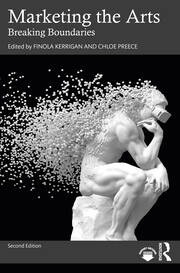
Marketing the Arts : Breaking Boundaries
"The importance of arts consumption and its socio-cultural, political, and economic dimensions / The impact of new technologies, platforms, and alternative artforms on the art market / The importance of the aesthetic experience itself and how to research it / The value of arts-based methods / The art versus commerce debate / The artist as entrepreneur / The role of the arts marketer as market-maker"

Managing Nano-Bio-Info-Cogno Innovations : Converging Technologies in Society
Tremendous human progress is becoming possible through the development of converging technologies stimulated by advances in four core fields: Nanotechnology, Biotechnology Information technology, and new technologies based in Cognitive science (NBIC). This book provides a unique review of technical developments related to the unification that is rapidly taking place today among these fields.

Mammalian and Avian Transgenesis : New Approaches
Mammalian and Avian Transgenesis presents a collection of novel methods for the production of a wide range of transgenic animals. The manual focuses largely on mice, but also contains protocols for successful transgenesis in rats, cows, pigs and birds. The manual provides detailed, step-by-step protocols covering all aspects of the production of transgenic animals, including the use of lentiviral vectors in gene transfer, intracytoplasmic sperm injection, nuclear transfer, large insert transgenesis, conditional gene expression systems, the use of reporter genes in transgenesis and transgenesis in large animals and birds. The text is supplemented by superb color photos. While the focus is on newly established techniques, the fundamental methods of transgenesis are also covered for those new to the field. Thus this manual is perfectly suited for those wishing to adopt new technologies in transgenesis.

Magnesium
Until recently the physiological role of magnesium was essentially ignored. However, with the development of new technologies to measure the intracellular free concentration of magnesium ([Mg2+]i), the biologically important fraction, there has been an explosion of interest in the molecular, biochemical, physiological and pharmacological functions of magnesium. In addition improved methods for assessing magnesium status in the clinic have contributed to the further understanding of magnesium regulation in health and disease...
Leading Pharmaceutical Innovation : Trends and Drivers for Growth in the Pharmaceutical Industry
Pharmaceutical giants have doubled their investments in drug development in the past decade only to see new drug approvals remain constant. This book investigates and highlights a set of proactive strategies aimed at generating sustainable competitive advantage based on value-generating business practices. We focus on three sources of pharmaceutical innovation: new management methods in the drug development pipeline, new technologies as enablers for cutting-edge R&D, and new forms of cooperation and internationalization, such as open innovation in the early phases of R&D. Our findings are illustrated by cases from Europe, the US, and Asia.

Laser Dermatology
The continual array of laser technology throughout the world has been nothing short of miraculous. Over the last fifteen years, this field has continued to grow and expand with new technologies. This book represents the most up to date description of the latest in laser and light source technology.

Circular entrepreneurship : Creating responsible enterprise
Investigation reveals enterprises small and large delivering a stimulating message, from changes in entrepreneurial mindsets to the inclusive use of new technologies and a push for innovation. Zucchella and Urban explore the novel concept of circular enterprise, showing how, with their capacity to innovate, these firms are becoming the most powerful actors of a new, sustainable social order.

Cardiovascular research : New technologies, methods, and applications
Cardiovascular Research: New Technologies, Methods & Applications serves as an essential reference material offering a complete overview of innovative new technologies, methods, and applications in current cardiovascular research. Cardiovascular Research: New Technologies, Methods & Applications presents a methods and applications approach to cardiovascular research written by prominent international researchers presenting commissioned summaries of cutting edge research.

Botrytis : Biology, Pathology and Control
The book is the result of intensive work of 43 authors, all of them leading scientists in the Botrytis sciences. New technologies have arisen that when applied to long-standing problems or to test new hypotheses have been most rewarding and many of these are covered in this book.
Blockchain, artificial intelligence and financial services : Implications and applications for finance and accounting professionals
Blockchain technology and artificial intelligence (AI) have the potential to transform how the accounting and financial services industries engage with the business, stakeholder and consumer communities. Presenting a blend of technical analysis with current and future applications, this book provides professionals with an action plan to embrace and move forward with these new technologies in financial and accounting organizations.
Biometric systems : Technology, design and performance evaluation
The use of computers to recognize humans from physical and behavioral traits dates back to the digital computer evolution of the 1960s. But even after decades of research and hundreds of major deployments, the field of biometrics remains fresh and exciting as new technologies are developed andoldtechnologiesareimprovedandfieldedinnewapplications.Wor- wide over the past few years,there has been a marked increase in both g- ernment and private sector interest in large-scale biometric deployments for accelerating human–machine processes, efficiently delivering human services, fighting identity fraud and even combating terrorism. The p- pose of this book is to explore the current state of the art in biometrics- tems and it is the system aspect that we have wished to emphasize. By their nature, biometric technologies sit at the exact boundary of the human–machineinterface.Butlikealltechnologies,bythemselvestheycan provide no value until deployed in a system with support hardware, n- work connections, computers, policies and procedures, all tuned together to work withpeople to improve some real business process within a social structure.
Bioimaging in Neurodegeneration
offers both the physician and researcher a critical survey of the best new technologies for studying neurodegeneration, as well as describing their optimal use in the diagnosis and treatment of specific neurodegenerative diseases

Atlas of electroanatomic mapping in supraventricular arrhythmias
For decades clinical electrophysiology has been considered a discipline for adepts, able to interpret not so obvious intracardiac signals. With the advent of new technologies, offering a three-dimensional reconstruction of cardiac anatomy and generating colour-coded maps, the approach to the complex world of electrophysiology is changing: A three-dimensional colour-coded electroanatomic map of a left atrium could be a precise and self-explanatory representation based on intracavitary signals, on which correct diagnosis is made and successul ablation is performed. As expected, this makes the difference especially in cases exhibiting complex arrhythmias (atypical atrial flutters, postsurgical arrhythmias), in which the task could be really tough.
Assistive technologies, robotics, and automated machines in the health domain
The field of healthcare is constantly evolving and advancing with new technologies and innovations. Among these, assistive technologies, robotics, and automated machines are rapidly gaining ground as powerful tools to improve the quality of care and enhance patient outcomes. From wearable devices that monitor vital signs to surgical robots that assist in complex procedures, these technologies have the potential to revolutionize the way we deliver healthcare. The development and the integration of assistive technologies, care robots, and automated machines are strategic both as single components, when paired together, and when interconnected in the health domain.This reprint explores the latest developments in assistive technologies, robotics, and automated machines in the health domain, providing a comprehensive overview of their applications and potential impact. The reprint is for the benefit of healthcare professionals, researchers, engineers, and students interested in these rapidly evolving fields.

Agent-oriented information systems II ; 6th International bi-conference workshop, AOIS 2004, Riga, Latvia, June 8, 2004 and New York, NY, USA, July 20, 2004, revised selected papers
Information systems have become the backbone of all kinds of organizations - day. In almost every sector – manufacturing, education, health care, government and businesses large and small – information systems are relied upon for - eryday work, communication, information gathering and decision-making. Yet, the in?exibilities in current technologies and methods have also resulted in poor performance, incompatibilities and obstacles to change. As many organizations are reinventing themselves to meet the challenges of global competition and e-commerce, there is increasing pressure to develop and deploy new technologies that are ?exible, robust and responsive to rapid and unexpected change. Agent concepts hold great promise for responding to the new realities of - formation systems. They o?er higher-level abstractions and mechanisms which address issues such as knowledge representation and reasoning, communication, coordination, cooperation among heterogeneous and autonomous parties, p- ception, commitments, goals, beliefs, intentions, etc., all of which need conc- tual modelling. On the one hand, the concrete implementation of these concepts can lead to advanced functionalities.
Agent-mediated electronic commerce VI ; Theories for and engineering of distributed mechanisms and systems, AAMAS 2004 Workshop, Amec 2004, New York, NY, USA, July 19, 2004, revised selected papers
The design of intelligent trading agents, mechanisms, and systems has receivedgrowing atttention in the agents and multiagent systems communities in aneffort to address the increasing costs of search, transaction, and coordinationwhich follows from the increasing number of Internet-enabled distibuted elec-tronic markets. Furthermore, new technologies and supporting business modelsare resulting in a growing volume of open and horizontally integrated markets fortrading of an increasingly diverse set of goods and services. However, growth oftechnologies for such markets requires innovative solutions to a diverse set of ex-isting and novel technical problems which we are only beginning to understand.Specifically, distributed markets present not only traditional
