



الصفحة 3
الصفحة 3

Molecular Building Blocks for Nanotechnology : From Diamondoids to Nanoscale Materials and Applications
This book contains a variety of subjects covering computational, dry and wet nanotechnology. The state-of-the-art subject matters presented here provide the reader with the latest developments on ongoing nanoscience and nanotechnology research from the bottom-up approach.

Molecular Biology of Human Cancers: An Advanced Student's Textbook
Presents many of the molecules and mechanisms generally important in human cancers. Following an overview on the cancer problem, individual chapters deal with cancer genetics and epigenetics, DNA damage and repair, oncogenes, tumor suppressors, regulatory pathways in cancer, apoptosis, cellular senescence, tumor invasion, and metastasis. A consensus is emerging that while these common mechanisms and molecules are all relevant to human cancers, in each cancer type (or even subtype) a selection of them are extremely important. For selected cancers, the route from genetic and epigenetic changes to their biological and clinical behavior can already be traced. Part II of the book presents a broad, but exemplary selection of cancers that serve as paradigms to illustrate this point. In fact, cancer research has now reached a critical stage, in which the accumulated knowledge on molecular mechanisms is gradually translated into improved prevention, diagnosis, and treatment. The state, pitfalls, and potential of these efforts are summarized in Part III. More than ever, cancer research is now an interdisciplinary effort which requires a basic knowledge of commonly used terms, facts, issues, and concepts. The aim of this book is to provide advanced students and practitioners of different disciplines with this basis, bridging the gap between standard textbooks of molecular biology, pathology, and oncology on the one hand and the specialized cancer literature on the other.
Molecular Beams in Physics and Chemistry : From Otto Stern's Pioneering Exploits to Present-Day Feats
This book gives a comprehensive account of both the history and current achievements of molecular beam research. In 1919, Otto Stern launched the revolutionary molecular beam technique. This technique made it possible to send atoms and molecules with well-defined momentum through vacuum and to measure with high accuracy the deflections they underwent when acted upon by transversal forces. These measurements revealed unforeseen quantum properties of nuclei, atoms, and molecules that became the basis for our current understanding of quantum matter. This volume shows that many key areas of modern physics and chemistry owe their beginnings to the seminal molecular beam work of Otto Stern and his school. Written by internationally recognized experts, the contributions in this volume will help experienced researchers and incoming graduate students alike to keep abreast of current developments in molecular beam research as well as to appreciate the history and evolution of this powerful method and the knowledge it reveals.

Modern Optical Spectroscopy : With Exercises and Examples from Biophysics and Biochemistry
This textbook offers clear explanations of the theory of optical spectroscopic phenomena and shows how these ideas are used in modern molecular and cellular biophysics and biochemistry. The topics covered include electronic and vibrational absorption, fluorescence, resonance energy transfer, exciton interactions, circular dichroism, coherence and dephasing, ultrafast pump-probe and photon-echo spectroscopy, single-molecule and fluorescence-correlation spectroscopy, Raman scattering, and multiphoton absorption.

Modern Aspects of Electrochemistry ; Vol. 39
This volume of Modern Aspects covers a wide spread of topics presented in an authoritative, informative and instructive manner by some internationally renowned specialists. Professors Politzer and Dr. Murray provide a comprehensive description of the various theoretical treatments of solute-solvent interactions, including ion-solvent interactions. Both continuum and discrete molecular models for the solvent molecules are discussed, including Monte Carlo and molecular dynamics simulations. The advantages and drawbacks of the resulting models and computational approaches are discussed and the impressive progress made in predicting the properties of molecular and ionic solutions is surveyed.

Models, Mysteries, and Magic of Molecules
Molecular behaviour, which is no less than magical, holds the key to the understanding, not only of chemistry, but of all biology and of life itself. It is a mystery why molecular behaviour should remain poorly understood and why the authoritative theories of physics have produced no more than superficial models to elucidate this vital issue. This book explores the common ground to guide chemists, biologists, crystallographers, spectroscopists and theorists into a deeper recognition of their individual relevance towards painting a holistic picture of scientific endeavour. This effort to stimulate interest in multidisciplinary research is rare, if not unique.

Modeling Marvels : Computational Anticipation of Novel Molecules
The aim of this book is to survey a number of chemical compounds that chemists, both theoretical and experimental, find fascinating. Some of these compounds, like planar carbon species or oxirene, offer no obvious practical applications; nitrogen oligomers and polymers, in contrast, have been touted as possible high-energy-density materials. What unites this otherwise eclectic collection is that these substances are unknown and offer a challenge to theory and to synthesis.
Microscopy Techniques
Light Microscopy has returned to fashion through the synergy of green fluorescent protein and a clutch of techniques involving some permutation of lasers, mathematics and acronyms, which offer the prospect of watching biological molecules at work inside living cells. This volume provides an introduction to these techniques … . this volume will be a longer-term reference for anyone who wants to understand how these methods actually work. In this respect it is excellent.

Micronutrients and macronutrients as nutraceuticals
Explains in detail the properties of micronutrients and macronutrients and their diverse uses as nutraceuticals for their beneficial properties, such as their antioxidant activity and immunity-boosting properties and how they can be incorporated into the human diet for optimum health, for growing beneficial bacteria in the gut, and inhibition of pathogens. Interestingly, the authors look at how disease-promoting habits often unfold in childhood, even prenatally, and employing nutrigenomics early on goes a long way toward curbing these chronic diseases later on in life.

Microlithography/Molecular Imprinting
The series presents critical reviews of the present and future trends in polymer and biopolymer science including chemistry, physical chemistry, physics and material science. It is addressed to all scientists at universities and in industry who wish to keep abreast of advances in the topics covered.Molecular recognition is central to how biological systems work. The molecular imprinting technique is a valuable polymerisation method for preparing synthetic materials able to mimic the molecular recognition phenomena present in living systems. A molecule that acts as a template is associated with functional monomers to form a complex by means of covalent linkages or noncovalent interactions. A polymerisation-crosslinking reaction is then performed around this complex. Upon removal of the template species, functionalised cavities, that have memorized the special features and bonding preferences of the template, are left inside the polymer network.

Microbial bioprocessing of agri-food wastes : food ingredients
Food ingredients are important molecules of the most diverse chemical classes responsible for conferring nutrition, stability, color, flavor, rheological and sensorial characteristics, in addition to several other important uses in the food industry. In this way, the production routes of these ingredients have gained more and more attention from consumers and producing industries, who expect that, in addition to their technological properties, these ingredients are still obtained without synthetic means, with savings of natural resources and mainly with less environmental impact.

Metal-containing molecules and nanomaterials : from diagnosis to therapy
Since the discovery and successful deployment of salvarsan to treat syphilis, as well as cisplatin as a cancer drug, the field of metallodrugs has been flourishing. In addition to therapeutic applications, metals and metal-containing molecules have properties, such as an electrochemical or an optical signal, used to diagnose biologically relevant molecules or unravel cellular metabolism. Metals are part of the essential elements for life, and of increased attention in nutraceuticals. Most of the current diagnosis processes, therapeutics and nutraceuticals are based on organic molecules. MILS-26 reviews the most recent metal-containing molecules and nanomaterials for diagnosis and therapy

Messenger RNA therapeutics
Focuses on the fundamentals and applications of messenger RNA (mRNA)-based therapeutics and discusses the strengths and key challenges of this emerging class of drugs. In the past 30 years, extensive research and technological development in many areas have contributed to the emergence of in vitro transcribed mRNA as a therapeutic that has now reached clinical testing. Formulations that protect the mRNA from nucleases and accelerate its cellular uptake, combined with improvements to the mRNA molecules themselves, have been critical advancements for mRNAs to become viable therapeutics. Though once regarded as a serious impediment, the transient nature of mRNA technology is now considered a major advantage in making mRNA therapies safe and, ultimately, a potential game changer in the field of medicine. This new book in the RNA Technologies series provides a state-of-the-art overview on the emerging field of mRNA therapeutics covering essential strategies for formulation, delivery, and application. It also reviews the promising role in cancer immunotherapy, respiratory diseases, and chronic HBV infection and discusses RNA vaccines in light of the current COVID-19 pandemic. mRNA-based approaches have great potential to revolutionize molecular biology, cell biology, biomedical research, and medicine.

Memories : Molecules and Circuits
This volume surveys the recent advances and provides an integrative view of molecular, cellular, and systems level mechanisms underlying cognitive processes in both animals and humans. Current state of the art and future avenues are discussed by distinguished scientists who provide not only an overview of the underlying neurobiology of cognitive processes from a basic science standpoint, but who also focus on clinical and therapeutic aspects surrounding impairments associated with disorders that affect cognition.

Medicinal plants and antimicrobial therapies
Serves as an excellent comprehensive material covering the current understandings and updates on antimicrobial resistance (AMR) and the use of medicinal plant resources for tackling it. Chapters cover important aspects of AMR and strategies to address this threatening issue with medicinal plants and their resources. One health perspectives for addressing AMR have been presented for the readers. Antimicrobial medicinal plant therapeutic resources including crude extracts, active fractions, pure molecules and essential oils, besides using them as functionalizing agents for nano-antimicrobials have been covered. Further, plant endophytes as a source of antimicrobial compounds have been discussed. Chapters cover both the bactericidal as well as resistance-reversal (or potentiating/ combinatorial therapies) potencies of medicinal plant resources. The book also focuses on how medicinal plant resources effectively target major determinants of AMR.

Medicinal compounds in modern healthcare : From tradition to innovation
Reviews the evolution, development, and application of medicinal compounds, beginning with their historical context and advancing to modern innovations. The book describes the therapeutic potential of bioactive compounds from microorganisms, the role of antioxidants and anti-inflammatory agents in managing chronic diseases, and the use of small molecules in pain management and mental healthcare. It further explores immunomodulatory compounds, epigenetic modifiers, and the latest advancements in drug development, including integrative medicine approaches and the applications of nanotechnology in traditional medicine. Additionally, the book addresses the use of immunomodulatory agents like methotrexate and paclitaxel in cancer treatment, regulatory considerations for ensuring safety and efficacy in medicinal compounds, and the growing field of nutraceuticals. Towards the end, the book covers the extraction, profiling, and ADMET evaluation of medicinal compounds, intellectual property challenges, and the significance of traditional medicine in modern healthcare.
Medicinal Chemistry and Pharmacological Potential of Fullerenes and Carbon Nanotubes
Medicinal Chemistry and Pharmacological Potential of Fullerenes and Carbon Nanotubes features important insights into the applications of fullerenes and carbon nanotubes. It discusses the fullerene and nanotubes derivatives which are effective against viruses, cells, and bacteria and those which are able to interact and inhibit certain enzymes. Also covered in this book are the formation of complex structures between biologically active molecules and carbon materials. Furthermore, the application of fullerenes in certain medical therapies is explored, including the very recent discovery of new bio-compatible media which could be used as carriers in the delivery of fullerenes in vivo. An additional topic of this text is the formation of hybrids between nanotubes and biological molecules and their use as chemical sensors.

Introduction to Ion Beam Biotechnology
It presents treatment of modern ion beam biotechnology and with respect to applications of ion beam bombardment of living cellular material in the hybrid field of ion beam physics and biology.Key Topics include: – Ion beam formation – Ion implantation fundamentals – Interaction between energetic ions and biological organisms – Reaction processes of ion implanted biological small molecules – Damage and repair of ion-bombarded DNA – Cell damage due to ion bombardment – Biological effects of ion implantation – Fundamentals of ion-bombardment-induced genetic variation – Ion beam mutation breeding of crops – Ion beam mutation breeding of microbes – Ion beam induced gene transfer – Ion beam induced synthesis of organic molecules – Single-ion bombardment mutation of cells
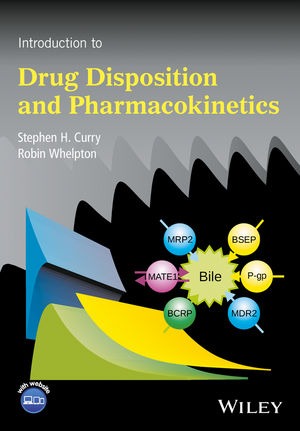
Introduction to Drug Disposition and Pharmacokinetics
The application of knowledge of drug disposition, and skills in pharmacokinetics, are crucial to the development of new drugs and to a better understanding of how to achieve maximum benefit from existing ones. The book takes the reader from basic concepts to a point where those who wish to will be able to perform pharmacokinetic calculations and be ready to read more advanced texts and research papers.

Introduction to biologic and biosimilar product development and analysis
Gives a concise introduction to development and analysis of pharmaceutical biologics for those in the pharmaceutical industry who are switching focus from small molecules to biologics processing, analysis, and delivery. In order to maintain a limited focus, Introduction to Biologic and Biosimilar Product Development and Analysis, will deal only with peptides, proteins and monoclonal antibodies.
