



الصفحة 3
الصفحة 3

Fundamentals of Semiconductors : Physics and Materials Properties
This third updated edition of Fundamentals of Semiconductors attempts to fill the gap between a general solid-state physics textbook and research articles by providing detailed explanations of the electronic, vibrational, transport, and optical properties of semiconductors. The approach is physical and intuitive rather than formal and pedantic. Theories are presented to explain experimental results. This textbook has been written with both students and researchers in mind. Its emphasis is on understanding the physical properties of Si and similar tetrahedrally coordinated semiconductors. The explanations are based on physical insights. Each chapter is enriched by an extensive collection of tables of material parameters, figures, and problems. Many of these problems "lead the student by the hand" to arrive at the results.

Functional ultrastructure: Atlas of tissue biology and pathology
The quality of data represented by the a growing tendency to substitute modern light mic- images of cells and tissues had been perfected to a very scopic techniques for electron microscopy because it is high level by the great microscopists of the era including less technically demanding and is more readily available. This atlas reminds us that the images that we see in leading tion obtained by electron microscopy is invaluable and journals for the most part do not reach the same techni- has no substitute.

Freedom and Value : Freedom’s Influence on Welfare and Worldly Value
Freedom of the sort implicated in acting freely or with free will is important to the truth of different sorts of moral judgment, such as judgments of moral responsibility and those of moral obligation. Little thought, however, has been invested into whether appraisals of good or evil presuppose free will. The central aim of this book is to dispute this assumption by arguing for the relevance of free will to the truth of two sorts of such judgment: welfare-ranking judgments or judgments of personal well-being (when is one's life intrinsically good for the one who lives it?), and world-ranking judgments (when is a possible world intrinsically better than another?). The book also examines free will’s impact on the truth of such judgments for central issues in moral obligation and in the free will debate.

Framing in Sustainability Science : Theoretical and Practical Approaches
This book offers both conceptual and empirical descriptions of how to “frame” sustainability challenges. It defines “framing” in the context of sustainability science as the process of identifying subjects, setting boundaries, and defining problems. The chapters are grouped into two sections: a conceptual section and a case section.

Forming the mind : Essays on the internal senses and the Mind/Body problem from avicenna to the medical enlightenment
The book collects essays from some of the foremost scholars in a relatively new and very promising field of research. It stresses how important and fruitful it is to see the time period between 1100 and 1700 as one continuous tradition, and brings together scholars working on the same issues in the Arabic, Jewish and Western philosophical traditions. In this respect, this collection opens up several new and interesting perspectives on the history of the philosophy of mind.
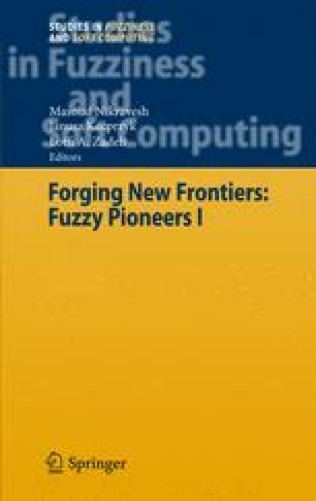
Forging New Frontiers : Fuzzy Pioneers I
The 2005 BISC International Special Event-BISCSE’05 " FORGING THE FRONTIERS" was held in the University of California, Berkeley, “WHERE FUZZY LOGIC BEGAN, from November 3 – 6, 2005. The successful applications of fuzzy logic and it’s rapid growth suggest that the impact of fuzzy logic will be felt increasingly in coming years. Fuzzy logic is likely to play an especially important role in science and engineering, but eventually its influence may extend much farther. In many ways, fuzzy logic represents a significant paradigm shift in the aims of computing - a shift which reflects the fact that the human mind, unlike present day computers, possesses a remarkable ability to store and process information which is pervasively imprecise, uncertain and lacking in categoricity.

Folk Psychology Re-Assessed
FOLK PSYCHOLOGY, THEORY OF MIND AND SIMULATION The tasks we face in our day to day social lives are quite heterogeneous but many of them make a common demand upon us. They require us to understand and interact with other people and, in most social encounters, we exhibit a special sensitivity to our fellow human beings that is quite different from the way we respond to inanimate objects and most other species of organism. Social life is dependent, to a considerable degree, on our ability to understand what is distinctive about human behaviour and to successfully apply that understanding in all manner of situations.

Failure case studies steel structures
Supplies a summary of the published findings from eight steel structure failure investigations and a valuable collection of references that can be used by civil engineering students and practicing engineers to improve their failure literacy. Engineering professors and students can use these case studies as the basis for class discussions, a starting point for further research, and a reminder that learning from past failures can avoid similar failures in the future and lead to improved engineering practices.

Fading Foundations : Probability and the Regress Problem
This book addresses the age-old problem of infinite regresses in epistemology. How can we ever come to know something if knowing requires having good reasons, and reasons can only be good if they are backed by good reasons in turn? The problem has puzzled philosophers ever since antiquity, giving rise to what is often called Agrippa's Trilemma. The current volume approaches the old problem in a provocative and thoroughly contemporary way. Taking seriously the idea that good reasons are typically probabilistic in character, it develops and defends a new solution that challenges venerable philosophical intuitions and explains why they were mistakenly held. Key to the new solution is the phenomenon of fading foundations, according to which distant reasons are less important than those that are nearby.

Facelets Essentials : Guide to JavaServer™ Faces View Definition Framework
Facelets is a templating language developed from the ground up with JavaServer Faces in mind. Created in response to the many concerns involving JavaServer Pages (JSP) when building JavaServer Faces (JSF) views, Facelets steps outside of the JSP specification and provides a highly performant, JSF–centric view technology. Facelets' top properties, templating, reuse, and ease of development, allow it to help making JSF a technology suitable for large–scale projects. One of the first things a developer using Facelets finds is that it immediately leads to a reduction in user interface code.

Extreme NXT : Extending the LEGO MINDSTORMS NXT to the Next Level
Extreme NXT: Extending the LEGO MIDSTORMS NXT to the Next Level is for intermediate-level users of NXT who would like to advance their capabilities by learning some of the basics of electronics. Plenty of examples are provided, and easy-to-follow instructions are included for building over 15 different sensors.

Exogenous and endogenous factors affecting happiness, happy mind, happy life
Emotions are the language of the soul. Our brain is the emotional center where every emotion is produced including happiness. Happiness underlying factors are considerable from two dimensions: endogenous factors and exogenous factors Therefore, this research aimed to consider biological factors that underlie happiness. The research is divided into several sub-groups (brain, genetics, neurotransmitters, endocrinology, hormones, drugs, diseases, and other exogenous factors). In spite of difficulties in finding special genes, several genes distributed to emotion and mood. Neuroscience studies showed that some part of brain (e.g. amygdala, hipocamp and limbic system) and neurotransmitters (e.g. dopamine, serotonin, norepinefrine and endorphin) play a role in control of happiness. A few studies pointed to the role of cortisol and adrenaline (adrenal gland) and oxitocin (pituitary gland) in controlling happiness.

Evolutionary Stasis and Change in the Dominican Republic Neogene
In practice, however, science is no less susceptible to fads, culture shifts, and pendulum swings than any other realm of human endeavor. This is an especially important feature of science to keep in mind in the present climate of shrinking government funding (at least in prop- tion to the demand) and the resulting susceptibility of individual scientists and entire disciplines to being influenced by the changing priorities of funding agencies (even if, as such agencies maintain, those priorities come ultimately “from the c- munity”). The present volume is in several important respects a testimonial to both the threats and opportunities that such scientific culture swings pose, both for the individual researcher and a wider field. When scientific research in the Dominican Republic Neogene began more than a century ago, paleontology was an essentially descriptive discipline, focused mainly on finding, describing, and documenting the taxa represented in the fossil record, and (especially in invertebrate paleontology) on using these taxa for bi- tratigraphic correlation.

Evolutionary Epistemology, Language and Culture : A Non-Adaptationist, Systems Theoretical Approach
Today we know that natural selection and evolution are far from synonymous and that they do not explain isomorphic phenomena in the world. ‘Taking Darwin seriously’ is the way to go, but today the time has come to take alternative and complementary theories that developed after the Modern Synthesis, equally seriously, and, furthermore, to examine how language and culture can merit from these diverse disciplines.As this volume will make clear, a specific inter- and transdisciplinary approach is one of the next crucial steps that needs to be taken, if we ever want to unravel the secrets of phenomena such as language and culture.

European citizenship after Brexit : Freedom of movement and rights of residence
This book investigates European citizenship after Brexit, in light of the functionalist theory of citizenship. No matter its shape, Brexit will impact significantly on what has been labelled as one of the major achievements of EU integration: Citizenship of the Union. For the first time an automatic and collective lapse of status is observed. It is a form of involuntary loss of citizenship en masse, imposed by the automatic workings of the law on EU citizens of exclusively British nationality. It does not however create statelessness and it is likely to be tolerated under international law. This loss of citizenship is connected to a reduction of rights, affecting not solely the former Union citizens but also second country nationals in the United Kingdom and their family members.

Esthetics in function : Integrating occlusal principles into smile design
Clearly depicts Dr. Calamita’s mindset and broad-based treatment philosophy that includes strong interpersonal communications skills, a deep sensitivity to patient needs, and the ability to provide the necessary emotional support, all of which are essential but often missing components in achieving overall treatment success.

Essays and Surveys in Global Optimization
Global optimization aims at solving the most general problems of deterministic mathematical programming: to find the global optimum of a nonlinear, nonconvex, multivariate function of continuous and/or integer variables subject to constraints which may be themselves nonlinear and nonconvex. In addition, once the solutions are found, proof of its optimality is also expected from this methodology. Therefore, with these difficulties in mind, global optimization is becoming an increasingly powerful and important methodology. Essays and Surveys in Global Optimization is the most recent examination of its mathematical capability, power, and wide ranging solutions to many fields in the applied sciences.

Environments for Multi-Agent Systems ; 1st International Workshop, E4MAS, 2004, New York, NY, July 19, 2004, Revised Selected Papers
The modern ?eld of multiagent systems has developed from two main lines of earlier research. Its practitioners generally regard it as a form of arti?cial intelligence (AI). Some of its earliest work was reported in a series of workshops in the US dating from1980,revealinglyentitled,“DistributedArti?cialIntelligence,”andpioneers often quoted a statement attributed to Nils Nilsson that “all AI is distributed. ” The locus of classical AI was what happens in the head of a single agent, and much MAS research re?ects this heritage with its emphasis on detailed modeling of the mental state and processes of individual agents. From this perspective, intelligenceisultimatelythepurviewofasinglemind,thoughitcanbeampli?ed by appropriate interactions with other minds. These interactions are typically mediated by structured protocols of various sorts, modeled on human conver- tional behavior. But the modern ?eld of MAS was not born of a single parent. A few - searchershavepersistentlyadvocatedideasfromthe?eldofarti?ciallife(ALife). These scientists were impressed by the complex adaptive behaviors of commu- ties of animals (often extremely simple animals, such as insects or even micro- ganisms). The computational models on which they drew were often created by biologists who used them not to solve practical engineering problems but to test their hypotheses about the mechanisms used by natural systems. In the ar- ?cial life model, intelligence need not reside in a single agent, but emerges at the level of the community from the nonlinear interactions among agents. - cause the individual agents are often subcognitive, their interactions cannot be modeled by protocols that presume linguistic competence.

Environmental security and environmental management : The role of risk assessment ; Proceedings of the NATO Advanced Research Workhop on The Role of Risk Assessment in Environmental Security and Emergency Preparedness in the Mediterranean Region, held in Eilat, Israel, April 15-18, 2004
The concept of “environmental security” has emerged as one basis for understanding international conflicts. This phrase can mean a variety of things. It can signify security issues stemming from environmental concerns or conflicting needs, or it can mean that the environment is treated as a resource for the long term, and the question is what should be done today to preserve the quality of the environment in the future. In the same way that energy security is about ensuring access to energy for the long run, it can also mean that pressing environmental concerns create a situation where different countries and communities are forced to collaboratively design a unified response, even if cooperation is not generally in the logic of their relations. Over the last several years, the authors of this book and their colleagues have tried to demonstrate the power of risk assessment and decision analysis as valuable tools that decision makers should use for a broad range of environmental problems, including environmental security. Risk analysis is almost more a state of mind or a way of looking at problems than it is a kind of algorithm or a set of recipes. It projects a kind of rationality on problems and forces a certain degree of quantitative rigor, as opposed to the all too common tendency of making environmental recommendations based on anecdotal evidence.

Entrepreneurial cognition : Exploring the mindset of entrepreneurs
This open access book investigates the inter-relationship between the mind and a potential opportunity to explore the psychology of entrepreneurship. Building on recent research, this book offers a broad scope investigation of the different aspects of what goes on in the mind of the (potential) entrepreneur as he or she considers the pursuit of a potential opportunity, the creation of a new organization, and/or the selection of an entrepreneurial career. This book focuses on individuals as the level of analysis and explores the impact of the organization and the environment only inasmuch as they impact the individual’s cognitions. Readers will learn why some individuals and managers are able to able to identify and successfully act upon opportunities in uncertain environments while others are not. This book applies a cognitive lens to understand individuals’ knowledge, motivation, attention, identity, and emotions in the entrepreneurial process.
