



الصفحة 3
الصفحة 3

Drugs and nutrients : The interactive effects
Devoted to the effects of food and of nutrient intake on the disposition of foreign compounds, and discusses effects of drugs on nutrition. It is intended for nutritionists and clinical investigators concerned with interpretation of aberrant effects of therapeutic drugs.

Drug target selection and validation
Focuses on the computational aspects of early drug discovery, drug target identification, and validation. It revises current classical paradigms in target and phenotypic-based drug design with still ingrained approximations and concepts and discusses the research in the new network approach concept that include kinetic selectivity and metabolic analysis. Many often-overlooked approximations and concepts in drug discovery are fully covered. Drug Target Selection and Validation includes both introductory sections and research-based sections to be of use to both students and research scientists in drug discovery, design, kinetics and metabolic analysis. Pharmaceutical scientists, pharmaceutics, drug developers, pharmacologists, biomedical researchers in computer science, medicinal chemists, and precision medicine developers benefit from the information provided. The book concludes with a chapter on chemical and structural databases.

Drug safety evaluation
Presents an all-inclusive practical guide for those who are responsible for developing new drugs and ensuring the safety of an ever-expanding spectrum of therapeutics. This book helps readers understand how the safety of these products are evaluated for use. Extensively revised to reflect up-to-date information, this edition includes changes to the scope of products (vaccines, small synthetic, large protein moieties, cells and tissues), harmonized global and national regulatory requirements, the therapeutic development process, and available technologies to identify and evaluate the relevance of potential patient risks

Drug Metabolism: Current Concepts
The user-friendly text focuses on concepts rather than extraneous details and is supported by many illustrated examples of biotransformations as well as frequent references to current critical reviews and articles highlighting the nature of research objectives in this vibrant area of medicinal development.

Drug Metabolism, Pharmacokinetics and Bioanalysis
Drug metabolism/pharmacokinetics and drug interaction studies have been extensively carried out in order to secure the druggability and safety of new chemical entities throughout the development of new drugs. Recently, drug metabolism and transport by phase II drug metabolizing enzymes and drug transporters, respectively, as well as phase I drug metabolizing enzymes, have been studied. A combination of biochemical advances in the function and regulation of drug metabolizing enzymes and automated analytical technologies are revolutionizing drug metabolism research. There are also potential drug-drug interactions with co-administered drugs due to inhibition and/or induction of drug metabolic enzymes and drug transporters.

Drug disposition and pharmacokinetics : Principles and applications for medicine, toxicology and biotechnology
Delivers an authoritative and comprehensive discussion of the fate of drug molecules in the body, as well as its implications for pharmacological and clinical effects. The text offers a unique and balanced approach that combines discussion of the specific physical and biological factors affecting the absorption, distribution, metabolism, and excretion of drugs, with mathematical assessments of plasma and body fluid concentrations. The book assumes little prior knowledge and is an ideal reference for practicing professionals in industry as well as researchers and academics.

Drug discovery and development
Presents up-to-date scientific information for maximizing the ability of a multidisciplinary research team to discover and bring new drugs to the marketplace. It explores many scientific advances in new drug discovery and development for areas such as screening technologies, biotechnology approaches, and evaluation of efficacy and safety of drug candidates through preclinical testing. This book also greatly expands the focus on the clinical pharmacology, regulatory, and business aspects of bringing new drugs to the market and offers coverage of essential topics for companies involved in drug development. Historical perspectives and predicted trends are also provided.

Drug delivery approaches and nanosystems ; Vol.1 : Novel drug carriers
Presents a full picture of the state-of-the-art research and development in drug delivery systems using nanotechnology and its applications. It addresses the ever-expanding application of nanotechnology or nano-sized materials in the medical field and the real-world challenges and complexities of current drug delivery methodologies and techniques.

Drug Delivery Approaches : Perspectives from Pharmacokinetics and Pharmacodynamics
Delivers a thorough discussion of drug delivery options to achieve target profiles and approaches as defined by physical and pharmacokinetic models. The book offers an overview of drug absorption and physiological models, chapters on oral delivery routes with a focus on both PBPK and multiple dosage form options. It also provides an explanation of the pharmacokinetics of the formulation of drugs delivered by systemic transdermal routes.

Drug delivery : An integrated clinical and engineering approach
Offers a much needed comprehensive overview and patient-oriented approach for enhanced drug delivery optimization and advancement. Starting with an introduction to the subject and pharmacokinetics, it explores advances for such topics as oral, gastroretentive, intravitreal, and intrathecal drug delivery, as well as insulin delivery, gene delivery, and biomaterials-based delivery systems. It also describes drug delivery in cancer, cardiac, infectious diseases, airway diseases, and obstetrics and gynecology applications.

Don’t Panic with Mechanics! : Fun and success in the "loser discipline" of engineering studies!
The ultimate companion in the classical horror discipline of engineering science! Contents of the book are the basics of mechanics as treated in engineering and physical sciences: Statics, Elastostatics, Kinematics & Kinetics in unconventional, humorous presentation with many cartoons, funny explanations and a chapter containing several exercises with detailed solutions.

Deoxynucleoside Analogs in Cancer Therapy
Emerging as an important new volume in the renowned Cancer Drug Discovery and Development™ series, Deoxynucleoside Analogs in Cancer Therapy expertly summarizes the current status of development and application of deoxynucleoside analogs. Authoritative up-to-date reviews are presented by scientists well known in their specific areas and all contributions include valuable sound advice on structure and topics. Organized into several sections, the first part covers general aspects of drug uptake and metabolism and explains how novel technology has enabled a rapid expansion of this field. The second part is concerned with a number of specific drugs including cytarabine, gemcitabine, troxacitabine, clofarabine and Ara-G. The final section covers pharmacokinetics, prodrugs, and specific applications such as radiosensitization, gene therapy, and the use of deoxynucleoside analogs as tracers

Current Developments in Solid-state Fermentation
Over the period of last two decades, there has been significant resurgence in solid-state fermentation due to the numerous benefits it offers, especially in the engineering and environmental aspects. SSF has shown much promise in the development of several bioprocesses and products. This resurgence gained further momentum during the last 5-6 years with the developments in fundamental and applied aspects. A good deal of information has been generated in published literature and patented information. Several commercial ventures have come up based on SSF in different parts of the world. The contents are organized into four parts: Part 1 deals with the General and Fundamentals aspects of SSF; Part 2 deals with the production of bulk chemicals and products such as enzymes, organic acids, spores and mushrooms in SSF; Part 3 is on the use of SSF for specialty chemicals such as gibberellic acid, antibiotics and other pharmaceutically valuable secondary metabolites, pigments, and aroma compounds; Part 4 deals with the use of SSF miscellaneous application such as SSF for food and feed applications, agro-industrial residues as substrates in SSF and the production of silage and vermicompost.

Curcumin : clinical uses, health effects and potential complications
Curcumin is a natural product with polyphenolic structure. It is used in therapeutic remedies alone or in combination with other natural substances. Many researchers are investigating it because of its biological activities such as: anti-inflammatory, anti-cancer, anti-protozoal, anti-viral, anti-bacterial and has been found to be effective for treatment of Alzheimer, depression, headaches, fibromyalgia, leprosy, fever, menstrual problems, water retention, worms and kidney problems etc. It is an active ingredient in dietary spice, turmeric. It has reactive functional groups: a diketone moiety and two phenolic groups. Despite its unique biological activities, it suffers from some shortcomings which include: gastrointestinal problems, poor bioavailability due to its poor absorption, short half-life, poor solubility in aqueous solutions, rapid systemic elimination and antithrombotic activity which can interfere with blood clotting. The first chapter of this book reviews the different delivery systems used for incorporation of curcumin and its derivatives, release kinetics and up to date in vivo results. Chapter two discusses curcumin nano and microencapsulation and its implications on clinical uses.

Control Theory in Physics and other Fields of Science : Concepts, Tools, and Applications
This book covers systematically and in a simple language the mathematical and physical foundations of controlling deterministic and stochastic evolutionary processes in systems with a high degree of complexity. Strong emphasis is placed on concepts, methods and techniques for modelling, assessment and the solution or estimation of control problems in an attempt to understand the large variability of these problems in several branches of physics, chemistry and biology as well as in technology and economics. The main focus of the book is on a clear physical and mathematical understanding of the dynamics and kinetics behind several kinds of control problems and their relation to self-organizing principles in complex systems. The book is a modern introduction and a helpful tool for researchers, engineers as well as post-docs and graduate students interested in an application oriented control theory and related topics.

Computer Aided Pharmaceutics and Drug Delivery : An Application Guide for Students and Researchers of Pharmaceutical Sciences
Examines the role of computer-assisted techniques for discovering, designing, optimizing and manufacturing new, effective, and safe pharmaceutical formulations and drug delivery systems. The book discusses computational approaches, statistical modeling and molecular modeling for the development and safe delivery of drugs in humans. The application of concepts of QbD (Quality by Design), DoE (Design of Experiments), artificial intelligence and in silico pharmacokinetic assessment/simulation have been made a lot easier with the help of commercial software and expert systems. This title provides in-depth knowledge of such useful software with illustrations from the latest researches. The book also fills in the gap between pharmaceutics and molecular modeling at micro, meso and maro scale by covering topics such as advancements in computer-aided Drug Design (CADD), drug-polymer interactions in drug delivery systems, molecular modeling of nanoparticles and pharmaceutics/bioinformatics.

Computational drug discovery and design
Provides new and updated methods and techniques for identification of drug target, binding sites prediction, high- throughput virtual screening, lead discovery and optimization, conformational sampling, prediction of pharmacokinetic properties using computer-based methodologies. Chapters also focus on the application of the latest artificial intelligence technologies for computer aided drug discovery.

Columbia : Final Voyage
The author provides a comprehensive and personal look at both the Columbia astronauts and the STS-107 mission, together with a behind-the-scenes account of other people involved in the mission and their personal reactions to the accident.In ‘Columbia: Final Voyage’ aerospace writer Philip Chien, who has over 20 years’ experience covering the US space program, provides a unique insight into the crew members who lost their lives in the Columbia disaster. Chien interviewed all seven crew members several times and got to know them as individuals.

Clinical pharmacy education, practice and research clinical pharmacy, drug information, pharmacovigilance, pharmacoeconomics and clinical research
Stresses educational approaches that empower pharmacists with patient care and research competencies. The learning objectives and writing style of the book focus on clarifying the concepts comprehensively for a pharmacist, from regular patient counseling to pharmacogenomics practice. It covers all interesting topics a pharmacist should know. This book serves as a basis to standardize and coordinate learning to practice, explaining basics and using self-learning strategies through online resources or other advanced texts. With an educational approach, it guides pharmacy students and pharmacists to learn quickly and apply. Clinical Pharmacy Education, Practice and Research provides an essential foundation for pharmacy students and pharmacists globally.
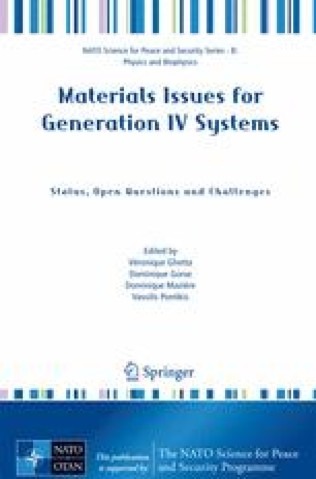
Materials Issues for Generation IV Systems ; Status, Open Questions and Challenges
Global warming, shortage of low-cost oil resources and the increasing demand for energy are currently controlling the world's economic expansion while often opposing desires for sustainable and peaceful development. In this context, atomic energy satisfactorily fulfills the criteria of low carbon gas production and high overall yield. However, in the absence of industrial fast-breeders the use of nuclear fuel is not optimal, and the production of high activity waste materials is at a maximum. These are the principal reasons for the development of a new, fourth generation of nuclear reactors, minimizing the undesirable side-effects of current nuclear energy production technology while increasing yields by increasing operation temperatures and opening the way for the industrial production of hydrogen through the decomposition of water.
