



الصفحة 3
الصفحة 3
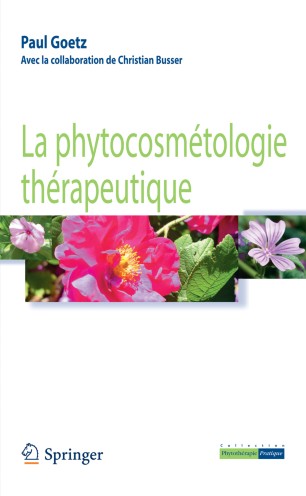
La phytocosmétologie thérapeutique = Herapeutic phytocosmetology
Deals with restorative cosmetology. This is understood through the eyes of the doctor specializing in phytotherapy. Three main aspects are discussed: the diagnosis of disturbance of the skin and integuments, external treatment with natural substances, as well as oral treatment (internal treatment). Oral cosmetology has no official recognition, yet the effects of plant extracts on the condition of the skin and integuments are well known. After an introduction to the physiology of the skin, the dosage and the phenomena of skin deterioration, the author discusses different types of treatment depending on the extracts used while explaining their mode of action. This work was written by a doctor, Doctor Paul Goetz, teacher in clinical phytotherapy, and a pharmacist, Doctor Christian Busser, pharmaceutical and scientific advisor, doctor in ethnology and ethnopharmacologist.
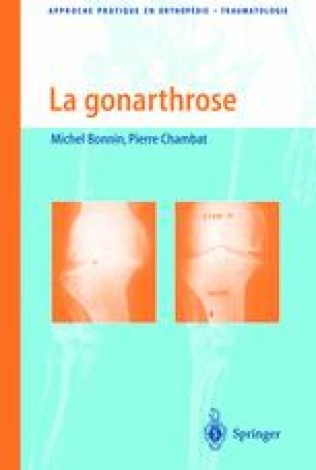
La gonarthrose : Traitement chirurgical : De l´arthroscopie à la prothèse = Knee osteoarthritis : Surgical treatment : from arthroscopy to prosthesis
The aim of this work is to take stock in a clear and didactic way on all the current knowledge on osteoarthritis of the knee and its treatment. It successively addresses the diagnosis and the medical treatment, then the surgical treatments then finally the various aspects of the total knee prosthesis. This book is designed to be read at several levels: basic information is intended particularly for non-specialist or trainee surgeons, rheumatologists, rehabilitation physicians, radiologists and physiotherapists. More specialized aspects are discussed in a second part of the book concerning the future of medical treatment (biology, gene therapy) and certain complex problems of surgical techniques. The points of controversy concerning the total knee replacement are discussed in the last part of the book, of interest to physicians and surgeons.

Knowledge Management for Educational Innovation ; IFIP WG 3.7 7th Conference on Information Technology in Educational Management (ITEM), Hamamatsu, Japan, July 23-26, 2006
The IFIP series publishes state-of-the-art results in the sciences and technologies of information and communication. The principal aim of the IFIP series is to encourage education and the dissemination and exchange of information about all aspects of computing.

ITI treatment guide ; Vol.5 : Sinus floor elevation procedures
Provides clinicians with evidence-based data and practical information relating to sinus floor elevation procedures to ensure adequate bone volume for implant placement. This guide places emphasis on proper case selection based on a comprehensive clinical and radiologic examination of the patient.
Cell-Cell Channels
The biological sciences are dominated by the idea that cells are the functionally autonomous, physically separated, discrete units of life. This concept was propounded in the 19th century by discoveries of the cellular structuring of both plants and animals. Moreover, the ap parent autonomy of unicellular eukaryotes, as well as the cellular basis of the mammalian brain (an organ whose anatomy for a long while defied attempts to validate the idea of the cellular nature of its neurons), seemed to provide the final conclusive evidence for the completeness of *cell theory', a theory which has persisted in an almost dogmatic form up to the present day. However, it is very obvious that there are numerous observations which indicate that it is not the cells which serve as the basic units of biological life but that this property falls to some other, subcellular assemblage. To deal with this intricate problem concerning the fundamental unit of living matter, we proposed the so-called Cell Body concept which, in fact, devel ops an exceedingly original idea proposed by Julius Sachs at the end of the 19th century. In the case of eukaryotic cells, DNA-enriched nuclei are intimately associated with a microtubular cytoskeleton. In this configuration—as a Cell Body—these two items comprise the fundamental functional and struc tural unit of eukaryotic living matter. The Cell Body seems to be inherent to all cells in all organisms.

Cartoony story app = تطبيق قصة كارتونية
The translation of textual narratives into immersive visual representations poses a significant challenge in the field of artificial intelligence. Traditional cartoon generation techniques face formidable technical challenges and require substantial resources. Research efforts towards direct video synthesis from text have encountered obstacles in developing efficient techniques. In parallel, researchers propose an alternative approach involving the generation of dynamic sequences of images portraying children's story narratives. This approach includes applying various visual effects to highlight motion, interaction, and excitement in storytelling. By dynamically generating a sequence of images reflecting the narrative's progression and applying diverse visual effects, this alternative method offers a flexible and practical solution to cartoon generation challenges, providing an efficient and effective experience akin to video while retaining the magical appeal of visual storytelling. ...
Cancer et traitement: Domicile ou hôpital : Le choix du patient = Cancer and treatment : Home or hospital : The patient's choice
This book takes stock of the needs, expectations and challenges of caring for a cancer patient at home or in hospital. Indeed, if the number of cancer cases is increasing in Western countries, their management is evolving. The emphasis today is on a more humane announcement of the disease, less aggressive treatments and a better quality of life. Better informed patients often wish to be treated at home. As the survival time lengthens, hospital stays are reduced and chosen. Home care teams will soon be relying on the hospital more easily, thanks to specific communication methods and care networks. Here, all the stakeholders involved in the psycho-oncological approach to the patient discuss the choice of place and means of treatment for patients: from the general practitioner to the psychologist, from the oncologist to the mobile palliative care unit.

Cancer du sein ; Compte rendu du cours supérieur francophone de cancérologie (Saint-Paul-de-V Vence, ence, 18–20 janvier 2007) = Breast cancer : Proceedings of the French-speaking oncology higher course (Saint-Paul-de-V Vence, ence, 18–20 January 2007)
Durant les deux premières journées, toutes les étapes importantes de la prise en charge des cancers du sein ont été déclinées. L’analyse du risque de voir survenir un cancer du sein a été explorée dans sa diversité suivie par les résultats du dépistage organisé et les problèmes du diagnostic. Les traitements locorégionaux ont précédé les traitements adjuvants sans oublier les patientes dont la tumeur présentait une hyperexpression de HER2. Une session a été consacrée aux cancers métastatiques et une autre aux personnes âgées. Comme à chaque cours, nous nous sommes penchés sur l’avenir en dissertant sur la classification moléculaire et sur le passé avec la très belle conférence du Pr David Khayat sur le bilan du Plan Cancer.
Biomedical Visualisation ; Vol.9
This edited book explores the use of technology to enable us to visualise the life sciences in a more meaningful and engaging way. It will enable those interested in visualisation techniques to gain a better understanding of the applications that can be used in visualisation, imaging and analysis, education, engagement and training. The reader will also be able to learn about the use of visualisation techniques and technologies for the historical and forensic settings.In this volume, there are chapters which examine forensic and historical visualisation techniques and digital reconstruction, ultrasound, virtual learning resources and patient utilised software and hardware. The use of HoloLens as a disruptive technology is discussed as well as historical items as a feature in a modern medical curriculum. It concludes with a fascinating chapter on pulse extraction from facial videos.
Big data-enabled internet of things
Covers analytical techniques for handling the huge amount of data generated by the Internet of Things, from architectures and platforms to security and privacy issues, applications, and challenges as well as future directions. The fields of Big Data and the Internet of Things (IoT) have seen tremendous advances, developments, and growth in recent years. The IoT is the inter-networking of connected smart devices, buildings, vehicles and other items which are embedded with electronics, software, sensors and actuators, and network connectivity that enable these objects to collect and exchange data. The IoT produces a lot of data. Big data describes very large and complex data sets that traditional data processing application software is inadequate to deal with, and the use of analytical methods to extract value from data. This edited book covers analytical techniques for handling the huge amount of data generated by the Internet of Things, from architectures and platforms to security and privacy issues, applications, and challenges as well as future directions.

Basic Guide to Dental Instruments
Provides a working inventory of dental instrumentation in common use in dental surgeries. A clear photograph of each instrument is included, and described according to name, usage, any relevant features and varieties. Each section is dedicated to a specific discipline or division of dentistry. Complete set-ups have been included at the end of most sections for various procedures. The coverage reflects instrumentation and accessory items used in general dental practice, routine hospital dental procedures and selected specialist settings.

Atlas of Non-Invasive Coronary Angiography by Multidetector Computed Tomography
The multidetector CT scanner speeds diagnosis and treatment of patients. One of its many uses is to perform CT coronary angiography. Multidetector CT has generated excitement within the cardiology and radiology community as it provides clear pictures and takes less time than other non-invasive techniques, including conventional spiral and electron-beam CT which can take up to an hour or more. This atlas presents over 160 illustrations, with 116 in color and illustrates the capacity of multidetector CT for the analysis of the anatomy of the coronary arteries.
Approaching consumer culture : Global flows and local contexts
This collection analyzes the impact of Western consumer culture on local cultures and consumption in Southeast Europe and East Asia. Cultural, historical, economic and sociopolitical contexts are examined regarding buying behaviors, usage and customization practices and consumer activism, specifically in Bulgaria, Serbia, and Romania as cultures continue to evolve in the post-socialist era, and in China and Japan as a continuation of movements toward modernity and progress. Surprising and thought-provoking contrasts stand out as consumers balance the global with the local in terms of clothing, technology, luxury items, and food.

Anomaly Detection : Techniques and Applications
When information in the data warehouse is processed, it follows a definite pattern. An unexpected deviation in the data pattern from the usual behavior is called an anomaly. The anomaly in the data is also referred to as noise, outlier, spammer, deviations, novelties and exceptions. Identification of the rare items, events, observations, patterns which raise suspension by differing significantly from the majority of data is called anomaly detection. With progress in the technologies and the widespread use of data for the purpose for business the increase in the spams faced by the individuals and the companies are increasing day by day. This noisy data has boomed as a major problem in various areas such as Internet of Things, web service, Machine Learning, Artificial Intelligence, Deep learning, Image Processing, Cloud Computing, Audio processing, Video Processing, VoIP, Data Science, Wireless Sensor etc. Identifying the anomaly data and filtering them before processing is a major challenge for the data analyst. This anomaly is unavoidable in all areas of research. This book covers the techniques and algorithms for detecting the deviated data.

AI home decorator
Presents the development of “DesignMate”, an innovative AI home decorator application designed to revolutionize interior design. With three main features powered by artificial intelligence, DesignMate simplifies and enhances the process of home decoration. The first feature leverages an Autoregressive transformer model trained on the extensive 3Dfront dataset to suggest room decor based on room layouts. The second feature employs Generative Adversarial Networks (GANs) to enhance the colors of specific room layouts. The third feature introduces an expert system that tailors decor options to user-entered conditions. DesignMate also introduces an integrated e-commerce platform dedicated to furniture, offering users a wide selection of high-quality items that perfectly complement their preferred room designs.
Advancing Human Assessment : The Methodological, Psychological and Policy Contributions of ETS
Describes the extensive contributions made toward the advancement of human assessment by scientists from one of the world’s leading research institutions, Educational Testing Service. The book’s four major sections detail research and development in measurement and statistics, education policy analysis and evaluation, scientific psychology, and validity. Many of the developments presented have become de-facto standards in educational and psychological measurement, including in item response theory (IRT), linking and equating, differential item functioning (DIF), and educational surveys like the National Assessment of Educational Progress (NAEP), the Programme of international Student Assessment (PISA), the Progress of International Reading Literacy Study (PIRLS) and the Trends in Mathematics and Science Study (TIMSS). In addition to its comprehensive coverage of contributions to the theory and methodology of educational and psychological measurement and statistics,
Advanced Microsystems for Automotive Applications 2007 ; 3rd ed.
There is a coincidence of the AMAA objectives and those of EPoSS, the European Technology Platform on Smart Systems Integration, contributing intensively to the development of automotive-specific smart systems. You will find a series of the EPoSS items in the programme of the 11th AMAA, which continues to be a unique exchange forum for companies in the automotive value chain. The publication in hand also reflects these issues. It is a cut-out of new technological priorities in the area of microsystems-based smart devices and opens up a mid-term perspective of future smart systems applications in automobiles
