



الصفحة 3
الصفحة 3

Model-Based Reasoning in Science, Technology, and Medicine
The volume is based on the papers that were presented at the international conference Model-Based Reasoning in Science and Medicine (MBR’06 China), held at Sun Yat-sen University, Guangzhou, P.R. China in July 2006. The presentations given at the conference explored how scientific thinking uses models and explanatory reasoning to produce creative changes in theories and concepts. Some addressed the problem of model-based reasoning in technology, and stressed the issue of technological innovation and medical reasoning. The various contributions of the book are written by interdisciplinary researchers who are active in the area of creative reasoning in science and technology: the most recent results and achievements about the topics above are illustrated in detail in the papers.
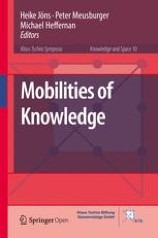
Mobilities of Knowledge
This collection of essays examines how spatial mobilities of people and practices, technologies and objects, knowledge and ideas have shaped the production, circulation, and transfer of knowledge in different historical and geographical contexts. Targeting an interdisciplinary audience, Mobilities of Knowledge combines detailed empirical analyses with innovative conceptual approaches. The first part scrutinizes knowledge circulation, transfer, and adaption, focussing on the interpersonal communication process, early techniques of papermaking, a geographical text, indigenous knowledge in exploration, the genealogy of spatial analysis, and different disciplinary knowledges about the formation of cities, states, and agriculture.

Mobile and Wireless Communication Networks; IFIP 19th World Computer Congress, TC-6, 8th IFIP/IEEE Conference on Mobile and Wireless Communications Networks, August 20-25, 2006, Santiago, Chile
International Federation for Information Processing The IFIP series publishes state-of-the-art results in the sciences and technologies of information and communication. The scope of the series includes: foundations of computer science; software theory and practice; education; computer applications in technology; communication systems; systems modeling and optimization; information systems; computers and society; computer systems technology; security and protection in information processing systems; artificial intelligence; and human-computer interaction. Proceedings and post-proceedings of referred international conferences in computer science and interdisciplinary fields are featured. These results often precede journal publication and represent the most current research. The principal aim of the IFIP series is to encourage education and the dissemination and exchange of information about all aspects of computing.

Micro-Macro-interaction : In Structured media and Particle Systems
This book presents the development of new methods in this interdisciplinary field of macro- micro-interactions of different engineering branches like mechanical and process engineering, applied mathematics, theoretical, and computational physics. In particular, solids with microstructures and particle systems are considered.
Micro-Assembly Technologies and Applications ; IFIP TC5 WG5.5 Fourth International Precision Assembly Seminar (IPAS’2008) Chamonix, France February 10–13, 2008
The IFIP series publishes state-of-the-art results in the sciences and technologies of information and communication. The scope of the series includes: foundations of computer science; software theory and practice; education; computer applications in technology; communication systems; systems modeling and optimization; information systems; computers and society; computer systems technology; security and protection in information processing systems; artificial intelligence; and human-computer interaction. Proceedings and post-proceedings of referred international conferences in computer science and interdisciplinary fields are featured. These results often precede journal publication and represent the most current research.

Methodological Investigations in Agent-Based Modelling : With Applications for the Social Sciences
Examines the methodological complications of using complexity science concepts within the social science domain. The opening chapters take the reader on a tour through the development of simulation methodologies in the fields of artificial life and population biology, then demonstrates the growing popularity and relevance of these methods in the social sciences. Following an in-depth analysis of the potential impact of these methods on social science and social theory, the text provides substantive examples of the application of agent-based models in the field of demography. This work offers a unique combination of applied simulation work and substantive, in-depth philosophical analysis, and as such has potential appeal for specialist social scientists, complex systems scientists, and philosophers of science interested in the methodology of simulation and the practice of interdisciplinary computing research.

Metathesis Polymerization
Clearly illustrated and demonstrated by the entire series of Advances in Polymer Science., the area of polymer science is a rapidly developing and growing field, strongly influencing other areas of chemistry. Among other polymerization techniques, those based on metathesis polymerization have experienced significant progress. With a rapidly developing armory of initiators on hand, one is now capable of polymerizing various types of functional monomers by metathesis-based techniques.The latest developments in all these areas of metathesis-based polymerizations are summarized in this book. It is designed to attract equally students and advanced scientists working in the areas of polymer science, physical, and organometallic chemistry by providing both extensive background information and up-to-date interdisciplinary knowledge. Special consideration has been given to the literature sections in order to facilitate further reading.
Meshfree Methods for Partial Differential Equations IV
The numerical treatment of partial differential equations with particle methods and meshfree discretization techniques is a very active research field both in the mathematics and engineering community. Due to their independence of a mesh, particle schemes and meshfree methods can deal with large geometric changes of the domain more easily than classical discretization techniques. Furthermore, meshfree methods offer a promising approach for the coupling of particle models to continuous models. This volume of LNCSE is a collection of the proceedings papers of the Fourth International Workshop on Meshfree Methods held in September 2007 in Bonn. The articles address the different meshfree methods (SPH, PUM, GFEM, EFGM, RKPM, etc.) and their application in applied mathematics, physics and engineering. The volume is intended to foster this very active and exciting area of interdisciplinary research and to present recent advances and results in this field.

Memories in Wireless Systems
This book is a guide which treats many components used in mobile communications, and in particular focuses on non-volatile memories. It emerges following the conducting line of the non-volatile memory in the wireless system: On the one hand it develops the foundations of the interdisciplinary issues needed for design analysis and testing of the system. On the other hand it deals with many of the problems appearing when the systems are realized in industrial production. These cover the difficulties from the mobile system to the different types of non-volatile memories.

Medical Treatment of Intoxications and Decontamination of Chemical Agents in the Area of Terrorist Attack
This book includes reports which were presented at a NATO Advanced Research Workshop (ARW) entitled?Medical Treatment of Intoxications and Decontamination of Chemical Agent in the Area of Terrorist Attack?. The focus of this workshop was assessment of scientific concepts and practical means for management of chemical agent casualties in the area of terrorist attack with emphasis on improving the medical treatment and decontamination. These problems were analyzed from an interdisciplinary perspective. The primary objective of the ARW was to provide countries in which chemical-defense systems are currently under development with the experience and expertise of those that are more advanced and/or have already been exposed and responded to a chemical-terrorist attack. . The main areas covered were: 1. new approaches in pre-treatment and prophylaxis of nerve agent intoxication; 2. diagnosis of exposure to chemical agents ; 3. therapy of chemical agent intoxication; 4. development of personal decontamination; 5. decontamination of intoxication with chemical agents.

Media Theory : Interdisciplinary Applied Mathematics
The focus of this book is a mathematical structure modeling a physical or biological system that can be in any of a number of `states.' Each state is characterized by a set of binary features, and differs from some other neighbor state or states by just one of those feature. A simple example of a `state’ is a partial solution of a jigsaw puzzle, which can be transformed into another partial solution or into the final solution just by adding or removing a single adjoining piece. The evolution of such a system over time is considered. Such a structure is analyzed from algebraic and probabilistic (stochastic) standpoints.
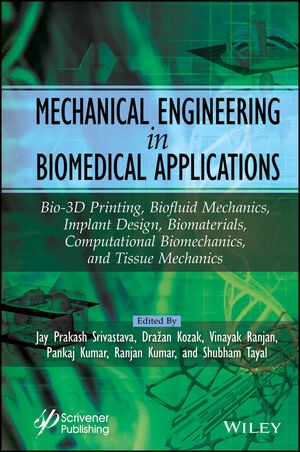
Mechanical engineering in biomedical application: bio-3D printing, biofluid mechanics, implant design, biomaterials, computational biomechanics, tissue mechanics
Explores the latest research and developments related to the interdisciplinary field of biomedical and mechanical engineering offering insights and perspectives on the research, key technologies, and mechanical engineering techniques used in biomedical applications.

Iron Nutrition in Plants and Rhizospheric Microorganisms
This book uses an interdisciplinary approach to provide a comprehensive review on the status of iron nutrition in plants. International scientists discuss research on acquisition of iron by strategy I and strategy II plants. These reviews summarize a variety of plant species and include both laboratory and field observations. Topics covered in this book include: plants as a source of iron for animals and humans, iron translocation in the plants, iron-stimulated activities that influence crop yield and fruit tree productivity, iron uptake by plants as influenced by microorganisms (i.e. free living soil microorganisms, symbiotic nitrogen-fixing and pathogenic bacteria), the role of plant hormones in iron transport, iron-metal competition in phytoremediation, root zone activities involving interactions between minerals and organic matter, the role of microbial siderophores in rhizospheric iron cycling, iron storage as phytoferritin, proteomic and metabolic studies associated with iron stress response, methods for studying iron metabolism including stable isotopes, and the correction of iron deficiency through the use of synthetic or natural chelates.

Introduction to development engineering
Introduces the emerging field of development engineering and its constituent theories, methods, and applications. It is both an instructional text for students and a resource for researchers and practitioners involved in the design and scaling of technologies for low-resource communities. The scope is broad, ranging from the development of mobile applications for low-literacy users to hardware and software solutions for providing electricity and water in remote environments. It is also highly interdisciplinary, drawing on methods and theories from the social sciences as well as engineering and the natural sciences.

Interface oral health science 2016 : Innovative research on biosis-abiosis intelligent interface
This volume broadens understanding of dentistry and promotes interdisciplinary research across a wide range of related fields, based on the symposium entitled "Innovative Research for Biosis–Abiosis Intelligent Interface 2016". It aims to create highly functional and autonomic intelligent interface by combining highly functional interface science with the technology of an evaluation and a control at the interface, with the various topics of biomaterials, innovation for oral science and application, regenerative oral science, and medical engineering. Since 2002, the Tohoku University Graduate School of Dentistry has hosted “Interface Oral Health Science” several times as the main theme of dental research in the twenty-first century, and this is the sixth proceedings of the symposiums following the ones in 2005, 2007, 2009, 2011, and 2014.

Interface oral health science 2014 : Innovative research on biosis-abiosis intelligent interface
The Tohoku University Graduate School of Dentistry first introduced the concept of “Interface Oral Health Science”, designed to establish and maintain healthy oral cavities, which are home to a number of mixed systems. Included in those systems are: (1) host tissues such as teeth, mucosa, muscle and bone, (2) parasites and microorganisms cohabiting the surfaces of the oral cavity, and (3) biomaterials that are used for the rehabilitation of oral functions. In addition, (4) these systems are subject to severe and complex mechanical forces. Therefore, it is critical to promote dental studies that integrate a wide range of interdisciplinary research as medicine, agriculture, material science, engineering, and pharmacology.

Interdisciplinary public health reasoning and epidemic modelling : The case of black death
This is a book about interdisciplinary public health reasoning and epidemic m- th elling, in general, and the study of the infamous 14 century AD Black Death d- aster, in particular. We focus on the intellectual context in which epidemic mod- ling takes place, in a way that accounts for the present-day interdisciplinary and multicultural trends in scientific inquiry. Like most scientific fields, public health research defines itself based on knowledge, which raises serious epistemic and cognitive issues.

Interdisciplinary Perspectives on Mortality and its Timings : When is Death?
This volume provides a series of illuminating perspectives on the timings of death, through in-depth studies of Shakespearean tragedy, criminal execution, embalming practices, fears of premature burial, rumours of Adolf Hitler’s survival, and the legal concept of brain death. In doing so, it explores a number of questions, including: how do we know if someone is dead or not? What do people experience at the moment when they die? Is death simply a biological event that comes about in temporal stages of decomposition, or is it a social event defined through cultures, practices, and commemorations? In other words, when exactly is death? Taken together, these contributions explore how death emerges in a series of stages that are uncertain, paradoxical, and socially contested.

Interdisciplinary Mathematics Education : The State of the Art and Beyond
This book is the first major publication on the topic of “Interdisciplinary Mathematics Education” It offers extensive theoretical insights, empirical research, and practitioner accounts of interdisciplinary mathematics work in STEM and beyond (e.g. in music and the arts).

Interdisciplinary mathematics education : A state of the art
This book provides an essential introduction to the state-of the-art in interdisciplinary Mathematics Education. First, it begins with an outline of the field’s relevant historical, conceptual and theoretical backgrounds, what “discipline” means and how inter-, trans-, and meta-disciplinary activities can be understood. Relevant theoretical perspectives from Marx, Foucault and Vygotsky are explained, along with key ideas in theory, e.g. boundaries, discourses, identity, and the division of labour in practice. Second, the book reviews research findings of mainly empirical studies on interdisciplinary work involving mathematics in education, in all stages of education that have become disciplined. For example, it reports that a common theme in studies in middle and high schools is assessing the motivational benefits for the learner of subsuming disciplinary motives and even practices to extra-academic problem-solving activities; this is counter-balanced by the effort needed to overcome the disciplinary boundaries in academic institutions, and in professional identities. These disciplinary boundaries are less obviously limitations in middle and primary schools, and in some vocational courses. Third and finally, it explores selected case studies that illustrate these concepts and findings, both in terms of the motivational benefits for learners and the institutional and other boundaries involved.
