



الصفحة 3
الصفحة 3

Metaheuristic Optimization Algorithms in Civil Engineering : New Applications
Discusses the application of metaheuristic algorithms in a number of important optimization problems in civil engineering. Advances in civil engineering technologies require greater accuracy, efficiency and speed in terms of the analysis and design of the corresponding systems. As such, it is not surprising that novel methods have been developed for the optimal design of real-world systems and models with complex configurations and large numbers of elements.

Medical Biometrics ; 1st International Conference, ICMB 2008, Hong Kong, China, January 4-5, 2008, Proceedings
Medical biometrics primarily refers to the usage of beh- ioral and physiological characteristics of humans for medical diagnosis and body care. Thus the goal of medical biometrics is to explore solutions to the open problems in medicine using biometric measurements, technologies and systems.

MDATA : A New Knowledge Representation Model: Theory, Methods and Applications
This book introduces a new knowledge representation model called MDATA (Multi-dimensional Data Association and inTelligent Analysis). By modifying the representation of entities and relations in knowledge graphs, dynamic knowledge can be efficiently described with temporal and spatial characteristics. The MDATA model can be regarded as a high-level temporal and spatial knowledge graph model, which has strong capabilities for knowledge representation. This book introduces some key technologies in the MDATA model, such as entity recognition, relation extraction, entity alignment, and knowledge reasoning with spatiotemporal factors. The MDATA model can be applied in many critical applications and this book introduces some typical examples, such as network attack detection, social network analysis, and epidemic assessment.

Inventive communication and computational technologies ; Proceedings of ICICCT 2020
This book gathers selected papers presented at the 4th International Conference on Inventive Communication and Computational Technologies (ICICCT 2020), held on 28–29 May 2020 at Gnanamani College of Technology, Tamil Nadu, India. The respective contributions highlight recent research efforts and advances in a new paradigm called ISMAC (IoT in Social, Mobile, Analytics and Cloud contexts). The topics covered include the Internet of Things, Social Networks, Mobile Communications, Big Data Analytics, Bio-inspired Computing and Cloud Computing. Given its scope, the book is chiefly intended for academics and practitioners working to resolve practical issues in this area.
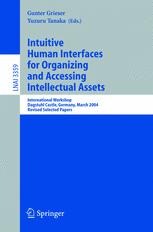
Intuitive Human Interfaces for Organizing and Accessing Intellectual Assets ; International Workshop, Dagstuhl Castle, Germany, March 1-5, 2004, Revised Selected Papers
This book constitutes the thoroughly refereed post-proceedings of the 2004 International Workshop on Intuitive Human Interfaces for Organizing and Accessing Intellectual Assets, held in Dagstuhl Castle, Germany in March 2004. The 17 revised full papers presented together with an introductory overview have gone through two rounds of reviewing and revision. The papers are organized in topical sections on man-machine interface for intuitive knowledge access, intelligent pad and meme media, visualization and design of information access spaces, and semantics and narrative organization and access of knowledge.
Introduction to Intelligent Construction Technology of Transportation Infrastructure
Expounds on the related technologies of intelligent transportation infrastructure construction. Based on the essential characteristics of intelligent construction, "perception, analysis, decision-making, and execution," the basic structure of intelligent construction technology (ICT) is established. With the integration of engineering construction technologies, the analyses of the essence of intelligent algorithms and the feasibility of Artificial Intelligence (AI) are provided. The book introduces the essential characteristics of Big Data and the Internet of Things and their relationship with engineering construction. On this basis, the feasibility and implementation plan of intelligent technology applications in design, construction, and maintenance are analyzed and demonstrated with engineering examples.

Internet of things, artificial intelligence and blockchain technology
Explores the concepts and techniques of IoT, AI, and blockchain. Also discussed is the possibility of applying blockchain for providing security in various domains. The specific highlight of this book is focused on the application of integrated technologies in enhancing data models, better insights and discovery, intelligent predictions, smarter finance, smart retail, global verification, transparent governance, and innovative audit systems. Explains how blockchain can significantly increase data privacy and security while boosting accuracy and integrity in IoT generated data and AI processed information; Gives insight into blockchain’s numerous potential applications, starting with recent technologies that give users control over sharing and privacy; Shows readers how to employ blockchain in IoT and AI, helping them to understand what they can and cannot do with blockchain.

Interface oral health science 2016 : Innovative research on biosis-abiosis intelligent interface
This volume broadens understanding of dentistry and promotes interdisciplinary research across a wide range of related fields, based on the symposium entitled "Innovative Research for Biosis–Abiosis Intelligent Interface 2016". It aims to create highly functional and autonomic intelligent interface by combining highly functional interface science with the technology of an evaluation and a control at the interface, with the various topics of biomaterials, innovation for oral science and application, regenerative oral science, and medical engineering. Since 2002, the Tohoku University Graduate School of Dentistry has hosted “Interface Oral Health Science” several times as the main theme of dental research in the twenty-first century, and this is the sixth proceedings of the symposiums following the ones in 2005, 2007, 2009, 2011, and 2014.

Interface oral health science 2014 : Innovative research on biosis-abiosis intelligent interface
The Tohoku University Graduate School of Dentistry first introduced the concept of “Interface Oral Health Science”, designed to establish and maintain healthy oral cavities, which are home to a number of mixed systems. Included in those systems are: (1) host tissues such as teeth, mucosa, muscle and bone, (2) parasites and microorganisms cohabiting the surfaces of the oral cavity, and (3) biomaterials that are used for the rehabilitation of oral functions. In addition, (4) these systems are subject to severe and complex mechanical forces. Therefore, it is critical to promote dental studies that integrate a wide range of interdisciplinary research as medicine, agriculture, material science, engineering, and pharmacology.
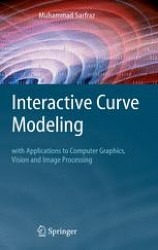
Interactive Curve Modeling : With Applications to Computer Graphics, Vision and Image Processing
Interactive curve modeling techniques and their applications are extremely useful in a number of academic and industrial settings, and specifically play a significant role in multidisciplinary problem solving, such as in font design, designing objects, CAD/CAM, medical operations, scientific data visualization, virtual reality, character recognition, and object recognition, etc. Various problems such as iris, fingerprint, and signature recognition, can also be intelligently solved and automated using curve techniques.
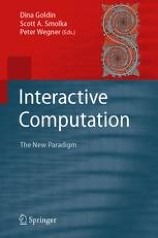
Interactive Computation : The New Paradigm
The interaction paradigm provides a new conceptualization of computational phenomena that emphasizes interaction rather than algorithms, thus reflecting the shift in technology from number-crunching on mainframes to distributed intelligent networks with graphical user interfaces.

Intelligent Virtual Agents ; Vol.4133 ; 6th International Conference, IVA 2006, Marina Del Rey, CA; USA, August 21-23, 2006, Proceedings
This volume contains the proceedings of the 6th International Conference on Intelligent Virtual Agents, IVA 2006, held in Marina del Rey, California, USA from August 21–23.For the second year in a row,IVA also hosted the Gathering of Animated Lifelike Agents (GALA 2006), an annual festival to showcase the latest animated lifelike agents created by university students and academic or industrial research groups. IVA 2006 received 73 submissions from Europe, the AmericasandAsia.Thepaperspublishedherearethe24fullpapersand11short papers presented at the conference, as well as one-page descriptions of posters and the featured invited talks by Brian Parkinson of Oxford University, Rod Humble of Electronic Arts, and Michael Mateas of the University of California, Santa Cruz and Andrew Stern of Procedural Arts.

Intelligent Virtual Agents ; Vol.3661 : 5th International Working Conference, IVA 2005, Kos, Greece, September 12-14, 2005, Proceedings
The origin of the Intelligent Virtual Agents conference dates from a successful workshop on Intelligent Virtual Environments held in Brighton at the 13th European Conference on Artificial Intelligence (ECAI'98). This workshop was followed by a second one held in Salford in Manchester in 1999. Subsequent events took place in Madrid, Spain in 2001 and Irsee, Germany in 2003 and attracted participants from both sides of the Atlantic as well as Asia. th This volume contains the proceedings of the 5 International Working Conference on Intelligent Virtual Agents, IVA 2005, held on Kos Island, Greece, September 12–14, 2005, which highlighted once again the importance and vigor of the research field. A half-day workshop under the title “Socially Competent IVA’s: We are not alone in this (virtual) world!” also took place as part of this event. IVA 2005 received 69 submissions from Europe, North and South America, Africa and Asia. The papers published here are the 26 full papers and 14 short papers presented at the conference, as well as one-page descriptions of the 15 posters and the descriptions of the featured invited talks by Prof. Justine Cassell, of Northwestern University and Prof. Kerstin Dautenhahn, of the University of Hertfordshire. We would like to thank a number of people that have contributed to the success of this conference. First of all, we thank the authors for their high-quality work and their willingness to share their ideas.

Intelligent Virtual Agents ; 8th International Conference, IVA 2008, Tokyo, Japan, September 1-3, 2008. Proceedings
This book constitutes the refereed proceedings of the 8th International Workshop on Intelligent Virtual Agents, IVA 2008, held in Tokyo, Japan, in September 2008.The 18 revised full papers and 28 revised short papers presented together 42 poster papers were carefully reviewed and selected from 99 submissions. The papers are organized in topical sections on motion and empathy; narrative and augmented reality; conversation and negotiation; nonverbal behavior; models of culture and personality; markup and representation languages; architectures for robotic agents; cognitive architectures; agents for healthcare and training; and agents in games, museums and virtual worlds.

Intelligent Virtual Agents ; 7th International Working Conference, IVA 2007, Paris, France, September 17-19, 2007, Proceedings
The 19 revised full papers and 12 revised short papers presented together with five invited talks and the abstracts of 32 poster papers are organized in topical sections on rendering and analysis, culture and identity, behavior models, feedback models, dialogues, applications, evaluation, gaze models and emotions.

Intelligent tutoring systems ; 9th International Conference, ITS 2008, Montreal, Canada, June 23-27, 2008 Proceedings
This book constitutes the refereed proceedings of the 9th International Conference on Intelligent Tutoring Systems, ITS 2008, held in Montreal, Canada, in June 2008.The 63 revised full papers and 61 poster papers presented together with abstracts of 5 keynote talks were carefully reviewed and selected from 207 submissions. The papers are organized in topical sections on emotion and affect, tutor evaluation, student modeling, machine learning, authoring tools , tutor feedback and intervention, data mining, e-learning and Web-based ITS, natural language techniques and dialogue, narrative tutors and games, semantic Web and ontology, cognitive models, and collaboration.

Intelligent Tutoring Systems ; 8th International Conference, ITS 2006, Jhongli, Taiwan, June 26-30, 2006 Proceedings
This book constitutes the refereed proceedings of the 8th International Conference on Intelligent Tutoring Systems, ITS 2006, held in Jhongli, Taiwan in June 2006. The 67 revised full papers and 40 poster papers presented together with abstracts of 6 keynote talks were carefully reviewed and selected from over 200 submissions. The papers are organized in topical sections on assessment, authoring tools, bayesian reasoning and decision-theoretic approaches, case-based and analogical reasoning, cognitive models, collaborative learning, elearning and web-based intelligent tutoring systems, error detection and handling, feedback, gaming behavior, learner models, motivation, natural language techniques for intelligent tutoring systems, scaffolding, simulation, as well as tutorial dialogue and narrative.

Intelligent technologies for interactive entertainment ; 1st International Conference, INTETAIN 2005, Madonna di Campaglio, Italy, November 30 - December 2, 2005, Proceedings
Constitutes the proceedings of the First International Conference on Intelligent Technologies for Interactive Entertainment, 2005 held in Madonna di Campiglio, Italy. The papers included in this title cover topics such as intelligent interactive games, intelligent music, interactive cinema, edutainment, interactive art, and interactive real TV.

Intelligent Techniques for Web Personalization ; IJCAI 2003 Workshop, ITWP 2003, Acapulco, Mexico, August 11, 2003, Revised Selected Papers
Web personalizationcan be de?ned as any set of actions that can tailor the Web experience to a particular user or set of users. The experience can be something as casualas browsinga Web site oras (economically)signi?cantas tradingstock or purchasing a car. The actions can range from simply making the presentation more pleasing to anticipating the needs of a user and providing customized and relevant information. To achieve e?ective personalization, organizations must rely on all available data, including the usage and click-stream data (re?e- ing user behavior), the site content, the site structure, domain knowledge, user demographics and pro?les. In addition, e?cient and intelligent techniques are needed to mine these data for actionable knowledge, and to e?ectively use the discovered ...

Intelligent Techniques and Tools for Novel System Architectures
Provides a source wherein academics, researchers and practitioners may derive high-quality, original and state-of-the-art papers describing theoretical aspects, systems architectures, analysis and design tools and techniques, and implementation experiences in intelligent systems where information and knowledge management should be mainly characterised as a net-centric infrastructure riding on the fifth wave of "distributed intelligence".
