



الصفحة 3
الصفحة 3

Modern Actuarial Risk Theory : Using R
"The book gives a comprehensive survey of non-life insurance mathematics. … Originally written for use with the actuarial science programs at the Universities of Amsterdam and Leuven, it is now in use at many other universities as well as for the non-academic actuarial education program organized by the Dutch Actuarial Society. The methods presented can not only be used in non-life insurance, but also in other branches of actuarial science, as well as in actuarial practice. (Pavel Stoynov, Zentralblatt MATH, Vol. 1148, 2008). This book gives an introduction to non-life insurance mathematics. … Throughout the book, the software R is used for the implementation of the techniques presented. One finds also many exercises with hints for their solution in an appendix.

Models for Discrete Longitudinal Data
This book provides a comprehensive treatment on modeling approaches for non-Gaussian repeated measures, possibly subject to incompleteness. The authors consider a variety of extensions, such as models for multivariate longitudinal measurements, random-effects models with serial correlation, and mixed models with non-Gaussian random effects. They sketch the general principles for how to deal with the commonly encountered issue of incomplete longitudinal data. The authors critique frequently used methods and propose flexible and broadly valid methods instead, and conclude with key concepts of sensitivity analysis. The book shows how the different approaches can be implemented within the SAS software package. The text is organized so the reader can skip the software-oriented chapters and sections without breaking the logical flow.

Models and Algorithms for Global Optimization : Essays Dedicated to Antanas Žilinskas on the Occasion of His 60th Birthday
The research of Antanas Žilinskas has focused on developing models for global optimization, implementing and investigating the corresponding algorithms, and applying those algorithms to practical problems. This volume, dedicated to Professor Žilinskas on the occasion of his 60th birthday, contains new survey papers in which leading researchers from the field present various models and algorithms for solving global optimization problems.
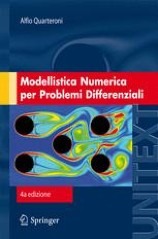
Modellistica numerica per problemi differenziali = Numerical modeling for differential problems
This text introduces the basic concepts for the numerical modeling of partial differential problems. We consider the classic elliptic, parabolic and hyperbolic linear equations, but also other equations, such as those of diffusion and transport, of Navier-Stokes, and the conservation laws, and we provide numerous physical examples underlying these equations. Then we analyze numerical resolution methods based on finite elements, finite differences, finite volumes, spectral methods and domain decomposition methods. In particular, the algorithmic and computer implementation aspects are discussed and various easy-to-use programs are provided.
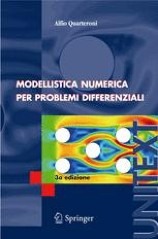
Modellistica Numerica per Problemi Differenziali = Numerical Modeling for Differential Problems
This text introduces the fundamental concepts for the numerical modeling of partial differential problems. We consider the classic linear elliptic, parabolic and hyperbolic equations, but also other equations, such as those of diffusion and transport, of Navier-Stokes, and the conservation laws. Numerous physical examples underlying these equations are provided, their main mathematical properties are studied, then numerical resolution methods based on finite elements, finite differences, finite volumes and spectral methods are proposed and analyzed. In particular, the algorithmic and computer implementation aspects are discussed and some easy-to-use programs in C ++ language are provided. The text does not presuppose an advanced mathematical knowledge of partial differential equations: the strictly indispensable concepts in this regard are reported in the Appendix. The volume is therefore suitable for students of scientific degree courses (Engineering, Mathematics, Physics, Chemistry, Information Sciences) and recommended for researchers from the academic and extra-academic world who want to approach this interesting branch of applied mathematics.

Modelling and Control of Dynamical Systems : Numerical Implementation in a Behavioral Framework
This book reviews known topics of the Behavioral Approach and offers new theoretic results with the advantage of including control algorithms implemented numerically in the computer. In addition, issues of numerical analysis are also included. The programs and algorithms are MATLAB based.

Modeling, Control and Implementation of Smart Structures : A FEM-State Space Approach
This monograph presents an introductory overview of smart structures, their concepts, their active involvement in the vibration control, their applications and the extensive research work done on it so far. The modelling of flexible beams using two types of beam theories, viz., the Euler-Bernoulli theory and the Timoshenko beam theory is presented, including a new concept of finite element modeling of the flexible structures using Timoshenko beam theory with the inclusion of the shear both in the piezo-patches as well as in the host structure. It presents the design of the periodic output feedback control system for smart structure systems, the design of the FOS controllers for active vibration control and the design of Discrete Sliding Mode controllers using multirate output feedback technique.

Modeling Performance Measurement : Applications and Implementation Issues in DEA
MODELING PERFORMANCE MEASUREMENT: Applications and Implementation Issues in DEA presents unified results from authors’ recent DEA research. These new DEA methodology and techniques are developed in application-driven scenarios that go beyond the identification of the best-practice frontier and seek solutions to aid managerial decisions. These new DEA developments are well-grounded in real world applications. Both DEA researchers and practitioners will find this book helpful. Theory is provided for DEA researchers for further development and possible extensions. However, it should also be mentioned that each theory is presented in practical terms with numerical examples, simple real management cases and verbal descriptions. It is felt that these concrete examples will be of value to researchers, students, and practitioners , This book also provides an easy-to-use DEA software — DEAFrontier (www.deafrontier.com). This DEA software is an Add-In for Microsoft Excel and provides a custom menu of DEA approaches The DEAFrontier does not set limit on the number of units, inputs or outputs.

Modeling of Biological Materials
This interdisciplinary collection of surveys highlights the central role played by the mathematical modeling of mechanical properties having an effect on the biology, chemistry, and physics of living matter. One of the main goals of the book is to present—in a single, self-contained resource—topics that are widely scattered across the literature in a variety of journals having mutually nonintersecting communities of readers, such as applied mathematicians, engineers, biologists, and physicians. Readers coming from diverse backgrounds are provided with basic modeling ideas and tools to address important problems in the medical and health sciences. Presented are appropriate models as well as their implementation through numerical and computer simulations, which may lead to potential technological innovations useful in medicine.

Modeling biological systems : Principles and applications
This extensively revised second edition of Modeling Biological Systems: Principles and Applications describes the essentials of creating and analyzing mathematical and computer simulation models for advanced undergraduates and graduate students. It offers a comprehensive understanding of the underlying principle, as well as details and equations applicable to a wide variety of biological systems and disciplines. Students will acquire from this text the tools necessary to produce their own models. The text contains two major sections: Principles and Applications. The first section discusses the principles of biological systems with a thorough description of the essential modeling activities of formulation, implementation, validation, and analysis. These activities are illustrated by a set of example models taken from recent and classical literature, chosen for their breadth of coverage and current timeliness. The new edition updates extensively many of these topics, especially quantitative model formulation, validation and model discrimination using information theory measures and Bayesian probability, and stability analysis and non-dimensionalization.

Modeling and Control of Antennas and Telescopes
Modeling and Control of Antennas and Telescopes presents the author’s research and field experience in the area of antenna modeling, dynamics, and control. The required spacecraft tracking accuracy of 1 mdeg was the impetus for the new approaches to the antenna controls that use model based controllers (LQG and H¥ ). Consequently, modeling also required a new approach using system identification techniques. Most of the material presented is new in the telescope industry. The methods have been not only analyzed and tested, but actually implemented, giving confidence in the final result, which is significantly increased antenna pointing accuracy.
Model-Driven Software Development
Abstraction is the most basic principle of software engineering. Abstractions are provided by models. Modeling and model transformation constitute the core of model-driven development. Models can be refined and finally be transformed into a technical implementation, i.e., a software system. The aim of this book is to give an overview of the state of the art in model-driven software development. Achievements are considered from a conceptual point of view in the first part, while the second part describes technical advances and infrastructures. Finally, the third part summarizes experiences gained in actual projects employing model-driven development. Beydeda, Book and Gruhn put together the results from leading researchers in this area, both from industry and academia. The result is a collection of papers which gives both researchers and graduate students a comprehensive overview of current research issues and industrial forefront practice, as promoted by OMG’s MDA initiative.

Model Driven Engineering Languages and Systems ; Vol. 4199 ; 9th International Conference, MoDELS 2006, Genova, Italy, October 1-6, 2006, Proceedings
This book constitutes the refereed proceedings of the 9th International Conference on Model Driven Engineering Languages and Systems (formerly the UML series of conferences), MoDELS 2006, held in Genova, Italy, in October 2006. The 51 revised full papers and 2 invited papers presented were carefully reviewed and selected from 178 initial submissions. The papers are organized in topical sections on evaluating UML, MDA in software development, concrete syntax, applying UML to interaction and coordination, aspects, model integration, formal semantics of UML, security, model transformation tools and implementation, analyzing dynamic models, specifying transformations, MOF, bridging models, risk, trust and dependability, tool environments, OCL, roundtrip engineering, real time and embedded systems, as well as workshops, tutorials and panels.
Model Driven Architecture ; European MDA Workshops : Foundations and Applications, MDAFA 2003 and MDAFA 2004, Twente, The Netherlands, June 26-27, 2003, and Linköping, Sweden, June 10-11, 2004, Revised Selected Papers
Model-Driven Architecture (MDA) is an initiative proposedby the Object M- agement Group (OMG) for platform-generic software development. MDA s- arates the specification of system functionality from the implementation on a specific platform. It is aimed at making software assets more resilient to changes caused by emerging technologies. While stressing the importance of modeling, the MDA initiative covers a wide spectrum of research areas. Further efforts are required to bring them into a coherent approach based on open standards and supported by matured tools and techniques. This volume contains the selected papers of two workshops on “Model-Driven Architecture – Foundations and Applications” (MDAFA): MDAFA 2003 held at the University of Twente, Twente, The Netherlands, June 26–27, 2003, and MDAFA 2004 held at Linko ¨ping University, Link¨ oping, Sweden, June 10–11, 2004. The goal of the workshops was to understand the foundations of MDA, to share experience in applying MDA techniques and tools, and to outline future research directions. The workshops organizers encouraged authors of accepted papers to re-submit their papers to a post-workshop reviewing process; 15 of these papers were accepted to appear in this volume on MDA.
Model Driven Architecture - Foundations and Applications ; 4th European Conference, ECMDA-FA 2008, Berlin, Germany, June 9-13, 2008. Proceedings
The 31 revised full papers presented - 21 research papers and 10 industry papers - were carefully reviewed and selected from 87 submissions. The papers address all current issues of model-driven architecture, i.e. model management, executable models, concrete syntaxes, aspects, and concerns, validation and testing, model-based systems engineering, model-driven development and service-oriented architectures, and the application of model-driven development. The papers are organized in topical sections on model management, executable models, concrete syntaxes, aspects and concerns, validation and testing, model-based systems engineering, model-driven development and service-oriented architectures, as well as surveys on applying model-driven development.
Model Checking Software ; Vol. 3925 ; 13th International SPIN Workshop, Vienna, Austria, March 30 - April 1, 2006, Proceedings
he name “SPIN” refers both to a workshopon model checking and to a famous model checking tool. The SPIN workshop is an annual forum for practitioners and researchersinterested in state space-based techniques for the validation and analysis of software and hardware systems, including communication protocols. It focuses on techniques based on explicit representations of state spaces, as implemented in the SPIN model checker or other tools, and techniques based on a combination of explicit representations with other representations. The SPIN model checker has proven to be particularly suited for the analysis of concurrent asynchronous systems. The workshop aims to encourage interaction and exchange of ideas with all related areas in software engineering.

Modal Array Signal Processing : Principles and Applications of Acoustic Wavefield Decomposition
Many applications of acoustic signal processing, such as teleconferencing and surveillance systems, require an estimate of several parameters present in the observed acoustic wavefield. The most important parameters are the number as well as the location of active acoustic sources. This book deals with the problem of detecting and localizing multiple simultaneously active wideband acoustic sources by applying the notion of wavefield decomposition using circular and spherical microphone arrays. The decomposed wavefield representation is used to serve as a basis for so-called modal array signal processing algorithms, which have the significant advantage over classical array signal processing algorithms that they inherently support multiple wideband acoustic sources. A rigorous derivation of modal array signal processing algorithms for unambiguous source detection and localization as well as performance evaluations by means of measurements using an actual real-time capable implementation are discussed.

Mobility Aware Technologies and Applications ; 2nd International Workshop, MATA 2005, Montreal, Canada, October 17 -- 19, 2005, Proceedings
The beginning of the twenty-first century is characterized by global markets, and the mobility of people is becoming an important fact of life. Consequently, the mobile user is demanding appropriate technical solutions to make use of customized information and communication services. In this context the notion of next-generation networks (NGNs), which are driven by the convergence of the entertainment sector, the mobile Internet, and fixed/mobile telecommunications, is emerging. Such NGNs are aggregating a variety of different access networks and supporting the seamless connection of an open set of end-user devices, and due to the adoption of an all-IP network paradigm they enable a much better integration of voice and data services. Coincidently the buzzword ‘fixed mobile convergence’ (FMC) describes the current trend towards providing common services across fixed and mobile networks resulting in the medium term in the full integration of fixed and mobile telecommunication networks. The adoption of appropriate middleware technologies and the provision of - called service delivery platforms driven by the ongoing innovation in the field of information technologies provides today the technical foundation for supporting terminal, personal and service mobility and thus the implementation of real seamless information and communication services. Furthermore, users are nowadays looking, in light of an omnipresent service environment, for a much higher degree of customization and context awareness in the services they use. The papers in this volume look at these enabling mobility-aware technologies and their use for implementing mobility-aware and context-aware applications.

Mobile Phone Programming and its Application to Wireless Networking
This book provides a solid overview of mobile phone programming targeting both academia and industry. Mobile Phone Programming covers all commercial realizations of Symbian, Windows Mobile and Linux platforms. Each programming language (JAVA, Python, C/C++) and a set of development environments are introduced “step by step” making developers familiar with current limitations, pitfalls, and challenges. Each chapter contains examples and source code to rapidly make developers familiar with the most important concepts. Examples cover peer to peer networks, cooperative networking, cross layer protocol design, key challenges such as power consumption, and sensor networks for which a full hardware and software implementation is provided. Whether you are an experienced developer or an advanced student Mobile Phone Programming will be your key reference for successfully entering the world of software development for mobile devices.
Mobile Information Systems II ; IFIP Working Conference on Mobile Information Systems, MOBIS 2005, Leeds, UK, December 6-7, 2005
Contains the proceedings of the second IFIP TC8 Working Conference on Mobile Information Systems which was held in December 2005 in Leeds, UK and sponsored by the International Federation of Information Processing (IFIP). Mobile Information Systems II aims to: · Clarify differences and similarities between the development of mobile and more traditional information systems. · Investigate the organizational impact of mobile information systems. · Investigate the 'e to m shift' , for example in m-Commerce relative to e-Commerce. · Investigate mobile commerce applications combined with the advantages of mobile communications technologies, the drivers of which have been identified as ubiquity, accessibility, security, convenience, localization, instant connectivity, and personalization. · Evaluate existing and newly developed approaches for the analysis, design, implementation, and evolution of mobile information systems. · Investigate technical issues and the constraints they impose on mobile information systems functionalities and design.
