



الصفحة 3
الصفحة 3
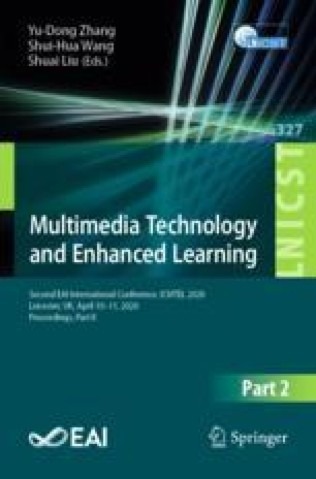
Multimedia technology and enhanced learning ; 2nd EAI International conference, ICMTEL 2020, Leicester, UK, April 10-11, 2020, Proceedings, Part II
This two-volume book constitutes the refereed proceedings of the Second International Conference on Multimedia Technology and Enhanced Learning, ICMTEL 2020, held in Leicester, United Kingdom, in April 2020. Due to the COVID-19 pandemic all papers were presented in YouTubeLive. The 83 revised full papers have been selected from 158 submissions. They describe new learning technologies which range from smart school, smart class and smart learning at home and which have been developed from new technologies such as machine learning, multimedia and Internet of Things.

Multimedia Technology and Enhanced Learning ; 2nd EAI International Conference, ICMTEL 2020, Leicester, UK, April 10-11, 2020, Proceedings, Part I
This two-volume book constitutes the refereed proceedings of the Second International Conference on Multimedia Technology and Enhanced Learning, ICMTEL 2020, held in Leicester, United Kingdom, in April 2020. Due to the COVID-19 pandemic all papers were presented in YouTubeLive. The 83 revised full papers have been selected from 158 submissions. They describe new learning technologies which range from smart school, smart class and smart learning at home and which have been developed from new technologies such as machine learning, multimedia and Internet of Things.

Multimedia security : Algorithm development, analysis and applications (algorithms for intelligent systems)
Provides an insight about various techniques used in multimedia security and identifies its progress in both technological and algorithmic perspectives. In the contemporary world, digitization offers an effective mechanism to process, preserve and transfer all types of information. The incredible progresses in computing and communication technologies augmented by economic feasibility have revolutionized the world. The availability of efficient algorithms together with inexpensive digital recording and storage peripherals have created a multimedia era bringing conveniences to people in sharing the digital data that includes images, audio and video. The ever-increasing pace, at which the multimedia and communication technology is growing, has also made it possible to combine, replicate and distribute the content faster and easier, thereby empowering mankind by having a wealth of information at their disposal.

Multimedia Retrieval
The single chapters of this textbook explain the general architecture of multimedia information retrieval systems; various metadata languages like Dublin Core, RDF, or MPEG; pattern recognition through Markov models, unsupervised learning, and pattern clustering; various indexing approaches to audio and video streams; interaction and control; the protection of content and user privacy; and search effectiveness and efficiency.

Multimedia Forensics
Media forensics has never been more relevant to societal life. Not only media content represents an ever-increasing share of the data traveling on the net and the preferred communications means for most users, it has also become integral part of most innovative applications in the digital information ecosystem that serves various sectors of society, from the entertainment, to journalism, to politics. Undoubtedly, the advances in deep learning and computational imaging contributed significantly to this outcome. The underlying technologies that drive this trend, however, also pose a profound challenge in establishing trust in what we see, hear, and read, and make media content the preferred target of malicious attacks.

Multimedia Encryption and Watermarking
Multimedia Encryption and Watermarking presents a comprehensive survey of contemporary multimedia encryption and watermarking techniques, which enable a secure exchange of multimedia intellectual property. Part I, Digital Rights Management (DRM) for Multimedia, introduces DRM concepts and models for multimedia content protection, and presents the key players. Part II, Multimedia Cryptography, provides an overview of modern cryptography, with the focus on modern image, video, speech, and audio encryption techniques. This book also provides an advanced concept of visual and audio sharing techniques. Part III, Digital Watermarking, introduces the concept of watermarking for multimedia, classifies watermarking applications, and evaluates various multimedia watermarking concepts and techniques, including digital watermarking techniques for binary images. Multimedia Encryption and Watermarking is designed for researchers and practitioners, as well as scientists and engineers who design and develop systems for the protection of digital multimedia content. This volume is also suitable as a textbook for graduate courses on multimedia security.

Multimedia Content Representation, Classification and Security ; International Workshop, MRCS 2006, Istanbul, Turkey, September 11-13, 2006, Proceedings
This book constitutes the refereed proceedings of the International Workshop on Multimedia Content Representation, Classification and Security, MRCS 2006, held in Istanbul, Turkey in September 2006. The 100 revised papers presented together with 4 invited lectures were carefully reviewed and selected from more than 190 submissions. The papers are organized in topical sections on biometric recognition, multimedia content security, steganography, watermarking, authentication, classification for biometric recognition, digital watermarking, content analysis and representation, 3D object retrieval and classification, representation, analysis and retrieval in cultural heritage, content representation, indexing and retrieval, content analysis and classification, feature extraction and classification, multimodal signal processing, 3D video and free viewpoint video, multimedia content transmission and classification, video and image processing, as well as video analysis and representation.
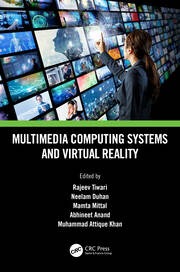
Multimedia computing systems and virtual reality
Presents recent advancements in multimedia systems as they relate to various application areas such as healthcare services and agriculture-related industries. The authors also discuss human-machine interface design, graphics modelling, rendering/animation, image/graphics techniques/systems and visualization. They then go on to explore multimedia content adaptation for interoperable delivery. Finally, the book covers cultural heritage, philosophical/ethical/societal/international issues, standards-related virtual technology and multimedia uses. This book is intended for computer engineers and computer scientists developing applications for multimedia and virtual reality and professionals working in object design and visualization, transformation, modelling and animation of the real world.
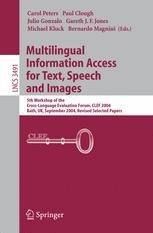
Multilingual Information Access for Text, Speech and Images ; 5th Workshop of the Cross-Language Evaluation Forum, CLEF 2004, Bath, UK, September 15-17, 2004, Revised Selected Papers
The ?fth campaign of the Cross-Language Evaluation Forum (CLEF) for Eu- pean languages was held from January to September 2004. Participation in the CLEF campaigns has increased each year and CLEF 2004 was no exception: 55 groups submitted results for one or more of the di?erent tracks compared with 42 groups in the previous year. CLEF 2004 also marked a breaking point with respect to previous campaigns. The focus was no longer mainly concentrated on multilingual document retrieval as in previous years but was diversi?ed to include di?erent kinds of text retrieval across languages (e. g. , exact answers in the question-answering track) and retrieval on di?erent kinds of media (i. e. , not just plain text but collections containing image and speech as well). In ad- tion, increasing attention was given to issues that regard system usability and user satisfaction with tasks to measure the e?ectiveness of interactive systems or system components being included in both the cross-language question - swering and image retrieval tasks with the collaboration of the coordinators of the interactive track. The campaign culminated in a two-and-a-half-day workshop held in Bath, UK, 15–17 September, immediately following the 8th European Conference on Digital Libraries. The workshop was attended by nearly 100 researchers and s- tem developers.

Multidetector-Row CT of the Thorax
With the advent of multidetector-row technology, excitement has returned to computed tomography. Not only can we now image faster and with better resolution than ever before; more importantly, the development of sophisticated image acquisition techniques has enabled us to venture into areas previously considered to be beyond the scope of CT imaging. The knowledge, experience, and vision of a host of renowned international experts in cutting-edge thoracic applications of multidetector-row CT are condensed within this book. The result is a critical, comprehensive review of the novel opportunities, but also the new challenges, brought about by the development of ever-faster CT acquisition techniques.

Multidetector-Row CT Angiography
Multidetector-row CT has dramatically improved the results of computed tomography in all clinical applications, but its beneficial impact has been most striking in vascular imaging. The simplicity of acquisition and the wide availability of equipment make this modality especially suitable for routine clinical application. In this book the basic aspects of multidetector-row CT angiography are comprehensively reviewed. Individual chapters are included on technical principles, image processing techniques and contrast agent administration. All clinical applications are then discussed in depth, with lucid descriptions of the examination technique for particular clinical indications and of the findings that characterize specific diseases. Limitations and advantages in comparison with other imaging modalities are considered. A large number of high-quality black and white and color illustrations help to explain the clinical findings.

Multidetector-Row Computed Tomography : Scanning and Contrast Protocols
Multidetector-row computed tomography (MDCT) has advanced the approach to diagnostic assessment of many pathologies and now plays an integral role in imaging of both abdominal and cardiovascular diseases. The possibility to acquire diagnostic images with shorter scan duration, longer scan ranges, and/or thinner sections, MDCT has facilitated the opening of new horizons, such as interventional MDCT and functional imaging in stroke and oncology. In addition, advanced postprocessing techniques now permit high quality volumetric imaging in combination with maximum intensity projections, volume rendering, curved planar reformations and multiplanar reconstructions. This volume gathers contributions by internationally renowned specialists in the field who, through presenting their clinical experience, provide a thorough overview not only of MDCT and its practical applications, but also of workflow management in everyday clinical practice. Focussing on scanning and contrast protocols, the current advantages and disadvantages of non-enhanced vs. enhanced MDCT are discussed, along with insights into likely future developments. The volume represents an up-to-date source of technical and practically-oriented clinical information which should prove of great benefit to all who wish to improve or consolidate their knowledge and expertise in MDCT.

MRI of the Heart and Vessels
In recent years magnetic resonance imaging (MRI) has enriched the technological potential available for the characterization of cardiovascular pathologies, adding substantial advantages to other non-invasive techniques. This technique, which is intrinsically digital and has reduced operator dependency, allows the performance of image analysis in a quantitative and reproducible manner. In virtue of its added diagnostic value and inherent refinements that allow construction of two- and three-dimensional images, MRI is gaining a primary role in the histopathological and physiopathological understanding of a large number of pathologies concerning the heart and vessels. This text is addressed both to MRI operators seeking specific technical information and to clinicians who wish to have a better understanding of the diagnostic and management advantages that MRI can offer.
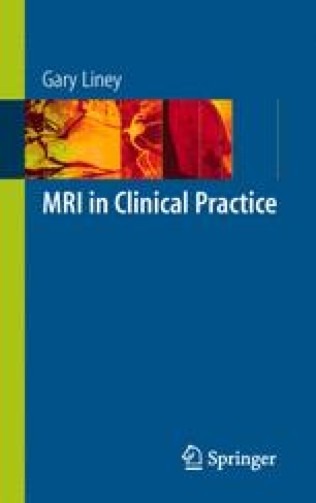
MRI in Clinical Practice
The book covers the basic Physics behind MRI, quality assurance, up-to-date safety guidelines and a useful gallery of image artefacts. Part of the book focuses on the specific areas of the body in which MRI is currently exploited, describing how MRI is performed in practice. In each of these sections, a common theme is followed with illustrations of MR images acquired with clinically relevant settings and typical imaging protocols are also explicitly stated. Additional information is provided which includes a subjective view of the strengths and weaknesses of MRI in comparison to other imaging modalities. As well as covering routine clinical techniques, the latest advanced methods (e.g. spectroscopy, fMRI, diffusion, high field MRI) are discussed and placed into the context of clinical application.

Motion-Free Super-Resolution
With the explosion of Internet technology and graphics engines, digital images are now everywhere. Image capturing tools are all pervading - in our pockets to inside a satellite. And although imaging applications demand an availability to high resolution images, such images are not picture perfect and may be lacking sufficient details. This requires that these images be super-resolved for improved details. How to achieve this is what constitutes research in the area of image super-resolution. Motion-Free Super-Resolution explores new technology for image super-resolution - applying cues other than the motion cue in super-resolving a scene. This book will serve as an essential reference for both academecians and practicing engineers in the area of image processing and computer vision, as well as providing a basis for ongoing research in this field.

Motion Planning in Medicine : Optimization and Simulation Algorithms for Image-Guided Procedures
The monograph written by Ron Alterovitz and Ken Goldberg combines ideas from robotics, physically-based modeling, and operations research to develop new motion planning and optimization algorithms for image-guided medical procedures. A challenge clinicians commonly face is compensating for errors caused by soft tissue deformations that occur when imaging devices or surgical tools physically contact soft tissue. A number of methods are presented which can be applied to a variety of medical procedures, from biopsies to anaesthesia injections to radiation cancer treatment. They can also be extended to address problems outside the context of medical robotics, including nonholonomic motion planning for mobile robots in field or manufacturing environments.

Morphological Models of Random Structures
This book covers methods of Mathematical Morphology to model and simulate random sets and functions (scalar and multivariate). The introduced models concern many physical situations in heterogeneous media, where a probabilistic approach is required, like fracture statistics of materials, scaling up of permeability in porous media, electron microscopy images (including multispectral images), rough surfaces, multi-component composites, biological tissues, textures for image coding and synthesis. The common feature of these random structures is their domain of definition in n dimensions, requiring more general models than standard Stochastic Processes.The main topics of the book cover an introduction to the theory of random sets, random space tessellations, Boolean random sets and functions, space-time random sets and functions (Dead Leaves, Sequential Alternate models, Reaction-Diffusion), prediction of effective properties of random media, and probabilistic fracture theories.

Molecular Imaging : Computer Reconstruction and Practice
This book reports the majority of lectures given during the NATO Advanced Study Institute ASI-982440, which was held at the European Scienti?c Institute of Archamps (ESI, Archamps – France) from November 9 to November 21, 2006. The ASI course was structured in two parts, the ?rst was dedicated to individual imaging techniques while the second is the object of this volume and focused on data modelling and processing and on image archiving and distribution. Courses devoted to nuclear medicine and digital imaging techniques are collected in a c- plementary volume of NATO Science Series entitled “Physics for Medical Imaging Applications”
Modern parallel programming with C++ and assembly language : X86 SIMD development using AVX, AVX2, and AVX-512
Understand the essential details about x86 SIMD architectures and instruction sets including AVX, AVX2, and AVX-512. / Master x86 SIMD data types, arithmetic instructions, and data management operations using both integer and floating-point operands. / Code performance-enhancing functions and algorithms that fully exploit the SIMD capabilities of a modern x86 processor. Employ C++ intrinsic functions and x86-64 assembly language code to carry out arithmetic calculations using common programming constructs including arrays, matrices, and user-defined data structures. Harness the x86 SIMD instruction sets to significantly accelerate the performance of computationally intense algorithms in applications such as machine learning, image processing, computer graphics, statistics, and matrix arithmetic. / Apply leading-edge coding strategies and techniques to optimally exploit the x86 SIMD instruction sets for maximum possible performance.

Modern Computational Intelligence Methods for the Interpretation of Medical Images
A detailed description of up-to-date methods used for computer processing and interpretation of medical images is given. The scope of the book include images acquisition, storing with compression, processing, analysis, recognition and also its automatic understanding In introduction general overview of the computer vision methods designed for medical images is presented. Next sources of medical images are presented with their general characteristics. Both traditional (like X-ray) and very modern (like PET) sources of medical images are presented. The main emphasis is placed on such properties of medical images given by particular medical imaging methods which are important form the point of view of its computer processing, analysis and recognition.
