



الصفحة 3
الصفحة 3

Crystalline cellulose and derivatives : Characterization and structures
Constitutes a valuable, concise and up-to-date guide for the materials and life science community interested in cellulose and related materials. Reliable crystal structures of all cellulose polymorphs and cellulose derivatives determined are critically reviewed and discussed. Models are represented in graphs together with a collection of geometrical data as well as the atomic coordinates for further use. The background for fiber diffraction, computer-aided modeling and spectroscopic investigations is briefly introduced and also included are the necessary molecular data from oligosaccharides as a basis for structure evaluations. X-ray diffraction patterns and spectroscopic diagrams are presented as references to characterize cellulosic materials and to serve as fingerprint tools for the exploration of unknown specimens of cell walls and of industrially processed films and fibers as well as solid-state materials.

Conducting Polymers with Micro or Nanometer Structure
Conducting Polymers with Micro or Nanometer Structure describes a topic discovered by three winners of the Nobel Prize in Chemistry in 2000: Alan J. Heeger, University of California at Santa Barbara, Alan G. MacDiarmid at the University of Pennsylvania, and Hideki Shirakawa at the University of Tsukuba. Since then, the unique properties of conducting polymers have led to promising applications in functional materials and technologies. The book first briefly summarizes the main concepts of conducting polymers before introducing micro/nanostructured conducting polymers dealing with their synthesis, structural characterizations, formation mechanisms, physical and chemical properties, and potential applications in nanomaterials and nanotechnology. The book is intended for researchers in the related fields of chemistry, physics, materials, nanomaterials and nanodevices.

Matematica e cultura 2006 = Mathematics and Culture 2006
The series Matematica e cultura, through a journey that began ten years ago, in an ever new, surprising and fascinating way, tries to describe the influences and links existing between the world of mathematics and that of aeronautics, medicine, biology, but also art, cinema. , of theater, literature or history: "A tribute to Mario Merz could not be missing, following his Fibonacci numbers towards infinity. And cinema, that of Davide Ferrario who takes up that thread, those numbers that fly over Turin. film on the axiom of parallels, a Venetian film E.

Mastering Your PhD : Survival and Success in the Doctoral Years and Beyond
Mastering your PhD" helps guide PhD students through their graduate student days. Filled with practical advice on getting started, communicating with your supervisor, staying the course, and planning for the future, this book is a handy guide for graduate students who need that extra bit of help getting started and making it through. Every year, thousands of students around the world embark on the long and difficult journey toward a PhD. Some of these students will make it through their program with flying colors. Others will experience difficulty getting to the end: some will sink and some will manage to swim – barely. The doctoral years can be daunting. While mainly directed to PhD students in the sciences, the book's scope is broad enough to encompass the obstacles and hurdles that almost all PhD students face at some point in their doctoral training. Who should read this book? Students of the physical and life sciences, computer science, math, and medicine thinking about entering a PhD program, doctoral students at the beginning of their research and any graduate student who is feeling frustrated and stuck. It’s never too early or too late
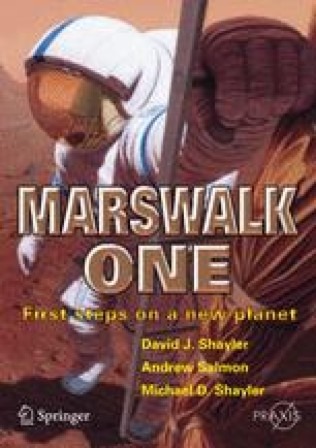
Marswalk One : First Steps on a New Planet
MARSWALK ONE: First Steps on a New Planet addresses the question of why we should embark on a journey to Mars, documenting what the first human crew will do when they place their feet in the red dust of the planet. The book also addresses why we need to carry out these tasks and, more importantly, what a human crew could achieve that an automated mission could not. Understanding the clear benefits of sending a human crew to the surface of Mars, and how these benefits can be seen back on Earth, is the key to sustained long-term public and political support for the programme in terms of cash and commitment. The book accepts that the journey will be made, but does not specify precisely when. Flight time, and how to get to and from the planet are discussed briefly, to understand why the suggested duration spent at Mars is reasonable. The main objective of the work is to look at what science will be done on the surface – supported by orbital operations – and what hardware and technology will be employed to achieve the mission objectives. This analysis is drawn from previous experiences in manned and unmanned space programmes, including Apollo, Skylab, Salyut/Mir, Shuttle and ISS, Viking, Luna/Lunokhod, and recent Mars missions such as Pathfinder and Global Surveyor.

Machine learning for biomedical application
Biomedicine is a multidisciplinary branch of medical science that consists of many scientific disciplines, e.g., biology, biotechnology, bioinformatics, and genetics; moreover, it covers various medical specialties. In recent years, this field of science has developed rapidly. This means that a large amount of data has been generated, due to (among other reasons) the processing, analysis, and recognition of a wide range of biomedical signals and images obtained through increasingly advanced medical imaging devices. The analysis of these data requires the use of advanced IT methods, which include those related to the use of artificial intelligence, and in particular machine learning. It is a summary of the Special Issue “Machine Learning for Biomedical Application”, briefly outlining selected applications of machine learning in the processing, analysis, and recognition of biomedical data, mostly regarding biosignals and medical images.
Low Power Methodology Manual : For System-on-Chip Design
"Tools alone aren't enough to reduce dynamic and leakage power in complex chip designs - a well-planned methodology is needed. Following in the footsteps of the successful Reuse Methodology Manual (RMM), authors from ARM and Synopsys have written this Low Power Methodology Manual (LPMM) to describe [such] [a] low-power methodology with a practical, step-by-step approach." "Excellent compendium of low-power techniques and guidelines with balanced content spanning theory and practical implementation. The LPMM is a very welcome addition to the field of low power SoC implementation that has for many years operated in a largely ad-hoc fashion."
Long-Term Preservation of Digital Documents : Principles and Practices
Key to our culture is that we can disseminate information, and then maintain and access it over time. While we are rapidly advancing from vulnerable physical solutions to superior, digital media, preserving and using data over the long term involves complicated research challenges and organization efforts. Uwe Borghoff and his coauthors address the problem of storing, reading, and using digital data for periods longer than 50 years. They briefly describe several markup and document description languages like TIFF, PDF, HTML, and XML, explain the most important techniques such as migration and emulation, and present the OAIS (Open Archival Information System) Reference Model. To complement this background information on the technology issues the authors present the most relevant international preservation projects, such as the Dublin Core Metadata Initiative, and experiences from sample projects run by the Cornell University Library and the National Library of the Netherlands. A rated survey list of available systems and tools completes the book.
Leadership and Business Ethics ; 2nd ed.
Seeks to overcome the marginal status of business ethics in universities, business, and enterprise by demonstrating that virtue ethics is an important step in the direction of an adequate response to the leadership issue. This new edition of a popular work points to new ways of achieving an ever more urgent coalescence of ethics and business. It proposes practical advice and viable suggestions to business people on what is right and wrong in business. The volume makes a vital contribution in the area of education that should serve the ongoing development of top leaders.
Leadership and Business Ethics ; 1st ed.
Seeks to contribute to a more adequate coalescence of ethics and business with innovative models for such coalescence, for the mutual benefit of business ethicists, professors teaching in the undergraduate and MBA classroom, corporate executives, and businesspeople. While each of the contributions in this collection is distinct, each invites us to examine our own mind sets about corporate responsibility and the future of free enterprise as Western multinational corporations expand into a global economy. This collection of essays helps to refocus our conceptual work about commerce and business practices in this new century of global enterprise.

Kristian Birkeland : The First Space Scientist
PREFACEThisscientific biography of Kristian Birkeland (1867–1917) was written to bring the story ofa Norwegian national hero to the attention ofthe English-speaking world. Birkeland’sheroic stature was established not on a field of military battle,but in the bitter cold of the Artic wilderness ashe sought to answer basic questions abouthow the Sun controlled northern lights andmag-netic storms. He was also afather of Norsk Hydro one ofNorway’s largest industries. Birkel and died before reaching the age of 50.Because Birkel and never kept adiary, documented information about his family and private life is sparse. Before he died, Olaf Devik, the last of Birke-ffland’s close friends, gave along interview and graciously transferred his personal archive to A.E. Birkeland’s 82 scientific papers and three book-length publications map the progress of his investigations. addressed this book questions that had vexed European scientists for centuries. Why do the northern lights appear overhead when the Earth’s magnetic field is disturbed? How are magnetic storms connected to disturbances on the Sun? To answer these questions Birkeland interpreted his advance laboratory simulations and daring campaigns in the Arctic wilderness in the light of Maxwell’s newly discovered laws of electricity and magnetism. Birkeland’s ideas were dismissed for decades, only to be vindicated when satellites could fly above the Earth’s atmosphere.
Common Chinese Materia Medica ; Vol.4
Describes 256 species of medicinal plants from 5 families, which are commonly used in Chinese medicine. The most important species are Agrimonia pilosa, Amygdalus persica, Armeniaca mume, Armeniaca vulgaris, Armeniaca sibirica, Chaenomeles sinensis, Eriobotrya japonica of Rosaceae; Chimonanthus praecox of Calycanthaceae;Albizia julibrissin, Archidendron clypearia, Entada phaseoloides, Bauhinia championii of Mimosoideae; Caesalpinia sappan, Cassia tora, Gleditsia sinensis of Caesalpiniaceae; Abrus cantoniensis, Astragalus membranaceus, Astragalus membranaceus, Dalbergia odorifera, Desmodium caudatum, Desmodium styracifolium, Erythrina variegata, Euchresta japonica, Flemingia prostrata, Glycyrrhiza uralensis, Glycyrrhiza inflata, Glycyrrhiza glabra, Lablab purpureus, Sophora japonica and Spatholobus suberectus of Butterflyaceae. In each specie, it introduces the scientific names, medicinal names, morphologies, habitats, distributions, acquisition and processing methods of these medicinal plants, the content of medicinal properties, therapeutic effects, usage and dosage of these medicinal plants, and attaches unedited color pictures and pictures of part herbal medicines of each species. This book series has 10 volumes in total, which covers over 2000 kinds of Chinese medicines that are commonly used. These volumes not only introduce the efficacy function and some prescriptions of the medicines, but also introduce the biological characteristics of them in detail with clear photos of the habitats, so that readers can identify them in the field. Apart from the growing environment, the books expound the distribution areas and other information to facilitate researches and other applications. The volumes are targeted at readers of general interests and it is also of high referential value for scientific researcher and teachers. It can be used as a guide to researchers, clinical doctors, and students in the department of pharmaceutics and traditional Chinese medicine.

Cancer immunotherapy
Defining Cancer as a disease in which some of the body's cells grow uncontrollably and spread to other parts of the body, making it an enormous medical and economic burden accounting for 9.6 million deaths in 2018. Cancer treatments were being introduced for a long time. The development of specific therapies to treat cancer really depends on the continued discovery of the molecular changes that lead to the malignant progression of human cancers. More and more drugs are being developed to block cancer pathways that lead to impaired growth and survival of cancer cells. In this dissertation, the concept of cellular and immunotherapy of cancer will be discussed briefly, taking into considerations the mechanisms of action, the advantages, challenges and drawbacks of the different types of monoclonal antibodies and CAR T-Cell therapy.
Building construction and technology
Highlights various aspects of building construction industry based on data from field studies. It discusses the challenges, methodologies, technological applications in building construction, technology, and management. The book presents new approaches to effective building construction and an understanding of the impact of applications of latest technologies.
Brain development in Drosophila melanogaster
The central nervous system (CNS) represents the organ with the highest structural and functional complexity. Accordingly, uncovering the mechanisms leading to cell diversity, patterning and connectivity in the CNS is one of the major challenges in developmental biology. The developing CNS of the fruitfly Drosophila melanogaster is an ideal model system to study these processes. Several principle questions regarding neurogenesis (like stem cell formation, cell fate specification, axonal pathfinding) have been addressed in Drosophila by focusing on the relatively simply structured truncal parts of the nervous system. This book provides an overview of some major facets of recent research on Drosophila brain development.
Bio-mechanisms of swimming and flying ; Fluid dynamics, biomimetic robots, and sports science
This book follows "Bio-mechanisms of Animals in Swimming and Flying" published in 2004 including 11 chapters. This time, the book includes 31 chapters on the latest researches into natural autonomous systems and locomotion in both flying and swimming organisms. The area of sports science such as analysis and simulation of human swimming is newly added. The computational frameworks for the modeling, simulation and optimization of animals in swimming and flying demonstrate an important role in the progress of interdisciplinary work in the fields of biology and engineering. An innovative technology is exhibited for the flight of an insect size micro air vehicle. Neuronal science is not only unveiling the locomotion mechanisms of swimming in fish from the aspect of the neuronal activities, but also applied to underwater biomimetic robots. The interdisciplinary works are exhibited in the fields of biology and engineering, yielding real-world benefits in innovative technologies.
Biomacromolecules : Carbohydrates, lipids, proteins and nucleic acids
The first chapter looks at the structural formulas and cyclic forms of monosaccharides, as well as their synthesis and breakdown. Cyclization, enolization, isomerization, tautomerization, mutarotation, and epimerization are all briefly described. Examples of disaccharides and polysaccharides are also presented. The second chapter covers triglycerides, steroids, vitamins, and their constituents. The third chapter examines the primary structure of proteins, including amino acid properties, peptide bond formation, and peptide synthesis. It also addresses secondary, tertiary, and quaternary structures. The book concludes with a chapter on nucleic acids, which covers the chemistry of nucleosides and oligonucleotides as well as topics such as genetic code, DNA secret code, Polymerase Chain Reaction and DNA fingerprinting.

Beginning Java™ SE 6 Platform : From novice to professional
Beginning Java™ SE 6 Platform: From Novice to Professional steers you through the maze of Java Standard Edition (SE) 6 features. The first chapter sets the stage by introducing Java SE 6 in terms of its name change, themes, an overview, and a sampling of new features. It also briefly discusses the first two Java SE 6 updates.

Beginning ASP.NET 3.5 in VB 2008 : From novice to professional
The most up–to–date and comprehensive introductory ASP.NET book you'll find on any shelf, Beginning ASP.NET 3.5 in VB 2008 guides you through Microsoft's latest technology for building dynamic web sites. This book will enable you to build dynamic web pages on the fly, and it assumes only the most basic knowledge of Visual Basic 2008.

Beginning ASP.NET 3.5 in C# 2008 : From novice to professional
The most up–to–date and comprehensive introductory ASP.NET book you'll find on any shelf, Beginning ASP.NET 3.5 in C# 2008 guides you through Microsoft's technology for building dynamic web sites. This book will enable you to build dynamic web pages on the fly, and it assumes only the most basic knowledge of C#.
