



الصفحة 3
الصفحة 3

Component Deployment; 3rd International Working Conference, CD 2005, Grenoble, France, November 28-29, 2005, Proceedings
his volume of Lecture Notes in Computer Science contains the proceedings of the rd 3 Working Conference on Component Deployment (CD 2005), which took place 2005 in Grenoble, France, and co-located with Middleware 2005. CD 2005 is the third international conference in the series, the first two being held in Berlin and Edinburgh in 2002 and 2004, respectively. The proceedings of both these conferences were also published by Springer in the Lecture Notes in Computer Science series and may be found in volumes 2370 and 3083. Component deployment addresses the tasks that need to be performed after components have been developed and addresses questions such as: • What do we do with components after they have been built? • How do we deploy them into their execution environment? • How can we evolve them once they have been deployed?
Compiling ESTEREL
Esterel is based on the simple idea of providing a software language that has a synchronous model of time. That is, the execution of the program is divided into discrete instants, and statements are either guaranteed to execute in a single instant, or take multiple instants as requested by the programmer. Suitable for programming safety-critical real-time systems, Esterel and its model of computation have found use in industrial applications such as avionics, integrated circuit design, and other safety-critical environments. While Compiling Esterel does not assume prior knowledge of the Esterel language, readers will appreciate having prior knowledge of programming language semantics and compiler technology, along with some familiarity with synchronous digital hardware design.

Certification and security in inter-organizational E-services ; IFIP 18th World Computer Congress, August 22-27, 2004, Toulouse, France
This collection of papers offers real-life application experiences, research results and methodological proposals of direct interest to systems experts and users in governmental, industrial and academic communities. This book also documents several important developments. The uptake of distributed computational infrastructure oriented to service provision, like Web-Services and Grid, is making C&S even more important. E-services based on legacy systems managed by autonomous and independent organizations, a common situation in the public administration sector, increase overall complexity. The increased presence and use of e-service IT-infrastructures depends on the critical ability required for all security issues, from the basic (availability, authentication, integrity, confidentiality) to the more complex (e.g. authorization, non-repudiation).

CASCOM : Intelligent service coordination in the semantic web
A general architecture for service delivery and coordination in intelligent agent-based peer-to-peer (IP2P) environments, that has been developed within the CASCOM research project, is presented in this book.

Business process management ; 5th International Conference, BPM 2007, Brisbane, Australia, September 24-28, 2007, Proceedings
This book includes business process maturity and performance, business process modeling, case studies, compliance and change, process configuration and execution, formal foundations of BPM, business process mining, and semantic issues in BPM.
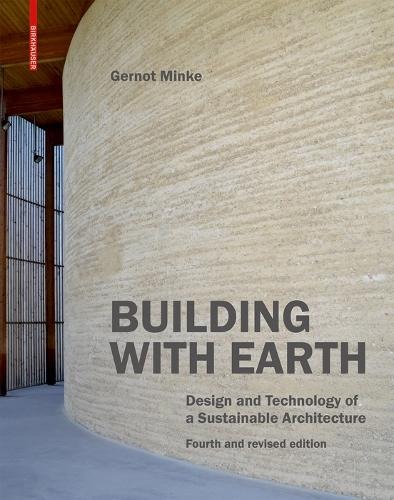
Building with earth : Design and technology of a sustainable architecture
Offers a practical systematic overview of the many uses of earth and techniques for processing it. Its properties and physical characteristics are described in informed and knowledgeable detail. The presentation reflects the rich and varied experiences gained over thirty years of building earth structures all over the world. Numerous photographs of construction sites and drawings show the concrete execution of earth architecture. Documentation of 30 international earth buildings. The characteristics of the building material earth and its applications in modern architecture
Bathrooms and sanitation : Principles, design, implementation = Detail practice
Provides comprehensive information on the basic principles of contemporary sanitary planning, as well as detailed solutions for state of the art execution and fitting. A selection of successfully completed projects offers readers inspiration for their own work. Comprehensive design principles and planning tools. Examples of successful projects. Sanitary areas as a sign of quality when evaluating buildings. Renovation, modernisation and accessibility. Fittings, materials and lighting design
Basics Masonry Construction - Basics
Masonry construction is usually the top priority in the constructive exercises during the course. The basic principles of dimensions, construction and component joining are developed using simple masonry structures. Topics: Material and dimensions Building physics and load-bearing properties Typical associations Components Execution of masonry
Analyzing uncertainty in civil engineering
This volume addresses the issue of uncertainty in civil engineering from design to construction. Failures do occur in practice. Attributing them to a residual system risk or a faulty execution of the project does not properly cover the range of causes. A closer scrutiny of the adopted design, the engineering model, the data, the soil-construction-interaction and the model assumptions is required. Usually, the uncertainties in initial and boundary conditions are abundant. Current engineering practice often leaves these issues aside, despite the fact that new scientific tools have been developed in the past decades that allow a rational description of uncertainties of all kinds, from model uncertainty to data uncertainty. It is the aim of this volume to have a critical look at current engineering risk concepts in order to raise awareness of uncertainty in numerical computations, shortcomings of a strictly probabilistic safety concept, geotechnical models of failure mechanisms and their implications for construction management, execution, and the juristic question of responsibility. In addition, a number of the new procedures for modelling uncertainty are explained.
Advances in Rule Interchange and Applications ; International Symposium, RuleML 2007, Orlando, Florida, October 25-26, 2007, Proceedings
The goal of RuleM is to develop an open, general, XML-based family of rule languages as intermediaries between various ‘specialized’ rule vendors, applications, industrial and academic research groups, as well as standardization efforts such as OMG’s PRR or W3C’s RIF. A general advantage of using declarative rules is that they can be easily represented in a machine-readable and platform-independent manner, often governed by an XML schema. This fits well into today’s distributed, heterogeneous Web-based system environments. Rules represented in standardized Web formats can be discovered, interchanged and invoked at runtime within and across Web systems, and can be interpreted and executed on any platform.
Advances in computer science – ASIAN 2007. Computer and network security ; 12th Asian computing science conference, Doha, Qatar, December 9-11, 2007, Proceedings
Covering all current aspects of computer and network security, the papers are organized in topical sections on program security, computer security, access control, protocols, intrusion detection, network security, and safe execution.
Abstract Computing Machines : A Lambda Calculus Perspective
The book addresses ways and means of organizing computations, highlighting the relationship between algorithms and the basic mechanisms and runtime structures necessary to execute them using machines. It completely abstracts from concrete programming languages and machine architectures, taking instead the lambda calculus as the basic programming and program execution model to design various abstract machines for its correct implementation. The emphasis is on fully normalizing machines based on full-fledged beta-reductions as essential prerequisites for symbolic computations that treat functions and variables truly as first-class objects. Their weakly normalizing counterparts are shown to be functional abstract machines that sacrifice the flavors of full beta-reductions for decidedly simpler runtime structures and improved runtime efficiency. Further downgrading of the lambda calculus leads to classical imperative machines that permit side-effecting operations on the runtime environment.

A Trading Desk View of Market Quality
"Market quality" is a complex, ambiguous term that means different things to different people. How should it be defined, measured, monitored, and improved? What is the evidence about the current state of our markets? How effective have recent innovations been? How can we better meet investor needs? These are some of the questions that we address in this book, along with a broad range of issues concerning equity market structure, regulation, and the quest for best execution. Throughout, particular attention is given to the perspective of front line participants on the buy-side and sell-side trading desks.
