



الصفحة 3
الصفحة 3

Herbal bioactive-based drug delivery systems ; 1st ed.
Provides a wide-ranging, in-depth resource for herbal bioactives, including detailed discussion of standardization and regulations. The book first explores specific drug delivery systems such as gastrointestinal, ocular, pulmonary, transdermal, and vaginal and rectal. It then discusses novel applications for nano, cosmetics, nutraceuticals, wound healing and cancer treatment. Finally, there is a section focusing on standardization and regulation which includes an enhancement of properties. This book is an essential resource for pharmacologists, pharmaceutical scientists, material scientists, botanists, and all those interested in natural products and drug delivery systems developments.

Handbook of research on nano-drug delivery and tissue engineering : Guide to strengthening healthcare systems
Provides an important and valuable collection of research accomplishments in nanomedicine, drug delivery, tissue engineering, processing, formulations, and their applications. Addresses topical issues in nano-drug delivery and nanotechnological approaches to tissue engineering. The first section offers research on a variety of diverse nano-based drug delivery systems, along with discussions of their efficacy, safety, toxicology, and applications for different purposes. Focusing on nanotechnology approaches to tissue engineering, part two of the volume considers the use of hydrogel systems, nanoceria and micro- and nano-structured biomaterials for bone tissue engineering, mesenchymal stem cells, and more. This volume is a systematic scientific reference of the novel research developments specifically in this area. The editors give special emphasis on the new trends and developments in the field of nanomedicine that will be very helpful for pharmaceutical and medical researchers, scientists, faculty, and students.

GPCRs as Therapeutic Targets ; 2-Vol. Set
Delivers an authoritative and in-depth compendium of a vibrant and active area of academic and industrial drug discovery. The book serves as an important reference for new and experienced researchers studying G protein-coupled receptors and discusses the molecular pharmacology of this important target class. It also includes up-to-date material on GPCR structures and structure-based drug design.

Gene delivery systems development and applications
Covers the development of gene therapy today, the technology involved, clinical applications of siRNA, non-viral vector-based mRNA delivery using nanotechnology, and RNA based vaccines for treating the infectious diseases. It also presents the current application of the CRISPR/Cas9 gene-editing technique which has revolutionized genome editing and which was awarded the 2020 Nobel Prize in Chemistry. Several new drug delivery systems are explored for the applications of gene therapy. These are found to be useful in treating chronic illnesses, including cancer and infectious diseases.

Gene delivery systems : nano delivery technologies
Gene therapy involves altering the genes in the body's cells in an effort to treat or stop disease, instead of using drugs or surgery. This book discusses the development of gene therapy today, from the technology involved to gene correction and the advances in genome editing.

Gastrointestinal malignancies
Details the advances in drug discovery and delivery and the present need for emerging technologies. Throughout the text new micro and nanofabrication techniques are described, including methods such as electrohydrodynamic processes, additive manufacturing, and microfluidics, which have the potential to produce drug delivery systems that were not possible a few years ago. This book is of great use to both entry-level and experienced researchers in the field of emerging technologies for the manufacturing of drug delivery devices.

Fundamentals of drug delivery
A comprehensive guide to the current research, major challenges, and future prospects of controlled drug delivery systems. Provides comprehensive and up-to-date coverage of the essential principles and processes of modern controlled drug delivery systems. Featuring contributions by respected researchers, clinicians, and pharmaceutical industry professionals, this edited volume reviews the latest research in the field and addresses the many issues central to the development of effective, controlled drug delivery.

Functional Hydrogels in Drug Delivery : Key Features and Future Perspectives
Deals with the synthesis and characterization of hydrogels specifically used as drug delivery systems. Each chapter includes the most recent updates about the different starting materials employed--whether natural and synthetic--and the improvement, such as modifications of synthetic approach and polymerization technique, of their physicochemical and biological properties to synthetize high performing carriers for specific uses, i.e. stimuli-responsive materials, molecularly imprinted polymers, mucoadhesive materials, carrier for the delivery of high molecular weight drugs, and gene-delivery.
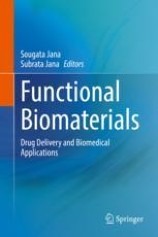
Functional Biomaterials : Drug Delivery and Biomedical Applications
Explores in depth a wide range of functional biomaterials-based systems for drug, gene delivery, and biomedical aspects. The chapters cover newer technologies such as polymeric micelle, pH-responsive biomaterials, stimuli-responsive hydrogels, silk fibroin, inorganic biomaterials, synthetic biomaterials, 3D printed biomaterials, metallic biomaterials, ceramic and hybrid biomaterials. It also describes the theranostic approaches for cancer therapy, the biomaterials-based nanofibers scaffolds in tissue engineering, as well as the strategies applications of metallic biomaterials for the medical and dental prosthetic field.

Fullerene and Alzheimer disease
Patients have suffered for a long time from Alzheimer's disease. The presence of some obstacles in treatment, which prompted us to talk in this research on one of the modern treatments for this disease, which is fullerene. The focus was in some detail on its structure and characteristics, in addition to its applications. We especially mention its application in the treatment of Alzheimer's. This was a new step in the world of medicine and pharmacy.

Formulating poorly water soluble drugs
A pharmaceutical scientist’s approach toward solubility enhancement of a poorly water-soluble molecule typically includes detailed characterization of the compound’s physiochemical properties, solid-state modifications, advanced formulation design, non-conventional process technologies, advanced analytical characterization, and specialized product performance analysis techniques. The scientist must also be aware of the unique regulatory considerations pertaining to the non-conventional approaches often utilized for poorly water-soluble drugs. One faced with the challenge of developing a drug product from a poorly soluble compound must possess at a minimum a working knowledge of each of the above mentioned facets and detailed knowledge of most. In light of the magnitude of the growing solubility problem to drug development, this is a significant burden especially when considering that knowledge in most of these areas is relatively new and continues to develop.

Fluid Transport in Nanoporous Materials : Proceedings of the NATO Advanced Study Institute, held in La Colle sur Loup, France, 16-28 June 2003
The most promising include molecular sieves which are being developed as inorganic or polymeric systems with 0. 3-30nm in pore dimensions. These nanoporous solids have a broad spectrum of applications in chemical and biochemical processes. The unique applications of molecular sieves are based on their sorption and transport selectivity. Yet, the transport processes in nanoporous systems are not understood well. At the same time, the theoretical capabilities have increased exponentially catalyzed by increases in computational capabilities. The interactions between a diffusing species and the host solid are being studied with increasing details and realism. Further, in situ experimental techniques have been developed which give an understanding of the interactions between diffusing species and nanoporous solids that was not available even a few years ago. The time was ripe to bring together these areas of common interest and study to understand what is known and what has yet to be determined concerning transport in nanoporous solids. Molecular sieves are playing an increasing role in a broad range of industrial petrochemical and biological processes. These include shape-selective separations and catalysis as well as sensors and drug delivery. Molecular sieves are made from inorganic as well as organic solids, e. g. , polymers. They can be employed in packed beds, as membranes and as barrier materials. Initially, the applications of molecular sieves were dominated by the use of zeolites.

Exosomes based drug delivery strategies for brain disorders
Provides a comprehensive overview of the role of exosomes in brain diseases, including stroke, multiple sclerosis, Parkinson's disease, Alzheimer's disease, epilepsy, and depression. It covers the basics of exosome biogenesis, composition, and synthesis, as well as the therapeutic potential of exosomes in brain disorders. The correlation between exosomes and neuroinflammation, the challenges of using exosomes as a novel carrier, and engineered exosomes to deliver therapeutic protein are covered well in this book. Use of radiolabelled exosomes as a diagnostic tool and the toxicity studies of exosomes with potential overcome approaches. It is an essential resource for researchers, clinicians, and healthcare professionals working in the field of exosome research, especially on its applications in brain disorders.

Ethnobotany : A phytochemical perspective
Explores the chemistry behind hundreds of plant medicines, dyes, fibers, flavors, poisons, insect repellants, and many other uses of botanicals. Bridging the gap between ethnobotany and chemistry, this book presents an introduction to botany, ethnobotany, and phytochemistry to clearly join these fields of study and highlight their importance in the discovery of botanical uses in modern industry and research. Part I. Ethnobotany, explores the history of plant exploration, current issues such as conservation and intellectual property rights, and a review of plant anatomy. An extensive section on plant taxonomy highlights particularly influential and economically important plants from across the plant kingdom. Part II. Phytochemistry, provides fundamentals of secondary metabolism, includes line drawings of biosynthetic pathways and chemical structures, and describes traditional and modern methods of plant extraction and analysis. The last section is devoted to the history of native plants and people and case studies on plants that changed the course of human history from five geographical regions: Africa, the Americas, Asia, Europe, and Ocean. Throughout the entire book, vivid color photographs bring science to life, capturing the essence of human botanical knowledge and the beauty of the plant kingdom.
Essentials of industrial pharmacy
Presents various pharmaceutical processes and equipment that are frequently used for production of pharmaceutical dosage forms, along with quality control tests of these dosage forms. Pictorial/graphical illustrations provide easier understanding of complex pharmaceutical concepts, manufacturing processes of pharmaceutical dosage forms. Since it is imperative for pharmacy students to have a clear understanding of the basic concepts used in development of drugs into suitable and stable dosage forms.

Essential pharmaceutics
Essential Pharmaceutics is suited to this modern teaching style, and is the first book of its kind to provide the resources and skills needed for successful implementation of an active learning pharmaceutics course.This text offers a format that is specifically suited for integration in an active learning, team-based classroom setting

Emerging drug delivery and biomedical engineering technologies : transforming therapy
Details the advances in drug discovery and delivery and the present need for emerging technologies. Throughout the text new micro and nanofabrication techniques are described, including methods such as electrohydrodynamic processes, additive manufacturing, and microfluidics, which have the potential to produce drug delivery systems that were not possible a few years ago. This book is of great use to both entry-level and experienced researchers in the field of emerging technologies for the manufacturing of drug delivery devices.

Drugs and a methodological compendium : From bench to bedside
Provides a meticulous view on methodological drug discovery and development insights from bench to bedside. Focus on computational modus operandi, pharmacological optimization approaches, modern high-throughput screening methods and in-vitro procedures, role of structural biologists in drug discovery and development, medicinal chemistry approaches for drug design, formulation and drug delivery, in-vivo evaluations of candidate molecules, clinical trial procedures and others. Covers specific case studies, regulatory approval proceedings, and industrial view point alongside the aforementioned conceptual layout. And at the same time, the volume integrates medical, biological, medicinal, pharmacological and computational streams, and it is suggested as an ideal guideline to a wide audience including molecular biologists, biochemist, pharmacologists, medicinal chemist, toxicologists, drug discovery and development researchers, and all other students interested in these disciplines.

Drug target selection and validation
Focuses on the computational aspects of early drug discovery, drug target identification, and validation. It revises current classical paradigms in target and phenotypic-based drug design with still ingrained approximations and concepts and discusses the research in the new network approach concept that include kinetic selectivity and metabolic analysis. Many often-overlooked approximations and concepts in drug discovery are fully covered. Drug Target Selection and Validation includes both introductory sections and research-based sections to be of use to both students and research scientists in drug discovery, design, kinetics and metabolic analysis. Pharmaceutical scientists, pharmaceutics, drug developers, pharmacologists, biomedical researchers in computer science, medicinal chemists, and precision medicine developers benefit from the information provided. The book concludes with a chapter on chemical and structural databases.

Drug Selectivity : An Evolving Concept in Medicinal Chemistry
Provides a current overview and comprehensive compilation for medicinal chemists that discusses the effects of aiming for multiple targets on the entire drug development process. The result is a broad survey of current and future strategies for drug selectivity in medicinal chemistry with theoretical but also practical aspects. Different strategies are presented and evaluated, such as various design approaches, merged multiple ligands, discovery technologies and a broad range of successful examples of unselective drugs taken from all major disease areas. With its wide-ranging view of an emerging new paradigm in drug development, this handbook is of prime importance for every medicinal and pharmaceutical chemist.
