



الصفحة 3
الصفحة 3

Balancing Agility and Formalism in Software Engineering ; 2nd IFIP TC 2 Central and East European Conference on Software Engineering Techniques, CEE-SET 2007, Poznan, Poland, October 10-12, 2007, Revised Selected Papers
This book constitutes the thoroughly refereed post-conference proceedings of the Second IFIP TC 2 Central and East Conference on Software Engineering Techniques, CEE-SET 2007, held in Poznan, Poland, in October 2007.
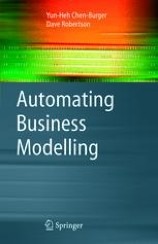
Automating business modelling : A guide to using logic to represent Informal methods and support reasoning
Enterprise Modelling (EM) methods are frequently used by entrepreneurs as an analysis tool for describing and redesigning their businesses. The resulting product, an enterprise model, is commonly used as a blueprint for reconstructing organizations and such effort is often a part of business process re-engineering and improvement initiatives. Automating Business Modelling describes different techniques of providing automated support for enterprise modelling methods and introduces universally used approaches. A running example of a business modelling method is included; providing a framework and detailed explanation as to how to construct automated support for modelling, allowing readers to follow the method to create similar support. Suitable for senior undergraduates and postgraduates of Business Studies, Computer Science and Artificial Intelligence, practitioners in the fields of Knowledge Management, Enterprise Modelling and Software Engineering, this book offers insight and know-how to both student and professional.

Advances in visual computing ; Vol. 4292 ; 2nd International symposium, ISVC 2006, Lake Tahoe, NV, USA, November 6-8, 2006, Proceedings, Part II
This year, the program consisted of 13 oral sessions, one poster session, ten special tracks, and six keynote presentations. The response to the call for - pers was very strong. We received more than twice the papers received last year. Specifcally, we received over 280 submissions for the main symposium from which we accepted 65 papers for oral presentation (23% acceptance) and 56 papers for poster presentation (20% acceptance). Special track papers were solicited separately through the Organizing and Program Committees of each track. A total of 57 papers were accepted for presentation in the special tracks. All papers were reviewed with an emphasis on potential to contribute to the state of the art in the ?eld. Selection criteria included accuracy and originality of ideas, clarity and signi?cance of results, and presentation quality. The review process was quite rigorous, involving two to three independent blind reviews followed by several days of discussion.

Advances in Visual Computing ; Vol. 4291 ; 2nd International Symposium, ISVC 2006, Lake Tahoe, NV, USA, November 6-8, 2006, Proceedings, Part I
This year, the program consisted of 13 oral sessions, one poster session, ten special tracks, and six keynote presentations. The response to the call for - pers was very strong. We received more than twice the papers received last year. Specifcally, we received over 280 submissions for the main symposium from which we accepted 65 papers for oral presentation (23% acceptance) and 56 papers for poster presentation (20% acceptance). Special track papers were solicited separately through the Organizing and Program Committees of each track. A total of 57 papers were accepted for presentation in the special tracks. All papers were reviewed with an emphasis on potential to contribute to the state of the art in the ?eld. Selection criteria included accuracy and originality of ideas, clarity and signi?cance of results, and presentation quality. The review process was quite rigorous, involving two to three independent blind reviews followed by several days of discussion. During the discussion period we tried to correct anomalies and errors that might have existed in the initial reviews.

Advances in spatial and temporal databases ; 9th International symposium, SSTD 2005, Angra dos Reis, Brazil, August 22-24, 2005, Proceedings
Constitutes the refereed proceedings of the introduce the papers of the proceedings of the 9th - ternational Symposium on Spatial and Temporal Databases – SSTD 2005. This year’s symposium continues the tradition of being the premier forum for the presentation of research results and experience reports on leading edge issues of spatial and temporal database systems, including data models, systems, applications and theory. ll the needs of novel applications and heterogeneous environments and identify new directions for future research and development. aspects of database systems for managing spatial and temporal data and for supporting their applications. A total of 77 papers were submitted this year from several countries. After a thorough review process, the program committee accepted 24 papers covering a variety of topics, including indexing techniques and query processing, mobile environments and moving objects, and spatial and temporal data streams.

Advances in Smaltalk ; 14th International Smaltalk Conference, ISC 2006, Prague, Czech Republic, September 4-8, 2006, Revised Selected Papers
This book constitutes the thoroughly refereed post-proceedings of the 14th International Smalltalk Conference.

Advances in intelligent data analysis XIX ; 19th International Symposium on Intelligent Data Analysis, IDA 2021, Porto, Portugal, April 26–28, 2021, Proceedings
Constitutes the proceedings of the 19th International Symposium on Intelligent Data Analysis, IDA 2021, which was planned to take place in Porto, Portugal. Due to the COVID-19 pandemic the conference was held online during April 26-28, 2021. The 35 papers included in this book were carefully reviewed and selected from 113 submissions. The papers were organized in topical sections named: modeling with neural networks; modeling with statistical learning; modeling language and graphs; and modeling special data formats.
Advances in grid and pervasive computing ; 1st International Conference, GPC 2006, Taichung, Taiwan, May 3-5, 2006, Proceedings
This book constitutes the refereed proceedings of the First International Conference on Grid and Pervasive Computing, GPC 2006, held in Taichung, Taiwan, in May 2006.The 64 revised full papers were carefully reviewed and selected from 267 submissions. The papers are organized in topical sections on grid scheduling, peer-to-peer computing, Web/grid services, high performance computing, ad hoc networks, wireless sensor networks, grid applications, data grid, pervasive applications, semantic Web, semantic grid, grid load balancing, wireless ad hoc/sensor networks, and mobile computing.

Advances in 3D Geo Information Systems
The individual papers represent a valuable collection of information on the current state-of-the-art research in the field of 3D geoinformation. It covers a range of these challenges, collected under the themes of Applications, Acquisition, Modelling, Analysis and Visualisation. The main strength of the collection concerns the data modelling and DBMS implementation issues with 3D GIS.
Adaptive Learning of Polynomial Networks : Genetic Programming, Backpropagation and Bayesian Methods
This book provides theoretical and practical knowledge for develop ment of algorithms that infer linear and nonlinear models. It offers a methodology for inductive learning of polynomial neural network mod els from data. The design of such tools contributes to better statistical data modelling when addressing tasks from various areas like system identification, chaotic time-series prediction, financial forecasting and data mining. The main claim is that the model identification process involves several equally important steps: finding the model structure, estimating the model weight parameters, and tuning these weights with respect to the adopted assumptions about the underlying data distrib ution. When the learning process is organized according to these steps, performed together one after the other or separately, one may expect to discover models that generalize well.
