



الصفحة 3
الصفحة 3
Bio-inspired credit risk analysis : Computational intelligence with support vector machines
Credit risk analysis is one of the most important topics in the field of financial risk management. Due to recent financial crises and regulatory concern of Basel II, credit risk analysis has been the major focus of financial and banking industry. Especially for some credit-granting institutions such as commercial banks and credit companies, the ability to discriminate good customers from bad ones is crucial. The need for reliable quantitative models that predict defaults accurately is imperative so that the interested parties can take either preventive or corrective action. Hence credit risk analysis becomes very important for sustainability and profit of enterprises. In such backgrounds, this book tries to integrate recent emerging support vector machines and other computational intelligence techniques that replicate the principles of bio-inspired information processing to create some innovative methodologies for credit risk analysis and to provide decision support information for interested parties.
Beginning Scala 3 : A functional and Object-Oriented Java Language
Introduces you to the Scala programming language, its object-oriented and functional programming characteristics, and then guides you through Scala constructs and libraries that allow you to assemble small components into high-performance, scalable systems. You will understand why Scala is judiciously used for critical business applications by leading companies such as Twitter, LinkedIn, Foursquare, the Guardian, Morgan Stanley, Credit Suisse, UBS, and HSBC – and you will be able to use it in your own projects. You will: Get started with Scala 3 or Scala language programming in general / Understand how to utilitze OOP in Scala / Perform functional programming in Scala / Master the use of Scala collections, traits and implicits / Leverage Java and Scala interopability / Employ Scala for DSL programming / Use patterns and best practices in Scala

Beginning PHP and MySQL E-Commerce : From novice to professional
Beginning PHP and MySQL E-Commerce: From Novice to Professional, Second Edition covers every step of the design and building process involved in creating powerful, extendable e–commerce web sites. Based around a real–world example involving a web site selling t–shirts, you'll learn how to create and manage a product catalog, build and integrate a shopping cart, and process customer accounts and PayPal/credit card transactions. With the e–commerce framework in place, authors Emilian Balanescu and Cristian Darie show you how to integrate advanced features sure to set your web site apart from the competition. You'll learn how to expand your catalog using Amazon Web Services, optimize the web site for the search engines, and take advantage of Ajax to build an even more user–friendly shopping cart.
Asset prices, booms and recessions : Financial economics from a dynamic perspective
Studies the interaction of the financial market, economic activity and the macroeconomy from a dynamic perspective. The financial market to be studied here encompasses the money and bond market, credit market, stock market and foreign exchange market. Economic activity is described by the activity of firms, banks, households, governments and countries. The book shows how economic activity affects asset prices and the financial market and how asset prices and financial market volatility feed back to economic activity. The focus in this book is on theories, dynamic models and empirical evidence.

Assessing Quality in European Higher Education Institutions : Dissemination, Methods and Procedures
This book collects the evaluation and accreditation experiences gathered by higher education institutions in Finland, France, Germany, Italy, the Netherlands, Portugal, the United Kingdom and Sweden.
Arts, Sciences, and Economics : A Historical Safari
This book has a rather long-winding history. It is not like anything else the present author ever wrote, as all the rest is theoretical economics in a d- tinctively mathematical dress. For the emergence of the following pages, there are several people, - cept the author, who are to have the credit, or perhaps the blame.
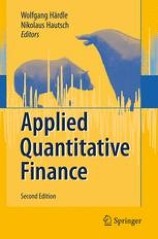
Applied Quantitative Finance
Applied Quantitative Finance (2nd edition) provides a comprehensive and state-of-the-art treatment of cutting-edge topics and methods. It provides solutions to and presents theoretical developments in many practical problems such as risk management, pricing of credit derivatives, quantification of volatility and copula modelling. The synthesis of theory and practice supported by computational tools is reflected in the selection of topics as well as in a finely tuned balance of scientific contributions on practical implementation and theoretical concepts. This linkage between theory and practice offers theoreticians insights into considerations of applicability and, vice versa, provides practitioners comfortable access to new techniques in quantitative finance.
AI in banking : Practical applications and case studies
Delves into the application of AI from theory to practice, offering detailed insights into AI project design and code implementation across eleven business scenarios in four major sectors: retail banking, e-banking, bank credit, and tech operations. it provides hands-on examples of various technologies, including automatic machine learning, integrated learning, graph computation, recommendation systems, causal inference, generative adversarial networks, supervised learning, unsupervised learning, computer vision, reinforcement learning, fuzzy control, automatic control, speech recognition, semantic understanding, bayesian networks, edge computing, and more. this book stands as a rare and practical guide to AI projects in the banking industry.
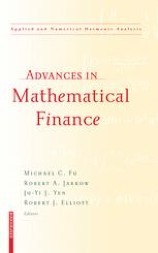
Advances in Mathematical Finance
This volume brings together a collection of chapters by some of the most distinguished researchers and practitioners in the fields of mathematical finance and financial engineering. Presenting state-of-the-art developments in theory and practice.
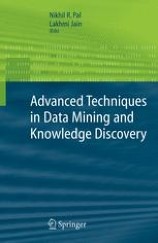
Advanced Techniques in Knowledge Discovery and Data Mining
This explosion is a result of the growing use of electronic media. But what is data mining (DM)? A Web search using the Google search engine retrieves many (really many) definitions of data mining. We include here a few interesting ones. One of the simpler definitions is: “As the term suggests, data mining is the analysis of data to establish relationships and identify patterns” [1]. It focuses on identifying relations in data. Our next example is more elaborate: An information extraction activity whose goal is to discover hidden facts contained in databases. Using a combination of machine learning, statistical analysis, modeling techniques and database technology, data mining finds patterns and subtle relationships in data and infers rules that allow the prediction of future results. Typical applications include market segmentation, customer profiling, fraud detection, evaluation of retail promotions, and credit risk analysis .

Accreditation and Evaluation in the European Higher Education Area
This volume presents a rich account of the development of accreditation and evaluation in 20 European countries. The authors are leaders in the field and they have cooperated in this effort by writing richly different, often deep and insightful analyses of the situation in their country. The two editors have added a synopsis detailing the main trends, and sketching commonalities as well as contrasts in the developments across Europe. The book shows how accreditation is becoming a main mechanism in the steering of higher education all over Europe. The book is unique in its analysis of forces driving towards the spread of different models of accreditation in the emerging European Higher Education area. Readers will obtain an up-to-date picture of the state of affairs of accreditation in the framework of evaluation activities in Europe.
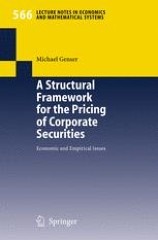
A Structural Framework for the Pricing of Corporate Securities : Economic and Empirical Issues
This book is the first comprehensive treatment, of structural credit risk models for the simultaneous and consistent pricing of corporate securities. Through the development of a flexible economic framework based on the firm's EBIT, the reader is taken from the economic principles of firm value models to the empirical implementation. Analytical solutions are provided, if EBIT follows an arithmetic or geometric Brownian motion.
