



الصفحة 3
الصفحة 3
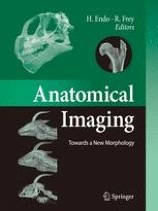
Anatomical Imaging : Towards a New Morphology
This book presents selected works of contemporary evolutionary morphologists and includes such topics as broad scale reconstructions of the brain and ear of dinosaurs, inference of locomotor habits from cancellous bone architecture in fossil primates, and a comparison of the independently evolved manipulating apparatuses in the lesser and giant pandas. Insight is provided into the application of modern noninvasive technologies, including digital imaging techniques and virtual 3D reconstruction, to the investigation of complex anatomical features and coherences. In combination with traditional methods, this allows for the formulation of improved hypotheses on coordinated function and evolution. The creation of virtual translucent specimens makes it possible to realize the age-old dream of the classical anatomists: looking through the skin into the inner organization of an organism. On full display here is the dramatic and promising impact that modern imaging techniques have on scientific progress in evolutionary morphology.

Adaptation to Life at High Salt Concentrations in Archaea, Bacteria, and Eukarya
This book complements “Halophilic Microorganisms”, edited by A. Ventosa and published by Springer-Verlag (2004), “Halophilic Microorganism and their Environments” by A. Oren (2002), published by Kluwer Academic Publishers as volume 5 of “Cellular Origins, Life in Extreme Habitats and Astrobiology” (COLE), and “Microbiology and Biogeochemistry of Hypersaline Environments” edited by A. Oren, and published by CRC Press, Boca Raton (1999).
Acoustic Emission Testing : Basics for Research - Applications in Civil Engineering
Covers all levels from the description of AE basics for AE beginners (level of a student) to sophisticated AE algorithms and applications to real large-scale structures as well as the observation of the cracking process in laboratory specimen to study fracture processes.
501 Math Word Problems
Contains only word problems - the kinds you encounter at school and on high stakes tests. Gaining familiarity with this specific question type is a proven technique for increasing test scores. The Skill Builder in Focus method provides the targeted practice on these questions necessary to attain higher scores. Questions are divided into six chapters: algebra, geometry, fractions, percents, decimals, and miscellaneous math. Within each chapter, questions move from easy to advanced, giving test-takers the opportunity to gain confidence in each math area. Each chapter contains questions, answers, and detailed explanations to reinforce learning and understanding. Diagrams and useful terminology help clarify math rules for effective studying and retention.
