



الصفحة 3
الصفحة 3

Future campus : Design quality in university buildings
Argues that investment in the higher education sector is a driver for intellectual, social and economic development, offering opportunities for positive impacts for the physical environment on the character and performance of higher education. The editor believes that good outcomes result from good design, which should address elements such as learning from best current practice, the importance of clear briefing, good environmental performance, the positive social impacts and, also, the importance of ensuring a beautiful outcome. It has chapters contributed from leading-edge practices, including case studies with highly illustrated project examples.

Fundamentals of Integrated Design for Sustainable Building
Introduces the technologies and processes of sustainable design and shows how to incorporate sustainable concepts at every design stage. This comprehensive primer takes an active learning approach that keeps students engaged. Includes: Expansive knowledge—from history and philosophy to technology and practice Fully updated international codes, like the CAL code, and current legislations Up-to-date global practices, such as the tools used for Life-Cycle Assessment Thorough coverage of critical issues such as climate change, resiliency, health, and net zero energy building Extensive design problems, research exercise, study questions, team projects, and discussion questions that get students truly involved with the material

Fundamentals of building performance simulation
Pares the theory and practice of a multi-disciplinary field to the essentials for classroom learning and real-world applications. Authored by a veteran educator and researcher, this textbook equips graduate students and emerging and established professionals in engineering and architecture to predict and optimize buildings’ energy use. It employs an innovative pedagogical approach, introducing new concepts and skills through previously mastered ones and deepening understanding of familiar themes by means of new material. Covering topics from indoor airflow to the effects of the weather, the book’s 19 chapters empower learners to: Understand the models and assumptions underlying popular BPS tools ; Compare models, simulations, and modelling tools and make appropriate selections ; Recognize the effects of modelling choices and input data on simulation predictions

Forty ways to think about architecture : Architectural history and theory today
How do we think about architecture historically and theoretically? Forty Ways to Think about Architecture provides an introduction to some of the wide-ranging ways in which architectural history and theory are being approached today.
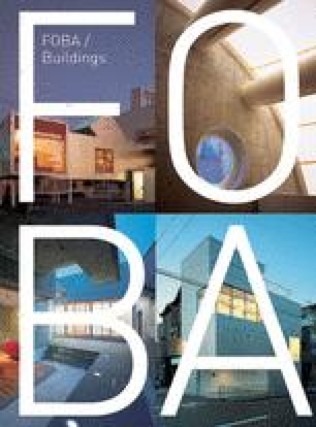
FOBA : Buildings
The book also chronicles the FOB Homes systema FOBA subsidiary company established in 1999a uniquely creative response to the generic mass-produced pre-fabricated housing available in Japan. With five basic prototypes that can be easily adapted to any site or client, FOB Homes redefines the concept of standardized housing. Their simple, neutral white boxes counter the visual chaos of contemporary Japan and offer the elegance and experience of "architecture" to the general publica union of modernist aesthetics with the modernist ideology of democratic, affordable design.

Fire Safety for Very Tall Buildings : Engineering Guide
Provides information on special topics that affect the fire safety performance of very tall buildings, their occupants and first responders during a fire. This Guide addresses these topics as part of the overall building design process using performance-based fire protection engineering concepts as described in the SFPE Engineering Guide to Performance Based Fire Protection. This Guide is not intended to be a recommended practice or a document that is suitable for adoption as a code. The Guide pertains to “super tall,” “very tall” and “tall” buildings. Throughout this Guide, all such buildings are called “very tall buildings.” These buildings are characterized by heights that impose fire protection challenges; they require special attention beyond the protection features typically provided by traditional fire protection methods. This Guide does not establish a definition of buildings that fall within the scope of this document.

Fire safety design for tall buildings
Provides structural engineers, architects, and students with a systematic introduction to fire safety design for tall buildings based on current analysis methods, design guidelines, and codes. It covers almost all aspects of fire safety design that an engineer or an architect might encounter—such as performance-based design and the basic principles of fire development and heat transfer.

Finite Elements in Structural Analysis : Theoretical Concepts and Modeling Procedures in Statics and Dynamics of Structures
Introduces the basic concepts of the finite element method in the static and dynamic analysis of beam, plate, shell and solid structures, discussing how the method works, the characteristics of a finite element approximation and how to avoid the pitfalls of finite element modeling. Presenting the finite element theory as simply as possible, the book allows readers to gain the knowledge required when applying powerful FEA software tools. Further, it describes modeling procedures, especially for reinforced concrete structures, as well as structural dynamics methods, with a particular focus on the seismic analysis of buildings, and explores the modeling of dynamic systems. Featuring numerous illustrative examples, the book allows readers to easily grasp the fundamentals of the finite element theory and to apply the finite element method proficiently.

Finite element analysis for building assessment : Advanced use and practical recommendations
Existing structures represent a heterogeneous category in the global built environment as often characterized by the presence of archaic materials, damage and disconnections, uncommon construction techniques and subsequent interventions throughout the building history. In this scenario, the common linear elastic analysis approach adopted for new buildings is incapable of an accurate estimation of structural capacity, leading to overconservative results, invasive structural strengthening, added intervention costs, excessive interference to building users and possible losses in terms of aesthetics or heritage values. For a rational and sustainable use of the resources, this book deals with advanced numerical simulations, adopting a practical approach to introduce the fundamentals of Finite Element Method, nonlinear solution procedures and constitutive material models.

Explosion-Resistant Buildings : Design, Analysis, and Case Studies
This excellent book highlights all aspects of the analysis and design of buildings subject to impact, explosion and fire. It is a definitive reference book and contains 10 chapters from a wide international prospective. Three-dimensional finite element and discrete element techniques are included. They are applied to buildings such as the World Trade Center (WTC Twin Towers) and the Federal Building in Oklahoma on the basis of the designers drawings, data and other information. Many small case studies are also included. The book has a comprehensive bibliography and a large appendix providing background analysis and computer subroutines of recently developed programs.

Essential cob construction : A guide to design, engineering and building
Presents both hands-on and rigorous technical information on how to build code compliant, low-embodied carbon, and fire- and earthquake-resistant buildings from cob--a mix of clay, sand and straw. The definitive cob guide for engineers, architects, designers, contractors, and owner-builders.

Environmental Challenges in Civil Engineering II
Rports on findings concerning structural material behavior, and new methods and technologies in constructions. A special emphasis is given to sustainable constructions practices, including material recycling and reuse, renovation and restoration of historical building and to those fostering sustainable development of cities and rural areas, and a better integration of buildings with the environment. Offering a good balance of theory and practice, and covering both technical and organizational aspects in civil engineering and architectural projects, this book offers extensive information on solutions and current challenges in construction projects and structural interventions in the context of environmental protection and earthquake prevention.

Energy Manual : Sustainable Architecture
Presents a comprehensive look at the constructional parameters of energy efficiency and sustainability. It offers an advance look at the legal regulations being planned by the EU, and – as a tool ready for immediate use by architects, engineers, and designers in their daily work – it points the way toward the efficient and sustainable construction and operation of buildings. With its focus on the entire lifecycle of a building, it provides an integrated perspective – a necessary prerequisite for sustainable economic management.

Endurance time excitation functions : Intensifying dynamic loads for seismic analysis and design
Seismic assessment and earthquake-resistant design are essential applications of earthquake engineering for achieving seismic safety for buildings, bridges, infrastructure, and many other components of the built environment. The Endurance Time Method (ETM) is used for seismic analysis of simple and complex structural systems and civil engineering infrastructure as well as producing optimal and cost-effective structural and detail designs. ETM is a relatively new approach to seismic assessment and design of structures. It has developed into a versatile tool in the field, and its practical applications are expected to increase greatly in the near future.

Emergent architectural territories in east asian cities
Presents current developments in city planning and architecture in East Asia. It describes the many neighborhoods in which the region’s large cities are modernizing or expanding with innovative structures and advanced construction projects. It combines a typology of public structures with an analysis of the compositional principles of urban environments. Thus, it finally connects new developments in city planning with new developments in architecture, and considers examples such as CCTV, Lujiazui, Kansai Airport, Xinyi, Taipei 101, Chek Lap Kok, Cheonggyecheon, Roppongi Hills, Da Shanzi, Shahe, Omotesando, and Marina Bay from a new perspective.And the new perspectives presented here are not just theoretical: some forty full-page bird’s eye views prepared especially for this volume show these future urban settings in highly detailed images of breathtaking beauty.

Ecological and Health Effects of Building Materials
Deals with the present adverse effects of using precarious building materials on the ecology and human health. Also, the detailed discussions on the novel and greener construction materials and their utilization as an alternative to the conventional harmful existing methods and materials are also presented in the subsequent chapters. This book helps to fill the research gaps in the existing prior-art knowledge in the field of sustainable construction and green building materials and methods giving due importance to ecology and health, specifically to the fields of sustainable structural engineering, sustainable geotechnical engineering, sustainable road engineering, etc.

Eco-efficient materials for reducing cooling needs in buildings and construction : Design, properties and applications
Provides a comprehensive review on building envelope materials and technologies for reducing cooling needs in buildings. The book offers in-depth analysis of the performance of new innovative materials and technologies used in pavements, facade and roofing materials, PCMs and chromogenic smart materials. Includes practical case study examples of their applications in building and construction. The book is an essential reference resource for researchers, architects and civil engineers, city planners, product developers, manufacturers, and other professionals working in eco-efficient cooling materials and sustainable and zero-energy building design.

Eco-design of buildings and infrastructure : developments in the period 2016–2020
Reviews the second five-year sequence of the Chair, first presenting methodological advances in eco-design: life cycle assessment and quantification of uncertainties; local environmental impacts of transport and biodiversity. The interdisciplinary partnership, also associating the human sciences, shows its interest in taking into account the human factor in the modelling of urban systems. This modelling is based on several numerical simulation tools, presented in the third part.

Earthquake Source Asymmetry, Structural Media and Rotation Effects
This is the first book on rotational effects in earthquakes, a revolutionary concept in seismology. Existing models do no yet explain the significant rotational and twisting motions that occur during an earthquake and cause the failure of structures. This breakthrough monograph thoroughly investigates rotational waves, basing considerations on modern observations of strong rotational ground motions and detection of seismic rotational waves. To describe the propagation of such waves the authors consider structured elastic media that allow for rotational motions and rotational deformations of the ground, sometimes stronger than translational deformations. The rotation and twist effects are investigated and described and their consequences for designing tall buildings and other important structures are presented. The book will change the way the world views earthquakes and will interest scientists and researchers in the fields of Geophysics, Geology and Civil Engineering.

Earthquake disaster simulation of civil infrastructures : From tall buildings to urban areas
Covers a range of numerical modeling approaches, higher performance computation methods, and high fidelity visualization techniques for earthquake disaster simulation of tall buildings and urban areas. It also demonstrates successful engineering applications of the proposed methodologies to typical landmark projects (e.g., Shanghai Tower and CITIC Tower, two of the world's tallest buildings; Beijing CBD and San Francisco Bay Area).
