



الصفحة 3
الصفحة 3

Intelligent Computing Theories and Application ; 17th International Conference, ICIC 2021, Shenzhen, China, August 12–15, 2021, Proceedings, Part I
The ICIC theme unifies the picture of contemporary intelligent computing techniques as an integral concept that highlights the trends in advanced computational intelligence and bridges theoretical research with applications. The theme for this conference is “Advanced Intelligent Computing Methodologies and Applications.”

Intelligent Computing Theories and Application ; 16th International Conference, ICIC 2020, Bari, Italy, October 2–5, 2020, Proceedings, Part II
This two-volume set of LNCS 12463 and LNCS 12464 constitutes - in conjunction with the volume LNAI 12465 - the refereed proceedings of the 16th International Conference on Intelligent Computing, ICIC 2020, held in Bari, Italy, in October 2020. The 162 full papers of the three proceedings volumes were carefully reviewed and selected from 457 submissions. The ICIC theme unifies the picture of contemporary intelligent computing techniques as an integral concept that highlights the trends in advanced computational intelligence and bridges theoretical research with applications. The theme for this conference is “Advanced Intelligent Computing Methodologies and Applications.” Papers related to this theme are especially solicited, addressing theories, methodologies, and applications in science and technology.

Intelligent Computing Theories and Application ; 16th International Conference, ICIC 2020, Bari, Italy, October 2–5, 2020, Proceedings, Part I
This two-volume set of LNCS 12463 and LNCS 12464 constitutes - in conjunction with the volume LNAI 12465 - the refereed proceedings of the 16th International Conference on Intelligent Computing, ICIC 2020, held in Bari, Italy, in October 2020. The 162 full papers of the three proceedings volumes were carefully reviewed and selected from 457 submissions The ICIC theme unifies the picture of contemporary intelligent computing techniques as an integral concept that highlights the trends in advanced computational intelligence and bridges theoretical research with applications. The theme for this conference is “Advanced Intelligent Computing Methodologies and Applications.” Papers related to this theme are especially solicited, addressing theories, methodologies, and applications in science and technology.

Intelligent Computing ; International Conference on Intelligent Computing, ICIC 2006, Kunming, China, August 16-19, 2006, Proceedings, Part I
The International Conference on Intelligent Computing (ICIC) was formed to provide an annual forum with dedication to the emerging and challenging topics in artificial intelligence, machine learning, bioinformatics, and computational biology, etc. It aims to bring together researchers and practitioners from both the academia and industry to share ideas, problems and solutions related to the multifaceted aspects of intelligent computing. The ICIC 2006 to be held in Kunming, Yunnan, China, 16-19 August 2006 is the second International Conference on Intelligent Computing, which is built upon the success of ICIC 2005 held in Hefei, China, 2005. This year, the conference mainly concentrates on the theories & methodologies as well as the emerging applications of intelligent computing. It intends to unify the contemporary intelligent computing techniques within an integral framework that highlights the trends in advanced computational intelligence and bridges the theoretical research with the applications. In particular, the bio-inspired computing emerges as a key role in pursuing for novel technology in recently years. The resulting techniques vitalize the life science engineering and daily life applications. In light of this trend, the theme for this conference is the Emerging Intelligent Computing Technology and Applications. Papers related to this theme were especially solicited, including theories, methodologies, and applications in science and technology.

Integral bridges : a fundamental approach to the time–temperature loading problem
In recent years, integral bridges have become increasingly popular in the UK. The Highways Agency standard now requires, where possible, that all new bridges with a length of less than sixty metres should be of integral form. In addition, it has been found that, due especially to the problems and costs associated with failed expansion joints, integral bridges are not only cost effective but also have a longer lifespan. Integral Bridges was commissioned by the Highways Agency to produce guidance for bridge designers by addressing the thermally induced soil/structure interaction problem created by environmental changes of temperature and the associated cyclical displacements imposed on the granular backfill to the bridge abutments. It develops a better theoretical understanding of the cyclic performance, in particular the strain racheting in the backfill soil when in contact with a stiff structure. It also identifies the governing soil parameters and examines their influence in the interaction problem, develops numerical modelling procedures to predict interactive soil behaviour, and identifies and quantifies the controlling features of bridge structures relevant to the interaction problem.

Integer programming and combinatorial optimization ; 9th International IPCO Conference, Cambridge, MA, USA, May 27-29, 2002. Proceedings
This volume contains the papers selected for presentation at IPCO 2002, the NinthInternationalConferenceonIntegerProgrammingandCombinatorial- timization, Cambridge, MA (USA), May 27–29, 2002. The IPCO series of c- ferences highlights recent developments in theory, computation, and application of integer programming and combinatorial optimization. IPCO was established in 1988 when the ?rst IPCO program committee was formed. IPCO is held every year in which no International Symposium on Ma- ematical Programming (ISMP) takes places. The ISMP is triennial, so IPCO conferences are held twice in every three-year period. The eight previous IPCO conferences were held in Waterloo (Canada) 1990, Pittsburgh (USA) 1992, Erice (Italy) 1993, Copenhagen (Denmark) 1995, Vancouver (Canada) 1996, Houston (USA) 1998, Graz (Austria) 1999, and Utrecht (The Netherlands) 2001. In response to the call for papers for IPCO 2002, the program committee received 110 submissions, a record number for IPCO. The program committee met on January 7 and 8, 2002, in Aussois (France), and selected 33 papers for inclusion in the scienti?c program of IPCO 2002. The selection was based on originality and quality, and re?ects many of the current directions in integer programming and combinatorial optimization research.

Insights into the pharmaceutical and clinical applications of nanoparticles in cancer therapy
Healthcare has long been on a quest for a ‘magic bullet’ to cure the dreaded disease cancer. As this book shows, nanoparticles perfectly fit the bill with their promising characteristics. Meticulously engineered nanostructures, with a useful drug or molecule, target a specific cancer in unique ways. However, as with many targeted systems, the effectiveness of the system needs to be weighed against the adverse effects. The toxicity of nanoparticles has been a worldwide concern, and evidence-based medicine analyses nanostructures for proof of safety and their efficacy in killing cancer cells. This book gives a fresh perspective on a wealth of diverse nanotechnological advances for various cancers.

Information technology and Lawyers : Advanced technology in the legal domain, from challenges to daily routine
The area of Information Technology & Lawyers is a fascinating one. Both from a practical and an academic perspective the opportunities of applying Information Technology to law are tremendous. At the same time, however, lawyers are amongst the most conservative professionals, and traditional late adapters of technology. Nowadays the gap between Information Technology & Lawyers is closing more and more, in particular due to the Internet and the richness of legal sources that can be found online. This book provides material to further bridge the gap by showing people with a legal background what is possible with Information Technology now and in the near future, as well as by showing people with an IT background what opportunities exist in the domain of law.

Information assurance : Security in the information environment
This updated edition of Information Assurance: Security in the Information Environment was written to help IT managers and assets protection professionals to assure the protection and availability of vital digital information and related information systems assets. This Second Edition of Information Assurance includes major updates, including three new chapters • The Role of Policy in Information Assurance • Incident Management and Response • Security Standards Bridging the gap between information security, information systems security and information warfare, this edition re-examines and explains why organisations need to take information assurance seriously, and discusses the business, legal, and technical knowledge needed to secure these vital government and business assets.

Informatics Education - The Bridge between Using and Understanding Computers ; International Conference on Informatics in Secondary Schools - Evolution and Perspectives, ISSEP 2006, Vilnius, Lithuania, November 7-11, 2006, Proceedings
Although the school system is subject to specific national regulations, didactical issues warrant discussion on an international level. This applies specifically to informatics didactics. In contrast to most other scientific disciplines, informatics undergoes substantial technical and scientific changes and shifts of paradigms even at the basic level taught in secondary school. Moreover, informatics education is under more stringent observation from parents, potential employers, and policy makers than other disciplines. It is considered to be a modern discipline. Hence, being well-educated in informatics seemingly ensures good job perspectives. Further, policy makers pay attention to informatics education, hoping that a young population well-educated in this modern technology will contribute to the future wealth of the nation.

In Search of an Integrative Vision for Technology : Interdisciplinary Studies in Information Systems
This book provides a fascinating reading experience for anyone interested in an inquiring relationship between technical progress and the quality of the human condition. It manages to keep a healthier balance between these two complex topics than is found in most publications of the genre, too often they consist either of much technology and little philosophy or the converse.... The book also manages to build accessible bridges over the gulf that tends to separate the philosophical language from the 'real' concerns of technologists."

In Memoriam Paul-André Meyer - Séminaire de Probabilités XXXIX
The 39th volume of Séminaire de Probabilités is a tribute to the memory of Paul André Meyer. His life and achievements are recalled in this book, and tributes are paid by his friends and colleagues. This volume also contains mathematical contributions to classical and quantum stochastic calculus, the theory of processes, martingales and their applications to mathematical finance and Brownian motion. These contributions provide an overview on the current trends of stochastic calculus.

Immunoinformatics
Immunoinformatics is an emerging subdiscipline of bioinformatics. It utilizes mathematics, information science, computer engineering, genomics, proteomics and immunological methods to bridge immunology and informatics. Similar to bioionformatics which became a driving force in genome research, immunoinformatics enables data-driven research strategies and systems approaches that aim at understanding the networks regulating the immune system. Considering the breath of topic, Immunoinformatics was composed to provide a cross-section of research ranging from data integration, epitope predictions to systems level applications. In ten chapters experts in the field introduce and discuss research strategies for immunologists and bioinformaticians who wish to endeavour existing and new approaches to gain insight into the workings of the immune system.

Imaging in Drug Discovery and Early Clinical Trials
Efficient tools for the selection and validation of drug targets both at the preclinical and clinical level are required. Non-invasive imaging and in particular molecular imaging methods are becoming essential technologies to support drug discovery and dvelopment. Imaging provides structural, functional, metabolic and molecular readouts that are being applied to characterize a disease phenotype (diagnosis), to elucidate molecular mechanisms involved, to evaluate drug efficacy and safety, and to identify potential biomarkers of the drug's mechanism-of-action, efficacy and safety. Non-invasive imaging techniques constitute a bridge between preclinical and clinical drug evaluation. In this monograph the contribution of imaging modalities to the various stages of drug discovery and development, from early target validation to their use in clinical development programs, is described. Chapters are devoted to the description of the drug discovery process as such, to the various imaging modalities being used both preclinically and clinically, to applications of imaging during the optimization of a lead compound (addressing issues such as bioavailability and efficacy) and during the drug safety evaluation.

Il senso e la narrazione = The sense and the narration
Humans are creatures of narration: infinitely they narrate and narrate themselves, intertwine dialogues, light up stories to illuminate the dark caves of the heart and the world, recover and transmute memories. We live between a firm and rough, unknowable reality, an enormous furnace of perturbations and calls and colors, and an elusive, delicate and ephemeral interiority: and between the two, between the world and us, we weave with thought and with words a fragile ponte, a bridge called sense. Swing this bridge at the unequal breath of a cosmic wind, dropping phosphoric fragments: sudden hourglasses, anonymous centaurs, sleepless geometers, distant syllogisms, vanished lineages, black basalts, crazy anchorites, silent plesiosaurs, flutes and bagpipes ... and they recompose figures, and we ask ourselves questions about those figures and tell stories. Only the vertigo of asking and narrating can give meaning to a life that some say is interwoven with pure chance. Forever detached from the flourishing matrix of the world, tormented by thought, prisoners of words, slaves of interpretation, lost in a long corridor of facing mirrors: we are at the center of a great, incomprehensible rumble.

Il bizzarro mondo dei quanti = The bizarre world of quanta
Written before the final exams by an exceptionally talented young woman, this book bridges the gap between the popular literature on quantum physics, which normally avoids any mathematical formula, and specialized literature, well filled with advanced mathematics.

Identifying, Assessing, and Treating Conduct Disorder at School
Identifying, Assessing, and Treating Conduct Disorder at School bridges the gap between science and practice, providing school professionals with the information they need to coordinate efforts and enhance communication between parents, other educators, administrators, and social services providers. In addition, it offers guidance on the interventions that are likely to be most effective in meeting the unique needs of youths with conduct disorder.

ICE manual of bridge engineering
The fully revised, restructured and updated second edition of the ICE Manual of Bridge Engineering has been written and edited by a team of leading experts and presents valuable contributions from across the field within a single resource. The second edition comprehensively addresses key topic within bridge engineering, from history and aesthetics to design, construction and maintenance issues.

Human semen analysis : From the WHO manual to the clinical management of infertile men
Intended to bridge the gap between the laboratory manual and the clinician by explaining in detail the test indication, its clinical utility, interpretation of results, and presenting a decision algorithm based on the test results. Thebook has 19 chapters grouped under seven sections that follow the chapters of the sixth edition of the WHO manual. Each chapter is written and reviewed by a team of senior clinicians, thus bringing a perspective that is truly clinically relevant. This book will be of great value to all clinicians involved in the management of male infertility and will also be of interest to laboratory scientists involved in semen testing by providing them with clinical perspectives of the test they perform. Human Semen Analysis: From the WHO Manual to the Clinical Management of Infertile Men is a useful guide for utilizing the WHO manual, interpreting test results, and deciding what subsequent clinical actions to take.
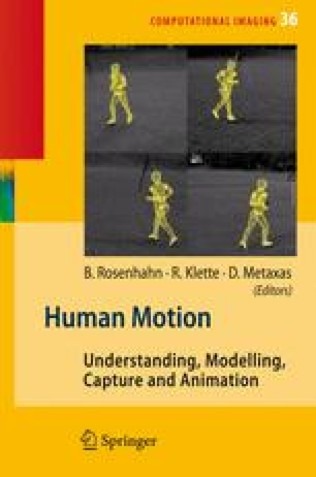
Human motion : Understanding, modeling, capture and animation
Edward Muybridge (1830–1904) is known as the pioneer in motion capt- ing with his famous experiments in 1887 called “Animal Locomotion”. Since then, the feld of animal or human motion analysis has grown in many dir- tions. However, research and results that involve human-like animation and the recovery of motion is still far from being satisfactory. Progress in human motion analysis depends on empirically anchored and grounded research in computer vision, computer graphics, and biomechanics. This book is based on a June 2006 workshop held in Dagstuhl, Germany. This workshop brought together for the frst time researchers from the afo- mentioned disciplines.
