



الصفحة 3
الصفحة 3

Farewell to the Internal Clock : A contribution in the field of chronobiology
Nearly everything making up what we call the “environment” of a plant has an infuence on the way it grows. Sunlight, te- perature, moisture contents of soil and atmosphere and vib- tions are all obvious examples of environmental components, and transient variations in their amount or intensity lead the plant to manifest more or less immediate responses. Small changes in carbon dioxide level in the atmosphere can even have effects, but these take a longer time to be registered – at least those that are visible, albeit at the microscopic level. Plants meet the challenges of the environment by means of acclimation. In this respect, plants are notable for the pl- ticity of their development. However, where morphological or physiological plasticity is no longer an option, the responses would be by means of adaptations as a result of genetic - lection or genetic “assimilation” (Waddington 1957).

Extra-coronal restorations : Concepts and clinical application
A clinical guide to contemporary materials and techniques for the restoration of individual teeth and implants. It fully reflects the important developments in the field over the past 15 years, including in particular the shift away from wholesale use of crowns towards adhesive dentistry and less invasive extra-coronal restorations. The book opens by considering the principles and evidence base relating to the longevity of restorations of teeth and implants. Importantly, it explains how to ensure "a healthy start" and manage future risks. Material choice and aesthetic issues are then discussed, before all aspects of the planning and provision of extra-coronal restorations are examined in depth. The coverage also includes the adaptation of crowns to existing partial dentures. In line with modern dental education, each chapter begins with clinically relevant learning objectives, and helpful clinical tips are highlighted.

Evolutionary Epistemology, Language and Culture : A Non-Adaptationist, Systems Theoretical Approach
Today we know that natural selection and evolution are far from synonymous and that they do not explain isomorphic phenomena in the world. ‘Taking Darwin seriously’ is the way to go, but today the time has come to take alternative and complementary theories that developed after the Modern Synthesis, equally seriously, and, furthermore, to examine how language and culture can merit from these diverse disciplines.As this volume will make clear, a specific inter- and transdisciplinary approach is one of the next crucial steps that needs to be taken, if we ever want to unravel the secrets of phenomena such as language and culture.

Evolutionary Biology from Concept to Application
this book provides an up-to-date overview of evolutionary concepts and how these concepts can be applied to a better understanding of various biological aspects. It is divided into the following four parts: Modelization of Evolution - Concepts in Evolutionary Biology - Knowledge - Applied Evolutionary Biology.This book is an invaluable source of information not only for evolutionary biologists, but also for biologists in general.

European Robotics Symposium 2008
These monothematic proceedings represent a collection of papers presented at the 2nd European Robotics Symposium, held in Prague, March 26-27, 2008. The goal of the given selection of papers is to provide a comprehensive overview of the recent status in robotics research world-wide in the key areas of cognition, autonomy, adaptation and robustness in robotics.

Engineering Interactive Systems ; EIS 2007 Joint Working Conferences, EHCI 2007, DSV-IS 2007, HCSE 2007, Salamanca, Spain, March 22-24, 2007. Selected Papers
This book constitutes the post-conference proceedings of the WG2.7/13.4 10th Conference on Engineering Human Computer Interaction (EHCI 2007), the WG 13.2 First Conference on Human Centred Software Engineering (HCSE 2007), and the 14th Conference on Design Specification and Verification of Interactive Systems (DSV-IS 2007); jointly held as EIS 2007, the international event on Engineering Interactive Systems, in Salamanca, Spain, in March 2007 - under the auspices of IFIP.
Embedded systems design : The ARTIST roadmap for research and development
Embedded systems now include a very large proportion of the advanced products designed in the world, spanning transport (avionics, space, automotive, trains), electrical and electronic appliances (cameras, toys, televisions, home appliances, audio systems, and cellular phones), process control (energy production and distribution, factory automation and optimization), telecommunications (satellites, mobile phones and telecom networks), and security (e-commerce, smart cards), etc. The extensive and increasing use of embedded systems and their integration in everyday products marks a significant evolution in information science and technology. We expect that within a short timeframe embedded systems will be a part of nearly all equipment designed or manufactured in Europe, the USA, and Asia. There is now a strategic shift in emphasis for embedded systems designers: from simply achieving feasibility, to achieving optimality. Optimal design of embedded systems means targeting a given market segment at the lowest cost and delivery time possible. Optimality implies seamless integration with the physical and electronic environment while respecting real-world constraints such as hard deadlines, reliability, availability, robustness, power consumption, and cost. In our view, optimality can only be achieved through the emergence of embedded systems as a discipline in its own right.

Economics and Management of Climate Change : Risks, Mitigation and Adaptation
Climate change is one of the biggest challenges for mankind. Although there is increasing evidence that climate change is already occurring, there is neither sufficient knowledge as to what extent climate change poses risks to societies and companies, nor about adequate strategies to cope with these risks. Bringing together an international group of scholars from environmental economics, political science and business, this book describes, analyses and evaluates climate change risks and responses of societies and companies. The book contributes to the question of how climate change can be mitigated by discussing efficient and effective design of mitigation measures, in particular emissions trading and clean development mechanism (CDM). Placing special emphasis on the impact of climate change risks on business, the book investigates in which way selected sectors of the economy are affected and what measures they can undertake to adapt to climate change risks.

Dynamics of Long-Life Assets : From Technology Adaptation to Upgrading the Business Model
The book provides readers with a better understanding of the factors that influence decisions, and put forward solutions to facilitate the rapid adaptation to changes in the business environment and customer needs through intelligent upgrade interventions. Further, it examines a number of sample cases from various contexts including car manufacturing, utilities, shipping and the furniture industry. The book offers a valuable resource for both academics and practitioners interested in the upgrading of capital-intensive products and services.

Dynamic Capabilities and Relationships : Discourses, Concepts, and Reflections
Building on the seminal work of David Teece, Kathleen Eisenhardt, Jeffrey Martin, and others, this volume applies the concept of dynamic capabilities to help readers understand how organizations can be successful in highly dynamic environments. The contributions, written by researchers who participated in the research program "Dynamic Capabilities and Relationships" and international researchers who participated in the program’s international conference (both funded by the Dieter Schwarz Foundation), highlight state-of-the-art research on dynamic capabilities and relationships. They also put forward an integrated management approach for the purpose of understanding, analyzing, and managing the successful creation and adaptation of capabilities and relationships.
Do Smart Adaptive Systems Exist? : Best Practice for Selection and Combination of Intelligent Methods
This book is intended as a reference and a guide summarising and focusing on best practices when using intelligent techniques and building systems requiring a degree of adaptation and intelligence. Another attractive feature of the book is that it brings together experts from neural network, fuzzy, machine learning, evolutionary and hybrid systems communities who will provide their views on how these different intelligent technologies have contributed and will contribute to creation of smart adaptive systems of the future.

Diversity and Evolution of Butterfly Wing Patterns : An Integrative Approach
is book facilitates an integrative understanding of the development, genetics and evolution of butterfly wing patterns. To develop a deep and realistic understanding of the diversity and evolution of butterfly wing patterns, it is essential and necessary to approach the problem from various kinds of key research fields such as “evo-devo,” “eco-devo,” ”developmental genetics,” “ecology and adaptation,” “food plants,” and “theoretical modeling.”
Distributed applications and interoperable systems ; Vol. 3543 ; 5th IFIP WG 6.1 International conference, DAIS 2005, Athens, Greece, June 15-17, 2005, Proceedings
ThisvolumecontainstheproceedingsoftheIFIPWG6. 1InternationalWorking Conference on Distributed Applications and Interoperable Systems V held in Athens, Greece, on June 15–17, 2005. The conference program presented the state of the art in research concerning distributed and interoperable systems. The emergence of 4th-generation c- munication systems, the evolution of Internet technologies, the convergence of telecom and datacom, wireless and ?xed communication systems and appli- tions pave the path for ubiquitous service and application provision. Innovative solutions are required for the development, implementation and operation of distributed applications in complex IT environments full of diversity and h- erogeneity. Today, the emerging wide spectrum of distributed systems.
Distributed Applications and Interoperable Systems ; 8th IFIP WG 6.1 International Conference, DAIS 2008, Oslo, Norway, June 4-6, 2008. Proceedings
This volume contains the proceedings of DAIS 2008, the 8th IFIP International Conference on Distributed Applications and Interoperable Systems.
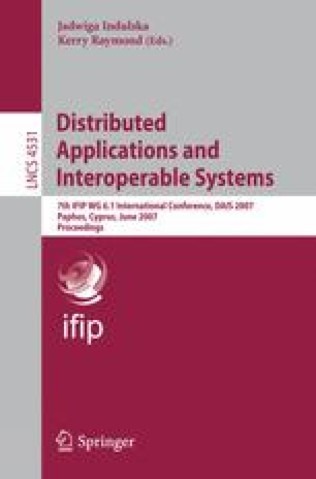
Distributed Applications and Interoperable Systems ; 7th IFIP WG 6.1 International Conference, DAIS 2007, Paphos, Cyprus, June 6-8, 2007, Proccedings
This book presented context-awareness, adaptation, mobility, distributed applications and peer-to-peer computing, all of which relate to the sustainability of distributed applications and integrated systems.
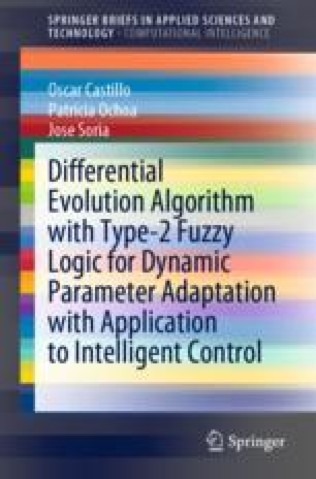
Differential Evolution Algorithm with Type-2 Fuzzy Logic for Dynamic Parameter Adaptation with Application to Intelligent Control
This book focuses on the fields of fuzzy logic, bio-inspired algorithm, especially the differential evolution algorithm and also considering the fuzzy control area. The main idea is that these two areas together can help solve various control problems and to find better results. In this book, the authors test the proposed method using five benchmark control problems. First, the water tank, temperature, mobile robot, and inverted pendulum controllers are considered. For these 4 problems, experimentation was carried out using a Type-1 fuzzy system and an Interval Type-2 system. The last control problem was the D.C. motor, for which the experiments were performed with Type-1, Interval Type-2, and Generalized Type-2 fuzzy systems. When we use fuzzy systems combined with the differential evolution algorithm, we can notice that the results obtained in each of the controllers are better and with increasing uncertainty, the results are even better. For this reason, the authors consider in this book the proposed method using fuzzy systems and the differential evolution algorithm to improve the fuzzy controllers’ behavior in complex control problems.

Dictionary of Pharmaceutical Medicine
Defines various terms typically used in pharmaceutical medicine. A new, 4th edition includes adaptations of the text to the steadily increasing regulatory requirements, particularly in the area of genetics/gene therapy, product quality (e.g., protection against falsified medicines) and of product safety (pharmacovigilance). Further evolving areas that are covered by the 4th edition are typical “grey zones” (health effects often borderline to medicinal products) such as cosmetics and dietary supplements where misleading information is prohibited on one hand but where any health claims need formal authorisation on the other.

Diapause in Aquatic Invertebrates : Theory and Human Use
Contributors to this new book are leaders in the field of diapause studies, and many authors were participants at a recent workshop on diapause in aquatic invertebrates (Pallanza, Italy 2003). The book consists of two major parts, as indicated in its title: Phenomenology of diapause and significance of this adaptation in scientific and practical uses. Application to newly developing areas such as cultivation of live food, like rotifers or Artemia, in modern aquaculture is covered, as are aspects of diapause that promote the colonization of new environments by facilitating the passive transport of resting stages of invasive species. Creation of artificial ecosystems outside of the Earth’s biosphere using dormant propagules becomes an actual possibility as humankind develops plans to colonize our nearest planets.

Designing Organizations : 21st Century Approaches
The design of organizations has been an ongoing concern of management theory and practice over the past several decades. Over this time, there has been little change in the fundamental theory, principles and concepts of Organization Design (OD). Recently organizational life has changed dramatically with the advent of: new communication systems, adaptive mechanisms, information technology, knowledge management systems, innovation processes and more. This book systemically examines these developments and their impact on OD with contributions from leading scholars in the area. Also featured in the book are the practical issues with implementing OD in organizations. The individual chapters are organized into five sections: (1) Putting Contingency Theory in its Place, (2) Focus on Individuals Who Make up the Organization, (3) Innovation Processes and Organization Design, (4) Adaptation and Technology, and (5) Design for Performance. Each chapter examines aspects of the book’s threefold theme: (1) core issues in organization design, (2) emerging theoretical perspectives in OD, and (3) new developments and directions in OD. A special feature of each chapter is: 1) implications for theory, and 2) implications for practice.
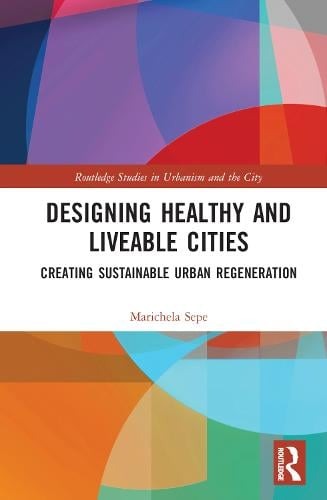
Designing healthy and liveable cities : Creating sustainable urban regeneration
Aim of this book is, after the definition of the field of investigation concerning sustainable regeneration trough topics such as resilience, adaptation, health and mixed connections, to illustrate the present-day approaches to the analysis and design of healthy places, and in particular the original Healthy Pl@ce Design method, flexible and repeatable in different contexts. The method aims at: identifying sustainable urban liveability and healthy and the factors which make places liveable and healthy from the user's point of view and identifying design interventions to enhance or create both urban liveability and health. Emblematic case studies carried out in Europe, USA and China - Bordeaux, Copenhagen, Hamburg, Madrid, Newcastle, Nice, Dublin, Vancouver and Wuhan - constitute the empirical part of the Book detailed with surveys, questionnaires, images and maps.
