



الصفحة 29
الصفحة 29

E-cigarette : A safer choice or a potential killer?
Aims to define the term e-cigarettes, to explain in detail what e-cigarettes are, to explain how e-cigarettes work, to review the range of e-cigarettes that currently exist, to define the term vaping and to examine the impact of e-cigarette usage on human health. The study will add to the current body of knowledge by showing why e-cigarettes are a public health concern due to their impac on human health. In this study, it is revealed that chemical exposure through e-cigarette use can harm an individual's health

E-Business@Print : Internet-based services and processes
The Internet has opened up exciting new opportunities for print media companies, enabling information to be processed for both paper and online output. It also offers new possibilities for print media companies to work increasingly closely with customers and production partners. The author provides a comprehensive overview of the new services that are now available and the new processes that the Internet enables. The reader is systematically guided through the various specialist terms, and numerous examples are used to illustrate possible applications, e.g. online editing systems, Web-based project management tools and online tracking of print jobs.

Earth science satellite remote sensing ; Vol.2 : Data, computational processing, and tools
Earth science satellite remote sensing has been rapidly expanding during the last decade. Volume 2 of this two volume monograph provides information on the Earth science remote sensing data information and data format such as HDF-EOS, and tools. It evaluates the current data processing approaches and introduces data searching and ordering from different public domains. Further it explores the remote sensing and GIS migration products and WebGIS applications. The core of this book arose from the workshop for Earth Science Satellite Remote Sensing held at George Mason University (GMU) in October 2002. Both volumes are designed to give scientists and graduate students with limited remote sensing background a thorough introduction to current and future NASA, NOAA and other Earth science remote sensing.

Earth Observation Open Science and Innovation
The digital transformation is revolutionizing our ability to monitor our planet and transforming the way we access, process and exploit Earth Observation data from satellites.This book reviews these megatrends and their implications for the Earth Observation community as well as the wider data economy. It provides insight into new paradigms of Open Science and Innovation applied to space data, which are characterized by openness, access to large volume of complex data, wide availability of new community tools, new techniques for big data analytics such as Artificial Intelligence, unprecedented level of computing power, and new types of collaboration among researchers, innovators, entrepreneurs and citizen scientists. In addition, this book aims to provide readers with some reflections on the future of Earth Observation, highlighting through a series of use cases not just the new opportunities created by the New Space revolution, but also the new challenges that must be addressed in order to make the most of the large volume of complex and diverse data delivered by the new generation of satellites.

Earth Observation of Global Change : The Role of Satellite Remote Sensing in Monitoring the Global Environment
Global Change is increasingly considered a critical topic in environmental research. Remote sensing methods provide a relevant tool to monitor global variables, since they offer a systematic coverage of the Earth Surface, at different spatial, spectral and temporal resolutions. The data provided by Earth Observation Satellites are being operationally used for monitoring atmospheric conditions, ice sheets and glaciar movements, crop dynamism and land use changes, deforestation and desertification processes, as well as water conditions. The book includes an analysis of the leading missions in global Earth observation, and then reviews the main fields in which remote sensing methods are providing vital data for global change studies.

Dynamical Vision ; ICCV 2005 and ECCV 2006 Workshops, WDV 2005 and WDV 2006, Beijing, China, October 21, 2005, Graz, Austria, May 13, 2006, Revised Papers
Classical multiple-view geometry studies the reconstruction of a static scene - served by a rigidly moving camera. However, in many real-world applications the scene may undergo much more complex dynamical changes. For instance, the scene may consist of multiple moving objects (e.g., a trafic scene) or arti- lated motions (e.g., a walking human) or even non-rigid dynamics (e.g., smoke, fire, or a waterfall). In addition, some applications may require interaction with the scene through a dynamical system (e.g., vision-guided robot navigation and coordination). To study the problem of reconstructing dynamical scenes, many new al- braic, geometric, statistical, and computational tools have recently emerged in computer vision, computer graphics, image processing, and vision-based c- trol.

Dynamical Contact Problems with Friction : Models, Methods, Experiments and Applications
The aim of this book is to describe an efficient procedure to model dynamical contact problems with friction. This procedure is applied to different practical problems and verified by experiments. Friction contacts are used to transmit forces or to dissipate energy. Examples for dynamical engineering systems with friction are brakes, machine tools, motors, turbines, bearings or wheel-rail systems. A better understanding of friction phenomena result in improvements like the reduction of noise and maintenance costs, increased life time of machines and improved energy efficiency. Dependent on the features of the dynamic system with friction contacts, different contact models and solution methods like multi-scaling methods are developed and applied.

Dynamic Programming : A Computational Tool
This book provides a practical introduction to computationally solving discrete optimization problems using dynamic programming. From the unusually numerous and varied examples presented, readers should more easily be able to formulate dynamic programming solutions to their own problems of interest. We also provide and describe the design, implementation, and use of a software tool, named DP2PN2Solver, that has been used to numerically solve all of the problems presented earlier in the book. This computational tool can be used by students to solve academic problems if this book is used in coursework, and by practitioners to solve many real-world problems if the state space is not too large.

Dynamic planet : Monitoring and understanding a dynamic planet with geodetic and oceanographic tools
This book presents a set of papers on IAG Symposium, held on Cairns, Australia, 22-26 August, 2005

Dynamic General Equilibrium Modelling : Computational Methods and Applications
Modern business cycle theory and growth theory uses stochastic dynamic general equilibrium models. Many mathematical tools are needed to solve these models. The book presents various methods for computing the dynamics of general equilibrium models. In part I, the representative-agent stochastic growth model is solved with the help of value function iteration, linear and linear quadratic approximation methods, parameterised expectations and projection methods. In order to apply these methods, fundamentals from numerical analysis are reviewed in detail. Part II discusses methods for solving heterogeneous-agent economies. In such economies, the distribution of the individual state variables is endogenous. This part of the book also serves as an introduction to the modern theory of distribution economics. Applications include the dynamics of the income distribution over the business cycle or the overlapping-generations model.

Dynamic Asset Allocation with Forwards and Futures
DYNAMIC ASSET ALLOCATION WITH FORWARD AND FUTURES is an advanced text on the theory of forward and futures markets which aims at providing readers with a comprehensive knowledge of how prices are established and evolve over time, what optimal strategies one can expect from the participants, what characterizes such markets, and what major theoretical and practical differences distinguish futures from forward contracts. The book proposes an approach of these markets from the perspective of dynamic asset allocation and asset pricing theory within an inter-temporal framework. The main ingredients that are used are the assumed absence of frictions and arbitrage opportunities in financial and real markets, the uniqueness of the economic general equilibrium, when such an equilibrium is required and the tools of continuous time finance, namely martingale theory and stochastic dynamic programming. The scope of DYNAMIC ASSET ALLOCATION WITH FORWARD AND FUTURES is essentially theoretical, with emphasis on economic meaning and financial interpretation. Regarding investment and/or hedging, focus is on optimal strategies rather than on actual practice. Simulations, however, are performed when important insights can be delivered as to the practical relevance of some theoretical results. Also, optimal strategies using futures are shown to differ markedly from those using forwards. The following issues are examined: pure hedging, investment and hedging in complete or incomplete markets, currency risk, optimal spreading, presence of stochastic dividend or convenience yields, pricing of non-redundant futures or forwards by means of general equilibrium analysis, and revisiting of existing Capital Asset Pricing Models.

Dryland Ecohydrology
By combining the analysis of biotic and abiotic components of terrestrial ecosystems, this volume provides a synthesis of material on arid and semiarid landscapes, which is currently scattered in a number of books and journal articles. The focus on water-limited ecosystems is motivated by their high sensitivity to daily, seasonal, and decadal perturbations in water availability, and by the ecologic, climatic, and economic significance of most of the world's drylands. Conceived as a tool for scientists working in the area of the earth and environmental sciences, this book presents the basic principles of eco-hydrology as well as a broad spectrum of topics and advances in this research field.

Driving digital transformation through data and AI : A practical guide to delivering data science and machine learning products
Explains how to build the organizational capability to deliver Data and AI products and drive immediate business results as new digital technologies significantly disrupt business Provides best practices, tools and templates for managing the organizational and technological change process to become an AI-driven enterprise Includes a variety of international case studies across several industries such as insurance, fashion, consumer goods, finance, technology and automotive Outlines how to develop a product strategy, build teams and design the platform and architecture Provides key principles for sharing knowledge, educating staff on data and AI, and effectively engaging top executives

Drawing with a tablet : Easy techniques for mastering digital drawing on location
learn step by step how to create amazing drawings while on the go. Shows sketchers how to take their digital drawing to the next level. Whether you are new to sketching or wish to try the latest technology, this useful guide shares expert tips and techniques for drawing on a tablet. With a focus on using the ProCreate tool, but with information that is relevant to other digital platforms, you will start with the basics, such as opening your file, choosing your resolution, determining your palette, and how to simplify your tools by creating a preferred set of brushes.Covers using layers and groups of layers, and shows you how to create a sketch from start to finish.
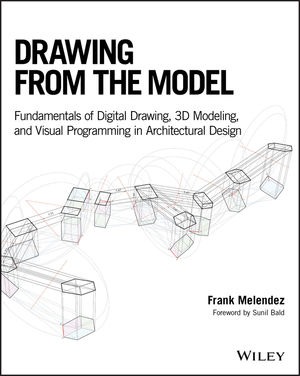
Drawing from the model : Fundamentals of digital drawing, 3D modeling, and visual programming in architectural design
Bridges traditional and contemporary methods of creating architectural design drawings and 3D models through digital tools and computational processes.

Doormaking : Materials, Techniques, and Projects for Building Your First Door
Starts first by addressing the fundamentals: the basics of good design and proper construction technique, the pros-and-cons of common materials including wood and sheet goods, interior and exterior finishes, hardware and the fine points of hanging doors. Once those key elements are covered, it offers project chapters that walk the reader step-by-step through the construction of eight essential doors, explaining design and material choices in specific contexts, tool options and other considerations. The first four projects are easly accessible to a beginner while the the remaining projects offer up some more challenging details for the intermediate woodworker. Also included are sidebars containing amusing anecdotes and mistake stories each delivering tips as well as details for hanging a door and an inspiring gallery of doors that are sure to inspire.

Domain Modeling and the Duration Calculus : International Training School, Shanghai, China, September 17-21, 2007, Advanced Lectures
The book presented provide competent coverage of software security, domain modeling of software engineering, and duration calculus for real time systems - originating from lectures of leading experts in these fields from Europe and Asia.It addressed in detail are: development of real-time systems, domain engineering using abstract modeling, the area of duration calculus, and formal methods like language description using the operational semantics approach.

Domain Decomposition Methods in Science and Engineering XVII
This volume contains a selection of papers presented at the 17th International Conference on Domain Decomposition Methods in Science and Engineering held at St. Wolfgang / Strobl, Austria, July 3 - 7, 2006. Domain decomposition is an active, interdisciplinary research area concerned with the development, analysis, and implementation of coupling and decoupling strategies in mathematical and computational models. Domain decomposition techniques provide efficient tools for treating problems in all Computational Sciences. The reader will become familiar with the newest domain decomposition technologies and their use for modeling and simulating of complex problems from different fields of applications.
DNA Computing ; 7th International Workshop on DNA-Based Computers, DNA7, Tampa, FL, USA, June 10-13, 2001, Revised Papers
Constitutes the post-proceedings of the 7th International Workshop on DNA-Based Computers, held in Florida in 2001. The 26 papers cover experimental tools, theoretical tools, probabilistic computational models, computer simulation and sequence design, algorithms, experimental solutions and more.

Distributed, High-Performance and Grid Computing in Computational Biology ; International Workshop, GCCB 2006, International Workshop, GCCB 2006, Eilat, Israel, January 21, 2007, Proceedings
Modern computational biology and bioinformatics are characterized by large and complex structured data and by applications requiring considerable computing resources, such as processing units, storage elements and software programs. In addition, these disciplines are intrinsically geographically distributed in terms of their instruments, communities and computing resources. Tackling the computational challenges in computational biology and bioinformatics increasingly requires high-end and distributed computing infrastructures, systems and tools.
