



الصفحة 29
الصفحة 29

Chemistry for pharmacy students : General, organic and natural product chemistry ; 2nd ed.
Opens with an overview of the general aspects of chemistry and their importance to modern life, with emphasis on medicinal applications. The text then moves on to discuss the concepts of atomic structure and bonding and the fundamentals of stereochemistry and their significance to pharmacy in relation to drug action and toxicity. Various aspects of organic functional groups, organic reactions, heterocyclic chemistry, nucleic acids and their pharmaceutical importance are then covered in subsequent chapters, with the final chapter dealing with drug discovery and development, and natural product chemistry. Provides a student-friendly introduction to the main areas of chemistry required by pharmacy degree courses. Written at a level suitable for non-chemistry students in pharmacy, but also relevant to those in life sciences, food science, and the health sciences Includes learning objectives at the beginning of each chapter Focuses on the physical properties and actions of drug molecules
Chemical Genomics ; Vol.58 : Small Molecule Probes to Study Cellular Function
Chemical genomics is a highly interdisciplinary and very exciting field of research both in academics and in the life sciences industry.Various aspects of the interface between chemistry and biology are covered in this volume, such as chemogenomics efforts in the pharmaceutical industry, diversity-oriented synthesis, chemogenomic approaches to the study of cell function, screening technologies, and natural products as tools in chemical biology.

Chemical components in some winter vegetables and their effectiveness in treating diseases
Cruciferous (Brassicaceae) vegetables comprise many important species cultivated worldwide and utilized traditionally for culinary and medicinal purposes in different cultures. In the last couple of decades, growing scientific evidence has suggested that consumption of cruciferous vegetables has a preventive role against a variety of human diseases. This prompted the development of nutritional ingredients derived from these vegetables and their use as dietary supplements in different formulations that contain complete plant extracts or specific compounds...

Charting a new course : Natural language processing and information retrieval : Essays in Honour of Karen Spärck Jones
This book celebrates the life and work of Karen Spärck Jones in her seventieth year. she is one of the major figures of 20th century and early 21st Century computing and information processing. It book consists of fifteen new and original chapters written by leading international authorities reviewing the state of the art and her influence in the areas in which Karen Spärck Jones has been active. Although she has a publication record which goes back over forty years, it is clear even the very early work reviewed in the book can be read with profit by those working on recent developments in information processing like bioinformatics and the semantic web.

Chaos, Nonlinearity, Complexity : The Dynamical Paradigm of Nature
This carefully edited book presents a focused debate on the mathematics and physics of chaos, nonlinearity and complexity in nature. It explores the role of non-extensive statistical mechanics in non-equilibrium thermodynamics, and presents an overview of the strong nonlinearity of chaos and complexity in natural systems that draws on the relevant mathematics from topology, measure-theory, inverse and ill-posed problems, set-valued analysis, and nonlinear functional analysis. It presents a self-contained scientific theory of complexity and complex systems as the steady state of non-equilibrium systems, denoting a homeostatic dynamic equilibrium between stabilizing order and destabilizing disorder.
Changing Forests : Collective Action, Common Property, and Coffee in Honduras
It merges political ecology, collective-action theories, and institutional analysis to study how the people and forests have changed through socioeconomic and political transitions. It studies the complex, often contradictory relationships between the people and their natural resources to understand why forest cover endures."Changing Forests" therefore encompasses three broad phases: (1) the premodern period, which considers historic perturbations in western Honduras from the period of colonialism into the middle of the twentieth century; (2) the period of state-led logging and intervention in La Campa, which caused major degradation in forest cover; and (3) the recent period in which export coffee production transformed property rights, and people’s perceptions of the forest gained new conservationist and economic dimensions. Each phase entails perspectives and experiences that influenced human use of forests, and shaped subsequent transformations.
Chance : The life of games and the game of life
With its many easy-to-follow mathematical examples, this book takes the reader on an almost chronological trip through the fascinating and amazing laws of chance, omnipresent in the natural world and in our daily lives. Along the route many fascinating topics are discussed, such as: challenging probability paradoxes; "paranormal" coincidences; game odds; causes and effects; interpretation of opinion polls; winning chances as a game proceeds; the nature of randomness; entropy and randomness; randomness in life; algorithmic complexity and the undecidability of randomness; possibilities and limitations of learning the laws of a Universe immersed in chance events. This charming book will inform and entertain the scientist and non-scientist alike.
Cells and Robots : Modeling and Control of Large-Size Agent Populations
Cells and Robots is an outcome of the multidisciplinary research extending over Biology, Robotics and Hybrid Systems Theory. It is inspired by modeling reactive behavior of the immune system cell population, where each cell is considered as an independent agent. In our modeling approach, there is no difference if the cells are naturally or artificially created agents, such as robots. This appears even more evident when we introduce a case study concerning a large-size robotic population scenario. Under this scenario, we also formulate the optimal control of maximizing the probability of robotic presence in a given region and discuss the application of the Minimum Principle for partial differential equations to this problem. Simultaneous consideration of cell and robotic populations is of mutual benefit for Biology and Robotics, as well as for the general understanding of multi-agent system dynamics.The text of this monograph is based on the PhD thesis of the first author. The work was a runner-up for the fifth edition of the Georges Giralt Award for the best European PhD thesis in Robotics, annually awarded by the European Robotics Research Network (EURON).
CD4+CD25+ Regulatory T Cells : Origin, Function and Therapeutic Potential
CD4+CD25+ regulatory T cells (Treg) and interleukin-10 producing T regulatory 1 (Tr1) cells have been studied in most detail and are the subject of most articles in this issue. Treg, also called "natural" regulatory T cells, will be traced from their intra-thymic origin to the site of their action in peripheral lymphoid organs and tissues.
Causation, Coherence and Concepts : A Collection of Essays
the papers cover epistemology, general philosophy of science, philosophy of language, and philosophy of mind. The section titles Belief, Causation, Laws, Coherence, and Concepts and the paper titles give a more adequate impression of the topics dealt with.
Catastrophic Events Caused by Cosmic Objects
Many times all of us could hear from mass media that an asteroid approached and swept past the Earth. Such an asteroid or comet will inevitably strike the planet some day. This volume considers hazards due to collisions with cosmic objects, particularly in light of recent investigations of impacts by the authors. Each chapter written by an expert contains an overview of an aspect and new findings in the field. The main hazardous effects – cratering, shock, aerial and seismic waves, fires, ejection of dust and soot, tsunami are described and numerically estimated. Numerical simulations of impacts and impact consequences have received much attention in the book. Fairly small impacting objects 50 -100 m in diameter pose a real threat to humanity and their influence on the atmosphere and ionosphere is emphasized.
Catastrophe modeling : A new approach to managing risk
Catastrophe Modeling: A New Approach to Managing Risk is the first book that systematically analyzes how catastrophe models can be used for assessing and managing risks of extreme events. It focuses on natural disaster risk, but also discusses the management of terrorism risk. A unique feature of this book is the involvement of three leading catastrophe modeling firms, AIR Worldwide, EQECAT, and Risk Management Solutions, who examine the role of catastrophe modeling in rate setting, portfolio management and risk financing. Given the uncertainties associated with terrorism the book points out the opportunities for utilizing catastrophe models to set insurance rates and to examine public-private partnerships for providing financial assistance in the event of a terrorist attack. This book is strongly recommended for individuals who must make decisions regarding the management of impacts of catastrophe risks including those in both the public and private sector.
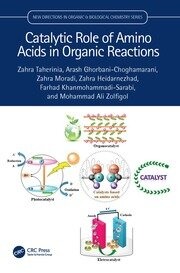
Catalytic role of amino acids in organic reactions
Asymmetric organometallic and organocatalytic processes have attracted great interest. Asymmetric synthesis using both natural and unnatural amino acids has been tremendously important from synthetic as well as industrial viewpoints, and numerous new methodologies have been developed in the last decades. Herein we provide an overview of old and very recent (since 1900 till now) advances and applications in the area of heterogeneous catalysis, homogeneous catalysis, electrocatalysis, photocatalysis, organocatalysis, thermal catalysis using amino acids [proline, glycine, alanine, valine, serine, threonine, cysteine, methionine, asparagine, glutamine, lysine, arginine, histidine, aspartate, glutamate, phenylalanine, and tryptophan], (supported or unsupported), an amino acid containing materials or amino acids derivatives as an essential component of catalysts, this book highlights the most important and recent developments to immobilize or support amino acids on various support materials. This book is suitable as supplementary reading for courses targeting the design, synthesis, and application of chiral catalysts, asymmetric catalysis, and sustainable production.

Catalogue of risks : Natural, technical, social and health risks
The book clearly shows the interdependence of risk measures. Safety and risks cannot be discussed only by looking at specific problems, since increasing safety in individual fields might lead to a decrease of safety over the entire society.
Carotenoids ; Vol.4 : Natural Functions
The Carotenoids book series provides detailed accounts of the fundamental chemistry of carotenoids and the basic methods used in carotenoid research, and critical discussions of the biochemistry, functions and applications of these important compounds. Volume 4 and its companion, Volume 5, deal with the functions of carotenoids in all kinds of living organisms and the actions of carotenoids in human nutrition and health. The material presented in the earlier Volumes is all relevant to studies of biological functions and actions. In particular, biological studies must be supported by a rigorous analytical base. The various analytical procedures described in Volumes 1A and 1B, supplemented by the data for individual compounds given in the Carotenoids Handbook, must be understood and applied correctly, whether they are being used for quantitative analysis, identification or in complex studies of carotenoids in situ.

Carbon Pricing in Japan
This book evaluates, from an economic perspective, various measures introduced in Japan to prevent climate change. Although various countries have implemented such policies in response to the pressing issue of climate change, the effectiveness of those programs has not been sufficiently compared.

Carbon monoxide in drug discovery, basics, pharmacology, and therapeutic potential
Carbon monoxide, one of the smallest organic natural molecules, is widely known for its toxicity. Formation of CO via incomplete combustion is a major contributing factor to accidental or intentional CO poisoning, leading to severe health consequences or death. In addition, CO is a by-product of tobacco smoking, and has been associated with some of the harmful effects of smoking. However, less known and probably far more important is the recognition of the essential physiological roles of CO as a signaling molecule in mammals. Against over more than a century of negative connotation, the last few decades have proven that CO possesses a multitude of physiological roles and therapeutic functions including regulation of the immune response, cellular proliferation, and control of cell survival. This concept is supported by the discovery that CO is produced by all cells and more so under conditions of stress. This book comprehensively summarizes key aspects of CO's endogenous roles, therapeutic functions, and challenges that we face in its development as a therapeutic agent. We hope this preface will provide a thread for reading this book and a birds-eye view of the landscape for understanding this field, and more importantly lay out the challenges ahead in understanding the detailed mechanisms of action of CO and in its development as a therapeutic agent.
Cannabinoids and the brain
Cannabinoids and the Brain gives a comprehensive overview of all the essential literature concerning the endocannabinoid and related systems in the nervous tissue. It is a rapidly expanding research field and the widespread presence of cannabinoids in most physiopathological mechanisms appear to hinder the effort to fully cover the subject. By the end of the book, the reader will have a solid knowledge of the genetics, molecular biology, anatomy, pharmacology, and physiology of the endocannabinoid system and its involvement in neurological and psychiatric disorders, and will eventually discover a natural relationship among marijuana, aspirin, and chili pepper.
CADD and informatics in drug discovery
Updates knowledge on recent advances in computational and bioinformatics tools/techniques and their practical applications in modern drug design and discovery programme. Also it encompasses fundamental principles, advanced methodologies and applications of various CADD approaches including several cutting-edge areas / presenting recent developments covering ongoing trends in the field of computer-aided drug discovery. Having contributions by a global team of experts, the book is expected to be an ideal resource for drug discovery scientists, medicinal chemists, pharmacologists, toxicologists, phytochemists, biochemists, biologists, RandD personnel, researchers, students, teachers and those working in the field of drug discovery. It will fill the knowledge gaps that exist in the current CADD approaches and methodologies/ protocols being widely used in both academic and research practices. Further, a special focus on current status of various computational drug design approaches (SBDD, LBDD, De-novo drug design, Pharmacophore-based search), bioinformatics tools and databases, computational screening and modeling of phytochemicals/natural products, artificial intelligence and machine learning, and network pharmacology and system biology would certainly guide researchers, students or readers to conduct their research in the emerging area(s) of interest. It is also expected to be highly beneficial to different stakeholders working in the pharmaceutical and biotechnology industries (RandD), the academic as well as research sectors. .

Browning Agents and Active Particles : Collective Dynamics in the Natural and Social Sciences
Lays out a vision for a coherent framework for understanding complex systems'' (from the foreword by J. Doyne Farmer). By developing the genuine idea of Brownian agents, the author combines concepts from informatics, such as multiagent systems, with approaches of statistical many-particle physics. This way, an efficient method for computer simulations of complex systems is developed which is also accessible to analytical investigations and quantitative predictions. The book demonstrates that Brownian agent models can be successfully applied in many different contexts, ranging from physicochemical pattern formation, to active motion and swarming in biological systems, to self-assembling of networks, evolutionary optimization, urban growth, economic agglomeration and even social systems.
