



الصفحة 29
الصفحة 29

Introduction to Engineering Statistics and Six Sigma : Statistical Quality Control and Design of Experiments and Systems
Introduction to Engineering Statistics and Six Sigma contains precise descriptions of all of the many related methods and details case studies showing how they have been applied in engineering and business to achieve millions of dollars of savings. Specifically, the methods introduced include many kinds of design of experiments (DOE) and statistical process control (SPC) charting approaches, failure mode and effects analysis (FMEA), formal optimization, genetic algorithms, gauge reproducibility and repeatability (R&R), linear regression, neural nets, simulation, quality function deployment (QFD) and Taguchi methods. A major goal of the book is to help the reader to determine exactly which methods to apply in which situation and to predict how and when the methods might not be effective.
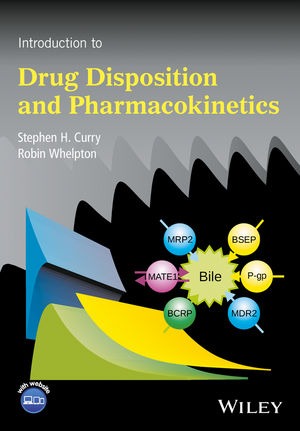
Introduction to Drug Disposition and Pharmacokinetics
The application of knowledge of drug disposition, and skills in pharmacokinetics, are crucial to the development of new drugs and to a better understanding of how to achieve maximum benefit from existing ones. The book takes the reader from basic concepts to a point where those who wish to will be able to perform pharmacokinetic calculations and be ready to read more advanced texts and research papers.

Introduction to Discrete Event Systems
Introduction to Discrete Event Systems is a comprehensive introduction to the field of discrete event systems, offering a breadth of coverage that makes the material accessible to readers of varied backgrounds. The book emphasizes a unified modeling framework that transcends specific application areas, linking the following topics in a coherent manner: language and automata theory, supervisory control, Petri net theory, Markov chains and queueing theory, discrete-event simulation, and concurrent estimation techniques
Introduction to Data Mining and its Applications
This book explores the concepts of data mining and data warehousing, a promising and flourishing frontier in data base systems and new data base applications and is also designed to give a broad, yet in-depth overview of the field of data mining. Data mining is a multidisciplinary field, drawing work from areas including database technology, AI, machine learning, NN, statistics, pattern recognition, knowledge based systems, knowledge acquisition, information retrieval, high performance computing and data visualization.

Introduction to Data Envelopment Analysis and Its Uses : With DEA-Solver Software and References
Recent years have seen a great variety of applications of DEA (Data Envelopment Analysis) for use in evaluating the performances of many different kinds of entities engaged in many different activities in many different contexts in many different countries. One reason is that DEA has opened up possibilities for use in cases which have been resistant to other approaches because of the complex (often unknown) nature of the relations between multiple inputs and multiple outputs involved in many of these activities (which are often reported in non-commeasurable units). It provide a systematic introduction to DEA and its uses as a multifaceted tool for evaluating problems in a variety of contexts.
Introduction to Contact Mechanics
Introduction to Contact Mechanics, Second Edition is a gentle introduction to the mechanics of solid bodies in contact for graduate students, post doctoral individuals, and the beginning researcher. This second edition maintains the introductory character of the first with a focus on materials science as distinct from straight solid mechanics theory. Every chapter has been updated to make the book easier to read and more informative. A new chapter on depth sensing indentation has been added, and the contents of the other chapters have been completely overhauled with added figures, formulae and explanations.

Introduction to Computational Optimization Models for Production Planning in a Supply Chain
In this book we strive to provide models that capture many of the - tails faced by ?rms operating in a modern supply chain, but we stop short of proposing models for economic analysis of the entire multi-player chain. In other words, we produce models that are useful for planning within a supply chain rather than models for planning the supply chain. The usefulness of the models is enhanced greatly by the fact that they have been implemented - ing computer modeling languages. Implementations are shown in Chapter 7, which allows solutions to be found using a computer.

Introduction to Computational Biology : An Evolutionary Approach
Molecular biology has changed dramatically over the past two decades. Until the early 1990s genes were studied one at a time by small teams of researchers; today entire genomes are sequenced by internationally collaborating laboratories. In the bygone gene-centered era the accumulation of data was the rate-limiting step in research. Now that step is often data interpretation. This is increasingly dependent on computational methods and as a consequence, computational biology has emerged in the past decade as a new subdiscipline of biology. This introduction to computational biology is centered on the analysis of molecular sequence data. There are two closely connected aspects to biological sequences: (i) their relative position in the space of all other sequences, and (ii) their movement through this sequence space in evolutionary time. Accordingly, the first part of the book deals with classical methods of sequence analysis: pairwise alignment, exact string matching, multiple alignment, and hidden Markov models. In the second part evolutionary time takes center stage and phylogenetic reconstruction, the analysis of sequence variation, and the dynamics of genes in populations are explained in detail. In addition, the book contains a computer program with a graphical user interface that allows the reader to experiment with a number of key concepts developed by the authors.

Introduction to Applied Optimization
This text presents a multi-disciplined view of optimization, providing students and researchers with a thorough examination of algorithms, methods, and tools from diverse areas of optimization without introducing excessive theoretical detail. This second edition includes additional topics, including global optimization and a real-world case study using important concepts from each chapter.

Introduction pratique aux bases de données relationnelles = A practical introduction to relational databases
Cet ouvrage introduit le lecteur dans le domaine des bases de données relationnelles en présentant une vaste sélection de sujets portant sur la modélisation des données, les langages de base de données, l'architecture des systèmes et l'évolution post-relationnelle. - Notions fondamentales: le modèle relationnel, les composants d’un système de gestion de bases de données, l’organisation de la mise en œuvre d’une base de données, les tâches de gestion des données. - De l'analyse à la base de données : le modèle entité association, la généralisation et l’agrégation, les dépendances et les formes normales,les contraintes d’intégrité. - Aperçu des langages de requête et de manipulation des données: l’algèbre relationnelle, le calcul des prédicats, SQL, QUEL, QBE, le traitement des valeurs nulles, la protection des données. - Les composants de l'architecture d'un système de bases de données : la compilation, l’interprétation et l’optimisation des requêtes, l’environnement multiutilisateur, le concept de transaction et la sérialisation, les méthodes optimiste et pessimiste, les structures de stockage et les méthodes d’accès. L’intégration et la migration des bases de données: l’exploitation des bases de données hétérogènes, les bases de données sur le Web, les règles de conversion pour effectuer l’intégration et la migration, les variantes de migration des bases de données hétérogènes, la planification de l’intégration et de la migration.

Introduction aux méthodes numériques
Au cours de l’histoire, les méthodes de calcul ont été l’expression de pratiques sans cesse renouvelées. Le développement de l’informatique a largement contribué à une rapide progression de l’ensemble des techniques numériques. En moins de cinquante ans, le paysage algorithmique a été complètement transformé. Aujourd’hui, la plupart des logiciels que nous employons font appel à des méthodes de plus en plus efficaces. Dans les simulations, comme dans les modélisations, l’analyse numérique occupe une place centrale. Composants essentiels de la vie scientifique, les méthodes et algorithmes qui sont présentés ici, illustrés par de nombreux exemples, sont mis à la portée de tous. De l’approximation polynomiale à la résolution d’équations aux dérivées partielles par des méthodes de différences, de volumes et d’éléments finis, ce livre offre un large panorama des méthodes numériques actuelles.

Introduction à SCILAB
Ce livre est organisé en deux parties. La première partie est consacrée au langage Scilab et à son environnement. Dans la seconde partie, les fonctionnalités des grands domaines d'utilisation du calcul numérique sont décrites et illustrées par des exemples: calcul matriciel, simulation, optimisation, résolution d'équations, statistiques.

Introducing Molecular Electronics
This volume presents a summary of our current understanding of molecular electronics combined with selected state-of-the-art results at a level accessible to the advanced undergraduate or novice postgraduate. This single book comprises the basic knowledge of both theory and experiment underpinning this rapidly growing field. Concepts and techniques such as density functional theory and charge transport, break junctions and scanning probe microscopy are introduced step-by-step and are subsequently used in specific examples. The text addresses a wide range of systems including molecular junctions made of single-molecules, self-assembled monolayers, carbon nanotubes and DNA.

Introducing Blockchain with Java : Program, Implement, and Extend Blockchains with Java
Includes numerous exercises and test questions to help you solidify what you have learned as you progress through the book, and provides ideas on expanding the codebase to make it your own. You will have access to a fully-functioning repository with Java code. You will have the knowledge necessary to program your own blockchains with Java and you will have a completed project for your portfolio. You will: Know the most important theoretical concepts of the blockchain / Code the blockchain in Java / Create a user interface with JavaFX / Implement SQLite DB using JDBC Driver / Create a P2P multi-threaded app / Create your own cryptocurrency app with full functionality / Implement blockchain technology on a P2P network from scratch using Java, JavaFX, and SQL

Intrinsic Molecular Mobility and Toughness of Polymers II
The series Advances in Polymer Science presents critical reviews of the present and future trends in polymer and biopolymer science including chemistry, physical chemistry, physics and material science . the authors highlight the dual role of segmental jumps and displacements to improve toughness by energy dissipation and relaxation of critical stresses and to influence without exception all damage mechanisms. The dynamic response of a chain segment to thermo-mechanical excitation strongly depends on in-chain cooperative motions. By combining the powerful techniques of multi-dimensional Nuclear Magnetic Resonance and of dielectric and dynamic mechanical analysis Monnerie,

Intrinsic Molecular Mobility and Toughness of Polymers I
The series Advances in Polymer Science presents critical reviews of the present and future trends in polymer and biopolymer science including chemistry, physical chemistry, physics and material science . the authors highlight the dual role of segmental jumps and displacements to improve toughness by energy dissipation and relaxation of critical stresses and to influence without exception all damage mechanisms. The dynamic response of a chain segment to thermo-mechanical excitation strongly depends on in-chain cooperative motions. By combining the powerful techniques of multi-dimensional Nuclear Magnetic Resonance and of dielectric and dynamic mechanical analysis Monnerie,

Intraseasonal Variability in the Atmosphere-Ocean Climate System
As the first comprehensive and authoritative review of intra-seasonal variability (ISV), this multi-author work balances coverage of observation, theory and modeling and provides a single source of reference for all those interested in this important, multi-faceted natural phenomenon and its relation to major short-term climatic variations. Commencing with an overview of ISV and observations from an historical perspective, the book offers successive chapters that deal with the role of ISV in monsoon variability on the monsoon regions of South Asia, East Asia and South America, in North America, and in the oceans. The coupling between ocean and atmosphere is considered, together with the function of angular momentum and Earth rotation.

Intervening in the Brain : Changing Psyche and Society
The present book subjects the whole range of questions associated with these problems to a thorough exploration. Extensive state-of-the-art accounts of the relevant clinical and theoretical neurosciences are followed by an in-depth philosophical analysis of the problems of personal identity and a comprehensive disquisition on legal and ethical questions posed by present and foreseeable future practices of neuroenhancement. A concluding chapter presents the study’s main results as recommendations, addressing clinical practitioners and researchers in the field as well as to politicians, legislators, law courts, philosophers, lawyers, and anybody fascinated by or concerned about the dawning era of intervening in the brain.
Internet and Network Economics ; Vol. 3828 : 1st International Workshop, WINE 2005, Hong Kong, China, December 15-17, 2005, Proceedings
Consists of the main program of 31 papers, of which the submitter email accounts are: 10 from edu (USA) accounts, 3 from hk (Hong Kong), 2 each from il (Isreal), cn (China), ch (Switzerland), de (Germany), jp (Japan), gr (Greece), 1 each from hp. com, sohu. com, pl (Poland), fr (France), ca (Canada), and in (India). In addition, 77 papers from 20 countries or regions and 6 dot. coms were selected for 16 special focus tracks in the areas of Internet and Algorithmic Economics; E-Commerce Protocols; Security; Collaboration, Reputation and Social Networks; Algorithmic Mechanism; Financial Computing; Auction Algorithms; Online Algorithms; Collective Rationality; Pricing Policies; Web Mining Strategies; Network Economics; Coalition Strategies; Internet Protocols; Price Sequence; Equilibrium.

Internet and network economics ; 4th International Workshop, WINE 2008, Shanghai, China, December 17-20, 2008. Proceedings
This book constitutes the refereed proceedings of the 4th International Workshop on Internet and Network Economics, WINE 2008, held in Shanghai, China, in December 2008.The 68 revised full papers presented together with 10 invited talks were carefully reviewed and selected from 126 submissions. The papers are organized in topical sections on market equilibrium, congestion games, information markets, nash equilibrium, network games, solution concepts, algorithms and optimization, mechanism design, equilibrium, online advertisement, sponsored search auctions, and voting problems.
