



الصفحة 29
الصفحة 29

Conflict prevention in project management : Strategies, methods, checklists, and case studies
This handbook is about the handling of external conflicts in international technical projects written for Project Managers and Engineers, Sales Managers, Executives and Legal Managers as seen from the client's as well as from the contractor's side. It is also for students seeking to become leaders in these disciplines and not to reproduce mistakes that others have made before them. The book does not try to give legal advice, but it helps engineers and project managers how to plan and execute their project in order to avoid major conflicts during the project.
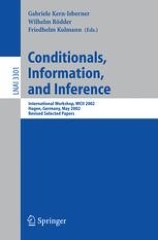
Conditionals, Information, and Inference
Conditionals are fascinating and versatile objects of knowledge representation. On the one hand, they may express rules in a very general sense, representing, for example, plausible relationships, physical laws, and social norms. On the other hand, as default rules or general implications, they constitute a basic tool for reasoning, even in the presence of uncertainty. In this sense, conditionals are intimately connected both to information and inference. Due to their non-Boolean nature, however, conditionals are not easily dealt with. They are not simply true or false — rather, a conditional “if A then B” provides a context, A, for B to be plausible (or true) and must not be confused with “A entails B” or with the material implication “not A or B.” This ill- trates how conditionals represent information, understood in its strict sense as reduction of uncertainty. To learn that, in the context A, the proposition B is plausible, may reduce uncertainty about B and hence is information. The ab- ity to predict such conditioned propositions is knowledge and as such (earlier) acquired information. The ?rst work on conditional objects dates back to Boole in the 19th c- tury, and the interest in conditionals was revived in the second half of the 20th century, when the emerging Arti?cial Intelligence made claims for appropriate formaltoolstohandle“generalizedrules.”Sincethen,conditionalshavebeenthe topic of countless publications, each emphasizing their relevance for knowledge representation, plausible reasoning, nonmonotonic inference, and belief revision.

Concentrator Location in Telecommunications Networks
It presents polyhedral results and exact solution methods for location problems encountered in telecommunications but which also have applications in other areas like transportation and supply chain management.

Computer-aided Systems in Public Transport
This proceedings volume consists of selected papers presented at the Ninth Int- national Conference on Computer-Aided Scheduling of Public Transport (CASPT 2004), which was held at the Hilton San Diego Resort and Conference Center in San Diego, California, USA, from August 9-11, 2004. The CASPT 2004 conference is the continuation of a series of international workshops and conferences prese- ing recent research and progress in computer-aided scheduling in public transport.

Computer-Aided Highway Engineering
Aimed at developing professional knowledge in the field of highway engineering with adequate skills in planning, designing and implementation of the highway project with an exposure of hands on training of computer software in designing the worldwide road infrastructures. It discusses Digital Terrain Model (DTM) using satellite data including highway geometric, pavement and tunnel design, supported by relevant tutorials. Quantity estimation, cost estimation and production of various types of construction drawings are described in detail with theory and tutorials backed by real project data. Recognizes the role of information and computer technology in various aspects of highway design. Reviews different tasks for feasibility studies and DPR with software applications. Explores topographic survey, Digital Terrain Model (DTM) and highway geometrics and, pavement and drainage design. Discusses project estimations for various revisions of the engineering work. Includes HEADS Pro along with chapter wise tutorials containing design and field data, tutorial guides and various tutorial videos.
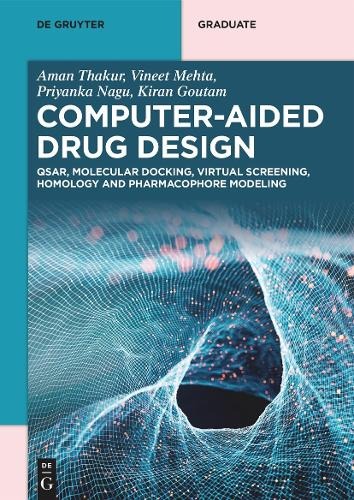
Computer-aided drug design
Computer-Aided Drug Design (CADD) is a comprehensive guide designed for both beginners and experienced users in CADD. Covers the fundamental principles and gradually delves into more advanced concepts and techniques, making it an invaluable resource to anyone interested in CADD. It begins by establishing a solid foundation, explaining the core concepts of CADD, the user interface and essential tools. It covers QSAR, molecular docking, homology modeling, virtual screening, pharmacophore modeling, ensuring that the reader can quickly become proficient in CADD. Provides in-depth insights into 3D modeling, rendering, and parametric design. The style of the book is simple, every topic begins from the very basics and explores advanced levels with clarity. Practical examples, step-by-step tutorials and hands-on exercises, are included for better understanding.

Computer Vision in Human-Computer Interaction ; Vol.3979 ; ECCV 2006 Workshop on HCI, Graz, Austria, May 13, 2006, Proceedings
This volume presents the proceedings of the HCI 2006 Workshop, held in conjunction with ECCV 2006 (European Conference on Computer Vision) in Graz, Austria. The goal of this workshop was to bring together researchers from the field of computer vision whose work is related to human–computer interaction.

Computer vision : A modern approach
Provides the most complete treatment of modern computer vision methods by two of the leading authorities in the field. This accessible presentation gives both a general view of the entire computer vision enterprise and also offers sufficient detail for students to be able to build useful applications. Students will learn techniques that have proven to be useful by first-hand experience and a wide range of mathematical methods.

Computer Processing of Oriental Languages. Beyond the Orient : The Research Challenges Ahead ; 21st International Conference, ICCPOL 2006, Singapore, December 17-19, 2006, Proceedings
This book constitutes the thoroughly refereed proceedings of the 21st International Conference on Computer Processing of Oriental Languages, ICCPOL 2006.The papers are organized in topical sections on information retrieval, document classification, questions and answers, summarization, machine translation, word segmentation, chunking, abbreviation expansion, writing-system issues, parsing, semantics, and lexical resources.

Computer Network Security
As society becomes increasingly dependent on computers and computer networks, computer problems continue to rise in number. Yet despite the proliferation of expert remedies, a viable solution to these security issues remains elusive, and society continues to suffer at the hands of cyber vandalism and computer viruses. This comprehensive text outlines and discusses today’s most important issues and concerns in computer network and information safety and security, and promises to ignite debate and participation in the ongoing global security dialog Computer Network Security is foremost an educational tool that aims to explore computer network infrastructure and protocol design security flaws and discusses current security solutions and best practices. It explores the security threats and vulnerabilities in the current network infrastructure and protocols and outlines current efforts including: Access Control and Authorization, Cryptography, Firewalls and VPNs, Web Security and Content Filtering, among others. The text further discusses various security proposals This text is an invaluable instructional and research tool for courses in computer and information security. Students or practitioners in computer science, information science, technology studies, library sciences, and information management studies will find this text particularly useful for their purposes. In addition, it is a rich resource for those looking to gain an understanding of computer infrastructures and network security threats.

Computational Materials Chemistry : Methods and Applications
As a result of the advancements in algorithms and the huge increase in speed of computers over the past decade, electronic structure calculations have evolved into a valuable tool for characterizing surface species and for elucidating the pathways for their formation and reactivity. It is also now possible to calculate, including electric field effects, STM images for surface structures. To date the calculation of such images has been dominated by density functional methods, primarily because the computational cost of - curate wave-function based calculations using either realistic cluster or slab models would be prohibitive. DFT calculations have proven especially valuable for elucidating chemical processes on silicon and other semiconductor surfaces. However, it is also clear that some of the systems to which DFT methods have been applied have large non-dynamical correlation effects, which may not be properly handled by the current generation of Kohn-Sham-based density functionals. For example, our CASSCF calculations on the Si(001)/acetylene system reveal that at some geometries there is extensive 86 configuration mixing. This, in turn, could signal problems for DFT cal- lations on these systems.

Computational logic in multi-agent systems ; 4th International Workshop, CLIMA IV, Fort Lauderdale, FL, USA, January 6-7, 2004, Revised Selected and Invited Papers
Though multiagent systems (MASs) are being increasingly used, few methods exist to ensure survivability of MASs. All existing methods suffer from two flaws. First, a centralized survivability algorithm (CSA) ensures survivability of the MAS – unfortunately, if the node on which the CSA exists goes down, the survivability of the MAS is questionable. Second, no mechanism exists to change how the MAS is deployed when external factors trigger a re-evaluation of the survivability of the MAS. In this paper, we present three algorithms to address these two important problems. Our algorithms can be built on top of any CSA. Our algorithms are completely distributed and can handle external triggers to compute a new deployment. We report on experiments assessing the efficiency of these algorithms.

Computational Life Sciences ; Vol. 3695 ; 1st International Symposium, CompLife 2005, Konstanz, Germany, September 25-27, 2005, Proceedings
This book constitutes the refereed proceedings of the First International Symposium on Computational Life Sciences, CompLife 2005, held in Konstanz, Germany in September 2005. The integration of knowledge in the life sciences is continuing apace with ev- increasingimportancebeing placedoncomputer-basedmethodsofdata capture, analysis, and knowledge representation. Today, our many di?erent sciences are providing us with a sea of information: it is the handling of this in?ux that is becoming a key discovery and regulatory question. The solutions to these problems will result in advancements to all of the involved sciences and will be highly in?uential both in the selection of the areas scientists seek to investigate and also on their success. For this to happen, it is crucial to establish an open and lively exchange between computer scientists, biologists, and chemists. To encourage precisely this type of exchange, crossing the borders of the sciences, we organized the 1st Symposium on Computational Life Science in Konstanz, Germany(September 25 27,2005).

Computational intelligence for remote sensing
This book is a composition of different points of view regarding the application of Computational Intelligence techniques and methods to Remote Sensing data and applications. The book covers a broad range of topics, starting from the hardware design of hyperspectral sensors, and data handling problems, namely data compression and watermarking issues, as well as autonomous web services.

Computational intelligence : A compendium
Computational Intelligence paradigms have proven effective on real-world problems in virtually all disciplines including Science, Engineering, Business, healthcare, Management and Avionics. This handbook includes contributions from the leading international experts in their respective fields. There are twenty five chapters grouped in the following ten parts covering theoretical aspects and practical applications.

Computational Forensic ; 2nd International Workshop, IWCF 2008, Washington, DC, USA, August 7-8, 2008. Proceedings
This book constitutes the refereed proceedings of the Second International Workshop, IWCF 2008, held in Washington, DC, USA, August 2008. The papers are organized in topical sections on trends and challenges; scanner, printer, and prints; human identification; shoeprints; linguistics;decision making and search; speech analysis; signatures and handwriting.

Computational Fluid Dynamics for Engineers
This book introduces a wide range of Computational Fluid Dynamics (CFD) methods used in the aerospace industry to solve engineering problems. Its format is arranged so that students and practicing engineers can understand the fundamental principles used in CFD, with sample computer programs for the solution of model problems. The emphasis is on two-dimensional equations in order to present the material in a modest sized book. Source codes for selected problems are given so that the reader can understand how those methods are implemented in FORTRAN and C languages, while exercises provide more hands-on experience.

Computational Electromagnetics
Computational Electromagnetics is a young and growing discipline, expanding as a result of the steadily increasing demand for software for the design and analysis of electrical devices. This book introduces three of the most popular numerical methods for simulating electromagnetic fields: the finite difference method, the finite element method and the method of moments. In particular it focuses on how these methods are used to obtain valid approximations to the solutions of Maxwell's equations, using, for example, "staggered grids" and "edge elements." The main goal of the book is to make the reader aware of different sources of errors in numerical computations, and also to provide the tools for assessing the accuracy of numerical methods and their solutions. To reach this goal, convergence analysis, extrapolation, von Neumann stability analysis, and dispersion analysis are introduced and used frequently throughout the book. Another major goal of the book is to provide students with enough practical understanding of the methods so they are able to write simple programs on their own. To achieve this, the book contains several MATLAB programs and detailed description of practical issues such as assembly of finite element matrices and handling of unstructured meshes.

Computational Commutative : Algebra 2
The main part of this book is a breathtaking passeggiata through the computational domains of graded rings and modules and their Hilbert functions. Besides Gröbner bases, we encounter Hilbert bases, border bases, SAGBI bases, and even SuperG bases. The tutorials traverse areas ranging from algebraic geometry and combinatorics to photogrammetry, magic squares, coding theory, statistics, and automatic theorem proving. Whereas in the first volume gardening and chess playing were not treated, in this volume they are. This is a book for learning, teaching, reading, and most of all, enjoying the topic at hand. The theories it describes can be applied to anything from children's toys to oil production. If you buy it, probably one spot on your desk will be lost forever!

Computational Chemistry and Molecular Modeling : Principles and Applications
The gap between introductory level textbooks and highly specialized monographs is filled by this modern textbook. It provides in one comprehensive volume the in-depth theoretical background for molecular modeling and detailed descriptions of the applications in chemistry and related fields like drug design, molecular sciences, biomedical, polymer and materials engineering. Special chapters on basic mathematics and the use of respective software tools are included.
