



الصفحة 29
الصفحة 29
Algorithms in Bioinformatics ; Vol. 3692 ; 5th international workshop, WABI 2005, Mallorca, Spain, October 3-6, 2005, Proceedings
this book present the proceedings of the 5th Workshop on Algorithmsin Bioinformatics (WABI 2005) which took place in Spain, 2005. The Workshop on Algorithms in Bioinformatics highlights research workspecifically developed to address algorithmic problems in biosequence analysis. The emphasis is therefore on statistical and probabilistic algorithms that addressimportant problems in the field of molecular and structural biology. the workshop aims to present recent research results, includingsignificant work in progress, and to identify and explore directions of futureresearch.Original research papers (including significant work in progress) or state-of-the-art surveys were solicited on all aspects of algorithms in bioinformatics,including, but not limited to: exact and approximate algorithms for genomics,genetics, sequence analysis, gene and signal recognition, alignment, molecularevolution, phylogenetics, structure determination or prediction, gene expressionand gene networks, proteomics, functional genomics, and drug design.

Algorithms in Bioinformatics ; 7th International Workshop, WABI 2007, Philadelphia, PA, USA, September 8-9, 2007, Proceedings
All current issues of algorithms in bioinformatics are addressed, ranging from mathematical tools to experimental studies of approximation algorithms and reports on significant computational analyses. Numerous biological problems are dealt with, including genetic mapping, sequence alignment and sequence analysis, phylogeny, comparative genomics, and protein structure. Furthermore the papers feature high-performance computing approaches to computationally hard learning and optimization problems in bioinformatics and cover methods, software and dataset repositories for development and testing of such algorithms and their underlying models.
Agrobacterium : From Biology to Biotechnology
Agrobacterium’ is a comprehensive book on Agrobacterium research, including its history, application, basic biology discoveries, and effects on human society. Although the book largely focuses on providing a detailed review of virtually all molecular events of the genetic transformation process, it also provides coverage of ethical and legal issues relevant to the use of Agrobacterium as a "genetic transformation machine". The result is an all-inclusive text which readers—including scientists and students involved in plant genetic engineering—will find useful as a reference source for all major aspects of the Agrobacterium-mediated genetic transformation of plant and non-plant organisms.
Agricultural biodiversity and biotechnology in economic development
The topics addressed in this book are of vital importance to the survival of humankind. Agricultural biodiversity, encompassing genetic diversity as well as human knowledge, is the base upon which agricultural production has been built, and protecting this resource is critical to ensuring the capacity of current and future generations to adapt to unforeseen challenges. Agricultural biodiversity underpins the productivity of all agricultural systems and is particularly important for poor and food-insecure farmers, who maintain highly diverse production systems in response to the marginal and risky production conditions they operate under. Understanding the importance of agricultural biodiversity in the livelihoods of the food insecure and enhancing its performance through the use of a variety of tools, including biotechnology, is a critically important issue in the world today
Aging and the Heart : A Post-Genomic View
In this book, the genetic and molecular basis of cardiovascular aging will be discussed. In addition, a comprehensive assessment of the bioenergetic changes that occur in human and animal models of cardiac aging as well as current diagnostic and future therapeutic modalities will be undertaken.

Aging and Senescence
Aging is characterized by a progressive loss of physiological integrity, leading to impaired function and increased vulnerability to death. This deterioration is the primary risk factor for major human pathologies, including cancer, diabetes, cardiovascular disorders, and neurodegenerative diseases. Aging research has experienced an unprecedented advance over recent years, particularly with the discovery that the rate of aging is controlled, at least to some extent, by genetic pathways and biochemical processes conserved in evolution. Although recent developments in molecular biology are far from understanding the biological basis of aging, research suggests that targeting the aging process itself could ameliorate many age-related pathologies.
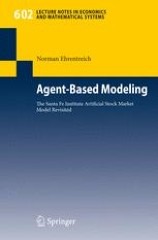
Agent-based modeling : The Santa Fe Institute artificial stock market model revisited
An excellent reference to both the learning, and empirical literature in finance." (Krzysztof Piasecki, Zentralblatt MATH, Vol. 1141, 2008) "Norman Ehrentreich was one of the daring few to take on the model, and he has summarized his work and findings in this excellent book. … It is useful primer for anyone interested in getting started in the area of agent-based finance. … It is essential reading for anyone interested in the dynamics of the SFI market in particular, but I also recommend it for others as a useful resource on agent-based financial market design as well." (Blake LeBaron, Journal of Artificial Societies and Social Simulation, Vol. 12 (2), March, 2009)
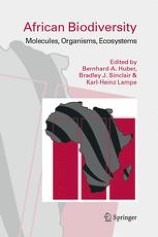
African Biodiversity : molecules, organisms, ecosystems
BIOTA is an interdisciplinary research project focusing on sustainable use and conservation of biodiversity in Africa (http://www.biote-africa.de). Session titles were Biogeography and Speciation Processes, Phylogenetic Patterns and Systematics, Diversity Declines and Conservation, and Applied Biodiversity Informatics
Advancing the Science of Cancer in Latinos
This book gives an overview of the sessions, panel discussions, and outcomes of the Advancing the Science of Cancer in Latinos conference, held in February 2018 in San Antonio, Texas, USA, and hosted by the Mays Cancer Center and the Institute for Health Promotion Research at UT Health San Antonio.

Advances in wheat genetics : From genome to field : Proceedings of the 12th International wheat genetics symposium
Provides a comprehensive review of the forefront of wheat research, across various important topics such as germplasm and genetic diversity, cytogenetics and allopolyploid evolution, genome sequencing, structural and functional genomics, gene function and molecular biology, biotic stress, abiotic stress, grain quality, and classical and molecular breeding. Following an introduction, 9 parts of the book are dedicated to each of these topics. A final, 11th part entitled “Toward Sustainable Wheat Production” contains 7 excellent papers that were presented in the 12th IWGS Special Session supported by the OECD.

Advances in web and network technologies, and information management ; APWeb/WAIM 2007 International Workshops : DBMAN 2007, WebETrends 2007, PAIS 2007 and ASWAN 2007, Huang Shan, China, June 16-18, 2007, Proceedings
With the increasing ubiquity of personal computing devices, such as mobile phones and PDAs, and the increasing deployment of sensor networks, new distributed applications are developed over networked databases posing interesting challenges. It aimed to bring together researchers in different fields related to database management and application over networks and to provide a forum where researchers and practitioners could share and exchange their knowledge and experience.

Advances in Swarm Intelligence ; 11th International Conference, ICSI 2020, Belgrade, Serbia, July 14–20, 2020, Proceedings
Constitutes the proceedings of the 11th International Conference on Advances in Swarm Intelligence, ICSI 2020, held in July 2020 in Belgrade, Serbia. Due to the COVID-19 pandemic the conference was held virtually. The 63 papers included in this volume were carefully reviewed and selected from 127 submissions. The papers are organized in 12 cohesive topical sections as follows: Swarm intelligence and nature-inspired computing; swarm-based computing algorithms for optimization; particle swarm optimization; ant colony optimization; brain storm optimization algorithm; bacterial foraging optimization; genetic algorithm and evolutionary computation; multi-objective optimization; machine learning; data mining; multi-agent system and robotic swarm, and other applications.

Advances in Structural Engineering - Optimization : Emerging Trends in Structural Optimization
An up-to-date source for computation applications of optimization, prediction via artificial intelligence methods, and evaluation of metaheuristic algorithm with different structural applications. As the current interest of researcher, metaheuristic algorithms are a high interest topic area since advance and non-optimized problems via mathematical methods are challenged by the development of advance and modified algorithms. The artificial intelligence (AI) area is also important in predicting optimum results by skipping long iterative optimization processes. The machine learning used in generation of AI models also needs optimum results of metaheuristic-based approaches.
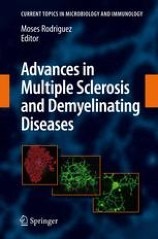
Advances in multiple Sclerosis and Experimental Demyelinating Diseases
Challenging Charcot’s hypothesis that inflammatory response is the primary contributor to demyelination, Dr. Rodriguez and colleagues take a fresh, bold look at the causes and possible treatments of MS.Assuming oligodendrocyte injury as a prerequisite to MS, the authors explore viruses, toxins and genetic defects as possible culprits. They present novel methods to interrupt and reverse demyelination. This book examines the correlation between axonal loss and clinical deficits, including the implied role of the CD8+ T cell and perforin. It assesses proteases, specifically, kallikrein 6, which are strongly associated with active demyelination. By directing natural autoantibodies against oligodendrocytes that demonstrate remyelination in animal models, the authors envision clinical trials for remyelination enhancement.
Advances in Molecular Breeding Toward Drought and Salt Tolerant Crops
Advances in Molecular Breeding toward Drought and Salt Tolerant Crops seeks to integrate the most recent findings about key biological determinants of plant stress tolerance with modern crop improvement strategies. This volume is unique because is provides exceptionally wide coverage of current knowledge and expertise being applied in drought and salt tolerance research, spanning the scientific hierarchy from physiology, biochemistry, development, and genetics, to the newest technologies being used to manipulate drought and salinity associated traits for germplasm improvement. This book will be an invaluable reference for educators and researchers in agronomy and horticulture, crop breeding, molecular genetics, and biotechnology.
Advances in Metaheuristics for Hard Optimization
The book gathers contributions related to the following topics: theoretical developments in metaheuristics; adaptation of discrete metaheuristics to continuous optimization; performance comparisons of metaheuristics; cooperative methods combining different approaches; parallel and distributed metaheuristics for multiobjective optimization; software implementations; and real-world applications.
Advances in Learning Classifier Systems ; 4th International Workshop, IWLCS 2001, San Francisco, CA, USA, July 7-8, 2001. Revised Papers
The Fourth International Workshop on Learning Classifier Systems (IWLCS2001) was held July 7-8, 2001, in San Francisco, California, during the Geneticand Evolutionary Computation Conference (GECCO 2001). We have includedin this volume revised and extended versions of eleven of the papers presentedat the workshop.The volume is organized into two main parts. The first is dedicated to importanttheoretical issues of learning classifier systems research including the influenceof exploration strategy, a model of self-adaptive classifier systems, and the useof classifier systems for social simulation. The second part contains papers dis-cussing applications of learning classifier systems such as data mining, stocktrading, and power distribution networks.An appendix contains a paper presenting a formal description of ACS, a rapidlyemerging learning classifier system model.

Advances in intelligent computing ; Vol. 3645 ; International conference on intelligent computing, ICIC 2005, Hefei, China, August 23-26, 2005, Proceedings, Part II
This book constitutes the proceedings of the International Conference on Intelligent Computing (ICIC 2005), held in China, 215 papers were published in this book organized into 9 categories, Including Topics Artificial Intelligence Computation by Abstract Devices Algorithm Analysis and Problem Complexity Image Processing and Computer Vision Pattern Recognition Evolutionary Biology
Advances in Evolutionary Computing for System Design
Evolutionary computing paradigms offer robust and powerful adaptive search mechanisms for system design. This book includes thirteen chapters covering a wide area of topics in evolutionary computing and applications including: -Introduction to evolutionary computing in system design - Evolutionary neuro-fuzzy systems - Evolution of fuzzy controllers - Genetic algorithms for multi-classifier design -Evolutionary grooming of traffic -Evolutionary particle swarms -Fuzzy logic systems using genetic algorithms - Evolutionary algorithms and immune learning for neural network-based controller design - Distributed problem solving using evolutionary learning -Evolutionary computing within grid environment -Evolutionary game theory in wireless mesh networks - Hybrid multiobjective evolutionary algorithms for the sailor assignment problem - Evolutionary techniques in hardware optimization
Advances in Evolutionary Algorithms : Theory, Design and Practice
The goal of this book is to provide effective optimization algorithms for solving a broad class of problems quickly, accurately, and reliably by employing evolutionary mechanisms. In this regard, five significant issues have been investigated: Bridging the gap between theory and practice of GEAs, thereby providing practical design guidelines. Demonstrating the practical use of the suggested road map. Offering a useful tool to significantly enhance the exploratory power in time-constrained and memory-limited applications. Providing a class of promising procedures that are capable of scalably solving hard problems in the continuous domain. Opening an important track for multiobjective GEA research that relies on decomposition principle.
