



الصفحة 27
الصفحة 27

Anand's Human Anatomy for Dental Students
Presents with six sections. The initial part of first section deals with general anatomy, a must for laying foundation of body structure, chapter 4 is ""organization of body"", gives a comprehensive overview of composition of body, its various parts with essentials of regional anatomy of limbs, thorax and abdomen. Subsequent chapters till chapter no. 17 deals with systemic anatomy, i.e. anatomy of various systems of body with their clinical significance.
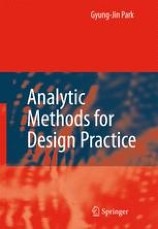
Analytic Methods for Design Practice
In the competitive world of modern engineering, rigorous and definite design methodologies are needed. However, many parts of engineering design are performed in either an ad-hoc manner or based on the intuition of the engineer.Analytic Methods for Design Practice is the first book to look at both stages of the design process – conceptual design and detailed design – and detail design methodologies for every step of the entire design process. The book introduces the following analytic design methodologies and explores their usefulness with many mathematical and practical examples: Axiomatic design; Optimization; Design of experiments; Robust design; Structural optimization; Dynamic response optimization; and Multidisciplinary optimization. A chapter of the book is devoted to case studies showing how practical design problems can be solved with analytic design methods based on Professor Park’s experiences of teaching design engineering over the past ten years.

Analysis, Control and Optimization of Complex Dynamic Systems
Analysis, Control and Optimization of Complex Dynamic Systems gathers in a single volume a spectrum of complex dynamic systems related papers written by experts in their fields, and strongly representative of current research trends. Complex systems present important challenges, in great part due to their sheer size which makes it difficult to grasp their dynamic behavior, optimize their operations, or study their reliability. Yet, we live in a world where, due to increasing inter-dependencies and networking of systems, complexity has become the norm. With this in mind, the volume comprises two parts. The first part is dedicated to a spectrum of complex problems of decision and control encountered in the area of production and inventory systems. The second part is dedicated to large scale or multi-agent system problems occurring in other areas of engineering such as telecommunication and electric power networks, as well as more generic context.

Analysis of Waiting-Time Data in Health Services Research
Analysis of Waiting-Time Data in Health Services Research asks critical questions linking waiting times to health care outcomes. Generously illustrated with charts and tables, the book places this type of data collection, analysis, and reporting firmly in the context of health services research, the study of outcomes of health care delivery to a population.
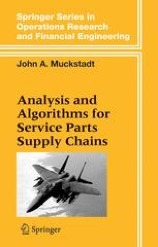
Analysis and Algorithms for Service Parts Supply Chains
Services requiring parts has become a $1.5 trillion business annually worldwide, creating a tremendous incentive to manage the logistics of these parts efficiently by making planning and operational decisions in a rational and rigorous manner. This book provides a broad overview of modeling approaches and solution methodologies for addressing service parts inventory problems found in high-powered technology and aerospace applications. The focus in this work is on the management of high cost, low demand rate service parts found in multi-echelon settings. This unique book, with its breadth of topics and mathematical treatment, begins by first demonstrating the optimality of an order-up-to policy [or (s-1,s)] in certain environments. This policy is used in the real world and studied throughout the text. The fundamental mathematical building blocks for modeling and solving applications of stochastic process and optimization techniques to service parts management problems are summarized extensively. A wide range of exact and approximate mathematical models of multi-echelon systems is developed and used in practice to estimate future inventory investment and part repair requirements.

Analog Design Essentials
The book starts with elementary stages in building up operational amplifiers. The synthesis of opamps is covered in great detail, such that lowest power consumption is always guaranteed. Many examples are included, operating at low supply voltages. Chapters on noise, distortion, filters, ADC/DACs and oscillators follow. These are all based on the extensive amount of teaching that the author has carried out both at universities and companies world-wide. All chapters have been drawn up specifically for self-study. They aim, however, at different levels of understanding. All start with elementary material. Most chapters also contain advanced material, especially from Chapter 9 onwards.

An Undergraduate Primer in Algebraic Geometry
This book consists of two parts. The first is devoted to an introduction to basic concepts in algebraic geometry: affine and projective varieties, some of their main attributes and examples. The second part is devoted to the theory of curves: local properties, affine and projective plane curves, resolution of singularities, linear equivalence of divisors and linear series, Riemann–Roch and Riemann–Hurwitz Theorems.The approach in this book is purely algebraic. The main tool is commutative algebra, from which the needed results are recalled, in most cases with proofs. The prerequisites consist of the knowledge of basics in affine and projective geometry, basic algebraic concepts regarding rings, modules, fields, linear algebra, basic notions in the theory of categories, and some elementary point–set topology.

An Introduction to Sobolev Spaces and Interpolation Spaces
After publishing an introduction to the Navier–Stokes equation and oceanography (Vol. 1 of this series), Luc Tartar follows with another set of lecture notes based on a graduate course in two parts, as indicated by the title. A draft has been available on the internet for a few years. The author has now revised and polished it into a text accessible to a larger audience.

An Introduction to Quantum and Vassiliev Knot Invariants
Provides an accessible introduction to knot theory, focussing on Vassiliev invariants, quantum knot invariants constructed via representations of quantum groups, and how these two apparently distinct theories come together through the Kontsevich invariant. Consisting of four parts, the book opens with an introduction to the fundamentals of knot theory, and to knot invariants such as the Jones polynomial. The second part introduces quantum invariants of knots, working constructively from first principles towards the construction of Reshetikhin-Turaev invariants and a description of how these arise through Drinfeld and Jimbo's quantum groups. Its third part offers an introduction to Vassiliev invariants, providing a careful account of how chord diagrams and Jacobi diagrams arise in the theory, and the role that Lie algebras play. The final part of the book introduces the Konstevich invariant. This is a universal quantum invariant and a universal Vassiliev invariant, and brings together these two seemingly different families of knot invariants. The book provides a detailed account of the construction of the Jones polynomial via the quantum groups attached to sl(2), the Vassiliev weight system arising from sl(2), and how these invariants come together through the Kontsevich invariant.

An Introduction to Language Processing with Perl and Prolog : An Outline of Theories, Implementation, and Application with Special Consideration of English, French, and German
This book teaches the principles of natural language processing, first covering linguistics issues such as encoding, entropy, and annotation schemes; defining words, tokens and parts of speech; and morphology. It then details the language-processing functions involved, including part-of-speech tagging using rules and stochastic techniques; using Prolog to write phase-structure grammars; parsing techniques and syntactic formalisms; semantics, predicate logic and lexical semantics; and analysis of discourse, and applications in dialog systems. The key feature of the book is the author's hands-on approach throughout, with extensive exercises, sample code in Prolog and Perl, and a detailed introduction to Prolog. The reader is supported with a companion website that contains teaching slides, programs, and additional material.

An Illustrated Guide to Furniture History
Provides upper-level students and instructors with an alternative visual analytical approach to learning about furniture history from Antiquity to Postmodernism. Following an immersive teaching model, it presents a Nine-Step Methodology to help students strengthen their visual literacy and quickly acquire subject area knowledge. Moving chronologically through key periods in furniture history and interior design, such as the Renaissance, the Arts and Crafts Movement, and Modernism, it traverses Europe to America to present a comprehensive foundational guide to the history of furniture design.

AmIware : Hardware Technology Drivers of Ambient Intelligence
Ambient Intelligence is one of the new paradigms in the development of information and communication technology, which has attracted much attention over the past years. The aim is the to integrate technology into people environment in such a way that it improves their daily lives in terms of well-being, creativity, and productivity. Ambient Intelligence is a multidisciplinary concept, which heavily builds on a number of fundamental breakthroughs that have been achieved in the development of new hardware concepts over the past years. New insights in nano and micro electronics, packaging and interconnection technology, large-area electronics, energy scavenging devices, wireless sensors, low power electronics and computing platforms enable the realization of the heaven of ambient intelligence by overcoming the hell of physics.

Ambient Intelligence in Everyday Life : Foreword by Emile Aarts
Originating from the Workshop on Ambient Intelligence in Everyday Life held at the Miramar Congress Center, San Sebastian, Spain, in July 2005, this book is devoted to the cognitive aspects of ambient intelligence. The 15 carefully reviewed and revised articles presented are organized in topical sections on human-centric computing, ambient interfaces, and architectures for ambient intelligence.

Ambient intelligence for scientific discovery : Foundations, theories, and systems
Many difficult scientific discovery tasks can only be solved in interactive ways, by combining intelligent computing techniques with intuitive and adaptive user interfaces. It is inevitable to use human intelligence in scientific discovery systems: human eyes can capture complex patterns and relationships, along with detecting the exceptional cases in a data set; the human brain can easily manipulate perceptions to make decisions. Ambient intelligence is about this kind of ubiquitous and autonomous human interaction with information. Scientific discovery is a process of creative perception and communication, dealing with questions like: how do we significantly reduce information while maintaining meaning, or how do we extract patterns from massive data and growing data resources. Originating from the SIGCHI Workshop on Ambient Intelligence for Scientific Discovery, this state-of-the-art survey is organized in three parts: new paradigms in scientific discovery, ambient cognition, and ambient intelligence systems. Many chapters share common features such as interaction, vision, language, and biomedicine.

Ambient Intelligence ; European Conference, AmI 2008, Nuremberg, Germany, November 19-22, 2008. Proceedings
This book constitutes the refereed proceedings of the Second European Conference on Ambient Intelligence, AmI 2008, held in Nuremberg, Germany, in November 2008.

Ambient intelligence
Ambient intelligence is the vision of a technology that will become invisibly embedded in our natural surroundings, present whenever we need it, enabled by simple and effortless interactions, attuned to all our senses, adaptive to users and context-sensitive, and autonomous.

Alternative medicines for diabetes management : Advances in pharmacognosy and medicinal chemistry
Apart from diet and exercise, the strategic use of different classes of prescribed or non-prescribed xenobiotic compounds for the restoration of euglycemic levels in the body is well known. The ongoing rivalry between the recommended usage of allopathic medicines versus ayurvedic remedies has encouraged many researchers to focus their studies on thoroughly isolating and characterizing the extracts from different parts of plants and then evaluating their relative activities via in vitro, in vivo and in some cases clinical studies.

Algorithmic learning theory ; 19th International Conference, ALT 2008, Budapest, Hungary, October 13-16, 2008. Proceedings
This book constitutes the refereed proceedings of the 19th International Conference on Algorithmic Learning Theory, ALT 2008, held in Budapest, Hungary, in October 2008, co-located with the 11th International Conference on Discovery Science, DS 2008.

Algebraic Geometry : An Introduction
The book starts with easily-formulated problems with non-trivial solutions – for example, Bézout’s theorem and the problem of rational curves – and uses these problems to introduce the fundamental tools of modern algebraic geometry: dimension; singularities; sheaves; varieties; and cohomology. The treatment uses as little commutative algebra as possible by quoting without proof (or proving only in special cases) theorems whose proof is not necessary in practice, the priority being to develop an understanding of the phenomena rather than a mastery of the technique. A range of exercises is provided for each topic discussed, and a selection of problems and exam papers are collected in an appendix to provide material for further study.

AI in marketing : Applications, insights, and analysis
AI in marketing equips students with the knowledge to understand the impact of artificial intelligence (AI) on marketing strategies, processes, and activities, empowering them to navigate the AI-driven marketing landscape confidently. divided into four parts, it provides a comprehensive exploration of AI's transformative role in marketing. the first part lays the groundwork, offering foundational insights into the intersection of AI and marketing. Part II explores the various applications of AI in marketing, and the tools marketers use to optimize their processes and deliver enhanced customer experiences. the third part focuses on leveraging AI for consumer insights, enabling marketers to craft data-driven strategies. the final part examines ethical considerations and the pedagogical integration of AI into marketing education.
