



الصفحة 27
الصفحة 27

Dense + Green cities : Architecture as urban ecosystem
In which ways does a "green building" contribute to the ecology of its surroundings? And how can ecologically designed urban districts, with their green and blue networks, link up with the elements and technologies of building design? All dimensions of "green building" are investigated in this book in an effort to understand and evaluate some of the most recent and innovative Dense+Green Cities in Asia, the Americas and Europe.

Dense + Green : Innovative building types for sustainable urban architecture
Explores new architectural typologies that emerge from the integration of green components such as sky terraces, vertical parks and green facades, in high-density buildings. In-depth case studies on the most relevant building types are complemented by expert essays that demonstrate the current paradigm shift in the sustainable urban environment.

Defence Applications of Multi-Agent Systems; International Workshop, DAMAS 2005, Utrecht, The Netherlands, July 25, 2005, Revised and Invited Papers
This book constitutes the thoroughly refereed post-proceedings of the International Workshop on Defence Applications of Multi-Agent Systems, DAMAS 2005, held in Utrecht, The Netherlands in July 2005 as an associated event of AAMAS 2005, the main international conference on autonomous agents and multi-agent systems. The 10 revised full papers presented together with 1 invited article are organized in topical sections on decision support and simulation, unmanned aerial vehicles, as well as on systems and security.
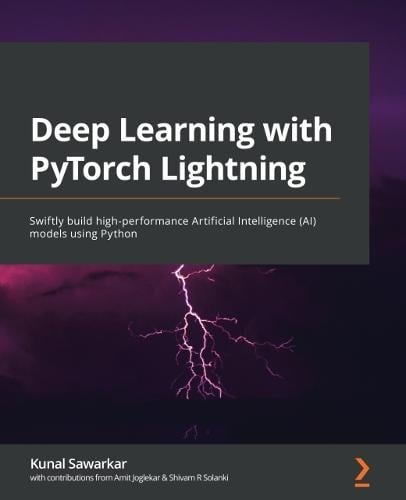
Deep Learning with PyTorch Lightning : Build and train high-performance artificial intelligence and self-supervised models using Python
You’ll learn how to configure PyTorch Lightning on a cloud platform, understand the architectural components, and explore how they are configured to build various industry solutions. You’ll build a neural network architecture, deploy an application from scratch, and see how you can expand it based on your specific needs, beyond what the framework can provide. In the later chapters, you’ll also learn how to implement capabilities to build and train various models like Convolutional Neural Nets (CNN), Natural Language Processing (NLP), Time Series, Self-Supervised Learning, Semi-Supervised Learning, Generative Adversarial Network (GAN) using PyTorch Lightning.

Deep learning architecture and application
As one of the fastest-growing topics in machine learning, deep learning algorithms have achieved unprecedented success in recent years. Novel paradigms (such as contrastive learning and few-shot learning) in deep learning and rising neural network architectures (e.g., transformer and masked autoencoder) are dramatically changing the field of data-driven algorithms. More importantly, deep learning models are redefining the next generation of industrial applications spanning image recognition, speech processing, language translation, healthcare, and other sciences. For example, recent advances in deep representation learning are allowing us to learn about protein 3D structures, which sheds new light on fundamental medicine and biology along with potentially bringing in billions of dollars (e.g., in the pharmaceutical market).

Deep learning approach for text summarization
Machine learning and deep learning, as we know, have started ruling over almost every field in the computing industry and so, has revolutionized the process of text summarization too. Automatic text summarization is an advancing realm of the natural language processing research in which concise textual summaries are generated from lengthy input documents. Extensive research has been carried out on how automatic summarization can be prosecuted through various extractive and abstractive techniques. In this paper, we address all the approaches to text summarization and present the modus operandi of an Architecture called Encoder Decoder, under the machine learning approach.

Decoding the city urbanism in the Age of Big Data
Shows how Big Data change reality and, hence, the way we deal with the city. They demonstrate how the Lab interprets digital data as material that can be used for the formulation of a different urban future. The publication also looks at the negative aspects of the city-related data acquisition and control.

Daylighting Design Planning Strategies and Best Practice Solutions
The primary objective of daylight systems is to make maximum use of daylight for certain building types and climates. The book documents the various dimensions of the optimum use of daylight with particular reference to window orientation, light distribution, and prism technology, and discusses the health and economic related aspects.

David Chipperfield Architects = Architektur und Baudetails: Architecture and Construction Details
Supplemented by three current projects. It gives a glimpse behind the scenes, describes processes and provides plenty of building details.

Data-driven BIM for Energy Efficient Building Design
Conceptualises the scale and spectrum of Building Information Modelling (BIM) and Artificial Intelligence (AI) approaches in energy efficient building design and to develop its functional solutions with a focus on four crucial aspects of building envelop, building layout, occupant behaviour and heating, ventilation and air-conditioning (HVAC) systems. Drawn from theoretical development on the sustainability, informatics and optimisation paradigms in built environment, the energy efficient building design will be marked through the power of data and BIM-intelligent agents during the design phase.

Databases, Information Systems, and Peer-to-Peer Computing ; International Workshops, DBISP2P 2005/2006, Trondheim, Norway, August 28-29, 2006, Revised Selected Papers
The P2P paradigm lends itself to constructing large-scale, complex, adaptive, autonomous and heterogeneous database and information systems, endowed with clearly specified and difierential capabilities to negotiate, bargain, coordinate and self-organize the information exchanges in large-scale networks. This vision will have a radical impact on the structure of complex organizations (business, sci- tific or otherwise) and on the emergence and the formation of social communities, and on how the information is organized and processed. The P2P information paradigm naturally encompasses static and wireless connectivity and static and mobile architectures. Wireless connectivity combined with the increasingly small and powerful mobile devices and sensors poses new challenges as well as opp- tunities to the database community. Information becomes ubiquitous, highly distributed and accessible anywhere and at any time over highly dynamic, - stable networks with very severe constraints on the information management and processing capabilities.

Databases, information systems, and peer-to-peer computing ; 2nd international workshop, DBISP2P 2004, Toronto, Canada, August 29-30, 2004, revised selected papers
Peer-to-peer (P2P) paradigm lends itself to constructing large-scale complex, adaptive, - tonomous and heterogeneous database and information systems, endowed with clearly speci?ed and di?erential capabilities to negotiate, bargain, coordinate, and self-organize the information exchanges in large-scale networks. This vision will have a radical impact on the structure of complex organizations (business, scienti?c, or otherwise) and on the emergence and the formation of social c- munities, and on how the information is organized and processed. The P2P information paradigm naturally encompasses static and wireless connectivity, and static and mobile architectures. Wireless connectivity c- bined with the increasingly small and powerful mobile devices and sensors pose new challenges to as well as opportunities for the database community. Inf- mation becomes ubiquitous, highly distributed and accessible anywhere and at any time over highly dynamic, unstable networks with very severe constraints on the information management and processing capabilities.

Databases in Networked Information Systems ; 5th International Workshop, DNIS 2007, Aizu-Wakamatsu, Japan, October 17-19, 2007, Proceedings
This book Is focusing on data semantics and infrastructure for information management and interchange, the papers are organized in topical sections on geospatial decision-making, Web data management systems, infrastructure of networked information systems, and Web query and web mining systems.

Databases and information systems ; 14th International Baltic Conference, DB&IS 2020, Tallinn, Estonia, June 16–19, 2020, Proceedings
This book constitutes the refereed proceedings of the 14th International Baltic Conference on Databases and Information Systems, DB&IS 2020, held in Tallinn, Estonia, in June 2020.* The 22 revised papers presented were carefully reviewed and selected from 52 submissions. The papers are centered around topics like architectures and quality of information systems, artificial intelligence in information systems, data and knowledge engineering, enterprise and information systems engineering, security of information systems.

Database systems for advanced applications ; Vol. 3453 ; 10th international conference, DASFAA 2005, Beijing, China, April 17-20, 2005, Proceedings
Data Stream Mining and Resource Adaptive Computation.- Purpose Based Access Control for Privacy Protection in Database Systems.- Complex Networks and Network Data Mining.- Bioinformatics.- Indexing DNA Sequences Using q-Grams.- PADS: Protein Structure Alignment Using Directional Shape Signatures.- LinkageTracker: A Discriminative Pattern Tracking Approach to Linkage Disequilibrium Mapping.- Watermarking and Encryption.- Query Optimization in Encrypted Database Systems.- Watermarking Spatial Trajectory Database.- Effective Approaches for Watermarking XML Data.- XML Query Processing.- A Unifying Framework for Merging and Evaluating XML Information.- Efficient Evaluation of Partial Match Queries for XML Documents Using Information Retrieval Techniques.- PathStack: A Holistic Path Join Algorithm for Path Query with Not-Predicates on XML Data.- XML Coding and Metadata Management.- An Improved Prefix Labeling Scheme: A Binary String Approach for Dynamic Ordered XML.- Efficiently Coding and Indexing XML Document.- XQuery-Based TV-Anytime Metadata Management.- Data Mining.- Effective Database Transformation and Efficient Support Computation for Mining Sequential Patterns.

Database and expert systems applications ; DEXA 2020 International workshops BIOKDD, IWCFS and MLKgraphs, Bratislava, Slovakia, September 14–17, 2020, Proceedings
This volume constitutes the refereed proceedings of the three workshops held at the 31st International Conference on Database and Expert Systems Applications, DEXA 2020, held in September 2020: The 11th International Workshop on Biological Knowledge Discovery from Data, BIOKDD 2020, the 4th International Workshop on Cyber-Security and Functional Safety in Cyber-Physical Systems, IWCFS 2020, the 2nd International Workshop on Machine Learning and Knowledge Graphs, MLKgraphs2019. Due to the COVID-19 pandemic the conference and workshop were held virtually. The 10 papers were thoroughly reviewed and selected from 15 submissions, and discuss a range of topics including: knowledge discovery, biological data, cyber security, cyber-physical system, machine learning, knowledge graphs, information retriever, data base, and artificial intelligent.
Database : Enterprise, skills and innovation; 22nd British national conference on databases, BNCOD 22, Sunderland, UK, July 5-7, 2005, Proceedings
The British National Conference on Databases (BNCOD) was established in 1980 as a forum for research into the theory and practice of databases. The original conference in the series took place at the University of Aberdeen. To be precise, this conference was in fact entitled ICOD which stood for International Conference on Databases. It was the intention, when the series began, that an ICOD would take place every two years, whilst a BNCOD would run in the years in between. As the record shows ICOD was only held in 1980 and 1983. The more junior conference has managed to acquire a lifetime much longer than that of its senior relative! If truth wereknown,however,BNCOD has,overthe years,growninto ICOD and although the conference is still titled “British National,” it is, in fact, an international conference that takes place on a yearly basis. Proof of this can be obtained simply by looking at the table of contents of these proceeding which clearlyshowthatthe majorityofpaperspresentedatthis year’sconferencecame from contributors whose a?liations are outside the UK. Despitetherangeofpapersono?er,BNCODstillretainsitsuniquelyBritish ?avor. The Programme Committee is drawn from UK academics and the c- ference is always held at a British university (or in earlier years a polytechnic!).

Data Management Technologies and Applications ; 8th International Conference, DATA 2019, Prague, Czech Republic, July 26–28, 2019, Revised Selected Papers
This book constitutes the thoroughly refereed proceedings of the 8th International Conference on Data Management Technologies and Applications, DATA 2019, held in Prague, Czech Republic, in July 2019. The 8 revised full papers were carefully reviewed and selected from 90 submissions. The papers deal with the following topics: decision support systems, data analytics, data and information quality, digital rights management, big data, knowledge management, ontology engineering, digital libraries, mobile databases, object-oriented database systems, and data integrity.

Data management in a connected world : Essays dedicated to Hartmut Wedekind on the occasion of his 70th birthday
Data management systems play the most crucial role in building large application s- tems. Since modern applications are no longer single monolithic software blocks but highly flexible and configurable collections of cooperative services, the data mana- ment layer also has to adapt to these new requirements. Therefore, within recent years, data management systems have faced a tremendous shift from the central management of individual records in a transactional way to a platform for data integration, fede- tion, search services, and data analysis. This book addresses these new issues in the area of data management from multiple perspectives, in the form of individual contributions, and it outlines future challenges in the context of data management.

Data integration in the life sciences ; Vol. 3615 ; 2nd international workshop, DILS 2005, San Diego, CA, USA, July 20-22, 2005, Proceedings
Constitutes the refereed proceedings of the Second International Workshop on Data Integration in the Life Sciences, DILS 2005, held in San Diego, CA, USA in July 2005. The papers are organized in sections on user applications, ontologies, data integration, and others, and address the issues in data integration from the life science point of view.
