



الصفحة 26
الصفحة 26

Invasive Plants : Ecological and Agricultural Aspects
The study of plant invasions is the science that attempts to understand causes and consequences of plant introductions outside of their native areas. contributing authors have strived to provide up-to-date reviews and discussions of invasion-related research involving natural and agroecosystems. Readers will get a unique perspective on ecological and agricultural aspects of plant invasions through employing general principles of ecology to plant invasions.

Invasive forest insects, introduced forest trees, and altered ecosystems : Ecological pest management in global forests of a changing world
Demand for timber and fibre continues to grow and is being met by increased reliance on plantation forestry. Many of the plantations that are being grown around the globe are non-native species that have characteristics of rapid growth and good commercial qualities. In some cases, the high rates of production are a result of the absence of native herbivore and diseases. This limited pest status is threatened as pest species move around the globe. At the same time there is concern about threats of these non-native plantation species on native communities and the impact of changing climates on forest productivity. This volume explores many of these issues for the first time.

Invariant Manifolds for Physical and Chemical Kinetics
By bringing together various ideas and methods for extracting the slow manifolds the authors show that it is possible to establish a more macroscopic description in nonequilibrium systems. The book treats slowness as stability. A unifying geometrical viewpoint of the thermodynamics of slow and fast motion enables the development of reduction techniques, both analytical and numerical. Examples considered in the book range from the Boltzmann kinetic equation and hydrodynamics to the Fokker-Planck equations of polymer dynamics and models of chemical kinetics describing oxidation reactions. Special chapters are devoted to model reduction in classical statistical dynamics, natural selection, and exact solutions for slow hydrodynamic manifolds. The book will be a major reference source for both theoretical and applied model reduction. Intended primarily as a postgraduate-level text in nonequilibrium kinetics and model reduction, it will also be valuable to PhD students and researchers in applied mathematics, physics and various fields of engineering.

Intrusion and Malware Detection and Vulnerability Assessment 2nd International Conference, DIMVA 2005, Vienna, Austria, July 7-8, 2005, Proceedings
Represents an increase of approximately 25% compared with the n- ber of submissions last year. All submissions were carefully reviewed by at least three Program Committee members or external experts according to the cri- ria of scienti?c novelty, importance to the ?eld, and technical quality. The ?nal selection took place at a meeting held on March 18, 2005, in Zurich, Switz- land. Fourteen full papers were selected for presentation and publication in the conference proceedings. In addition, three papers were selected for presentation in the industry track of the conference. The program featured both theoretical and practical research results, which were grouped into six sessions. Philip Att?eld from the Northwest Security Institute gave the opening keynote speech. The slides presented by the authors are available on the DIMVA 2005 Web site at http://www.dimva.org/dimva2005 We sincerely thank all those who submitted papers as well as the Program Committee members and the external reviewers for their valuable contributions.

Introduzione alla medicina molecolare = Introduction to molecular medicine
An indispensable guide for understanding a young science with rapid and promising developments. Now in its third completely revised edition, it presents in a concise yet comprehensive way the scientific and technological principles of this discipline and provides, in widely accessible language, the basic conceptual tools for understanding the human genome, gene expression and regulation, the various aspects of genetic engineering that allow for the manipulation of DNA, and human cloning.
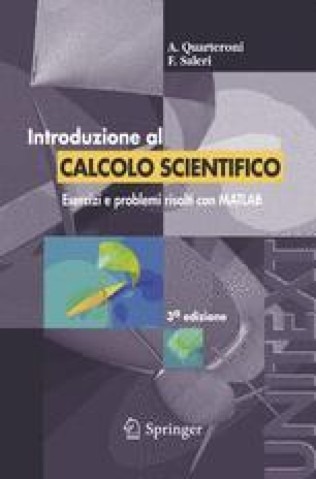
Introduzione al Calcolo Scientifico : Esercizi e problemi risolti con MATLAB = Introduction to scientific computing : Exercises and problem solved with MATLAB
Introduces the fundamental concepts for the numerical modeling of partial differential problems. We consider the classic linear elliptic, parabolic and hyperbolic equations, but also other equations, such as those of diffusion and transport, of Navier-Stokes, and the conservation laws. Numerous physical examples underlying these equations are provided, their main mathematical properties are studied, then numerical resolution methods based on finite elements, finite differences, finite volumes and spectral methods are proposed and analyzed. In particular, the algorithmic and computer implementation aspects are discussed and some easy-to-use programs in C ++ language are provided. The text does not presuppose an advanced mathematical knowledge of partial differential equations: the strictly indispensable concepts in this regard are reported in the Appendix. THE VOLUME is therefore suitable for students of scientific degree courses (Engineering, Mathematics, Physics, Chemistry, Information Sciences) and recommended for researchers from the academic and extra-academic world who want to approach this interesting branch of applied mathematics.

Introductory Statistics with R
R is an Open Source implementation of the S language. It works on multiple computing platforms and can be freely downloaded. R is now in widespread use for teaching at many levels as well as for practical data analysis and methodological development. This book provides an elementary-level introduction to R, targeting both non-statistician scientists in various fields and students of statistics. The main mode of presentation is via code examples with liberal commenting of the code and the output, from the computational as well as the statistical viewpoint. A supplementary R package can be downloaded and contains the data sets.

Introduction to wine laboratory practices and procedures
winemaking was a romanticized notion of putting grape juice into a barrel and allowing time to perform its magic as you sat on the veranda watching the sunset on a Tuscan landscape. For some small wineries, this notion might still ring true, but for the majority of wineries commercially producing quality wines, the reality of winemaking is far more complex. The persistent evolution of the wine industry demands continual advan- ments in technology and education to sustain and promote quality winem- ing. The sciences of viticulture, enology, and wine chemistry are becoming more intricate and sophisticated each year. Wine laboratories have become an integral part of the winemaking process, necessitating a knowledgeable staff possessing a multitude of skills. Science incorporates the tools that new-age winemakers are utilizing to produce some of the best wines ever made in this multibillion dollar trade. A novice to enology and wine chemistry can find these subjects daunting and intimidating. Whether you are a home winemaker, a new winemaker, an enology student, or a beginning-to-intermediate laboratory technician, p- ting all the pieces together can take time.

Introduction to Variance Estimation
The book provides instruction on the methods that are vital to data-driven decision making in business, government, and academe. It will appeal to survey statisticians and other scientists engaged in the planning and conduct of survey research, and to those analyzing survey data and charged with extracting compelling information from such data. It will appeal to graduate students and university faculty who are focused on the development of new theory and methods and on the evaluation of alternative methods. Software developers concerned with creating the computer tools necessary to enable sound decision-making will find it essential.

Introduction to the Tools of Scientific Computing
The book provides an introduction to common programming tools and methods in numerical mathematics and scientific computing. Unlike widely used standard approaches, it does not focus on any particular language but aims to explain the key underlying concepts. In general, new concepts are first introduced in the particularly user-friendly Python language and then transferred and expanded in various scientific programming environments from C / C ++, Julia and MATLAB to Maple. This includes different approaches to distributed computing.

Introduction to space syntax in urban studies
This textbook is a comprehensive introduction to space syntax method and theory for graduate students and researchers. It provides a step-by-step approach for its application in urban planning and design. This textbook aims to increase the accessibility of the space syntax method for the first time to all graduate students and researchers who are dealing with the built environment, such as those in the field of architecture, urban design and planning, urban sociology, urban geography, archaeology, road engineering, and environmental psychology. Taking a didactical approach, the authors have structured each chapter to explain key concepts and show practical examples followed by underlying theory and provided exercises to facilitate learning in each chapter

Introduction to software design with Java
Provides an in-depth introduction to software design, with a focus on object-oriented design, and using the Java programming language. Its goal is to help readers learn software design by discovering the experience of the design process. To this end, the text follows a continuous narrative that introduces each element of design know-how in context, and explores alternative solutions in that context. This narrative is complemented by hundreds of code fragments and design diagrams.

Introduction to Singularities and Deformations
This book presents the basic singularity theory of analytic spaces, including local deformation theory, and the theory of plane curve singularities. Plane curve singularities are a classical object of study, rich of ideas and applications, which still is in the center of current research and as such provides an ideal introduction to the general theory. Deformation theory is an important technique in many branches of contemporary algebraic geometry and complex analysis. This introductory text provides the general framework of the theory while still remaining concrete.

Introduction to Scientific Programming with Python
This book offers an initial introduction to programming for scientific and computational applications using the Python programming language. The presentation style is compact and example-based, making it suitable for students and researchers with little or no prior experience in programming.
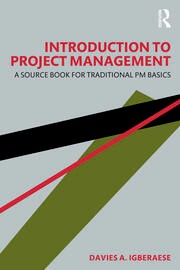
Introduction to Project Management : A Source Book for Traditional PM Basics
Presents the fundamentals of project management in simple language and an easy-to-understand format. It is targeted principally at those who are learning or desiring to learn project management as well as those who are already taking project management as a course of study or as a profession

Introduction to Programming with Fortran : with coverage of Fortran 90, 95, 2003 and 77
Introduction to Programming with Fortran contains: lots of clear and simple examples highlighting the key language features of the most recent versions of Fortran – Fortran 2003, 95 and 90. practical examples based on ISO TR 15580 and ISO TR 15581 which are widely supported and cover the ISO TR on Enhanced Modules – particularly important to large code suites common problems that occur when programming which are highlighted via clear examples and solutions Introduction to Programming with Fortran is an essential introduction for beginners as well as a concise reference for professionals. Overall the book gives a very effective hands-on coverage of Fortran, valuable to students and practitioners alike.

Introduction to Planetary Science : The Geological Perspective
This textbook is intended to be used in a lecture course for college students majoring in the Earth Sciences. Planetary Science provides an opportunity for these students to apply a wide range of subject matter pertaining to the Earth to the study of other planets of the solar system and their principal satellites. As a result, students gain a wider perspective of the different worlds that are accessible to us and they are led to recognize the Earth as the only oasis in space where we can live without life-support systems.The subject matter is presented in 24 chapters that lead the reader through the solar system starting with historical perspectives on space exploration and the development of the scientific method. The presentations concerning the planets and their satellites emphasize that their origin and subsequent evolution can be explained by applications of certain basic principles of physics, chemistry, and celestial mechanics and that the surface features of the solid bodies in the solar system can be interpreted by means of the principles of geology.

Introduction to Plane Algebraic Curves
This work treats an introduction to commutative ring theory and algebraic plane curves, requiring of the student only a basic knowledge of algebra, with all of the algebraic facts collected into several appendices that can be easily referred to, as needed.IT focuses on the purely algebraic aspects of plane curve theory, leaving the topological and analytical viewpoints in the background, with only casual references to these subjects and suggestions for further reading.

Introduction to PHP for Scientists and Engineers : Beyond JavaScript
This text presents key information needed to write your own online science and engineering applications, including reading, creating and manipulating data files stored as text on a server, thereby overcoming the limitations of a client-side language.

Introduction to Optics
Since the discovery of the laser in 1960 and optical fibers in 1970, optics has undergone dramatic changes that accentuate its multi-disciplinary character. This text covers essential concepts and reports the key developments and progress in current knowledge in the field. Inspired by the style of Richard Feynman, the method of presentation emphasizes "telling" optics, rather than deducing it from fundamental laws, as well as tactfully using mathematical tools so as not to obscure the physical phenomena of interest. For its excellent teaching approach, the book received the Arnulf-Francon Award of the French Optical Society. The concepts are formulated in a way such that the necessary mathematical tools do not hinder comprehension of the phenomena. Global in vision, the book can also be used as a reference. In addition to the traditional aspects of optics, it includes the tools and methods currently used by researchers and engineers, as well as explanation and implications of the most recent developments.
