



الصفحة 26
الصفحة 26
Abstraction, reformulation and approximation ; 6th International symposium, SARA 2005, Airth Castle, Scotland, UK, July 26-29, 2005, proceedings
This volume contains the proceedings of the 6th Symposium on Abstraction, Reformulation and Approximation (SARA 2005). the proceedings have been published in the LNAI series of Springer. Abstractions, reformulations and approximations (AR&A) have found app- cationsin avarietyofdisciplines andproblems, including constraintsatisfaction, design, diagnosis, machine learning, planning, qualitative reasoning, scheduling, resource allocation and theorem proving, but are also deeply rooted in philo- phy and cognitive science. The papers in this volume capture a cross-section of the various facets of the ?eld and of its applications. One of the primary uses of AR&A is oriented to overcome computational intractability. AR&A techniques, however, have also proved useful for knowledge acquisition, explanation and other applications.
Abductive Reasoning : Logical Investigations into Discovery and Explanation
Abductive Reasoning: Logical Investigations into Discovery and Explanation is a much awaited original contribution to the study of abductive reasoning, providing logical foundations and a rich sample of pertinent applications.

A treatise of legal philosophy and general jurisprudence: Vol.1 : The law and the right, Vol.2 : Foundations of Law, Vol.3 : Legal Institutions and the Sources of Law, Vol.4 : Scienta Juris, Legal Doctrine as Knowledge of Law and as a Source of Law, Vol.5 : Legal Reasoning, A Cognitive Approach to the Law
A Treatise of Legal Philosophy and General Jurisprudence is the first-ever multivolume treatment of the issues in legal philosophy and general jurisprudence, from both a theoretical and a historical perspective. The work is aimed at jurists as well as legal and practical philosophers. this book is a classical reference work that would be of great interest to legal and practical philosophers as well as to jurists and legal scholar at all levels.

A treatise of legal philosophy and general jurisprudence ; Vol.7 : The Jurists’ philosophy of law from Rome to the seventeenth century, Vol.8 : A History of the philosophy of law in the common law world, 1600–1900
A Treatise of Legal Philosophy and General Jurisprudence is the first-ever multivolume treatment of the issues in legal philosophy and general jurisprudence, from both a theoretical and a historical perspective. The work is aimed at jurists as well as legal and practical philosophers. Edited by the renowned theorist Enrico Pattaro and his team, this book is a classical reference work that would be of great interest to legal and practical philosophers as well as to jurists and legal scholar at all levels.
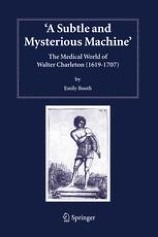
A Subtle and Mysterious Machine : The Medical World of Walter Charleton (1619-1707)
Walter Charleton (1619-1707) has been widely depicted as a natural philosopher whose intellectual career mirrored the intellectual ferment of the ‘scientific revolution’. Instead of viewing him as a barometer of intellectual change, I examine the previously unexplored question of his identity as a physician. Examining three of his vernacular medical texts, this volume considers Charleton’s thoughts on anatomy, physiology and the methods by which he sought to understand the invisible processes of the body.
A rose armed with thorns : Spinoza’s Philosophy under a novel lens
Presents a systemic analysis of Spinoza’s philosophy and challenges the traditional views. It deals with Spinoza’s concepts of substance, truth conditions, attributes, and the first, second, and supreme grades of knowledge. Based upon an analysis of the relevant details in all of Spinoza’s philosophical works, reveals many important points, including the following: Spinoza’s system is not, nor is meant to be, a foundational-deductive system but was meant to be a coherent system of a network model. Spinoza’s reality is not made in the image of a mathematical model. Imaginatio, the first grade of knowledge, and ratio, the second grade, are parts or properties of the supreme grade of knowledge, scientia intuitiva, which is their essence.
A Prodigy of Universal Genius : Robert Leslie Ellis, 1817-1859
Written by a diverse team of experts, the chapters in the book’s first part contain in-depth examinations of, among other things, Ellis’s family, education, Bacon scholarship and mathematical contributions. The second part consists of annotated transcriptions of a selection of Ellis’s diaries and correspondence. Taken together, A Prodigy of Universal Genius: Robert Leslie Ellis, 1817–1859 is a rich resource for historians of science, historians of mathematics and Victorian scholars alike.
A Primal Perspective on the Philosophy of Religion
This book challenges this widespread assumption and demonstrates how primal religions have something significant to offer on virtually every theme discussed in the philosophy of religion. Through this book the primal religous tradition stakes its claim for a place at the table.Despite the absence of written texts, primal religions have an implicit philosophy.This study shows how materials of primal religious experience can be incorporated in the categories of modern philosophy of religion. The book contends that the primal perspective can widen and deepen the horizons of philosophy of religion and enhance the philosophical appreciation of religion as a universal phenomenon.
A Practical Guide for SystemVerilog Assertions
SystemVerilog language consists of three very specific areas of constructs - design, assertions and testbench. This guide shows how to use the language to solve real verification problems. It examines how to verify complex protocols and memories using SVA with seeral examples.
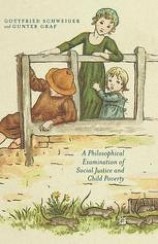
A Philosophical Examination of Social Justice and Child Poverty
Investigates child poverty from a philosophical perspective. It identifies the injustices of child poverty, relates them to the well-being of children, and discusses who has a moral responsibility to secure social justice for children.
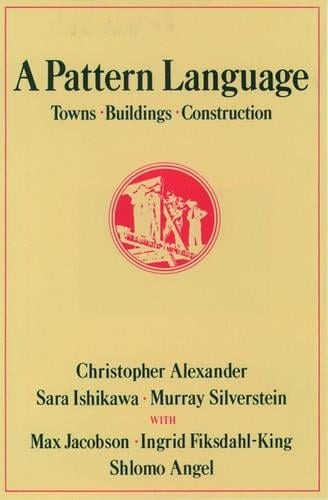
A Pattern Language : Towns, Buildings, Construction
In this volume, 253 archetypal patterns consisting of problem statements, discussions, illustrations, and solutions provide lay persons with a framework for engaging in architectural design.
A New Foundation of Physical Theories
Written in the tradition of G. Ludwig’s groundbreaking works, this book aims to clarify and formulate more precisely the fundamental ideas of physical theories. By introducing a basic descriptive language of simple form, in which it is possible to formulate recorded facts, ambiguities of physical theories are avoided as much as possible. In this approach the field of physics that should be described by a theory is determined by basic concepts only, i.e. concepts that can be explained without a theory.In this context the authors introduce a new concept of idealization and review the process of discovering new concepts. They believe that, when the theories are formulated within an axiomatic basis, solutions can be found to many difficult problems such as the interpretation of physical theories, the relations between theories as well as the introduction of physical concepts.
A Logical Approach to Philosophy : Essays in Honour of Graham Solomon
The papers in this collection are united by an approach to philosophy. They illustrate the manifold contributions that logic makes to philosophical progress, both by the application of formal methods to traditional philosophical problems and by opening up new avenues of inquiry as philosophers sort out the implications of new and often surprising technical results. Contributions include new technical results rich with philosophical significance for contemporary metaphysics, attempts to diagnose the philosophical significance of some recent technical results, philosophically motivated proposals for new approaches to negation, investigations in the history and philosophy of logic, and contributions to epistemology and philosophy of science that make essential use of logical techniques and results.

A Life (Un)Worthy of Living: Reproductive Genetics in Israel and Germany
This book presents the findings of a study into the social shaping of reproductive genetics in Germany and Israel, two exceptionally interesting social settings, which share a traumatic history. ‘This is a unique and courageous book. Yael Hashiloni-Dolev studied the field of reproductive genetics in Israel and Germany, and found out that while in Germany social, cultural, legal and religious conditions restrict the selection of embryos based on prenatal diagnosis, it is strongly encouraged in Israel. This unexpected finding is brilliantly analyzed by the author. Thus this excellent book must be read and discussed by social scientists, human geneticists, genetic counsellors, bio ethicists and medical students.'
A Legacy for Living Systems : Gregory Bateson as Precursor to Biosemiotics
This book represents a major attempt to revise this deficiency. Scholars from ecology, biochemistry, evolutionary biology, cognitive science, anthropology and philosophy discuss how Bateson's thinking might lead to a fruitful reframing of central problems in modern science. Most important perhaps, Bateson's bioanthropology is shown to play a key role in developing the set of ideas explored in the new field of biosemiotics. The idea that organismic life is indeed basically semiotic or communicative lies at the heart of the biosemiotic approach to the study of life.The only book of its kind, this volume provides a key resource for the quickly-growing substratum of scholars in the biosciences, philosophy and medicine who are seeking an elegant new approach to exploring highly complex systems.
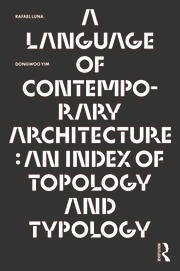
A Language of Contemporary Architecture : An Index of Topology and Typology
Provides an index of ideas, theories, projects, and definitions that string into a methodology for evaluating the contemporary language of architecture described as “contemporism” through a review of topology (form) and typology (system and elements). Trying to answer the postmodern question of how to move beyond modernism through a thread of architectural styles that tried to respond to deficiencies from the modern promise and contextual changes. Yet, the question remains, should this ongoing struggle to move beyond modernism be a stylistic battle? Has the present architectural practice ever left the modernist tendencies, and is there a structure for a contemporary language in architecture?. Presents a collection of highly illustrated projects that have worked under these parameters to break away from modernism in order to present a holistic integration of topology and typology as a language for “contemporism.” The index is illustrated with individual spreads, which can be read sequentially or independently, and encourages the reader to make their own connections. It also includes interviews and contributions from Toyo Ito, Anthony Vidler, Ben van Berkel, Christian Kerez, and Greg Lynn.
A History of Thermodynamics : The Doctrine of Energy and Entropy
The development of thermodynamics in the second half of the 19th century has had a strong impact on both technology and natural philosophy. It is true that the steam engine for the conversion of heat into work existed before thermodynamics was developed as a branch of physics. However, the systematic theory improved the conversion process, and it succeeded in developing other processes essential to modern life, notably refrigeration and rectification. So, altogether thermodynamics has provided humanity with cheap energy, and cheap fuel, -- consequently with cheap, and abundant, and unspoiled food. Thus thermodynamics has made populations grow, and life expectancy increase beyond anything people could possibly have imagined 200 years ago.
A History of Limb Amputation
This book traces humanity’s long experience of natural amputations due to congenital absence, disease, frostbite, toxins, domestic and wild animal trauma, and for non-medical reasons related to punitive, ritual, and legal actions, ultimately leading to the development of elective surgical amputation. While the evolution of surgical techniques forms a major chapter in the book, many ancillary problems are addressed including the control of hemorrhage and infection, the approach to pain relief, the development of suitable instruments and equipment, and the invention of prostheses, all suitably illuminated with case histories and relevant illustrations. In addition, alternative procedures designed to avoid amputation, increasingly important in the last two centuries, are debated, and factors associated with self-amputation in extremis, not rare according to press reports, are also examined. A separate chapter considers the philosophy and interpretations of society, patients, and surgeons faced with amputation, particularly before anesthesia.

A Concise Introduction to Mathematical Logic
This book is unique in that it is more concise than most others; the material is treated in a streamlined fashion. This allows the lecturer to select the material for a one-semester course on a topic more easily. These initial chapters cover just the material for an introductory course on mathematical logic combined with the necessary material from set theory. Chapter 3 is partly of a descriptive nature, providing a view towards decision problems, automated theorem proving, non-standard models and related subjects. The other chapters contain material on logic programming for computer scientists, model theory, recursion theory, Gödel's Incompleteness Theorems, and applications of mathematical logic. Philosophical and foundational problems of mathematics are discussed where appropriate.
A Comprehensible Universe : The Interplay of Science and Theology
Why is our world comprehensible? This question seems so trivial that few people have dared to ask it. In this book we explore the deep roots of the mystery of rationality. The inquiry into the rationality of the world began over two-and-a-half-thousand years ago, when a few courageous people tried to understand the world with the help of reason alone, rejecting the comforting fabric of myth and legend.
