



الصفحة 26
الصفحة 26

Andean Archaeology III : North and South
In this volume, the strong cultural differences between northern and southern regions of the Central Andes are examined and the conditions under which these differences evolved are explored.
Ancient Philosophy of the Self
This volume explores the various ways in which selfhood was approached and conceptualised in antiquity. They also describe how the ancient philosophers understood human agents as capable of causing changes and being affected in and by the world. The themes of persistence, identity, self-examination and self-improvement recur in many of these essays. The articles of the collection combine systematic and historical approaches to ancient sources that range from Socrates to Plotinus and Augustine.
Analyzing computer system performance with Perl::PDQ
Analyzing computer system performance is often regarded by most system administrators, IT professionals and software engineers as a black art that is too time consuming to learn and apply. Finally, this book by acclaimed performance analyst Dr. Neil Gunther makes this subject understandable and applicable through programmatic examples. The means to this end is the open-source performance analyzer Pretty Damn Quick (PDQ) written in Perl As the epigraph in this book points out, Common sense is the pitfall of performance analysis. The performance analysis framework that replaces common sense is revealed in the first few chapters of Part I. The important queueing concepts embedded in PDQ are explained in a very simple style that does not require any knowledge of formal probability theory. Part II begins with a full specification of how to set up and use PDQ replete with examples written in Perl. Subsequent chapters present applications of PDQ to the performance analysis of multicomputer architectures, benchmark results, client/server scalability, and Web-based applications.
Analytical Ultracentrifugation VIII
This book presents a comprehensive collection of 21 contributions from leading scientists in this field covering a broad spectrum of topics and presenting recent progress concerning instrumentation, data analysis and modeling, biological systems, particles, colloids, synthetic macromolecules, interacting systems. Due to the versatility of this fascinating and powerful technique, information and original publications are widespread and comprehensive collections are rare. Therefore, this volume presents a valuable source for biologists, chemists, materials scientists, and physicists interested in most recent information, results and development related to this important analytical method.
Analysis of variance for random models, Vol. 2 : Unbalanced data : Theory, methods, applications, and data analysis
Analysis of variance (ANOVA) models have become widely used tools and play a fundamental role in much of the application of statistics today. In particular, ANOVA models involving random effects have found widespread application to experimental design in a variety of fields requiring measurements of variance, including agriculture, biology, animal breeding, applied genetics, econometrics, quality control, medicine, engineering, and social sciences. This two-volume work is a comprehensive presentation of different methods and techniques for point estimation, interval estimation, and tests of hypotheses for linear models involving random effects. Both Bayesian and repeated sampling procedures are considered. Volume I examines models with balanced data (orthogonal models); Volume II studies models with unbalanced data (nonorthogonal models).

Analysis II : Differential and Integral Calculus, Fourier Series, Holomorphic Functions
Functions in R and C, including the theory of Fourier series, Fourier integrals and part of that of holomorphic functions.It is suitable for both teaching and self-study. In his familiar, personal style, the author emphasizes ideas over calculations and, avoiding the condensed style frequently found in textbooks, explains these ideas without parsimony of words.
Analysis II
As with the first, the second volume contains substantially more material than can be covered in a one-semester course. Such courses may omit many beautiful and well-grounded applications which connect broadly to many areas of mathematics. We of course hope that students will pursue this material independently; teachers may find it useful for undergraduate seminars. For an overview of the material presented, consult the table of contents and the chapter introductions. As before, we stress that doing the numerous exercises is indispensable for understanding the subject matter, and they also round out and amplify the main text. In writing this volume, we are indebted to the help of many.
Analysis by Its History
This book presents first-year calculus roughly in the order in which it first was discovered. The first two chapters show how the ancient calculations of practical problems led to infinite series, differential and integral calculus and to differential equations. The establishment of mathematical rigour for these subjects in the 19th century for one and several variables is treated in chapters III and IV. The text is complemented by a large number of examples, calculations and mathematical pictures and will provide stimulating and enjoyable reading for students, teachers, as well as researchers.
Analisi matematica II : Teoria ed esercizi con complementi in rete = Mathematical analysis 2 : Theory and exercises with online complements
Intends to support a second teaching of Mathematical Analysis according to the principles of the new Didactic Regulations. It is especially designed for those study courses (such as Engineering, Computer Science, Physics) in which the mathematical tool is a significant part of the training. The fundamental concepts and methods of the differential and integral calculus of several variables, the series of functions and the ordinary differential equations are presented with the primary objective of training the student in their operational but critical use. The didactic setting of the text follows the one used for ANALYSIS I. The method of presentation of the arguments allows a flexible and modular use of the text, in order to respond to the various possible didactic choices in the organization of a Mathematical Analysis course.
An Introduction to the Theory of Point Processes ; Vol. II : General Theory and Structure
Point processes and random measures find wide applicability in telecommunications, earthquakes, image analysis, spatial point patterns and stereology, to name but a few areas. The authors have made a major reshaping of their work in their first edition of 1988 and now present An Introduction to the Theory of Point Processes in two volumes with subtitles Volume I: Elementary Theory and Methods and Volume II: General Theory and Structure.

An introduction to ontology engineering
Provides the reader with a comprehensive introductory overview of ontology engineering. A secondary aim is to provide hands-on experience in ontology development that illustrate the theory. The book is divided into three blocks: Block I: logic foundations for ontologies both regarding the languages (mainly First Order predicate Logic, Description Logics, and OWL) and automated reasoning. Block II: developing good ontologies with methods and methodologies, the top-down approach with foundational ontologies, and the bottom-up approach to extract as much useful content as possible from legacy material. Block III: advanced topics with a selection of areas of specialisation, including Ontology-Based Data Access, the interaction between ontologies and natural languages (multilingual ontologies, controlled natural language), and advanced modelling with additional language features (fuzzy and temporal ontologies)
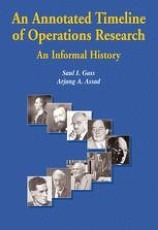
An annotated timeline of operations research: An informal history
An Annotated Timeline of Operations Research: An Informal History recounts the evolution of Operations Research (OR) as a new science - the science of decision making. Arising from the urgent operational issues of World War II, the philosophy and methodology of OR has permeated the resolution of decision problems in business, industry, and government. The Timeline chronicles the history of OR in the form of self-contained, expository entries. Each entry presents a concise explanation of the events and people under discussion, and provides key sources where further relevant information can be obtained. In addition, books and papers that have influenced the development of OR or helped to educate the first generations of OR academics and practitioners are cited throughout the book.

Alvar Aalto Houses
Finnish architect and designer Alvar Aalto (1898-1976) designed nearly one hundred single-family houses. Aalto, who is also known for his furniture and glassware, worked in a unique style that blended modernism and traditional vernacular architecture. Authors Jari and Sirkkaliisa Jetsonen (Finnish Summer Houses) present twenty-six of Aalto's innovative residences—from small summer homes and postwar standardized housing to large housing complexes for industrial commissions—built between the 1920s to the 1960s.
Allelochemicals : Biological Control of Plant Pathogens and Diseases
This book is organized around the indication that allelochemicals can be employed for biological control of plant pathogens and plant diseases. Specifically, this volume focuses on (i) discovery and development of natural product based fungicides for agriculture, (ii) direct use of allelochemicals as well as indirect effects through cover crops and organic amendments for plant parasitic pest control and (iii) application of allelopathy in pest management.
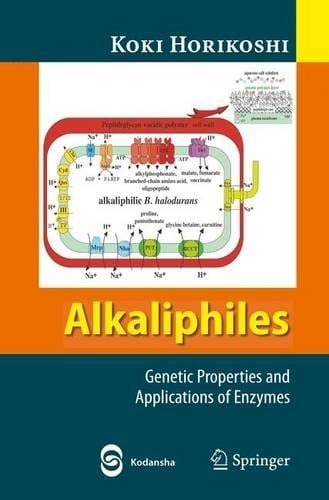
Alkaliphiles : Genetic properties and applications of enzymes
The pioneering work of Dr. Koki Horikoshi on the discovery, research and applications of alkaliphilic bacteria are described here in their entirety. The isolation, distribution and taxonomy of alkaliphilic microorganisms as well as their cell structure and physiology are discussed for a basic understanding of these entities. The molecular biology and genome sequencing of some alkaliphilic bacterial strains are also presented. Part II of the volume focuses on enzymes of alkaliphiles and their applications. These include alkaline proteases, starch-degrading enzymes and numerous others. Some of these enzymes are currently in wide commercial use as laundry detergent additives and in wastewater treatment. Alkaliphiles are a relatively recent field of research that will no doubt provide avenues to a wide range of further discoveries and applications for a new generation of workers in bioscience and technology.
Alicyclobacillus : Thermophilic Acidophilic Bacilli
Soft drinks with pHs lower than 4. 0 are subjected to minimum pasteuri- tion at 65 °C for 10 min as required by the Japanese Food Sanitation Law. Not only pathogenic bacteria but most spore-forming bacteria are unable to grow at this low pH condition, and thus reports of microbial spoilage in pasteurized acidic soft drinks are rare. Since 1982, when the spoilage of aseptically packed apple juice was - tributed to a new type of acidophilic spore-forming bacteria in Germany, a succession of similar complaints regarding other fruit juice concentrates and their products has been received. In the beginning, the bacteria were classified in the genus Bacillus, but later, in 1992, the new genus Ali- clobacillus was proposed owing to their characteristic cellular membranes containing omega-alicyclic fatty acids. A group of Alicyclobacillus strains, responsible for the tainting of fruit juices, was then described as A. a- doterrestris in 1999. They are acidophilic and grow preferably at around pH 4. 0. They are thermophilic and grow better at temperatures above 40 °C. This indicates that we might have been missing them by our or- nary methods of bacterial detection at pH 7. 0 and 35 °C.

Algorithmic number theory ; 8th International Symposium, ANTS-VIII Banff, Canada, May 17-22, 2008 Proceedings
This book constitutes the refereed proceedings of the 8th International Algorithmic Number Theory Symposium, ANTS 2008, held in Banff, Canada, in May 2008.
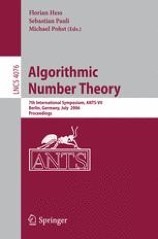
Algorithmic number theory ; 7th International Symposium, ANTS-VII, Berlin, Germany, July 23-28, 2006, Proceedings
This book constitutes the refereed proceedings of the 7th International Algorithmic Number Theory Symposium, ANTS 2006, held in Berlin, July 2006. The book presents 37 revised full papers together with 4 invited papers selected for inclusion. The papers are organized in topical sections on algebraic number theory, analytic and elementary number theory, lattices, curves and varieties over fields of characteristic zero, curves over finite fields and applications, and discrete logarithms.

Algorithmic Foundation of Robotics VII : Selected Contributions of the 7th International Workshop on the Algorithmic Foundations of Robotics
This book contains the proceedings from the 2006 Workshop on the Algorithmic Foundations of Robotics. The 32 papers in this book span a wide variety of topics: from fundamental motion planning algorithms to applications in medicine and biology, but they have in common a foundation in the algorithmic problems of robotic systems.
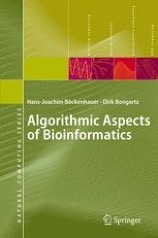
Algorithmic Aspects of Bioinformatics
Advances in bioinformatics and systems biology require improved computational methods for analyzing data, while progress in molecular biology is in turn influencing the development of computer science methods. This book introduces some key problems in bioinformatics, discusses the models used to formally describe these problems, and analyzes the algorithmic approaches used to solve them. After introducing the basics of molecular biology and algorithmics, Part I explains string algorithms and alignments; Part II details the field of physical mapping and DNA sequencing; and Part III examines the application of algorithmics to the analysis of biological data. Exciting application examples include predicting the spatial structure of proteins, and computing haplotypes from genotype data. This book describes topics in detail and presents formal models in a mathematically precise, yet intuitive manner, with many figures and chapter summaries, detailed derivations, and examples. It is well suited as an introduction into the field of bioinformatics, and will benefit students and lecturers in bioinformatics and algorithmics, while also offering practitioners an update on current research topics.
