



الصفحة 25
الصفحة 25

Atlas of Neuromuscular Diseases : A Practical Guideline
A comprehensive outline of neuromuscular diseases, written by experienced American and European authors. It discusses all aspects of neuromuscular disorders including the cranial nerves, spinal nerves, motor neurone disease, the nerve plexus, peripheral nerves, mononeuropathies, entrapment syndromes, polyneuropathies, the neuromuscular junction, and muscle disease. Each chapter is uniformly structured into anatomy, symptoms, signs, pathogentic possibilities, diagnosis and differential diagnosis, therapy and prognosis. Additionally the diagnostic tools and investigations used in neuromuscular disease are explained and a practical guide is given how to advance from symptoms to syndromes. For each disease the therapeutic options are described. It contains large number of clinical and histologic pictures from the practical experience of the authors and also a number of artists drawings to facilitate the understanding of anatomic structures.

Atlas effectors of anti-tumor immunity
The “Atlas Effectors of Anti-Tumor Immunity” is a unique scientific publication, which includes major issues of up-to-date information about immunophenotype, morphology and function of main effectors of anti-tumor immunity presented in a reasonable format. The Atlas comprises a large number of illustrations presented by schemes and original micrographs demonstrating morphological features and ultrastructure of immunocompetent cells at various stages of differentiation. The volume includes data referring to the history of anti-tumor immunity effectors research, state of the art and perspectives for development of anti-cancer adoptive immunotherapy methods.A special section of the Atlas describes cellular tumor microenvironment and micro-anatomy of carcinomas. Several parts include data about killer cells (natural killer T-cells, lymphokine-activated killers) and T-regulatory lymphocytes. A special chapter gives a wide-range description of antigen-presenting dendritic cells, methods of dendritic cell generation and development of DC-based vaccines for anti-tumor immunotherapy.
Atherosclerosis : Diet and Drugs
Divided into four parts and intends to give an overview on the pathogenesis of atherosclerosis, established treatment and prevention regimen, and of perspectives for the development of new treatment modalities.

Aspirin tablet film coated with famotidine
Focuses on enhancing the gastrointestinal tolerance of aspirin tablets by coating them with famotidine, a histamine-2 receptor antagonist known for its ability to reduce stomach acid production. The project aims to investigate the potential of famotidine coating in mitigating the gastric side effects commonly associated with aspirin usage, such as gastric irritation and ulcers. Through a series of in vitro studies, the project will evaluate the effectiveness of famotidine-coated aspirin tablets in reducing gastric mucosal damage and improving overall gastrointestinal safety.

Arum palaestenium in cancer therapies
Cancer is a very complicated sequence of disease conditions progressing gradually with a generalized loss of growth control.1–3 There were only a few options of cancer treatment for patients for many decades which include surgery, radiation therapy, and chemotherapy as single treatments or in combination.4,5 But recently, many pathways involved in cancer therapy progression and how they can be targeted has improved dramatically, with combinatorial strategies, involving multiple targeted therapies or “traditional” chemotherapeutics, such as the taxanes and platinum compounds, being found to have a synergistic effect.6 New approaches, such as drugs, biological molecules, and immune-mediated therapies, are being used for treatment.
Arts and health promotion : Tools and bridges for practice, research, and social transformation
This book offers an overview of the beautiful, powerful, and dynamic array of opportunities to promote health through the arts from theoretical, methodological, pedagogical, and critical perspectives. This is the first-known text to connect the disparate inter-disciplinary literatures into a coherent volume for health promotion practitioners, researchers, and teachers. It provides a one-stop depository for using the arts as tools for health promotion in many settings and as bridges across communities, cultures, and sectors.
Artificial intelligence based cancer nanomedicine : Diagnostics, therapeutics and bioethics
Nanomedicine is evolving with novel drug formulations devised for multifunctional approaches towards diagnostics ad therapeutics. Nanomedicine-based drug therapy is normally explored at a fixed dose. The drug action is time-dependent, dose-dependent and patient-specific. To overcome challenges of nanomedicine testing, artificial intelligence (AI) serves as a helping tool for optimizing the drug and dose parameters. Real time conversions between these two features enables upgradation of patient data acquisition and improved design of nanomaterials. In this scenario, AI-based pattern analysis and algorithms models can greatly improve accuracy of diagnostics and therapeutics.
Arterial Grafting for Coronary Artery Bypass Surgery
The second edition of this book provides updated knowledge about the biological characteristics and clinical use of arterial grafts for coronary artery bypass surgery. The reader will find first-hand information on arterial grafts as well as vein grafts with regard to biological characteristics, clinical use including off-pump coronary bypass grafting surgery, results, and future developments. Written by world-renowned cardiac surgeons and cardiovascular research scientists working in this area.
Aromatase Inhibitors
Many breast tumours are dependent upon oestrogen for their development and continued growth. Over the last 25 years hormone therapy has progressed from the irreversible destruction of endocrine glands to the use of drugs that reversibly suppress oestrogen synthesis or action. The inhibition of oestrogen synthesis is most readily achieved by inhibiting the final step in the pathway of oestrogen biosynthesis, the reaction which transforms androgens into oestrogens by creating an aromatic ring in the steroid molecule (hence the enzyme's trivial name, aromatase). Whereas the first aromatase inhibitors to be used therapeutically could be shown to produce drug-induced inhibition of the enzyme and therapeutic benefits in patients with breast cancer, they were not particularly potent and lacked specificity. However, second-generation drugs were developed and most recently third-generation inhibitors have evolved which possess remarkable specificity and potency. Initial results from clinical trials suggest that these agents will become the cornerstones of future endocrine therapy.
Aromatase Inhibitors
Many breast tumours are dependent upon oestrogen for their development and continued growth. Over the last 25 years hormone therapy has progressed from the irreversible destruction of endocrine glands to the use of drugs that reversibly suppress oestrogen synthesis or action. The inhibition of oestrogen synthesis is most readily achieved by inhibiting the final step in the pathway of oestrogen biosynthesis, the reaction which transforms androgens into oestrogens by creating an aromatic ring in the steroid molecule (hence the enzyme's trivial name, aromatase). Whereas the first aromatase inhibitors to be used therapeutically could be shown to produce drug-induced inhibition of the enzyme and therapeutic benefits in patients with breast cancer, they were not particularly potent and lacked specificity. However, second-generation drugs were developed and most recently third-generation inhibitors have evolved which possess remarkable specificity and potency. Initial results from clinical trials suggest that these agents will become the cornerstones of future endocrine therapy.
Applied therapeutics : The clinical use of drugs
"Continually revised and updated for 50 years, Applied Therapeutics: The Clinical Use of Drugs is the gold standard for patient centered drug therapeutics. With its acclaimed case-based approach, it promotes mastery and application of the fundamentals of drug therapeutics. Featuring contributions from more than 200 experienced clinicians, every chapter reflects our ever-changing knowledge of drugs and the application of this knowledge to the individualized therapy of patients. As students progress from the General Principles section to chapters on specific diseases, they will benefit from practical problem-solving techniques that help devise effective evidence-based drug treatment plans"
Applied Physiology in Intensive Care Medicine
A series of short papers published in Intensive Care Medicine since 2002 under the heading Physiologic Notes attempts to capture the essence of the physiologic perspectives that underpin both our understanding of disease and response to therapy. Tis present volume combines the complete list of these Physiologic Notes up until July 2006 with the ass o ciated review articles over the same in terval that also address edthese central issues.
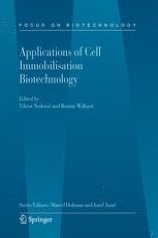
Applications of cell immobilisation biotechnology
Cell Immobilisation Biotechnology" is divided into the two book volumes, FOBI 8A and FOBI 8B. The FOBI 8A volume, Fundamentals of Cell Immobilisation Biotechnology, is dedicated to fundamental aspects of cell immobilisation while the present volume, FOBI 8B, Applications of Cell Immobilisation Biotechnology, deals with diverse applications of this technology.

Applications and Innovations in Intelligent Systems XV ; Proceedings of AI-2007, the Twenty-seventh SGAI International Conference on Innovative Techniques and Applications of Artificial Intelligence
The papers in this volume are the refereed application papers presented at AI-2007, the Twenty-seventh SGAI International Conference on Innovative Techniques and Applications of Artificial Intelligence, held in Cambridge in December 2007.
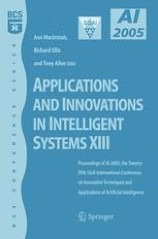
Applications and Innovations in Intelligent Systems XIII ; Proceedings of AI-2005, the Twenty-fifth SGAI International Conference on Innovative Techniques and Applications of Artifical Intelligence
The papers in this volume present new and innovative developments in the field, divided into sections on Applied AI in Information Processing, Techniques for Applied AI, Industrial Applications and Medical Applications.This is the thirteenth volume in the Applications and Innovations series. The series serves as a key reference as to how AI technology has enabled organisations to solve complex problems and gain significant business benefit.
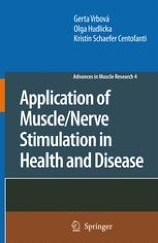
Application of muscle/nerve stimulation in health and disease
The first evidence that electrical changes can cause muscles to contract was p- vided by Galvani (1791). Thus, elect- cal activity graduated from a simple mechanism that is used to elicit muscle c- traction, to a system that could induce permanent changes in muscles and modify most of its characteristic properties.
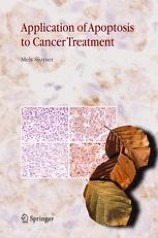
Application of Apoptosis to Cancer Treatment
This book is intended for workers in the field and clinicians as a useful guide of the state of affairs in this exciting field which may offer more effective possibilities for treatment of cancer patients.
Apoptotic pathways as targets for novel therapies in cancer and other diseases
The book attempts to review, summarize, and speculate on the apoptotic pathways, how are they regulated and how targeted therapies are being used to treat a wide variety of diseases. Special emphasis is placed on cancer since new treatments either being developed or currently in the clinical setting are showing great promise to increase survival rates for cancer patients.
Apoptosis, cell signaling, and human diseases : Molecular mechanisms ; Vol.2
Volume 1 is divided into two sections: "Malignant Transformation and Metastasis" and "Molecular Basis of Disease Therapy." Volume 2 follows a similar structure and is divided into sections entitled "Kinases and Phosphate" and "Molecular Basis of Cell Death." All of the contributors are at the forefront of scientific discovery, and the reviews they present systemically examine the most exciting and innovative aspects of their particular areas of expertise. Researchers will find these volumes of major benefit as they search for novel and more effective treatments for human diseases.
Apoptosis, cell signaling, and human diseases : Molecular mechanisms ; Vol.1
Volume 1 is divided into two sections: “Malignant Transformation and Metastasis” and “Molecular Basis of Disease Therapy.” Volume 2 follows a similar structure and is divided into sections entitled “Kinases and Phosphate” and “Molecular Basis of Cell Death.” All of the contributors are at the forefront of scientific discovery, and the reviews they present systemically examine the most exciting and innovative aspects of their particular areas of expertise. Researchers will find these volumes of major benefit as they search for novel and more effective treatments for human diseases.
