



الصفحة 25
الصفحة 25
Bioactive and therapeutic dental materials
Special attention has been given to bioactive materials developed to induce cells differentiation/stimulation, hard tissue formation and exert antimicrobial actions. New innovations are necessary to continue to help reinforcing existing technologies and to introduce new paradigms for treating dental disease and restoring teeth seriously compromised by caries lesions via biomimetic and more biological operative approaches. Dental bioactive materials is arguably the latest research area in dentistry and thus the amount of new research is overwhelming. However, in this day and age of evidence based practice it important for this new information to be distilled into a practical and understandable format.

Binary Rare Earth Oxides
The book begins with a brief introduction to binary rare earth oxides, their physical and chemical stabilities, polymorphism, crystal structures and phase transformation and the association with current applications. The book goes on to present the band structure of the oxides using several quantum chemical calculations, which belong to a newly developed area in the binary rare earth oxides. Central to this chapter are the characterizations of electrical, magnetic and optical properties, as well as details of single crystal growth and particle preparation methods that have progressed in recent years. Later chapters concentrate on thermo-chemical properties and trace determination techniques. The final chapter contains a variety of useful applications in various fields such as phosphors, glass abrasives, automotive catalysts, fuel cells, solid electrolytes, sunscreens, iron steels, and biological materials.

Big little hotel : Small hotels designed by architects
This book showcases small hotels, all located in the United States, designed by architects who use light and materials in interesting and intentional ways. The designs also deliberately connect to their local history, context, or land – in many cases all three. Both the architecture and the operations harmonize with the place, whether that is a bustling city, small town, or natural area. Many are new buildings but some are adaptive reuse projects or renovations of historic properties, extending the connectivity of the place into the future.
Benchmarking, Temporal Distribution, and Reconciliation Methods for Time Series
This book discusses the statistical methods most often applied for such adjustments, ranging from ad hoc procedures to regression-based models. The latter are emphasized, because of their clarity, ease of application, and superior results. Each topic is illustrated with many real case examples. In order to facilitate understanding of their properties and limitations of the methods discussed, a real data example, the Canada Total Retail Trade Series, is followed throughout the book.This book brings together the scattered literature on these topics and presents them using a consistent notation and a unifying view.

Behavior and design of high-strength constructional steel
Presents readers with extensive information on the behavior of high-strength constructional steels, providing them with the confidence they need to use them in a safe and economic manner to design and construct steel structures. The book includes detailed discussions on the mechanical properties of HHS while explaining the latest progress in research and design guidelines, including material properties at ambient and elevated temperatures. In addition, the book explains the behavior of elementary members subject to different types of loads and load combinations, and those that are integral to the design of bolted and welded connections.
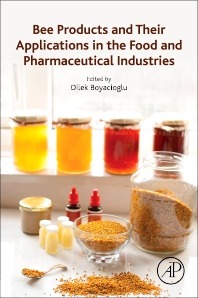
Bee products and their applications in the food and pharmaceutical industries ; 1st ed.
Focuses on the health benefits of selected bee products by looking more closely at their pharmacological potentials and therapeutic applications in coping with various diseases. The book explores some of these products, such as royal jelly, propolis and bee venom, which is highly attractive to the food supplement sector due to the biological actions that are proved by scientific studies. Bee products also attract the cosmetics industry by utilizing those products in various applications such as hair products, toothpaste, sunscreen creams, lip balsams, or facial moisturizing creams. Each chapter focuses on a particular health benefit, providing more compact and detailed information about each activity for a specific interest. The mainframe of the book is based on the medicinal and pharmacological functions of bee products, with the therapeutic applications for each bee product supporting the mechanism of action of their biological functions.

Bee products : Chemical and biological properties
Presents an updated discussion on the chemical composition and biological properties of the main bee products, which until now have been presented separately in different editions This book scoops out studies about bee products most used in marketing and in traditional medicine such as honey, royal jelly, propolis, bee pollen and bee venom Discusses chemical composition and biological function of the different bee products on topics such as nutrition, aging and age-related diseases, cancer, neurodegenerative diseases and pathogen infections Bee products are rich in several essential nutrients and non essential nutrients, as sugars, minerals, proteins, free amino acids, vitamins, enzymes and polyphenols, that seem to be closely related to their biological functions. The effects of these products in nutrition, aging and age-related diseases, cancer, neurodegenerative diseases and pathogen infections are discussed.
Basics Masonry Construction - Basics
Masonry construction is usually the top priority in the constructive exercises during the course. The basic principles of dimensions, construction and component joining are developed using simple masonry structures. Topics: Material and dimensions Building physics and load-bearing properties Typical associations Components Execution of masonry

Basic methods for the biochemical lab
Covers : quantitative methods (proteins, nucleic acids, phospholipids and carbohydrates), electrophoresis (several polyacrylamide and agarose systems, 2D-PAGE, detection methods and affinity electrophoresis), chromatographic protocols (thin-layer chromatography, GPC, IEC, affinity chromatography, HPLC), immunochemical protocols (hapten-carrier and enzyme conjugation, immunization and antibody purification, immune affinity chromatography, ELISA), centrifugation (differential and density gradient centrifugation for cells and cellular fractions), radioactivity (labeling and counting), buffers (buffer properties and compositions).
Basic Electromagnetism and Materials
This textbook can be used to teach electromagnetism to a wide range of undergraduate science majors in physics, electrical engineering or materials science. However, by making lesser demands on mathematical knowledge than competing texts, and by emphasizing electromagnetic properties of materials and their applications, this textbook is uniquely suited to students of materials science. Many competing texts focus on the study of propagation waves either in the microwave or optical domain, whereas Basic Electromagnetism and Materials covers the entire electromagnetic domain and the physical response of materials to these waves.
Autonomous intelligent systems : Multi-agents and data mining ; 2nd International workshop, AIS-ADM 2007, St. Petersburg, Russia, June 3-5, 2007, Proceedings
MAS offiers powerful metaphors for information system conceptualization, a range of new techniques, and technologies specifically focused on the design and implementation of lar- scale open distributed intelligent systems. KDD also provides intelligent inf- mation technology with powerful ideas, algorithms, and software means to help cope with the main problem of artificial intelligence, formulated in the we- known question “Where does the knowledge come from?”, thus actually making modern applications intelligent and adaptive. The evident recent trend in both science and industry is to integrate and take advantage of both technologies. The existing experience with combined application of multi-agent technology to design architectures of distributed (- erarchical and peer-to-peer) data mining and KDD systems, as well as the u- lization of data mining and KDD achievements to provide enhanced intelligence of MAS, confirms the fact that both technologies are capable of mutual enri- ment and their integrateduse may result in intelligent information systems with new emergent properties.
Automatic Quantum Computer Programming : A Genetic Programming Approach
Computer science will be radically transformed if ongoing efforts to build large-scale quantum computers eventually succeed and if the properties of these computers meet optimistic expectations. Nevertheless, computer scientists still lack a thorough understanding of the power of quantum computing, and it is not always clear how best to utilize the power that it is understood. This dilemma exists because quantum algorithms are difficult to grasp and even more difficult to write. Despite large-scale international efforts, only a few important quantum algorithms are documented, leaving many essential questions about the potential of quantum algorithms unanswered.

Austenitic TRIP/TWIP steels and steel-zirconia composites : Design of tough, transformation-strengthened composites and structures
This book presents a collection of the most up-to-date research results in the field of steel development with a focus on pioneering alloy concepts that result in previously unattainable materials properties.

Atoms, molecules and photons : An introduction to atomic- molecular- and quantum physics
This introduction to Atomic and Molecular Physics explains how our present model of atoms and molecules has been developed over the last two centuries both by many experimental discoveries and, from the theoretical side, by the introduction of quantum physics to the adequate description of micro-particles. It illustrates the wave model of particles by many examples and shows the limits of classical description. The interaction of electromagnetic radiation with atoms and molecules and its potential for spectroscopy is outlined in more detail and in particular lasers as modern spectroscopic tools are discussed more thoroughly. Many examples and problems with solutions are offered to encourage readers to actively engage in experimentation.

Atomistic approaches in modern biology : From quantum chemistry to molecular simulations
This volume of Topics in Current Chemistry presents an overview of atomistic theoreticalmethodsapplied tomolecular biologicalsystems. Itthus repesents abottom-upview of chemistryonbiologyfroma theoreticalperspective. The chapters arearrangedsuchthat important issuesareconsidered startingfrom a quantum mechanical perspective and proceeding to a molecular mechanics and molecular dynamics descriptiono fthemotionoftheelementaryparticles involved.which are responsible for the properties and function of biomolecules. Depending on the length and time scales relevant for a given phenomenon to be investigated, tailored theoretical methods are required to account for these. If one is interested in large scale motions of molecules, a molecul- mechnanics-based description willbeappropriate.

Atmospheric Aerosol Properties : Formation, Processes and Impacts
An increasing interest in studies of atmospheric aerosols in the context of their impact on the formation of climate, heterogeneous chemical reactions in the atmosphere affecting in particular the environmental quality, problems of visibility and human health is the cause of unusual scales of developments connected with studies of atmospheric aerosols. The necessity has arisen to analyze the latest results concerning, first of all, three aspects of the problems considered: 1. aerosol properties from data of complex field observational experiment; 2. processes of aerosol formation and interaction of aerosol with clouds, 3. aerosol as a climate-forming atmospheric component (including the problem of long-range transport). The monograph in hand is dedicated mainly to the problems of the impact of aerosol on climate processes in the atmosphere, from microphysical processes of formation and evolution of aerosol properties to the formation of macro-scale cloud sytems on aerosol particles.

Atmosphere and Climate : Studies by Occultation Methods
In this book we focus on sensors on Low Earth Orbit (LEO) satellites, which exploit solar, lunar, stellar, GNSS (Global Navi- tion Satellite Systems), and LEO-crosslink signals for observing the Earth's - mosphere and climate. The methods all share the key properties of self-calibration, high accuracy and vertical resolution, global coverage, and (if using radio signals) all-weather ca- bility. The atmospheric parameters obtained extend from the fundamental va- ables temperature, density, pressure and water vapor via trace gases, aerosols and cloud liquid water to ionospheric electron density. Occultation data are therefore of high value in a wide range of fields including climate monitoring and research, atmospheric physics and chemistry, operational meteorology, and ionospheric physics.

Atlas of fallen dust in Kuwait
Serves as an atlas of deposited dust and dust storms in Kuwait in relation to local and global regions. It features a wealth of maps and images of dust storm trajectories in the region, together with detailed descriptions of the chemical and physical properties of fallen dust
Assertion-Based Design
Chapter 3 Specifying RTL Properties 61 3. 3 Declarative versus procedural 67 3. 3 RTL assertion specification techniques 68 RTL invariant assertions 69 3. 2 Declaring properties with PSL 72 RTL cycle related assertions 73 3. 3 3. 1 Immediate assertions 84 3. 3 System functions 95 3. 3 Assertions across simulation time slots 111 4.
Asphaltenes, heavy oils, and petroleomics
Petroleomics is the prediction of all properties of petroleum based on the Petroleome, or complete listing of all components in a given crude oil. As it is developed, petroleomics will lead petroleum science into a bright new future, and it is the major focus of this book. A necessary step has been to resolve the molecular size and structure of asphaltene and its hierarchical aggregate structures, as well as the dynamics of asphaltenes. This is especially important for heavy oils. Flow assurance concerns and interfacial science are also treated. The technological development of downhole fluid analysis addresses the most important issues in deepwater production of oil.
