



الصفحة 25
الصفحة 25

Handbook of Fractional Calculus for Engineering and Science
Provides reliable methods for solving fractional-order models in science and engineering. Contains efficient numerical methods and algorithms for engineering-related equations. Contains comparison of various methods for accuracy and validity. Demonstrates the applicability of fractional calculus in science and engineering. Examines qualitative as well as quantitative properties of solutions of various types of science- and engineering-related equations.

Handbook of Face Recognition
This authoritative handbook is the first to provide complete coverage of face recognition, including major established approaches, algorithms, systems, databases, evaluation methods, and applications. After a thorough introductory chapter from the editors, 15 chapters address the sub-areas and major components necessary for designing operational face recognition systems. Each chapter focuses on a specific topic, reviewing background information, reviewing up-to-date techniques, presenting results, and offering challenges and future directions.

Handbook of damage mechanics : Nano to macro Scale for materials and structures
A wide range of materials that engineers may encounter are covered, including metals, composites, ceramics, polymers, biomaterials, and nanomaterials. The internationally recognized team of contributors employs a consistent and systematic approach, offering readers a user-friendly reference that is ideal for frequent consultation.

Handbook of advanced magnetic materials : Vol 1 : Nanostructural effects ; Vol 2 : Characterization and simulation ; Vol 3 : Fabrication and processing ; Vol 4 : Properties and applications
The objective of Handbook of Advanced Magnetic Materials is to provide a timely, comprehensive review of recent progress in magnetic materials research. This broad yet detailed reference consists of four volumes: 1.) Nanostructured advanced magnetic materials, 2.) Characterization and simulation of advanced magnetic materials, 3.) Processing of advanced magnetic materials, and 4.) Properties and applications of advanced magnetic materials Emphasis is on the processing, experimental investigation, theoretical understanding, and application of nanostructured magnetic materials. The chapters, authored by worldwide known specialists, provide an introduction into the topics and review the latest advances in magnetic nanostructures and materials. This includes emerging new materials, scientific methods, and experimental techniques. The coverage is very broad and includes nanostructural effects, characterization and simulation, fabrication and processing, and properties and applications of advanced magnetic materials.

Hacia el Futuro : Energy, Economics and the Environment in 21st Century Mexico
The book focuses on the impact of future energy policies on fossil fuel use, environmental quality, and economic growth in Mexico over the next 20 years. The first part examines the growth of the Mexican energy sector and its link to international trade, government revenues, economic welfare, income distribution and environmental pollution. The scientific linkages between greenhouse gas emissions and climate change are presented with the economic theory behind various emission abatement strategies. The authors examine the harmful effects of climate change on economic well being in Mexico and explain the role of Mexico and Latin America in current climate change negotiations.

Guideline for Salinity Assessment, Mitigation and Adaptation Using Nuclear and Related Techniques
Develop protocols for salinity and sodicity assessment and develop mitigation and adaptation measures to use saline and sodic soils sustainably. The focus is on important issues related to salinity and sodicity and to describe these in an easy and user friendly way. The information has been compiled from the latest published literature and from the authors’ publications specific to the subject matter.

Guide to Efficient Software Design : An MVC Approach to Concepts, Structures, and Models
This classroom-tested textbook presents an active-learning approach to the foundational concepts of software design. These concepts are then applied to a case study, and reinforced through practice exercises, with the option to follow either a structured design or object-oriented design paradigm. The text applies an incremental and iterative software development approach, emphasizing the use of design characteristics and modeling techniques as a way to represent higher levels of design abstraction, and promoting the model-view-controller (MVC) architecture.
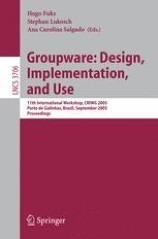
Groupware : design, implementation, and use ; Vol. 3706 ; 11th International workshop, CRIWG 2005, Porto de Galinhas, Brazil, September 25-29, 2005, Proceedings
This book constitutes the refereed proceedings of the 11th International Workshop on Groupware, CRIWG 2005, held in Porto de Galinhas, Brazil in September 2005. The 16 revised full papers and 13 revised short papers presented together with a keynote paper were carefully reviewed and selected from 67 submissions. The papers are organized in topical sections on groupware development, collaborative applications, workflow management, knowledge management, computer supported collaborative learning, group decision support systems, mobile collaborative work, and work modeling in CSCW.
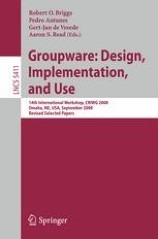
Groupware : Design, Implementation, and Use ; 14th International Workshop, CRIWG 2008, Omaha, NE, USA, September 14-18, 2008, Revised Selected Papers
This book constitutes the refereed post-conference proceedings of the 14th International Workshop on Groupware: Design, Implementation, and Use, held in Omaha, Nebraska, USA, during September 14-18, 2008.The 30 papers presented were carefully reviewed and selected from numerous submission. The topics covered are groupware solutions, co-located groups, groupware for health care, collaborative systems development, collaborative emergency response, groupware approaches, patterns of collaboration.

Groundwater Geochemistry : A Practical Guide to Modeling of Natural and Contaminated Aquatic Systems
Numerical groundwater flow, transport, and geochemical models are important tools besides classical deterministic and analytical approaches. Solving complex linear or non-linear systems of equations, commonly with hundreds of unknown parameters, is a routine task for a PC. Modeling hydrogeochemical processes requires a detailed and accurate water analysis, as well as thermodynamic and kinetic data as input. Thermodynamic data, such as complex formation constants and solubility-products, are often provided as databases within the respective programs. However, the description of surface-controlled reactions (sorption, cation exchange, surface complexation) and kinetically controlled reactions requires additional input data. Unlike groundwater flow and transport models, thermodynamic models, in principal, do not need any calibration.

Groundwater Geochemistry : A Practical Guide to Modeling of Natural and Contaminated Aquatic Systems
Offers beginners and advanced modellers alike a minimum theoretical background and a focus on the practical solution of geochemical modeling with PHREEQC. This book covers the possibility to use PITZER equation and the CD music concept within the version of PHREEQC.

Groundwater Dynamics in Hard Rock Aquifers : Sustainable Management and Optimal Monitoring Network Design
Groundwater is of utmost importance in the arid and semi-arid environment. The areas in such regions are forced to face a variety of problems regarding groundwater as it is the main source of water no matter for any use viz., drinking, domestic, irrigation or industrial particularly for the rural population. The main challenges in hard rock areas in the semi-arid region are the water conservation, management and planning of the water resources. This is further complicated with several complexities of the geological formation. With the semi-arid environment, complex geological settings and over shooting stresses, the aquifer system becomes extremely fragile and sensitive. In spite of a good amount of research in this field, it is still needed to understand the behaviour of such complex system precisely and also apply the result in reasonably larger scales.

Groundwater : Resource evaluation, augmentation, contamination, restoration, modeling and management
The demand for water resources is increasing day by day due to ever increasing population, mostly from developing countries. This has resulted in abstracting more water from the subsurface stratum and forcing the water managers to manage the limited groundwater resources in a more scientific way, which in turn needs a more sophisticated way of assessing the underground resource and manage it optimally.

Grid-based problem solving environments ; IFIP TC2/WG2.5 Working Conference on Grid-based problem solving environments : Implications for development and deployment of numerical software, July 17-21, 2006, Prescott, Arizona, USA
The IFIP series publishes state-of-the-art results in the sciences and technologies of information and communication. The principal aim of the IFIP series is to encourage education and the dissemination and exchange of information about all aspects of computing.

Grid economics and business models ; 5th International workshop, GECON 2008, Las Palmas de Gran Canaria, Spain, August 26, 2008. Proceedings
This volume constitutes the refereed proceedings of the 5th International Workshop on Grid Economics and Business Models, GECON 2008, held in Las Palmas de Gran Canaria, Spain, August 2008.The 10 full papers included in this volume were carefully selected from 27 submission. They aim at presenting current results and innovative research in the area of grid economics. The papers are organized in topical sections on grid business modeling, market mechanisms for the grid, grid markets, and grid architectures.The proceedings are rounded off by 9 project reports that give an overview of the current and ongoing research in grid economics.

Grid economics and business models ; 4th International workshop, GECON 2007, Rennes, France, August 28, 2007, Proceedings
In the third contribution, Altmann and colleagues formulate a taxonomical - proach to Grid business models. They survey the development and origin of Grid technologies and focus on the importance of business-directed values when trying to commercialize today’s Grids. Therein, they identify the reduction of costs, the - provement of efficiency, the creation of novel products and services as well as the quality and collaboration between companies as key factors for the differentiation of Grid business models.
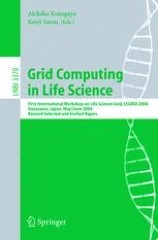
Grid computing in life science ; 1st International Workshop on Life Science Grid, LSGRID 2004 Kanazawa, Japan, May 31-June 1, 2004, Revised Selected and Invited Papers
Researchers in the ?eld of life sciences rely increasingly on information te- nology to extract and manage relevant knowledge. The complex computational and data management needs of life science research make Grid technologies an attractive support solution. However, many important issues must be addressed before the Life Science Grid becomes commonplace. The 1st International Life Science Grid Workshop (LSGRID 2004) was held in Kanazawa Japan, May 31–June 1, 2004. This workshop focused on life s- ence applications of grid systems especially for bionetwork research and systems biology which require heterogeneous data integration from genome to phenome, mathematical modeling and simulation from molecular to population levels, and high-performance computing including parallel processing, special hardware and grid computing.
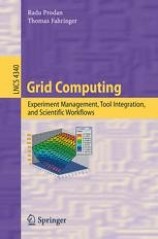
Grid computing : Experiment management, Tool Integration, and Scientific Workflows
Grid computing has become a topic of significant interest in the scientific community as a means of enabling application developers to aggregate resources scattered around the globe for solving large-scale scientific problems. This monograph addresses four critical software development aspects for the engineering and execution of applications on parallel and Grid architectures.

Grey information : Theory and practical applications
he book covers the latest advances in grey information and systems research, providing a state-of-the-art overview of this important field. Covering the theoretical foundation, fundamental methods and main topics in grey information and systems research, this book includes all the elementary concepts: basic principles, grey numbers and their operations, grey equations and matrices, operators of sequences and generations of grey sequences, grey incidence analysis, grey clusters and grey statistical evaluations, grey systems modeling, grey combined models, grey prediction, grey decisions, grey programming, grey input and output and grey controls, etc.

Green economy in the transport sector : A case study of Limpopo Province, South Africa
This book provides policy framework on “towards a Green Economy in the Transport Sector” draws inspiration from the UNEP report on Green Economy Modeling (2014), which focused on South Africa with respect to Transport, Natural Resource Management, Agriculture, and Energy sectors. This is because in the last 10 years natural resources, environmental risks and ecological issues have come to the attention of the international community because the subject is fundamentally important for overarching sustainable growth. It is important to note that environmental problems such as greenhouse gas emissions and climate change in different regions of the world including South Africa result in significant problems.
