



الصفحة 25
الصفحة 25

Financial Privacy : An International Comparison of Credit Reporting Systems
This book provides the first in-depth analysis of the economics and regulation of financial privacy. It is an international comparison of credit reporting systems in the United States and in European countries. On the theoretical level the book explains competition in information markets, especially in markets for goods made of highly personal and sensitive information. It reviews the microeconomics of information and privacy and discusses the economic incentives to disclose or to conceal information. The book also focuses on the institutions of credit reporting, the history of credit reporting agencies and the regulation of privacy and credit reporting on both sides of the Atlantic as well as internationally. Finally, on the empirical level, it reviews the microeconomic and potential macroeconomic effects of credit reporting in the credit markets of countries around the world.

Financial mathematics, derivatives and structured products
Introduces readers to the financial markets, derivatives, structured products and how the products are modelled and implemented by practitioners. In addition, it equips readers with the necessary knowledge of financial markets needed in order to work as product structurers, traders, sales or risk managers. As the book seeks to unify the derivatives modelling and the financial engineering practice in the market, it will be of interest to financial practitioners and academic researchers alike. Further, it takes a different route from the existing financial mathematics books, and will appeal to students and practitioners with or without a scientific background. The book can also be used as a textbook for the following courses: Financial Mathematics (undergraduate level) Stochastic Modelling in Finance (postgraduate level) Financial Markets and Derivatives (undergraduate level) Structured Products and Solutions (undergraduate/postgraduate level)

Financial market imperfections and corporate decisions : Lessons from the transition process in Hungary
The book presents the results of an empirical investigation of the behaviour of Hungarian firms during the transition process focusing in particular on the role of financial market imperfections for corporate capital structure and investment decisions. The results suggest that financial market reforms have succeeded, albeit partially, in hardening firms's budget constraints and improving the efficiency of the credit allocation process. In particular, following the introduction of the banking sector reform and of the new bankruptcy law, budget constraints became more binding for small private firms, while informational costs became less relevant for foreign-owned firms.

Financial management and corporate governance
This book provides an integrative perspective on financial management and corporate governance deployed in management decisions. It analyzes wide-ranging issues such as valuation, capital investment, capital structure, mergers and acquisitions, shareholder and stakeholder value management, and corporate governance structure. Throughout the analyses, the book provides a coherent view of firms, laws and markets, and offers practical financial modeling techniques to assist in financial decisions.

Financial management and accounting in the public sector
Public sector managers are confronted daily with targets and demands that are often set in confusing accounting and financial language. In Financial Management and Accounting in the Public Sector, Gary Bandy employs a clear and concise narrative to introduce the core concepts of public financial management to help those managers to deliver programmes, projects and services that are value for money. As the author puts it, managing public money is an art, not a science.
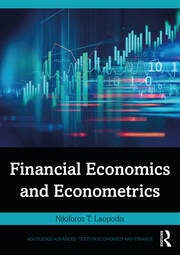
Financial economics and econometrics
Covers financial data and univariate models; asset returns; interest rates, yields and spreads; volatility and correlation; and corporate finance and policy. Each chapter begins with a theory in financial economics, followed by econometric methodologies which have been used to explore the theory. Next, the chapter presents empirical evidence and discusses seminal papers on the topic. Boxes offer insights on how an idea can be applied to other disciplines such as management, marketing and medicine, showing the relevance of the material beyond finance. Readers are supported with plenty of worked examples and intuitive explanations throughout the book, while key takeaways, ‘test your knowledge’ and ‘test your intuition’ features at the end of each chapter also aid student learning.

Financial Distress, Corporate Restructuring and Firm Survival : An Empirical Analysis of German Panel Data
Philipp Jostarndt analyzes the anatomy of financial distress for a large sample of German corporations. He studies distress-induced changes in ownership and control, success factors in distressed equity infusions, and firms’ choice between in- and out-of-court debt restructurings. Moreover, he conducts a survival analysis to examine the determinants of survival, acquisition, and bankruptcy as alternative paths to exit financial distress. He includes both the firm perspective as well as the market valuations of the undertaken restructurings and, where applicable, relates the findings to the microstructure of Germany’s revised bankruptcy legislation.

Financial cryptography and data security Vol. 3570 ; 9th International Conference, FC 2005, Roseau, The Commonwealth Of Dominica, February 28 - March 3, 2005, Revised Papers
The 9th International Conference on Financial Cryptography and Data Security (FC 2005) was held in the Commonwealth of Dominica from February 28 to March 3, 2005. This conference, organized by the International Financial Cryptography Association (IFCA), continues to be the premier international forum for research, exploration, and debate regarding security in the context of finance and commerce. The conference title and scope was expanded this year to cover all aspects of securing transactions and systems. The goal is to build an interdisciplinary meeting, bringing together cryptographers, data-security specialists, business and economy researchers, as well as economists, IT professionals, implementers, and policy makers. We think that this goal was met this year. The conference received 90 submissions and 24 papers were accepted, 22 in the Research track and 2 in the Systems and Applications track. In addition, the conference featured two distinguished invited speakers, Bezalel Gavish and Lynne Coventry, and two interesting panel sessions, one on phishing and the other on economics and information security. Also, for the first time, some of the papers that were judged to be very strong but did not make the final program were selected for special invitation to our Works in Progress (Rump) Session that took place on Wednesday evening.

Financial crisis management and democracy : Lessons from Europe and Latin America
This book discusses financial crisis management and policy in Europe and Latin America, with a special focus on equity and democracy. Based on a three-year research project by the Jean Monnet Network, this volume takes an interdisciplinary, comparative approach, analyzing both the role and impact of the EU and regional organizations in Latin America on crisis management as well as the consequences of crisis on the process of European integration and on Latin America’s regionalism.

Financial Compensation for Victims of Catastrophes : A Comparative Legal Approach
Some countries have created a specific fund solution; others follow a generous ad hoc approach whereby large amounts of compensation are made available on an ex post basis. This book shall pay attention to all of these seemingly quite different solutions. Experts from different countries report on the way catastrophes are dealt with in their particular jurisdiction from the angle of tort law, social security, insurance or alternative compensation mechanisms such as compensation funds. Various possible remedies for victims are critically discussed; attention is also paid to the economic analysis of law.

Financial Analysis of Mergers and Acquisitions : Understanding Financial Statements and accounting Rules with Case Studies
Helps its readers better analyze M&A transactions using information provided in financial statements. Covering accounting and reporting of consolidations, goodwill, non-controlling interests, step acquisitions, spin-offs, equity carve-outs, joint ventures, leveraged buyouts, disposal of subsidiaries, special purpose entities, and taxes, it focuses on the link between underlying economic events and the information in financial statements and how this link affects the assessment of corporate performance. The first part of the book provides description of the accounting rules governing M&A transactions, while the second part includes cases of M&A transactions. Each case focuses on a different element of an M&A transaction, and it is followed by a detailed solution with a complete analysis. Unlike other books in this field, this textbook focuses exclusively on accounting and financial analysis for graduate and upper undergraduate level courses in financial analysis, corporate finance, and financial accounting.

Finance for Food : Towards New Agricultural and Rural Finance
Reflects the current state of discussion about agricultural and rural finance in developing and transition countries. It provides insight into specific themes, such as commodity value chains, farm banking, risk management in agricultural banking, structured finance, crop insurance, mobile banking, and how to increase effectiveness in rural finance. Case studies illustrate various aspects of agricultural and rural finance in developing economies. The book is based on one of the yearly financial Sector Development Symposia held by the KfW Development Bank.

Finance for Engineers : Evaluation and Funding of Capital Projects
Finance for Engineers: Evaluation and Funding of Capital Projects provides a framework for engineers and scientists to undertake financial evaluations and assessments of engineering or production projects. The material covered enables the reader to understand how the economics of a technical project affects the finances of the company. The integration of the technical and financial decision-making is demonstrated through case studies and examples relevant to the practising engineer.

Finance 4.0 - towards a socio-ecological finance system : A participatory framework to promote sustainability
The first is Bitcoin that infamously pursues a state-independent, decentralized conception of money. The second is Finance 4.0, a system that proposes a participatory multi-dimensional money system with built-in incentives for sustainable behavior
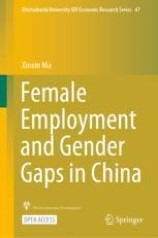
Female Employment and Gender Gaps in China
This book investigates female employment and the gender gap in the labor market and households during China’s economic transition period. It provides the reader with academic evidence for understanding the mechanism of female labor force participation, the determinants of the gender gap in the labor market, and the impact of policy transformation on women’s wages and employment in China from an economics perspective

Fecal Incontinence : Diagnosis and Treatment
Fecal incontinence is a frequent, distressing condition that has a devastating impact on patients’ lives. However, patients are typically embarrassed and reluctant to acknowledge this disability, so they relinquish the possibility of being cured and remain socially isolated. Since fecal incontinence may result from various pathophysiological situations, an accurate diagnostic work-up of each patient is fundamental. Today, a wide range of therapeutic options is available, but making the correct choice is pivotal to the successful management of this condition. This book is aimed at all physicians involved in the assessment and treatment of fecal incontinence. Its main purpose is to review the latest advances in the epidemiologic, socio-economic, psychologic, diagnostic, and therapeutic aspects of fecal incontinence, in order to establish guidelines for effective treatment.

Feasibility and Infeasibility in Optimization : Algorithms and Computational Methods
Feasibility and Infeasibility in Optimization is a timely expository book that summarizes the state of the art in both classical and recent algorithms related to feasibility and infeasibility in optimization, with a focus on practical methods. All model forms are covered, including linear, nonlinear, and mixed-integer programs. Connections to related work in constraint programming are shown. Part I of the book addresses algorithms for seeking feasibility quickly, including new methods for the difficult cases of nonlinear and mixed-integer programs. Part II provides algorithms for analyzing infeasibility by isolating minimal infeasible (or maximum feasible) subsets of constraints, or by finding the best repair for the infeasibility. Infeasibility analysis algorithms have arisen primarily over the last two decades, and the book covers these in depth and detail. Part III describes applications in numerous areas outside of direct infeasibility analysis such as finding decision trees for data classification, analyzing protein folding, radiation treatment planning, automated test assembly, etc.

Fearless leadership : Managing fear, leading with courage and strengthening authenticity
All management starts with self-management - handle fear and become an authentic leader. Often, the problem with management is not theoretical, but practical. Managers know enough about leadership, but a lot of them do not act accordingly.

Fashion marketing in emerging economies Vol. II : South American, Asian and African perspectives
Provides and sheds light on insights, challenges, and opportunities to support the development and economic growth of the fashion industries within emerging markets. The fashion industry is growing rapidly in emerging markets; fashion marketers and retailers are increasingly becoming aware of the benefits of this market and are forced to seek their future growth potentials in this part of the world; in addition, marketing strategies, tools and technologies have also evolved.

Faith, finance, and economy : Beliefs and economic well-being
This book seeks to foster a multidisciplinary understanding of the ties between faith, financial intermediation, and economic progress by drawing on research across economics, finance, history, philosophy, ethics, theology, public policy, law, and other disciplines.
