



الصفحة 24
الصفحة 24

Evolving Toolbox for Complex Project Management
Enhances learning about complex project management principles and practices through the introduction and discussion of a portfolio of tools presented as an evolving toolbox. Throughout the book, industry practitioners examine the toolsets that are part of the toolbox to develop a broader understanding of complex project management challenges and the available tools to address them.

Evolving Connectionist Systems : The Knowledge Engineering Approach
Evolving Connectionist Systems is aimed at all those interested in developing and using intelligent computational models and systems to solve challenging real world problems in computer science, engineering, bioinformatics and neuroinformatics. The book challenges scientists and practitioners with open questions about future creation of new information models inspired by Nature. This edition includes new methods for adaptive, knowledge-based learning, such as online incremental feature selection, spiking neural networks, transductive neuro-fuzzy inference, adaptive data and model integration, cellular automata and artificial life systems, particle swarm optimisation, ensembles of evolving systems, and quantum inspired neural networks. New applications to gene and protein interaction modelling, brain data analysis and brain model creation, computational neuro-genetic modelling, adaptive speech, image and multimodal recognition, language modelling, adaptive robotics, modelling dynamic financial and socio-economic systems, and ecological modelling, are covered. An important new feature of the book is the attempt to connect different structural and functional levels of a complex, intelligent system, looking for inspiration from functional relationships in natural systems, such as the genetic and the brain activity.

Evolvable Machines : Theory & Practice
Methods for the artificial evolution of active components, such as programs and hardware, are rapidly developing branches of adaptive computation and adaptive engineering. "Evolvable Machines" reports innovative and significant progress in automatic and evolutionary methodology applied to machine design. This book presents theoretical as well as practical chapters concentrating on Evolvable Robots, Evolvable Hardware Synthesis, as well as Evolvable Design.
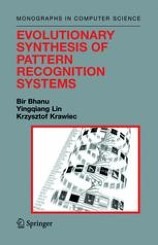
Evolutionary Synthesis of Pattern Recognition Systems
Evolutionary Synthesis of Pattern Recognition Systems presents novel effective approaches based on evolutionary computational techniques, such as genetic programming (GP), linear genetic programming (LGP), coevolutionary genetic programming (CGP) and genetic algorithms (GA) to automate the synthesis and analysis of object detection and recognition systems. The book’s concepts, principles, and methodologies will enable readers to automatically build robust and flexible systems—in a systematic manner—that can provide human-competitive performance and reduce the cost of designing and maintaining these systems. Its content covers all key aspects of object recognition: object detection, feature selection, feature discovery, object recognition, domain knowledge. Basic knowledge of programming and data structures, and some calculus, is presupposed.ing the book’s novel ideas

Evolutionary Microeconomics
Classical microeconomics is intended to explain how a price system is able to coordinate the economic agents. But even if it can be extended to incomplete information and externalities, it remains grounded on very heroic assumptions. Agents are endowed with a very strong rationality, equilibrium is stated without a concrete process to achieve it, market is the unique institution considered. Evolutionary microeconomics is aimed at bypassing these limitations by considering a dynamic approach, however not biologically oriented.

Evolutionary Intelligence : An introduction to theory and applications with Matlab
This book gives a good introduction to evolutionary computation for those who are first entering the field and are looking for insight into the underlying mechanisms behind them. Emphasizing the scientific and machine learning applications of genetic algorithms instead of applications to optimization and engineering, the book could serve well in an actual course on adaptive algorithms.
Evolutionary computation, machine learning and data mining in bioinformatics ; 6th European Conference, EvoBIO 2008, Naples, Italy, March 26-28, 2008. Proceedings
The feld of bioinformatics has two main objectives: the creation and main- nance of biological databases, and the discovery of knowledge from life sciences data in order to unravel the mysteries of biological function, leading to new drugs and therapies for human disease. Life sciences data come in the form of biological sequences, structures, pathways, or literature. One major aspect of discovering biological knowledge is to search, predict, or model specifc infortioninagivendatasetinorderto generate new in teresting knowledge.Computer science methods such as evolutionary computation, machine learning, and data mining all have a great deal to ofer the feld of bioinformatics.

Evolutionary computation, machine learning and data mining in bioinformatics ; 5th European Conference, EvoBIO 2007, Valencia, Spain, April 11-13, 2007, Proceedings
This book Covers brings together experts in computer science with experts in bioinformatics and the biological sciences. It presents contributions on fundamental and theoretical issues along with papers dealing with different applications areas.

Evolution of Teaching and Learning Paradigms in Intelligent Environment
This book is a fascinating window on the evolution of teaching and learning paradigms in intelligent environments. The three Australian authors include a number of chapters on issues of real relevance to today's teaching practice, including an introduction to the evolution of teaching and learning paradigms

Evidence-Based Medical Ethics : Cases for Practice-Based Learning
In Evidence-Based Medical Ethics: Cases for Practice-Based Learning, the authors address what has been missing in existing text books and ethics courses to date – clear-cut ethical and legal guidelines that provide a method for the reader to learn how to systematically manage dilemmas seen in the everyday practice of medicine.
Evaluation of text summaries based on linear optimization of content metrics
Covers both theoretical contributions and practical applications in security system design by applying the Internet of Things (IoT) and CI. It further explains the application of IoT in the design of modern security systems and how IoT blended with computational intel- ligence can make any security system improved and realizable. Key features: Focuses on the computational intelligence techniques of security system design Covers applications and algorithms of discussed computational intelligence techniques Includes convergence-based and enterprise integrated security systems with their applications Explains emerging laws, policies, and tools affecting the landscape of cyber security Discusses application of sensors toward the design of security systems This book will be useful for graduate students and researchers in electrical, computer engineering, security system design and engineering
Evaluation Methods in Biomedical Informatics
This book is a general reference designed for individuals from a broad range of professional backgrounds at various stages of learning about medical information systemsIt attempts to explain why medical information resources should be studied, and why this is a challenging process. It explores the options for conducting such studies, and specifically deciding what topic to study. It also explains how to design, carry out, and interpret a study using a particular set of techniques, how to conduct studies in the context of health care organizations, and how to communicate study designs and study results to the proper audience.

European Traditions in Didactics of Mathematics
This book discusses several didactic traditions in mathematics education in countries across Europe, including France, the Netherlands, Italy, Germany, the Czech and Slovakian Republics, and the Scandinavian states. It shows that while they all share common features both in the practice of learning and teaching at school and in research and development, they each have special features due to specific historical and cultural developments. The book also presents interesting historical facts about these didactic traditions, the theories and examples developed in these countries.

European Robotics Symposium 2006
This unique reference represents a cross-section of forefront robotics research, ranging from robotics and systems to learning, autonomy and failure detection, from vision and navigation to localization and mapping, which are based on the papers presented at the 1st European Robotics Symposium (EUROS-06) held in Palermo, Italy from 16-18 March, 2006. The European Robotics Symposium (EUROS) is a brand-new International scientific event promoted by EURON, the European Robotics Network. Since its inception in 2000, EURON links most of the European robotics research teams and today (2006) involves more than 165 universities and companies across all of its member states. The EUROS meeting will be held in Europe every other year, but international participation at all levels is strongly encouraged making it a meeting place for high-quality presentation of interesting international research on robotics.

European Higher Education Area : Challenges for a New Decade
This book highlights the major outcomes of the fourth edition of the Future of Higher Education – Bologna Process Researchers Conference (January 2020), which has already established itself as a landmark in the European higher education environment.

Euro-Par 2020 : Parallel Processing ; 26th International Conference on Parallel and Distributed Computing, Warsaw, Poland, August 24–28, 2020, Proceedings
This book constitutes the proceedings of the 26th International Conference on Parallel and Distributed Computing, Euro-Par 2020, held in Warsaw, Poland, in August 2020. The conference was held virtually due to the coronavirus pandemic. The 39 full papers presented in this volume were carefully reviewed and selected from 158 submissions. They deal with parallel and distributed computing in general, focusing on support tools and environments; performance and power modeling, prediction and evaluation; scheduling and load balancing; high performance architectures and compilers; data management, analytics and machine learning; cluster, cloud and edge computing; theory and algorithms for parallel and distributed processing; parallel and distributed programming, interfaces, and languages; multicore and manycore parallelism; parallel numerical methods and applications; and accelerator computing.
E-Training Practices for Professional Organizations
E-Training Practices for Professional Organizations is an essential reference for anyone interested in the integration of e-business, e-work and e-learning processes. The book collects, for the first time, the proceedings from the 2003 IFIP eTrain Conference held in Pori, Finland. The text serves as a multi-disciplinary resource for information on the research, development and applications of all topics related to e-Learning. The first half of the book discusses theories, paradigms and their applications in academia and industry. The last half of the book examines learning environments, design issues and collaboration among the corporate, governmental and academic sectors. With academic and professional contributors, E-Training Practices for Professional Organizations reflects the multi-faceted and exciting nature of e-training studies. This volume presents the balanced view of past developments and current research necessary to truly reach the potential of this burgeoning field.

Essentials of Excel VBA, Python, and R Vol. I : Financial statistics and portfolio analysis
Teaches statistical analyses and research methods utilizing business case studies and financial data, with the applications of Excel VBA, Python and R. Each chapter engages the reader with sample data drawn from individual stocks, stock indices, options, and futures. Now in its second edition, it has been expanded into two volumes, each of which is devoted to specific parts of the business analytics curriculum. To reflect the current age of data science and machine learning, the used applications have been updated from Minitab and SAS to Python and R.

Essentials of Computer Organization and Architecture
Addresses all necessary organization and architecture topics, but concise enough to be appropriate for a single-term course. Its focus on real-world examples and practical applications encourages students to develop a “big-picture” understanding of how essential organization and architecture concepts are applied in the computing world. In addition to direct correlation with the ACM/IEEE guidelines for computer organization and architecture, the text exposes readers to the inner workings of a modern digital computer through an integrated presentation of fundamental concepts and principles.

Essential practical prescribing
Designed to support lecture series or themes on core topics within the health sciences. See www.wileyessential.com for further details. Contains a range of learning methods within each chapter including: key topics, learning objectives, case studies, DRUGS checklists, ‘Top-Tips’, advice on guidelines and evidence, and key learning points Uses patient histories to set the scene and enhance the clinical emphasis Offers examples of correctly completed drug charts throughout Is an ideal companion for Prescribing Safety Assessment (PSA) preparation
