



الصفحة 24
الصفحة 24

Computer Algebra Recipes for Mathematical Physics
Over two hundred novel and innovative computer algebra worksheets or ""recipes"" will enable readers in engineering, physics, and mathematics to easily and rapidly solve and explore most problems they encounter in their mathematical physics studies. While the aim of this text is to illustrate applications, a brief synopsis of the fundamentals for each topic is presented, the topics being organized to correlate with those found in traditional mathematical physics texts. The recipes are presented in the form of stories and anecdotes, a pedagogical approach that makes a mathematically challenging subject easier and more fun to learn.

Computer Algebra Recipes : An Introductory Guide to the Mathematical Models of Science
Computer algebra systems are revolutionizing the teaching, the learning, and the exploration of science. Not only can students and researchers work through mathematical models more efficiently and with fewer errors than with pencil and paper, they can also easily explore, both analytically and numerically, more complex and computationally intensive models. Aimed at science and engineering undergraduates at the sophomore/junior level, this introductory guide to the mathematical models of science is filled with examples from a wide variety of disciplines, including biology, economics, medicine, engineering, game theory, mathematics, physics, and chemistry.

Computational Thinking Education
This book is under a CC BY 4.0 license. This book offers a comprehensive guide, covering every important aspect of computational thinking education. It provides an in-depth discussion of computational thinking, including the notion of perceiving computational thinking practices as ways of mapping models from the abstraction of data and process structures to natural phenomena. Further, it explores how computational thinking education is implemented in different regions, and how computational thinking is being integrated into subject learning in K-12 education. In closing, it discusses computational thinking from the perspective of STEM education, the use of video games to teach computational thinking, and how computational thinking is helping to transform the quality of the workforce in the textile and apparel industry.

Computational Techniques for Dental Image Analysis
With the technology innovations dentistry has witnessed in all its branches over the past three decades, the need for more precise diagnostic tools and advanced imaging methods has become mandatory across the industry. Recent advancements to imaging systems are playing an important role in efficient diagnoses, treatments, and surgeries. Provides innovative insights into computerized methods for automated analysis. The research presented within this publication explores pattern recognition, oral pathologies, and diagnostic processing.

Computational Methods in Financial Engineering : Essays in Honour of Manfred Gilli
The focus of this book is the development of computational methods and analytical models in financial engineering that rely on computation. The book contains eighteen chapters written by leading researchers in the area on portfolio optimization and option pricing; estimation and classification; banking; risk and macroeconomic modelling. It explores and brings together current research tools and will be of interest to researchers, analysts and practitioners in policy and investment decisions in economics and finance. "This book collects frontier work by researchers in computational economics in a tribute to Manfred Gilli, a leading member of this community. Contributions cover many of the topics researched by Gilli during his career: portfolio optimization and option pricing, estimation and classification, as well as banking, risk and macroeconomic modeling. The editors have put together a remarkable panorama of the rapidly growing and diversifying field of computational economics and finance
Coming to Terms with Superdiversity: The Case of Rotterdam
This book discusses Rotterdam as clear example of a superdiverse city that is only reluctantly coming to terms with this new reality. Rotterdam, as is true for many post-industrial cities, has seen a considerable backlash against migration and diversity: the populist party Leefbaar Rotterdam of the late Pim Fortuyn is already for many years the largest party in the city. At the same time Rotterdam has become a majority minority city where the people of Dutch descent have become a numerical minority themselves. The book explores how Rotterdam is coming to terms with superdiversity, by an analysis of its migration history of the city, the composition of the migrant population and the Dutch working class population, local politics and by a comparison with Amsterdam and other cities. As such it contributes to a better understanding not just of how and why super-diverse cities emerge but also how and why the reaction to a super-diverse reality can be so different.

Combination therapy against multidrug resistance
Explores strategic methods with investigation of both short- and long-term goals to combat multidrug resistance Presents a broad scope to understand fully the ways to apply combined therapy to multidrug resistance Provides an overview of combination therapy, but also includes specific cases such as cancer, tuberculosis, HIV and malaria

Collective Action in the Formation of Pre-Modern States
This book explores a collective action perspective on the formation of pre-modern states, but does not only promote a new mode of theoretical understanding. Rather, it subjects collective action theory to a methodologically rigorous evaluation using a systematic cross-cultural analysis of historical, ethnographic, and archaeological data drawn from a world-wide sample of societies. These data provide strong support for the theory while pointing the way to a more complex and nuanced approach to collective action, uniting theories of pre-modern and modern states.

Collaborating against child abuse : Exploring the Nordic Barnahus model
This edited collection explores the background and implementation of the Nordic Barnahus (or 'Children's House') model – recognised as one of the most important reforms related to children who are the victims of crime in the Nordic region. This book discusses both its potential to affect change and the challenges facing it. The model was introduced as a response to a growing recognition of the need for more integrated and child-centred services for children exposed to violence and sexual abuse. In the Barnahus structure, different professions work together to ensure that victimized children receive help and treatment and that their legal rights are met. This original study is organised into four broad themes: child-friendliness, support and treatment; the forensic child investigative interview; children’s rights perspectives; and interagency collaboration and professional autonomy.
Cognitive engineering : A distributed approach to machine intelligence
Cognitive Engineering: A Distributed Approach to Machine Intelligence explores the design issues of intelligent engineering systems. Beginning with the foundations of psychological modeling of the human mind, the main emphasis is given to parallel and distributed realization of intelligent models for application in reasoning, learning, planning and multi-agent co-ordination problems. The last two chapters provide case studies on human-mood detection and control, and behavioral co-operation of mobile robots. This is the first comprehensive text of its kind, bridging the gap between Cognitive Science and Cognitive Systems Engineering. Each chapter includes plenty of numerical examples and exercises with sufficient hints, so that the reader can solve the exercises on their own. Computer simulations are also included in most chapters to give a clear idea about the application of the algorithms undertaken in the book. In addition, mathematical analysis on convergence and stability of the neuro-fuzzy models will enable the reader to pursue their research career in cognitive engineering.

Cognitive Aspects of Bilingualism
A unique feature of this book is that chapters favor that line of cognitive linguistics which makes a clear distinction between real world and projected world. Information conveyed by language must be about the projected world. Both the experimental results and the systematic claims in this volume call for a weak form of whorfianism. Also, chapters add some relatively unexplored issues of bilingualism to the well-known ones, such as gender systems in the bilingual mind, context and task, synergic concepts, blending, the relationship between lexical categorization and ontological categorization among others.

Code : The Hidden Language of Computer Hardware and Software ; 2nd ed
The classic guide to how computers work, updated with new chapters and interactive graphics Computers are everywhere --- most obviously in our laptops and smartphones, but also our cars, televisions, microwave ovens, alarm clocks, robot vacuum cleaners, and other smart appliances. Have you ever wondered what goes on inside these devices to make our lives easier but occasionally more infuriating? Explores more deeply the bit-by-bit, gate-by-gate construction of the heart of every smart device ― the central processing unit that combines the simplest of basic operations to perform the most complex of feats. Along with new chapters, Petzold created a new website, CodeHiddenLanguage.com, that uses animated interactive graphics to make computers even easier to comprehend.

Co-Creativity and engaged scholarship : Transformative methods in social sustainability research
This book explores creative and collaborative research methods within the social sustainability sciences. The term co-creativity is used in reference to both individual methods and overarching research approaches that, through socially inclusive forms of action and reflection, stimulate alternative understandings of why and how things are, and how they could be. Supported by a wide-ranging series of in-depth—including chapters on militant research and guerrilla narrative, decolonial participative approaches, appreciate inquiry and care-ethics, deep-mapping, photo-voice, community-arts, digital participatory mapping, and living labs—the edited collection critically reviews the potential of creative, collaborative and transdisciplinary forms of research praxis to nurture just and transformative processes of change.

Co-creation for responsible research and innovation : Experimenting with design methods and tools
This book summarizes research being pursued within the SISCODE (Society in Innovation and Science through CO-DEsign) project, funded by the EU under the H2020 programme, the goal of which is to set up an analytical, reflective and learning framework to explore the transformations in initiatives and policies emerging from the interaction between citizens and stakeholders. The book provides a critical analysis of the co-design processes activated in 10 co-creation labs addressing societal challenges across Europe. Each lab as a case study of real-life experimentation is described through its journey, starting from the purpose on the ground of the experimentation and the challenge addressed.

Coastal architectures and politics of tourism : Leisurescapes in the global sunbelt
Offers a critical and complicated picture of how leisure tourism connected the world after the World War II, transforming coastal lands, traditional societies, and national economies in new ways. Analyzes selected case studies of architectures and landscapes around the world, contextualizing them within economic geographies of national development, the geopolitics of the Cold War, the legacies of colonialism, and the international dynamics of decolonization. Postwar leisure tourism evokes a rich array of architectural spaces and altered coastal landscapes, which is explored in this collection through discussions of tourism developments in the Mediterranean littoral, such as Greece, Turkey, and southern France, as well as compelling analyses of Soviet bloc seaside resorts along the Black Sea and Baltic coasts, and in beachscapes and tourism architectures of western and eastern hemispheres, from Southern California to Sri Lanka, South Korea, and Egypt.

Clocks in the Sky : The Story of Pulsars
In this book, Geoff McNamara explores the history, subsequent discovery and contemporary research into pulsar astronomy. The story of pulsars is brought right up to date with the announcement in 2006 of a new breed of pulsar, Rotating Radio Transients (RRATs), which emit short bursts of radio signals separated by long pauses. These may outnumber conventional radio pulsars by a ratio of four to one. Geoff McNamara ends by pointing out that, despite the enormous success of pulsar research in the second half of the twentieth century, the real discoveries are yet to be made including, perhaps, the detection of the hypothetical pulsar black hole binary system by the proposed Square Kilometre Array - the largest single radio telescope in the world.
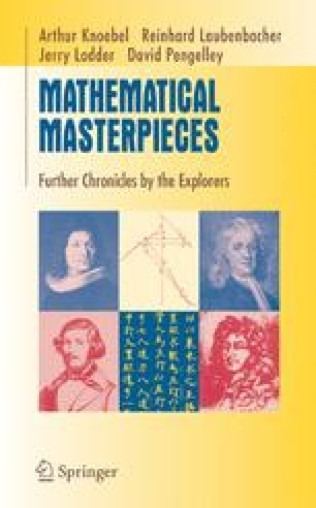
Mathematical Masterpieces : Further Chronicles by the Explorers
Experience the discovery of mathematics by reading the original work of some of the greatest minds throughout history. Here are the stories of four mathematical adventures, including the Bernoulli numbers as the passage between discrete and continuous phenomena, the search for numerical solutions to equations throughout time, the discovery of curvature and geometric space, and the quest for patterns in prime numbers. Each story is told through the words of the pioneers of mathematical thought. Particular advantages of the historical approach include providing context to mathematical inquiry, perspective to proposed conceptual solutions, and a glimpse into the direction research has taken.
Mathematical Aspects of Classical and Celestial Mechanics
In this book we describe the basic principles, problems, and methods of clssical mechanics. Our main attention is devoted to the mathematical side of the subject. Although the physical background of the models considered here and the applied aspects of the phenomena studied in this book are explored to a considerably lesser extent, we have tried to set forth first and foremost the “working” apparatus of classical mechanics. This apparatus is contained mainly in Chapters 1, 3, 5, 6, and 8. Chapter 1 is devoted to the basic mathematical models of classical - chanics that are usually used for describing the motion of real mechanical systems. Special attention is given to the study of motion with constraints and to the problems of realization of constraints in dynamics. In Chapter 3 we discuss symmetry groups of mechanical systems and the corresponding conservation laws. We also expound various aspects of ord- reduction theory for systems with symmetries, which is often used in appli- tions. Chapter 4 is devoted to variational principles and methods of classical mechanics. They allow one, in particular, to obtain non-trivial results on the existence of periodic trajectories. Special attention is given to the case where the region of possible motion has a non-empty boundary. Applications of the variational methods to the theory of stability of motion are indicated.
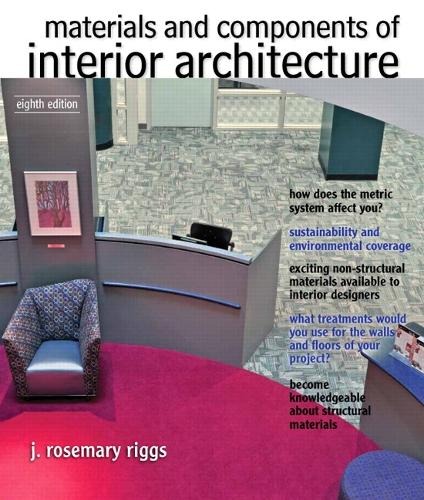
Materials and Components of Interior Architecture
Offers a unique look at interior design,fully covering the exciting breadth of nonstructural materials available to interior designers. With an eye on the environment, it instills a firm understanding of the products, properties, and uses of all materials—from floors, walls, and ceilings to installation and recycling. Going beyond paint and carpet, it explores over 27 different floorings and devotes separate chapters to kitchens and baths. Filled with the latest information from manufacturers, suppliers, and associations, it provides students with the knowledge to creatively engage the “nuts and bolts” of interior design—both in terms of structure and style.
Matematica generale con il calcolatore
By introducing mathematical objects, it teaches students how to use a computer to perform numerical and symbolic calculations, define a function and calculate its values, plot and explore graphs, and execute simple algorithms. The course is rich in examples, applications, and models, drawn from economics, physics, biology, statistics, and mathematics itself. The analysis of these models constitutes, in a certain sense, the true purpose of the mathematical theory covered. Automatic calculation tools (mathematics software, spreadsheets) are used extensively to explore and illustrate concepts and properties. Mathcad® software, in particular, was used, both as a calculation tool and as a simple yet powerful programming language. Considerable space is devoted to approximation, emphasizing the distinction between numerical and symbolic calculation; to algorithms as a synthesis of the syntactic and semantic aspects of mathematical objects; and to computer simulation, interpreted as a "physical" experiment and a source of conjecture. The ability to use a calculator marks a sort of "democratization" of mathematics: even complex results, which have always required a broad background of knowledge and laborious calculations, are now quickly accessible to anyone who understands the meaning of mathematical objects and knows how to use the syntax.
