



الصفحة 24
الصفحة 24

Hyperbolic Systems of Balance Laws : Lectures given at the C.I.M.E. Summer School held in Cetraro, Italy, July 14-21, 2003
The present Cime volume includes four lectures by Bressan, Serre, Zumbrun and Williams and an appendix with a Tutorial on Center Manifold Theorem by Bressan. Bressan’s notes start with an extensive review of the theory of hyperbolic conservation laws. Then he introduces the vanishing viscosity approach and explains clearly the building blocks of the theory in particular the crucial role of the decomposition by travelling waves. Serre focuses on existence and stability for discrete shock profiles, he reviews the existence both in the rational and in the irrational cases and gives a concise introduction to the use of spectral methods for stability analysis. Finally the lectures by Williams and Zumbrun deal with the stability of multidimensional fronts.

Hyperbolic Problems and Regularity Questions
This book discusses new challenges in the quickly developing field of hyperbolic problems. Particular emphasis lies on the interaction between nonlinear partial differential equations, functional analysis and applied analysis as well as mechanics.The book originates from a recent conference focusing on hyperbolic problems and regularity questions. It is intended for researchers in functional analysis, PDE, fluid dynamics and differential geometry.

Hyperbolic Geometry
The geometry of the hyperbolic plane has been an active and fascinating field of mathematical inquiry for most of the past two centuries. The basic approach taken is to define hyperbolic lines and develop a natural group of transformations preserving hyperbolic lines, and then study hyperbolic geometry as those quantities invariant under this group of transformations. Topics covered include the upper half-plane model of the hyperbolic plane, Möbius transformations, the general Möbius group, and their subgroups preserving the upper half-plane, hyperbolic arc-length and distance as quantities invariant under these subgroups, the Poincaré disc model, convex subsets of the hyperbolic plane, hyperbolic area, the Gauss-Bonnet formula and its applications.

Hydropower Economics
HYDROPOWER ECONOMICS examines sustainable alternate energy sources beginning with modeling hydropower and extending the model to include thermal power and wind power. The book will use various econometric measures, equilibrium metrics, OR methods, and DEA/productivity analyses to analyze and model the optimal use of these alternate energy sources. Because these problems are dynamic in nature, dynamic methods are used to model the problems. The book derives results on the allocation of the amounts of alternate sources of energy (water, thermal, and wind) required to produce electricity at acceptable levels over time. Graphic illustrations of the analytical and mathematical modeling used to reach research conclusions are used throughout the book.

Hydrogen Technology : Mobile and Portable Applications
This book presents the current state of the hydrogen economy with the focus on applications in the automotive technology and industry - Where are we in the implementation of hydrogen economy? What are the perspectives? Which are the directions to develop this field? This book answers these questions by compiling reviews from internationally recognized researchers.

Hydrodynamics of Explosion : Experiments and Models
Hydronamics of Explosion presents the research results for the problems of underwater explosions and contains a detailed analysis of the structure and the parameters of the wave fields generated by explosions of cord and spiral charges, a description of the formation mechanisms for a wide range of cumulative flows at underwater explosions near the free surface, and the relevant mathematical models. Shock-wave transformation in bubbly liquids, shock-wave amplification due to collision and focusing, and the formation of bubble detonation waves in reactive bubbly liquids are studied in detail. Particular emphasis is placed on the investigation of wave processes in cavitating liquids, which incorporates the concepts of the strength of real liquids containing natural microinhomogeneities, the relaxation of tensile stress, and the cavitation fracture of a liquid as the inversion of its two-phase state under impulsive (explosive) loading. The problems are classed among essentially nonlinear processes that occur under shock loading of liquids and may be of interest to researchers in physical acoustics, mechanics of multiphase media, shock-wave processes in condensed media, explosive hydroacoustics, and cumulation.

Hybrid Systems : Computation and Control ; 11th International Workshop, HSCC 2008, St. Louis, MO, USA, April 22-24, 2008. Proceedings
Contains the proceedings ofthe 11th Workshop on Hybrid Systems: Computation and Control (HSCC 2008) held in St. Louis, Missouriduring April 22–24,2008.The annual workshop on hybrid systems focuses on research inbedded ,reactive systems in volving theinterplay between symbolic/switchingand continuous dynamical behaviors. HSCC attracts academic as well as industrial researchers to exchange information on the latest developments of applications and theoretical advancements in the design, analysis, control, optimization, and implementation of hybrid systems, with particular attention to embedded and networked control systems. We would like to thank the Program Committee members and the reviewers for an excellent job of evaluating the submissions and participating in the online Program Committee discussions.

Hybrid Systems : Computation and Control ; Vol. # 3414 ; 8th International Workshop, HSCC 2005, Zurich, Switzerland, March 9-11, 2005, Proceedings
Contains the proceedings of the 8th Workshop on Hybrid S- tems: Computation and Control(HSCC2005)heldinZurich, Switzerlandduring March 9-11, 2005. The annual workshop on hybrid systems attracts researchers from academia and industry interested in modeling, analysis, and implemen- tion of dynamic and reactive systems involving both discrete and continuous - haviors. This year's HSCC was technically co-sponsored by the IEEE Control Systems Society. The program consisted of 3 invited talks and 40 regular papers selected from 91 regular submissions. The program covered topics such as tools for analysis and verification, control and optimization, modeling, engineering applications, and emerging directions in programming language support and implementation. We would like to thank the Program Committee members and reviewers for an excellent job of evaluating the submissions and participating in the online Program Committee discussions.
Hybrid metaheuristics ; Vol. 3636 ; 2nd International Workshop, HM 2005, Barcelona, Spain, August 29-30, 2005. Proceedings
Constitutes the refereed proceedings of the Second International Workshop on Hybrid Metaheuristics, HM 2005, held in Barcelona, Spain, in August 2005. In this book, the papers addresses topics such as: low-level hybridization, high-level hybridization, portfolio techniques, expert systems, co-operative search, taxonomy, terminology, and more.

Hybrid metaheuristics : An emerging approach to optimization
The book is intended both to provide an overview of hybrid metaheuristics to novices of the field, and to provide researchers from the field with a collection of some of the most interesting recent developments.

Hybrid Intelligent Systems : Analysis and Design
The objective of this edited volume is to offer a general view at the recent conceptual developments of Soft Computing (SC) regarded as a general methodology supporting the design of hybrid systems along with their diversified applications to modeling, simulation and control of non-linear dynamical systems. As of now, SC methodologies embrace neural networks, fuzzy logic, genetic algorithms and chaos theory. Each of these methodologies exhibits well delineated advantages and disadvantages. Interestingly, they have been found useful in solving a broad range of problems. However, many real-world complex problems require a prudent, carefully orchestrated integration of several of these methodologies to fully achieve the required efficiency, accuracy, and interpretability of the solutions. In this edited volume, an overview of SC methodologies, and their applications to modeling, simulation and control, will be given in an introductory paper by the Editors. Then, detailed methods for integrating the different SC methodologies in solving real-world problems will be given in the papers by the other authors in the book. The edited volume will cover a wide spectrum of applications including areas such as: robotic dynamic systems, non-linear plants, manufacturing systems, and time series prediction.

Humans-with-media and the reorganization of mathematical thinking : Information and communication technologies, modeling, visualization and experimentation
Offers a new conceptual framework for reflecting on the role of information and communication technology in mathematics education. Borba and Villarreal provide examples from research conducted at the level of basic and university-level education, developed by their research group based in Brazil, and discuss their findings in the light of the relevant literature. Arguing that different media reorganize mathematical thinking in different ways, they discuss how computers, writing and oral discourse transform education at an epistemological as well as a political level. Modeling and experimentation are seen as pedagogical approaches which are in harmony with changes brought about by the presence of information and communication technology in educational settings. Examples of research about on-line mathematics education courses, and Internet used in regular mathematics courses, are presented and discussed at a theoretical level. In this book, mathematical knowledge is seen as developed by collectives of humans-with-media.

Human-Like Biomechanics : A Unified Mathematical Approach to Human Biomechanics and Humanoid Robotics
The book contains six Chapters and an Appendix. The first Chapter is an Introduction, giving a brief review of mathematical techniques to be used in the text. The second Chapter develops geometrical basis of human-like biomechanics, while the third Chapter develops its mechanical basis, mainly from generalized Lagrangian and Hamiltonian perspective. The fourth Chapter develops topology of human-like biomechanics, while the fifth Chapter reviews related nonlinear control techniques. The sixth Chapter develops covariant biophysics of electro-muscular stimulation. The Appendix consists of two parts: classical muscular mechanics and modern path integral methods, which are both used frequently in the main text.

Human-Computer Interaction and Cybersecurity Handbook - Human Factors and Ergonomics
Covers all areas of human–computer interaction and human factors in cybersecurity Includes information for IT specialists, who often desire more knowledge about the human side of cybersecurity Provides a reference for other disciplines such as psychology, behavioral science, software engineering, and security management Offers a source of information for cybersecurity practitioners in government agencies and private enterprises Presents new areas such as smart networking and devices

Human-centered software engineering - Integrating usability in the software development lifecycle
Human-CenteredSoftwareEngineering: BridgingHCI,UsabilityandSoftwareEngineering From its beginning in the 1980’s, the ?eld of human-computer interaction (HCI) has beende?nedasamultidisciplinaryarena. BythisImeanthattherehas beenanexplicit recognition that distinct skills and perspectives are required to make the whole effort of designing usable computer systems work well. Thus people with backgrounds in Computer Science (CS) and Software Engineering (SE) joined with people with ba- grounds in various behavioral science disciplines (e. g. , cognitive and social psych- ogy, anthropology) in an effort where all perspectives were seen as essential to creating usable systems. But while the ?eld of HCI brings individuals with many background disciplines together to discuss a common goal - the development of useful, usable, satisfying systems - the form of the collaboration remains unclear.
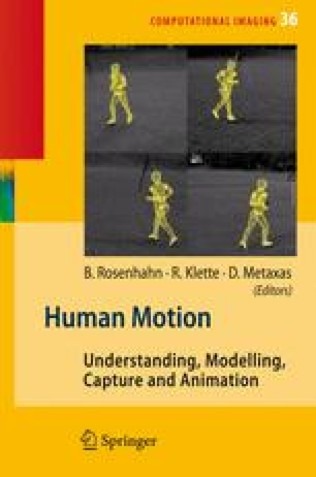
Human motion : Understanding, modeling, capture and animation
Edward Muybridge (1830–1904) is known as the pioneer in motion capt- ing with his famous experiments in 1887 called “Animal Locomotion”. Since then, the feld of animal or human motion analysis has grown in many dir- tions. However, research and results that involve human-like animation and the recovery of motion is still far from being satisfactory. Progress in human motion analysis depends on empirically anchored and grounded research in computer vision, computer graphics, and biomechanics. This book is based on a June 2006 workshop held in Dagstuhl, Germany. This workshop brought together for the frst time researchers from the afo- mentioned disciplines.

Human Longevity, Individual Life Duration, and the Growth of the Oldest-Old Population
Old-age survival has considerably improved in the second half of the twentieth century. In this book, these fundamental questions are explored by experts from such diverse fields as biology, medicine, epidemiology, demography, sociology, and mathematics: they report on recent cutting-edge studies about essential issues of human longevity such as evolution of lifespan of species, genetics of human longevity, reasons for the recent improvement in survival of the elderly, medical and behavioral causes of deaths among very old people, and social factors of long survival in old age.
Human Haptic Perception : Basics and Applications
Active touch perception – also known as haptic perception – is of primary importance for the planning, direction and execution of everyday actions. This most complex of human sensory systems is gaining ever more importance for various scientific disciplines as well as practical industrial applications.In this book an international team of 80 authors presents a comprehensive collection of writings on both aspects of research on human haptic perception. After a theoretical and historical introduction, the chapters are dedicated to neurophysiological basics as well as the psychological, clinical and neuropsychological aspects of haptic perception. Results of studies into human haptic perception in the fields of virtual haptics and robotics are also included. In the final section, contributions from the applied and industrial sectors illustrate the practical uses of knowledge about the human sense of touch.

Human Exploitation and Biodiversity Conservation
The sustainable use of biodiversity is one of the three key objectives of the 1992 "Convention on Biological Diversity". To achieve this, sound conservation practice has to be recognized as beneficial and implemented by all who access, or use it – from subsistence farmers to skiers and pharmaceutical bioprospectors. At the same time, indigenous peoples necessarily utilize enormous numbers of plants, fungi, and fish, particularly for foods and medicines. This book gathers together a wide range of contributions addressing diverse aspects of front-line human involvement in biodiversity exploitation and conservation. Its scope is broad, the organisms explored ranging from birds, invertebrates and mammals – both terrestrial and aquatic – to crops and medicinal plants. Meanwhile, the issues addressed include land use changes, the importance of gardens, hedges and green lanes, housing developments, hunting, invasive species, local community involvement, sacred groves, socioeconomic factors and trade.

Human Cell Culture ; Vol. VI : Embryonic Stem Cells
If you wish to grow or characterize embryonic stem cells or persuade them to differentiate into a particular cell type, then this book contains information that is vital to your success. The aim is to provide clear simple instructions and protocols for growing, maintaining and characterizing embryonic stem cells and details of the various methods used to make stem cells differentiate into specific cell types.
