



الصفحة 24
الصفحة 24

Atlas of genetic diagnosis and counseling
Many birth defects, although rare individually, are encountered in clinical practice and have now become treatable if properly diagnosed. In the Atlas of Genetic Diagnosis and Counseling, Harold Chen, MD, shares his almost 40 years of clinical genetics practice in a comprehensive pictorial atlas of 203 genetic disorders, malformations, and malformation syndromes. The author provides a detailed outline for each disorder, describing its genetics, basic defects, clinical features, diagnostic tests, and counseling issues, including recurrence risk, prenatal diagnosis, and management. Numerous color photographs of prenatal ultrasounds, imagings, cytogenetics, and postmortem findings illustrate the clinical features of patients at different ages, patients with varying degrees of severity, and the optimal diagnostic strategies. The disorders cited are supplemented by case histories and diagnostic confirmation by cytogenetics, biochemical, and molecular techniques, when available.

Atlas of fundus autofluorescence imaging
During recent years, FAF (Fundus autofluorescence) imaging has been shown to be useful in various retinal diseases with regard to diagnostics, documentation of changes, identification of disease progression, and monitoring of novel therapies. Hereby, FAF imaging gives additional information above and beyond conventional imaging tools.This unique atlas provides a comprehensive and up-to-date overview of FAF imaging in retinal diseases. It also compares FAF findings with other imaging techniques such as fundus photograph, fluorescein- and ICG angiography as well as optical coherence tomography. General ophthalmologists as well as retina specialists will find this a very useful guide which illustrates typical FAF characteristics of various retinal diseases.

Atlas of endomicroscopy
Deals with the new insights of endomicroscopy and provides you an overview about the development, the requirements, the technique, current indications and further possibilities of endomicroscopy.

Atlas of dentomaxillofacial anatomical imaging
A complete guide on imaging of the dentomaxillofacial region, a region of high interest to a wide range of specialists. A large number of injuries and patient’s treatment involve the facial skeleton. Enriched by radiographic images and illustrations, this book explores the anatomy of this region presenting its imaging characteristics through the most commonly available techniques (MDCT, CBCT, MRI and US). In addition, two special chapters on angiography and micro-CT expand the limits of dentomaxillofacial imaging.

Atlas of confocal laser scanning in-vivo microscopy in ophthalmology : principles and applications in diagnostic and therapeutic
Confocal microscopy with laser scanning technology yields in-vivo images of ocular and ocular adnexal surfaces that are so brilliant that they rival histology in terms of quality.This unique atlas and textbook demonstrates normal in-vivo anatomy of the cornea, limbus and conjunctiva, quantifies various cellular structures using cell-density calculations and establishes correlations between novel optical sections of various diseases of the ocular surface and clinical findings.

Atlas de pathologie thoracique = Atlas of thoracic pathology
This book, devoted primarily to chest imaging, is divided into three main parts. The first brings together all the information to understand the formation and interpretation of images of the thorax, whether normal or pathological, and thus to avoid as many misinterpretations as possible. The second studies the different thoracic radioanatomical syndromes. It allows the pulmonologist, faced with a certain type of image, to relate it to the underlying anatomical compartment damaged and then to consider all the possible etiologies. The third part, on the other hand, recapitulates all the radiological aspects likely to be encountered in each of the pathologies considered.
Astronomy with a home computer
Here is a one-volume guide to just about everything computer-related for amateur astronomers!Today’s amateur astronomy is inextricably linked to personal computers. Computer-controlled "go-to" telescopes are inexpensive. CCD and webcam imaging make intensive use of the technology for capturing and processing images. Planetarium software provides information and an easy interface for telescopes. The Internet offers links to other astronomers, information, and software. The list goes on and on.
Astronomical sketching : A step-by-step introduction
At some time we have all gazed through the telescope eyepiece at the magnificent rings and banded globe of Saturn, or seen long shadows reaching across crater floors at the Moon’s terminator – and wondered at the sheer beauty of the sight. It seems almost anachronistic to think of sketching when CCD imaging is available, but astronomical sketching provides an entirely different and deeply personal experience. It means spending time at the eyepiece to really look at what you can see, training your eye to perceive ever greater detail to take the fullest advantage of your telescope's light grasp and resolution.
Artrite reumatoide e spondiloentesoartriti : Diagnostica per immagini e imaging follow-up = Rheumatoid Arthritis and Spondyloentesoarthritis : Follow-up imaging and imaging
Recent technological evolutions in diagnostic imaging have allowed him to grasp the anatomical and functional alterations that characterize the onset phase of degenerative and inflammatory arthropathies. In the context of the latter, in particular, imaging is not only fundamental in the diagnosis of the early stage of arthritis but also in defining their evolution and response to modern therapeutic treatment. The evaluation of a new imaging semeiology, which makes considerable use of the use of contrast medium in relation to both power Doppler and magnetic resonance imaging, has made it possible to narrow the gap between histology and imaging in rheumatological diagnostics.

Artificial neural networks : Recent advances, new perspectives and applications
This book explores the potential of ANNs for applications in different fields. Itincludes eight chapters that discuss deep learning, ANN tools, and other cutting-edgetechnologies. It also suggests avenues for further research into ANN techniques formedical imaging to detect breast tumors, classification of COVID-19 surveillancedatasets, health management, estimation of materials processing parameters, solarenergy management, and control of a petrochemical unit.

Artificial intelligence techniques in hydrology and water resources management
The sustainable management of water cycles is crucial in the context of climate change and global warming. It involves managing global, regional, and local water cycles, as well as urban, agricultural, and industrial water cycles, to conserve water resources and their relationships with energy, food, microclimates, biodiversity, ecosystem functioning, and anthropogenic activities. Hydrological modeling is indispensable for achieving this goal, as it is essential for water resources management and the mitigation of natural disasters. In recent decades, the application of artificial intelligence (AI) techniques in hydrology and water resources management has led to notable advances. In the face of hydro-geo-meteorological uncertainty, AI approaches have proven to be powerful tools for accurately modeling complex, nonlinear hydrological processes and effectively utilizing various digital and imaging data sources, such as ground gauges, remote sensing tools, and in situ Internet of Things (IoT) devices.
Artificial intelligence techniques for satellite image analysis
The main objective of this book is to provide a common platform for diverse concepts in satellite image processing. In particular it presents the state-of-the-art in Artificial Intelligence (AI) methodologies and shares findings that can be translated into real-time applications to benefit humankind. Interdisciplinary in its scope, the book will be of interest to both newcomers and experienced scientists working in the fields of satellite image processing, geo-engineering, remote sensing and Artificial Intelligence. It can be also used as a supplementary textbook for graduate students in various engineering branches related to image processing.

Artificial intelligence in medicine ; 10th conference on artificial intelligence in medicine, AIME 2005, Aberdeen, UK, July 23-27, 2005, Proceedings
This book constitutes the refereed proceedings of the 10th Conference on Artificial Intelligence in Medicine in Europe, AIME 2005, held in Aberdeen, UK in July 2005. The 35 revised full papers and 34 revised short papers presented together with 2 invited contributions were carefully reviewed and selected from 148 submissions. The papers are organized in topical sections on temporal representation and reasoning, decision support systems, clinical guidelines and protocols, ontology and terminology, case-based reasoning, signal interpretation, visual mining, computer vision and imaging, knowledge management, machine learning, knowledge discovery, and data mining.
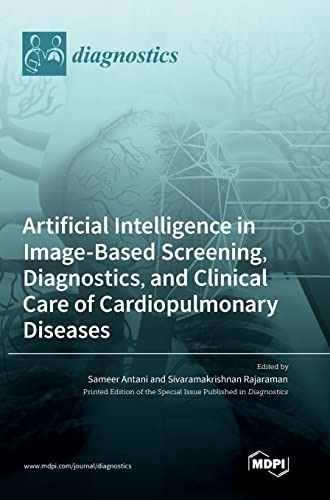
Artificial intelligence in image-based screening, diagnostics, and clinical care of cardiopulmonary diseases
In this Special Issue, “Artificial Intelligence in Image-Based Screening, Diagnostics, and Clinical Care of Cardiopulmonary Diseases”, we have highlighted exemplary primary research studies and literature reviews focusing on novel AI/ML methods and their application in image-based screening, diagnosis, and clinical management of cardiopulmonary diseases.
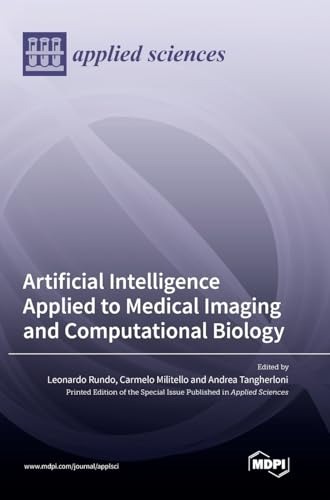
Artificial intelligence applied to medical imaging and computational biology
Medical imaging and computational biology continuously pose new fundamental medical and biological questions that often give rise to novel challenges in Artificial Intelligence. These research fields present an increasing need for the application of cutting-edge computational approaches that generally involve machine learning or computational intelligence techniques, which can effectively perform bioimage and biosignal processing in different clinical areas.

Arabic and Chinese Handwriting Recognition ; SACH 2006 Summit College Park, MD, USA, September 27-28, 2006 Selected Papers
Cheriet provides an overview of the problems of Arabic recognition and how systems can use natural language processing techniques to correct errors in lexicon-based systems.

Applied scanning probe methodsVII : Biomimetics and industrial applications
The present volumes cover three main areas: novel probes and techniques (Vol. V), charactarization (Vol. VI), and biomimetics and industrial applications (Vol. VII). Volume V includes an overview of probe and sensor technologies including integrated cantilever concepts, electrostatic microscanners, low-noise methods and improved dynamic force microscopy techniques, high-resonance dynamic force - croscopy and the torsional resonance method, modelling of tip cantilever systems, scanning probe methods, approaches for elasticity and adhesion measurements on the nanometer scale as well as optical applications of scanning probe techniques based on near?eld Raman spectroscopy and imaging.

Applied scanning probe methods X : Biomimetics and industrial applications
The success of the Springer Series Applied Scanning Probe Methods I–VII and the rapidly expanding activities in scanning probe development and applications worldwide made it a natural step to collect further speci c results in the elds of development of scanning probe microscopy techniques (Vol. VIII), characterization (Vol. IX), and biomimetics and industrial applications (Vol. X). These three volumes complement the previous set of volumes under the subject topics and give insight into the recent work of leading specialists in their respective elds. Following the tradition of the series, the chapters are arranged around techniques, characterization and biomimetics and industrial applications. Volume VIII focuses on novel scanning probe techniques and the understanding of tip/sample interactions. Topics include near eld imaging, advanced AFM, specialized scanning probe methods in life sciences including new self sensing cantilever systems, combinations of AFM sensors and scanning electron and ion microscopes, calibration methods, frequency modulation AFM for application in liquids, Kelvin probe force microscopy, scanning capacitance microscopy, and the measurement of electrical transport properties at the nanometer scale.
Applied scanning probe methods VIII : Scanning probe microscopy techniques
The success of the Springer Series Applied Scanning Probe Methods I–VII and the rapidly expanding activities in scanning probe development and applications worldwide made it a natural step to collect further speci c results in the elds of development of scanning probe microscopy techniques (Vol. VIII), characterization (Vol. IX), and biomimetics and industrial applications (Vol. X). These three volumes complement the previous set of volumes under the subject topics and give insight into the recent work of leading specialists in their respective elds. Following the tradition of the series, the chapters are arranged around techniques, characterization and biomimetics and industrial applications. Volume VIII focuses on novel scanning probe techniques and the understanding of tip/sample interactions. Topics include near eld imaging, advanced AFM, s- cializedscanningprobemethodsinlifesciencesincludingnewselfsensingcantilever systems, combinations of AFM sensors and scanning electron and ion microscopes, calibration methods, frequency modulation AFM for application in liquids, Kelvin probe force microscopy, scanning capacitance microscopy, and the measurement of electrical transport properties at the nanometer scale.

Applied scanning probe methods IX : Characterization
The success of the Springer Series Applied Scanning Probe Methods I–VII and the rapidly expanding activities in scanning probe development and applications worldwide made it a natural step to collect further speci c results in the elds of development of scanning probe microscopy techniques (Vol. VIII), characterization (Vol. IX), and biomimetics and industrial applications (Vol. X). These three volumes complement the previous set of volumes under the subject topics and give insight into the recent work of leading specialists in their respective elds. Following the tradition of the series, the chapters are arranged around techniques, characterization and biomimetics and industrial applications. Volume VIII focuses on novel scanning probe techniques and the understanding of tip/sample interactions. Topics include near eld imaging, advanced AFM, s- cializedscanningprobemethodsinlifesciencesincludingnewselfsensingcantilever systems, combinations of AFM sensors and scanning electron and ion microscopes, calibration methods, frequency modulation AFM for application in liquids, Kelvin probe force microscopy, scanning capacitance microscopy, and the measurement of electrical transport properties at the nanometer scale.
