



الصفحة 24
الصفحة 24
Loop Spaces, Characteristic Classes and Geometric Quantization
This book deals with the differential geometry of manifolds, loop spaces, line bundles and groupoids, and the relations of this geometry to mathematical physics. Various developments in mathematical physics (e.g., in knot theory, gauge theory, and topological quantum field theory) have led mathematicians and physicists to search for new geometric structures on manifolds and to seek a synthesis of ideas from geometry, topology and category theory. In this spirit, this book develops the differential geometry associated to the topology and obstruction theory of certain fiber bundles (more precisely, associated to grebes). The theory is a 3-dimensional analog of the familiar Kostant--Weil theory of line bundles. In particular the curvature now becomes a 3-form.

Logos of Phenomenology and Phenomenology of the Logos. Book One : Phenomenology as the Critique of Reason in Contemporary Criticism and Interpretation
During its century-long unfolding, spreading in numerous directions, Husserlian phenomenology while loosening inner articulations, has nevertheless maintained a somewhat consistent profile. As we see in this collection, the numerous conceptions and theories advanced in the various phases of reinterpretations have remained identifiable with phenomenology.

Logistics Systems Analysis
It has two new sections, a new appendix, and more than half a dozen new figures. A few references have also been added, Much of the new material is based on work , The financial support of the National Science Foundation and the Volvo Foundations Center of Excellence for the Future of Urban Transportation at U. C. Berkeley is also acknowledged. The new appendix presents the logic behind the traveling salesman and vehicle routing results used in Sec. 4. 2 to describe the transportation ope- tion; Chapter 4 is more self-contained as a result. New section 5. 6 int- duces and evaluates a general method that automatically translates the c- tinuum approximation recipes of Chapters 4 and 5 into discrete system designs. This closes a gap in previous editions. Other additions include an explanation of how to develop system designs that can efficiently acc- modate real-time control strategies to manage uncertainty (new section 4. 6. 3), and extensions of the many-to-many design ideas of Chap. 6

Logical approaches to computational barriers ; 2nd Conference on Computability in Europe, CiE 2006, Swansea, UK, June 30-July 5, 2006, Proceedings
The sources of new ideas and methods include practical developments in areas such as neural networks, quantum computation, natural computation, molecular computation, and computational learning. Applications are everywhere, especially, in algebra, analysis and geometry, or data types and programming. This volume, Logical Approaches to Computational Barriers, is the proce- ings of the second in a series of conferences of CiE that was held at the Depa- ment of Computer Science, Swansea University, 30 June - 5 July, 2006.
Location, Transport and Land-Use : Modelling Spatial-Temporal Information
Shows the use of statistical tools for forecasting and analyzing implications of land-use decisions. The idea is that la- use on a map is necessarily a consequence of individual, and often conflicting, siting decisions over time.
Local-Moment Ferromagnets : Unique Properties for Modern Applications
Some ferromagnetic materials with localized magnetic moments have become a hot topic in modern solid-state physics because of their potential applications, e.g. in spintronic devices. The magnetic systems of interest comprise diluted magnetic semiconductors and half-metallic ferromagnets. Like conventional concentrated local-moment systems, they are characterized by an exchange interaction between localized magnetic moments and quasi-free charge carriers. The current research on local-moment ferromagnetism is reviewed in a tutorial style by leading experts in this field. Experimentalists present the latest approaches to characterize the unique material properties, and theoreticians propose definitive ideas to explain the observed phenomena. Students and researches alike will benefit from this status report.

Lippincott illustrated reviews : Pharmacology
Presents up-to-date drug information in an accessible format ideal for a fast, effective refresher. Part of the popular Lippincott® Illustrated Reviews series, this concise resource features clear, effective writing and hundreds of illustrations that break down complex information for rapid review. Sequential images present mechanisms of action and focus on showing rather than telling students how drugs work, and review questions with answers deliver powerful, practical exam preparation. Updated drug information reflects the most current, clinically relevant pharmacology material. Approachable outline format distills complex information for easier review. High-quality illustrations reinforce understanding in vibrant detail. Enhanced review questions with answers test students' understanding and identify areas for further study.
Linear Functional Analysis
This introduction to the ideas and methods of linear functional analysis shows how familiar and useful concepts from finite-dimensional linear algebra can be extended or generalized to infinite-dimensional spaces. Aimed at advanced undergraduates in mathematics and physics, the book assumes a standard background of linear algebra, real analysis (including the theory of metric spaces), and Lebesgue integration, although an introductory chapter summarizes the requisite material. The initial chapters develop the theory of infinite-dimensional normed spaces, in particular Hilbert spaces, after which the emphasis shifts to studying operators between such spaces. Functional analysis has applications to a vast range of areas of mathematics; the final chapters discuss the particularly important areas of integral and differential equations.
Linear Differential Equations and Group Theory from Riemann to Poincaré
A study of how a particular vision of the unity of mathematics, often called geometric function theory, was created in the 19th century. The central focus is on the convergence of three mathematical topics: the hypergeometric and related linear differential equations, group theory, and on-Euclidean geometry. The text for this second edition has been greatly expanded and revised, and the existing appendices enriched with historical accounts of the Riemann–Hilbert problem, the uniformization theorem, Picard–Vessiot theory, and the hypergeometric equation in higher dimensions. The exercises have been retained, making it possible to use the book as a companion to mathematics courses at the graduate level.

Lifelong Learning : Interpretations of an Education Policy in Europe
In Europe, the idea of Lifelong Learning has developed from an education policy to the most important pedagogic paradigm. The concept was created as an answer to the international education crisis, diagnozed by Philip H. Coombs in 1967. Since the European Year of Lifelong Learning in 1996, it has been regarded as an alternative to deal with the rapid social, political and economic changes of the modern world. Andrea Óhidy shows the genesis of the concept and its development towards a pedagogic paradigm. She investigates the relations between the concept of Lifelong Learning and school education and points out the most important links between Lifelong Learning and adult education.
Lie Sphere Geometry : With Applications to Submanifolds
Provides a clear and comprehensive modern treatment of Lie sphere geometry and its applications to the study of Euclidean submanifolds. It begins with the construction of the space of spheres, including the fundamental notions of oriented contact, parabolic pencils of spheres, and Lie sphere transformations. The link with Euclidean submanifold theory is established via the Legendre map, which provides a powerful framework for the study of submanifolds, especially those characterized by restrictions on their curvature spheres.

Leibniz and the natural world : Activity, passivity and corporeal substances in Leibniz's Philosophy
In the present book, Pauline Phemister argues against traditional Anglo-American interpretations of Leibniz as an idealist who conceives ultimate reality as a plurality of mind-like immaterial beings and for whom physical bodies are ultimately unreal and our perceptions of them illusory. Re-reading the texts without the prior assumption of idealism allows the more material aspects of Leibniz's metaphysics to emerge. Leibniz is found to advance a synthesis of idealism and materialism. His ontology posits indivisible, living, animal-like corporeal substances as the real metaphysical constituents of the universe; his epistemology combines sense-experience and reason; and his ethics fuses confused perceptions and insensible appetites with distinct perceptions and rational choice. In the light of his sustained commitment to the reality of bodies, Phemister re-examines his dynamics, the doctrine of pre-established harmony and his views on freedom.

Legitimacy Needs as Drivers of Business Exit
A diversified firm’s withdrawal from a business unit, i.e. business exit, is a significant phenomenon in management practice. Although divestitures are highly relevant in practice, the acquisition of business units attracts much more attention in strategic management research. Carolin Decker develops and empirically applies a framework in which business exits serve the purpose of re-establishing a firm’s previously harmed legitimacy. She suggests four types of legitimacy needs that are to be satisfied with the divestiture of a business unit and the simultaneous pursuit of strategic reorientation. The author tests the theoretical framework with secondary data on 213 business exits. Her findings support the idea that legitimacy needs drive the likelihood of fit-enhancing business exits in divesting firms.
Lectures on Quantum Gravity
A primary goal was to foster interaction and communication between participants from different cultures, both in the layman’s sense of the term and in terms of approaches to quantum gravity. We hope that the links formed by students and the school will persist throughout their professional lives, continuing to promote interaction and the essential exchange of ideas that drives research forward. This volume contains improved and updated versions of the lectures given at the School. It has been prepared both as a reminder for the participants, and so that these pedagogical introductions can be made available to others who were unable to attend. We expect them to serve students of all ages well.
Lectures on Algebraic Geometry I : Sheaves, Cohomology of Sheaves, and Applications to Riemann Surfaces
This book and the following second volume is an introduction into modern algebraic geometry. In the first volume the methods of homological algebra, theory of sheaves, and sheaf cohomology are developed. These methods are indispensable for modern algebraic geometry, but they are also fundamental for other branches of mathematics and of great interest in their own.In the last chapter of volume I these concepts are applied to the theory of compact Riemann surfaces. In this chapter the author makes clear how influential the ideas of Abel, Riemann and Jacobi were and that many of the modern methods have been anticipated by them.

Learning, philosophy, and African citizenship
This book discusses and addresses the compelling questions concerning the ideals of citizenship, the processes of learning to fulfill these ideals, and possibilities of education in fostering citizenship. Rather than advocating for one framework, the authors demonstrate the continuously contested nature of the concept of citizenship as theoretically discussed and practically experienced. The monograph combines, in an unconventional way, selected philosophical accounts and everyday experiences from certain locations in Tanzania and Uganda.

Learning from nature how to design new implantable biomaterialsis : From biomineralization fundamentals to biomimetic materials and processing routes ; Proceedings of the NATO Advanced Study Institute, held in Alvor, Algarve, Portugal, 13-24 October 2003
The demands upon the material properties largely depend on the site of application and the function it has to restore. Ideally, a replacement material should mimic the living tissue from a mechanical, chemical, biological and functional point of view.

Law and Politics : A Dilemma for Contemporary Legal Theory
Politics and the political discourse occupy a central position in the modern legal theoretical discussion. The goal of this book is to reconstruct and to classify, according to ideal-typical models, the different positions taken by the major contemporary legal theories as to whether and how law relates to politics. In particular, attention is focused on Kelsen, Hart, Finnis, Critical Legal Studies, Law and Economics and legal realisms.

Languages and Compilers for Parallel Computing ; 19th International Workshop, LCPC 2006, New Orleans, LA, USA, November 2-4, 2006, Revised Papers
The 19th Workshop on Languages and Compilers for Parallel Computing was heldinNovember2006inNewOrleans,LouisianaUSA.Morethan40researchers from around the world gathered together to present their latest results and to exchange ideas on topics ranging from parallel programming models, code generation,compilationtechniques,paralleldatastructureandparallelexecution models,toregisterallocationandmemorymanagementinparallelenvironments.
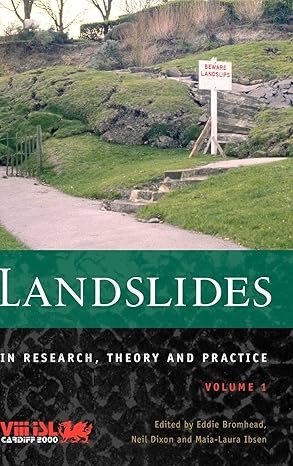
Landslides in research, theory and practice ; Proceedings of the 8th International Symposium on Landslides held in Cardiff on 26–30 June 2000
Contains vital information from throughout the world on landslide and slope instability problems. Every four years the worlds leading scientists and engineers dealing with landslides, have the opportunity to meet up and engage in the exchange of ideas and experiences at a symposium run under the auspices of ISSMGE Technical Committee 11. These volumes, taken from the 8th symposium in the series, detail investigations into landslide causes, mechanisms and hazards, together with accounts of monitoring and mapping.
