



الصفحة 24
الصفحة 24
Multimodal Processing and Interaction : Audio, Video, Text
Multimodal Processing and Interaction: Audio, Video and Text presents high quality, state-of-the-art research ideas and results from theoretic, algorithmic and application viewpoints. This edited volume contains both state-of-the-art reviews and original contributions by leading experts in the scientific and technological field of multimedia. It grew out of a four-year collaboration among research groups participating in the European network of Excellence on Multimedia Understanding, Semantics, Computation and Learning (MUSCLE).

Multimodal Concepts for Integration of Cytotoxic Drugs
The first part of this book summarizes the rationale and the preclinical data for combined treatment with ionizing radiation and pharmaceutical agents. Individual chapters focus on different forms of combined treatment, with due consideration being given to a range of drugs and to emerging combinations with small molecules and antibodies, derived from recent advances in molecular oncology. The second part of the book comprises a series of disease-specific chapters in which the clinical results of combined modality treatment are presented. In addition, the topics of acute and late toxicity, supportive treatment and tolerance in elderly patients are reviewed.

Multimedia Services in Intelligent Environments : Advanced Tools and Methodologies
This book presents a sample of recent research results in multimedia services. Besides the introductory chapter, this book includes fourteen additional chapters. Nine of these chapters cover various aspects of data processing in multimedia services in intelligent environments, such as storage, recognition and classification, transmission, information retrieval, and information securing. Four additional chapters present multimedia services in noise and hearing monitoring and measuring, augmented reality, automated lecture rooms and rights management and licensing. Finally, the last chapter is devoted to an intelligent recommender service in scientific digital libraries.

Multimedia Semantics : The Role of Metadata
This book gives an overview on fundamental issues within the field of multimedia metadata focusing on contextualized, ubiquitous, accessible and interoperable services on a higher semantic level. The book in hand provides a selection of basic articles being a base for multimedia metadata research. Furthermore it presents a view on the current state of the art in multimedia metadata research.

Multimedia security : Algorithm development, analysis and applications (algorithms for intelligent systems)
Provides an insight about various techniques used in multimedia security and identifies its progress in both technological and algorithmic perspectives. In the contemporary world, digitization offers an effective mechanism to process, preserve and transfer all types of information. The incredible progresses in computing and communication technologies augmented by economic feasibility have revolutionized the world. The availability of efficient algorithms together with inexpensive digital recording and storage peripherals have created a multimedia era bringing conveniences to people in sharing the digital data that includes images, audio and video. The ever-increasing pace, at which the multimedia and communication technology is growing, has also made it possible to combine, replicate and distribute the content faster and easier, thereby empowering mankind by having a wealth of information at their disposal.

Multimedia Retrieval
The single chapters of this textbook explain the general architecture of multimedia information retrieval systems; various metadata languages like Dublin Core, RDF, or MPEG; pattern recognition through Markov models, unsupervised learning, and pattern clustering; various indexing approaches to audio and video streams; interaction and control; the protection of content and user privacy; and search effectiveness and efficiency.
Multimedia Introduction to Programming Using Java
Although vital to modern software development, Java and object-oriented programming can pose significant challenges to newcomers. This text, unique in both scope and approach and accompanied by interactive content that you may find on extras.springer.com, addresses that learning curve by providing a careful, classroom-tested presentation of Java -- from the fundamentals of variables, types, and expressions to procedural concepts like loops and sophisticated object-oriented ideas. Additional key features of this work Introduces objects and classes early in the exposition, rendering object-oriented programming intuitive and natural. Develops programs, rather than simply showcasing them. Supports all concepts through complementary lectures on the zip-file featured on extras.springer.com. Contains numerous self-help exercises that encourage readers to practice programming. With its comprehensive appendices and bibliography, systematic approach, and helpful interactive programs on extras.springer.com, this exciting work provides the key tools they needed for successful object-oriented programming. It is ideal for use at the undergraduate and graduate beginning level, whether in the classroom or for distance learning; furthermore, the text will also be a valuable self-study resource or reference volume in any programmer’s library.

Multimedia Forensics
Media forensics has never been more relevant to societal life. Not only media content represents an ever-increasing share of the data traveling on the net and the preferred communications means for most users, it has also become integral part of most innovative applications in the digital information ecosystem that serves various sectors of society, from the entertainment, to journalism, to politics. Undoubtedly, the advances in deep learning and computational imaging contributed significantly to this outcome. The underlying technologies that drive this trend, however, also pose a profound challenge in establishing trust in what we see, hear, and read, and make media content the preferred target of malicious attacks.

Multimedia Encryption and Watermarking
Multimedia Encryption and Watermarking presents a comprehensive survey of contemporary multimedia encryption and watermarking techniques, which enable a secure exchange of multimedia intellectual property. Part I, Digital Rights Management (DRM) for Multimedia, introduces DRM concepts and models for multimedia content protection, and presents the key players. Part II, Multimedia Cryptography, provides an overview of modern cryptography, with the focus on modern image, video, speech, and audio encryption techniques. This book also provides an advanced concept of visual and audio sharing techniques. Part III, Digital Watermarking, introduces the concept of watermarking for multimedia, classifies watermarking applications, and evaluates various multimedia watermarking concepts and techniques, including digital watermarking techniques for binary images. Multimedia Encryption and Watermarking is designed for researchers and practitioners, as well as scientists and engineers who design and develop systems for the protection of digital multimedia content. This volume is also suitable as a textbook for graduate courses on multimedia security.

Multimedia Database Retrieval : A Human-Centered Approach
Multimedia Database Retrieval: A Human-Centered Approach presents the latest development in user-centered methods and the state-of-the-art in visual media retrieval. It includes discussion on perceptually inspired non-linear paradigm in user-controlled interactive retrieval (UCIR) systems. It also features a coherent approach which focuses on specific topics within content/concept-based retrievals via audio-visual information modeling of multimedia. Highlights include: * Exploring an adaptive machine that can learn from its environment * Optimizing the learning system by incorporating self-organizing adaptation into the retrieval process * Demonstrating state-of-the-art applications within small, medium, and large databases
Multimedia Data Mining and Knowledge Discovery
Multimedia Data Mining and Knowledge Discovery provides an overview of the current state-of-the-art in the field of multimedia data mining and knowledge discovery, and discusses the variety of hot topics in multimedia data mining research. Consisting of an introductory section and four topical parts, the book describes the objectives and current tendencies in multimedia data mining research and their applications.

Multimedia Content Representation, Classification and Security ; International Workshop, MRCS 2006, Istanbul, Turkey, September 11-13, 2006, Proceedings
This book constitutes the refereed proceedings of the International Workshop on Multimedia Content Representation, Classification and Security, MRCS 2006, held in Istanbul, Turkey in September 2006. The 100 revised papers presented together with 4 invited lectures were carefully reviewed and selected from more than 190 submissions. The papers are organized in topical sections on biometric recognition, multimedia content security, steganography, watermarking, authentication, classification for biometric recognition, digital watermarking, content analysis and representation, 3D object retrieval and classification, representation, analysis and retrieval in cultural heritage, content representation, indexing and retrieval, content analysis and classification, feature extraction and classification, multimodal signal processing, 3D video and free viewpoint video, multimedia content transmission and classification, video and image processing, as well as video analysis and representation.

Multimedia Content Analysis and Mining ; International Workshop, MCAM 2007, Weihai, China, June 30-July 1, 2007, Proceedings
The workshop gives a snapshot of the current wor- wide research in multimedia analysis. Through recent advances in computing, networking, and data storage, multimedia will create new interesting technical possibilities in a wide range of ?elds, such as entertainment, commerce, science, medicine, and public safety.
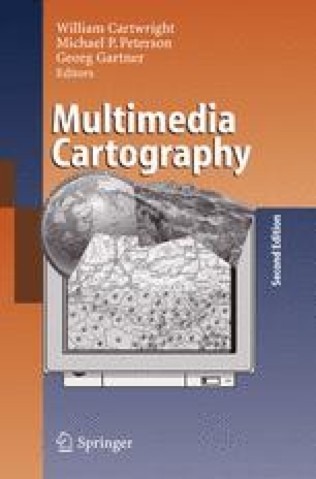
Multimedia Cartography
The various sections of this book cover the theoretical backgrounds, applications and future developments of Multimedia Cartography. This second edition of Multimedia Cartography includes updated applications areas that are Internet-focussed. Since the release of Edition 1 in 1999 the focus of the delivery of Multimedia Cartography applications now includes the World Wide Web and mobile services, as well as discrete media. New chapters in the book reflect this. As well, the book includes additional chapters on 3D applications and Virtual Reality applications.

Multimedia big data computing for IoT applications : Concepts, paradigms and solutions
This book considers all aspects of managing the complexity of Multimedia Big Data Computing (MMBD) for IoT applications and develops a comprehensive taxonomy. It also discusses a process model that addresses a number of research challenges associated with MMBD, such as scalability, accessibility, reliability, heterogeneity, and Quality of Service (QoS) requirements, presenting case studies to demonstrate its application. Further, the book examines the layered architecture of MMBD computing and compares the life cycle of both big data and MMBD. Written by leading experts, it also includes numerous solved examples, technical descriptions, scenarios, procedures, and algorithms.

Multilingualism: Understanding Linguistic Diversity
Multilingualism is everywhere in our globalised society. Delving into the 'social life' of languages, John Edwards provides a brief yet compelling overview of multilingualism and its sociocultural implications and consequences. Covering major topics including language origins, language death, lingua francas, pidgins, creoles and artificial languages, this book provides a complete introduction to what happens when languages meet.

Multilingualism, Cultural Identity, and Education in Morocco
This book is an original contribution to the field of multilingualism and cultural identity. It investigates the ramifications of multilingualism for language choice patterns and attitudes among Moroccans. It focuses on the impact of multilingualism on cultural identity and education. It includes a debate on education and language planning policies in Morocco since independence. It reveals the complexity of post-colonial Morocco characterized by contradictory attitudes toward the languages in contact and toward language policy and education. It is of interest to students and researchers of sociolinguistics, cultural studies, anthropology and gender studies as well as for specialists of education and language policy/planning.
Multilingual Development : English in a Global Context
English as a global lingua franca interacts with other languages across a wide range of multilingual contexts. Combining insights from linguistics, education studies, and psychology, this book addresses the role of English within the current linguistic dynamics of globalization. It takes Singapore, Hong Kong, and Dubai as case studies to illustrate the use of English in different multilingual urban areas, arguing that these are places where competing historical assessments, and ideological conceptions of monolingualism and multilingualism, are being acted out most forcefully.

Multilevel Urban Governance and the `European City : Discussing Metropolitan Reforms in Stockholm and Helsinki
Urban scholars have come up with very different answers to the question of what the main defining characteristics of urban Europe are and whether they can be described in a distinct ideal-typical model, the ’European City’. In order to fully understand the prevailing political arrangements and ongoing transformations in urban Europe, they have increasingly turned towards ‘multilevel governance approaches’ to conduct more comprehensive and comparative analyses of urban politics and policies. Nico Giersig reflects on these debates and exemplifies the specificities of Nordic cities within Europe as a whole. He accomplishes this by means of a systematic comparison of governance arrangements and their dynamics in two Nordic capital regions.

Multilevel Synthesis : From the Group to the Individual
This book presents a historical panorama of the evolution of demographic thought from its eighteenth-century origins up to the present day, and uses it to demonstrate how the multilevel approach can resolve some of the contradictions that have become apparent and achieve a synthesis of the different approaches employed. Part one guides the reader from period analysis to multilevel analysis, examining longitudinal and event history analysis on the way. Part two is a detailed account of multilevel analysis, its methods, and the relevant mathematical models notably as regards the type of variables being used. Numerous examples, examined across successive sections, make the book clear and easy to follow.
