



الصفحة 24
الصفحة 24

Evolvable systems : From biology to hardware ; 8th International Conference, ICES 2008, Prague, Czech Republic, September 21-24, 2008. Proceedings
This book constitutes the refereed proceedings of the 8th International Conference on Evolvable Systems, ICES 2008, held in Prague, Czech Republic, in September 2008.The 28 revised full papers and 14 revised poster papers presented were carefully reviewed and selected from 52 submissions. The papers are organized in topical sections on evolution of analog circuits, evolution of digital circuits, hardware-software codesign and platforms for adaptive systems, evolutionary robotics, development, real-world applications, evolutionary networking, evolvable artificial neural networks, and transistor-level circuit evolution.

Evolutionary Scheduling
Evolutionary scheduling is a vital research domain at the interface of two important sciences - artificial intelligence and operational research. Scheduling problems are generally complex, large scale, constrained, and multi-objective in nature, and classical operational research techniques are often inadequate at solving them effectively. With the advent of computation intelligence, there is renewed interest in solving scheduling problems using evolutionary computational techniques. These techniques, which include genetic algorithms, genetic programming, evolutionary strategies, memetic algorithms, particle swarm optimization, ant colony systems, etc, are derived from biologically inspired concepts and are well-suited to solve scheduling problems since they are highly scalable and flexible in terms of handling constraints and multiple objectives. This edited book gives an overview of many of the current developments in the large and growing field of evolutionary scheduling, and demonstrates the applicability of evolutionary computational techniques to solve scheduling problems, not only to small-scale test problems, but also fully-fledged real-world problems.

Evolutionary computation in combinatorial optimization ; 8th European Conference, EvoCOP 2008, Naples, Italy, March 26-28, 2008. Proceedings
Metaheuristics have been shown to be e?ective for di?cult combinatorial - timization problems appearing in various industrial, economical, and scientifc domains. Prominent examples of metaheuristics are evolutionary algorithms, tabu search, simulated annealing, scatter search, memetic algorithms, variable neighborhood search, iterated local search, greedy randomized adaptive search procedures, ant colony optimization and estimation of distribution algorithms. Problems solved successfully include scheduling, timetabling, network design, transportation and distribution, vehicle routing, the travelling salesman pr- lem, packing and cutting, satisfability and general mixed integer programming.

Evolutionary Biology from Concept to Application
this book provides an up-to-date overview of evolutionary concepts and how these concepts can be applied to a better understanding of various biological aspects. It is divided into the following four parts: Modelization of Evolution - Concepts in Evolutionary Biology - Knowledge - Applied Evolutionary Biology.This book is an invaluable source of information not only for evolutionary biologists, but also for biologists in general.

Evolution from Cellular to Social Scales
Evolution is a critical challenge for many areas of science, technology and development of society. The book reviews general evolutionary facts such as origin of life and evolution of the genome and clues to evolution through simple systems. Emerging areas of science such as "systems biology" and "bio-complexity" are founded on the idea that phenomena need to be understood in the context of highly interactive processes operating at different levels and on different scales. This is where physics meets complexity in nature, and where we must begin to learn about complexity if we are to understand it. Similarly, there is an increasingly urgent need to understand and predict the evolutionary behavior of highly interacting man-made systems, in areas such as communications and transport, which permeate the modern world. The same applies to the evolution of human networks such as social, political and financial systems, where technology has tended to vastly increase both the complexity and speed of interaction, which is sometimes effectively instantaneous.

Evidence-Based Oral Surgery : A Clinical Guide for the General Dental Practitioner
This book is designed to guide the dental practitioner in the medical and surgical management of the oral surgery patient. It provides dentists and dental professionals with up-to-date, evidence-based information on how to handle any oral surgical problem and how to work up a patient.

Evidence-Based Medicine : How to Practice and Teach EBM
An evidence-based approach to dietary and lifestyle medicine is taken. An approach known as “epidemiology-based health promotion,” which compiles and presents available evidence that could help physicians, other healthcare professionals and members of the general public make wiser decision about healthcare, is also explored.

Evidence-Based Medicine - A Paradigm Ready To Be Challenged? : How Scientific Evidence Shapes Our Understanding And Use Of Medicine
This book aims to clarify the term „evidence-based medicine“ (EBM) from a philosophy of science perspective. The author, Marie-Caroline Schulte discusses the importance of evi-dence in medical research and practice with a focus on the ethical and methodological prob-lems of EBM.

Evidence-Based Medical Ethics : Cases for Practice-Based Learning
In Evidence-Based Medical Ethics: Cases for Practice-Based Learning, the authors address what has been missing in existing text books and ethics courses to date – clear-cut ethical and legal guidelines that provide a method for the reader to learn how to systematically manage dilemmas seen in the everyday practice of medicine.
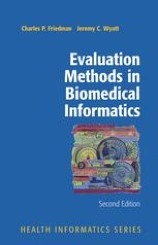
Evaluation Methods in Biomedical Informatics
This book is a general reference designed for individuals from a broad range of professional backgrounds at various stages of learning about medical information systemsIt attempts to explain why medical information resources should be studied, and why this is a challenging process. It explores the options for conducting such studies, and specifically deciding what topic to study. It also explains how to design, carry out, and interpret a study using a particular set of techniques, how to conduct studies in the context of health care organizations, and how to communicate study designs and study results to the proper audience.

Evaluating Multiple Narratives : Beyond Nationalist, Colonialist, Imperialist Archaeologies
This volume uses Bruce Trigger's 1984 article, "Alternative Archaeologies: Nationalist, Colonialist, Imperialist" as a starting point to examine the complex interaction between contemporary society and archaeological practice today. This book uses case studies from Asia, Latin America, Europe and North America to explore the interplay between the sociopolitical context of specific national, regional or local archaeological traditions and the variety of interpretations of the past made by archaeologists and others.

Eutrophication in the Baltic Sea : Present Situation, Nutrient Transport Processes, Remedial Strategies
This book takes a holistic process-based ecosystem perspective on the eutrophication in the Baltic Sea, with a focus on the factors regulating how the system would respond to changes in nutrient loading. This includes a very special process for the Baltic Sea: land uplift. After being depressed by the glacial ice, the land is now slowly rising adding vast amounts of previously deposited nutrients and clay particles to the system.

European cultural diplomacy and Arab Christians in Palestine, 1918–1948 : Between contention and connection
This book investigates the transnationally connected history of Arab Christian communities in Palestine during the British Mandate (1918-1948) through the lens of the birth of cultural diplomacy.

Euro-Par 2020 : Parallel Processing ; 26th International Conference on Parallel and Distributed Computing, Warsaw, Poland, August 24–28, 2020, Proceedings
This book constitutes the proceedings of the 26th International Conference on Parallel and Distributed Computing, Euro-Par 2020, held in Warsaw, Poland, in August 2020. The conference was held virtually due to the coronavirus pandemic. The 39 full papers presented in this volume were carefully reviewed and selected from 158 submissions. They deal with parallel and distributed computing in general, focusing on support tools and environments; performance and power modeling, prediction and evaluation; scheduling and load balancing; high performance architectures and compilers; data management, analytics and machine learning; cluster, cloud and edge computing; theory and algorithms for parallel and distributed processing; parallel and distributed programming, interfaces, and languages; multicore and manycore parallelism; parallel numerical methods and applications; and accelerator computing.

Euro-Par 2007 Workshops : Parallel Processing ; HPPC 2007, UNICORE Summit 2007, and VHPC 2007, Rennes, France, August 28-31, 2007, Revised Selected Papers
Parallel and distributed processing , although within the focus of computer science research for along time ,is gainingmore and more importance in awidespectrum of applications. These proceedings aim to demonstrate the use of parallel and distributed processing concepts in diferent application felds, and attempt to spark interest in novel research directions to advance the embracing model of high-performance computing research in general. The objective of these workshops is to specifcally address researchers c- ing from university, industry and governmental research organizations and application-oriented companies, in order to close the gap between purely sentifc research and the applicability of the research ideas to real-life problems.

Ethics of Belief : Essays in Tribute to D.Z. Phillips
This volume is presented as a tribute to D.Z. Phillips and the introduction by Eugene Long includes a brief discussion of Phillips' life and work. The first six articles were originally written at the invitation of Phillips for a conference on the ethics of belief held at Claremont Graduate University. Essays by Allen Wood, Richard Amesbury and Van Harvey discuss the question of the ethics of belief in the context of the evidentialist principle most frequently associated with W. K. Clifford. Essays by Ronney Mourad, Jennifer Faust and Robert Audi are concerned with the voluntariness of belief, the persuasive power of arguments and differing conceptions of faith, belief and acceptance. The final two essays by John Whittaker and Anselm Min focus on Phillips' understanding of the logic and rationality of religious belief.

Ethical and Philosophical Consideration of the Dual-Use Dilemma in the Biological Sciences
This book examines the kinds of life-science experiments that give rise to the dual-use dilemma and provides philosophical analysis of the ethical issues and policy options surrounding dual-use research. this is the first book-length treatment of the topic by professional ethicists. It also challenges, and offers an alternative perspective to, the hugely influential U.S. National Research Council position on the dual-use dilemma.

Estimation in Conditionally Heteroscedastic Time Series Models
ARCH (autoregressive conditionally heteroscedastic), is well-suited for the description of economic and financial price. Nowadays ARCH has been replaced by more general and more sophisticated models, such as GARCH (generalized autoregressive heteroscedastic). This monograph concentrates on mathematical statistical problems associated with fitting conditionally heteroscedastic time series models to data. This includes the classical statistical issues of consistency and limiting distribution of estimators. Particular attention is addressed to (quasi) maximum likelihood estimation and misspecified models, along to phenomena due to heavy-tailed innovations. The used methods are based on techniques applied to the analysis of stochastic recurrence equations. Proofs and arguments are given wherever possible in full mathematical rigour. Moreover, the theory is illustrated by examples and simulation studies.

Estimates of cost of crime : History, methodologies, and implications
With the emergence and development of quantitative methods in economics and statistics, the exercise of calculating costs of crime became possible, In this book, it's argue that we can estimate costs of different crimes, and that such estimates are relevant for criminal law and crime policy. Notwithstanding the incommensurability of many consequences of crime, society every day makes numerous decisions how to tackle crime, and at least implicitly assesses the relative importance of the problem. Properly done costs of crime estimates make people’s evaluation more visible, and allow for more coherent public policy.

Essentials of pharmacodynamics and drug action
Provides a comprehensive exploration of the dynamic field of pharmacology and its fundamental principles. It delves into the intricate interactions between drugs and the human body, focusing on pharmacokinetics, which explains the dynamics of drug actions in the body, and pharmacodynamics, which uncovers the mechanisms through which drugs exert their effects. The book also emphasizes the crucial aspects of therapeutics and gene-based therapy, shedding light on modern approaches to disease treatment.
