



الصفحة 24
الصفحة 24
Multiagent System Technologies ; 5th German Conference, MATES 2007, Leipzig, Germany, September 24-26, 2007, Proceedings
The papers are organized in topical sections on engineering multi-agent systems, multi-agent planning and learning, multi-agent communication, interaction, and coordination, multi-agent resource allocation, multi-agent planning and simulation, as well as trust and reputation.

Multi-Agent Programming : Languages, Platforms and Applications
Part I describes four approaches that are based on computational logic or process algebra--Jason, 3APL, IMPACT, and CLAIM/SyMPA. These programming languages have formal semantics and use heavy machinery based on formal methods, but also provide working platforms for the development of multi-agent systems. Part II presents agent languages and platforms that extend or are based on Java--JADE, Jadex, and JACKTM. Although these have no formal semantics, the languages are well documented and the platforms provide a variety of tools that have been extensively used in practice. Part III provides two significant industry specific applications--The DEFACTO System for coordinating human-agent teams for the future of disaster response, and the ARTIMIS rational dialogue agent technology. The book also features seven appendices, summarising each of the agent programming languages, hence facilitating comparison of the approaches. In particular, Appendix A describes the criteria used for comparing the agent languages and platforms.

Multiagent based Supply Chain Management
The authors takes a close look at what has been done recently in the field of supply chain management using agent technology and more specifically multiagent systems. The book contains sixteen chapters organized in four main parts; Introductory Papers; Multiagent Based Supply Chain Modeling, Collaboration and Coordination Between Agents in a Supply Chain and Multiagent Based Supply Chain Management: Applications. This book is intended as reference material for researchers, graduate students, and practitioners alike who are interested in pursuing research and development in this area, and who need for that, a comprehensive view of the existing literature, and some ideas for future directions.
Multi-Agent and Multi-Agent-Based Simulation ; Joint Workshop MABS 2004
The aim of the workshop was to provide a forum for work in both appli- tions of multi-agent-based simulation and the technical challenges of simulating large multi-agent systems (MAS). There has been considerable recent progress in modelling and analyzing multi-agent systems, and in techniques that apply MAS models to complex real-world systems such as social systems and organi- tions. Simulation is an increasingly important strand that weaves together this work. In high-risk, high-cost situations, simulations provide critical cost/benefit leverage, and make possible explorations that cannot be carried out in situ: – Multi-agent approaches to simulating complex systems are keytools in interdisciplinary studies of social systems. Agent-based social simulation (ABSS) research simulates and synthesizes social behavior in order to understand real social systems with properties of self-organization, scalability, robustness, and openness. – In the MAS community, simulation has been applied to awide range of MAS research and design problems, from models of complex individual agents - ploying sophisticated internal mechanisms to models of large-scale societies of relatively simple agents which focus more on the interactions between agents.

Multi story building
The project is a concrete multi story building with storage block located in Damascus.
Mule 2 : A Developers Guide
Mule 2: A Developer's Guide introduces the Mule 2.0 integration platform for developers of enterprise integration applications who wish to leverage Mule as a lightweight messaging framework that contains a distributable object broker for managing communication between applications. The book is based on insight, knowledge, and experience resulting from working with Mule. The text provides support, consulting, and training to developers implementing Mule in a broad range of scenarios ranging from small projects through to large corporations developing major deployments.

Mud volcanoes, geodynamics and seismicity ; Proceedings of the NATO Advanced Research Workshop on mud volcanism, geodynamics and seismicity, Baku, Azerbaijan, from 20 to 22 May 2003
PURPOSE OF PRESENT BOOK During the period May 19-26, 2003 the NATO Advanced Research Workshop (ARW) “Mud volcanism, Geodynamics and Seismicity” was held in Baku. Participants iscussed about different geodynamic features of mud volcanism and participated to field trips oriented to a better knowledge of mud volcanic features. The Meeting focused on many features of mud volcanism occurrence and related geodynamic topics. The purpose of present book is to collect contributions discussed during the Meeting and to fill a marked editorial gap on mud volcanism.

Mud and Mudstones : Introduction and Overview
Our book provides the first elementary overview of mud and mudstone written for a broad spectrum of professionals, teachers and students in geology, petroleum geology and engineering, urban planning and development, paleontology and paleoecology, and architecture and archaeology. Mud and mudstone provide the foundations to master all their aspects and prepares you to dig deeply into the many fascinating questions of their origin, relationships to earth history and practical uses. Key topics include the production of mud, its transport, the important role of bottom oxygen, sites of deposition, burial, provenance, mudstones in basins and an overview of practical uses followed by an appendix and extended glossary.

Mucosal Immune Defense : Immunoglobulin A
This book, authored by international experts in the field of IgA immunology, presents a comprehensive and timely overview of current knowledge of IgA structure and function. Topics include the basic science of IgA biochemistry and molecular biology, general and tissue-specific aspects of IgA function, and the clinical relevance of IgA in infection, autoimmunity, immunodeficiency and cancer.

MSCs and Innovative Biomaterials in Dentistry
Presents the modern concepts of mesenchymal stem cells (MSCs) and biomaterials as they pertain to the dental field. The book is organized around three main topics: MSCs biology, advanced biomaterials, and clinical applications. The chapters present basic information on stem cell biology and physiology, modern biomaterials that improve bone tissue regeneration, the biomatrices like platelet-rich fibrin (PRF) used to functionalize the biomaterials surface, the strategic and safe intraoral seats of harvesting, the new sources for MSCs, as well as the future perspectives and new challenges in these exciting fields.

MRI of the Temporomandibular Joint : Correlation Between Imaging and Pathology
This book is the outcome of a fruitful, long-standing cooperation between expert radiologists and clinicians, and explains the most relevant features and technical requirements that are needed to optimally conduct and assess MR examinations for temporomandibular joint (TMJ) pathologies.

MRI of the Heart and Vessels
In recent years magnetic resonance imaging (MRI) has enriched the technological potential available for the characterization of cardiovascular pathologies, adding substantial advantages to other non-invasive techniques. This technique, which is intrinsically digital and has reduced operator dependency, allows the performance of image analysis in a quantitative and reproducible manner. In virtue of its added diagnostic value and inherent refinements that allow construction of two- and three-dimensional images, MRI is gaining a primary role in the histopathological and physiopathological understanding of a large number of pathologies concerning the heart and vessels. This text is addressed both to MRI operators seeking specific technical information and to clinicians who wish to have a better understanding of the diagnostic and management advantages that MRI can offer.
MRI in Clinical Practice
The book covers the basic Physics behind MRI, quality assurance, up-to-date safety guidelines and a useful gallery of image artefacts. Part of the book focuses on the specific areas of the body in which MRI is currently exploited, describing how MRI is performed in practice. In each of these sections, a common theme is followed with illustrations of MR images acquired with clinically relevant settings and typical imaging protocols are also explicitly stated. Additional information is provided which includes a subjective view of the strengths and weaknesses of MRI in comparison to other imaging modalities. As well as covering routine clinical techniques, the latest advanced methods (e.g. spectroscopy, fMRI, diffusion, high field MRI) are discussed and placed into the context of clinical application.

MRI Atlas Orthopedics and Neurosurgery The Spine
This MRI atlas of the spine is the fruit of interdisciplinary cooperation among radiologists, orthopedic surgeons, traumatologists, and neurosurgeons. It is a clinically oriented atlas that covers all important diseases and injuries of the spine. Ample illustrations are supplemented by concise descriptions of anatomy and pathophysiology, the normal and abnormal MRI appearance, diagnostic pitfalls, and the clinical significance of MRI. The clear and didactic style enables readers to revise the fundamentals of spinal anatomy and disease states as a basis for understanding the diagnostic strategies and surgical management.
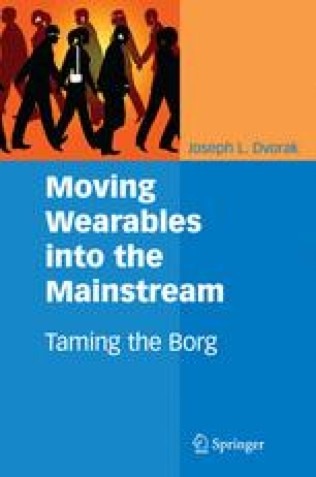
Moving Wearables into the Mainstream : Taming the Borg
Moving Wearables into the Mainstream also introduces concepts such as Operational Inertia that form a mindset conducive to designing wearables suitable for broad adoption by consumers. This book provides insight into legal and cultural issues potentially unfamiliar to research engineers, as well as a broad discussion of technologies underlying wearable devices.Moving Wearables into the Mainstream is designed for a professional audience of practitioners and researchers in industry. This volume is also suitable as a secondary advanced-level text or reference book for students in computer science and electrical engineering.

Moving Millions : Transport Strategies for Sustainable Development in Megacities
The Alliance for Global Sustainability is an international partnership among four of the leading scienti?c and technological universities worldwide: • The Massachusetts Institute of Technology (MIT-AGS); • The University of Tokyo (UT); • The Swiss Federal Institute of Technology (ETH); and • The Chalmers University of Technology. Created in 1997, the AGS today brings together hundreds of university scientists, engineers, and social scientists to address complex issues that lie at the intersection of environmental, economic, and social policy goals. Since its inception, the AGS has promoted and supported multidisciplinary research teams drawn from its partner institutions. Working on critical issues in sustainability across several ?elds encompassing energy and climate, mobility, urban systems, water and agriculture, cleaner technologies, public policy, and communications, these teams have developed a signi?cant body of new knowledge.

Mouse Models of Human Blood Cancers : Basic Research and Pre-clinical Applications
Although it remains an open question among some people whether mice and humans are similar in disease development, the laboratory mouse has emerged as the preeminent animal model for human diseases. This is underscored by the recently completed mouse and human genome projects, which have revealed that mice and humans share the vast majority of their genes, and thus get many of the same diseases, and for the same reasons. Emphasizing why mouse models are valuable in vivo systems for understanding disease mechanisms and developing therapeutic strategies for human blood cancers, "Mouse Models of Human Blood Cancers: Basic Research and Pre-clinical Applications," edited by Shaoguang Li, aims on presenting thorough analyses of the pathological features and the molecular bases of several major types of blood cancer and to describe translational research using mouse cancer models.

Mouse controller using electroencephalography (EEG) device
The growing technologies related to neuroscience has to lead many innovative applications, most importantly Electroencephalography, or EEG for short. This field of study has become recently a trend that many companies around the world have started to enter the race of conquering the brain and controlling everything from a mouse controller to the whole human body. This project aims to help disabled people use a computer with ease and simplicity without needing to use their hands, or anything really, which they can achieve by wearing a headset or get someone to put it on them. The headset is designed to read brain activities and send it to a computer program to understand where the user wants to move the mouse cursor on the computer screen using an Artificial Intelligence model. This project helps further researches in this field which pushes the technology even further from where it is now. The device designed for this project can be repurposed pretty easily to serve many different applications other than controlling a mouse.

Mountains : Sources of Water, Sources of Knowledge
This book addresses the major challenges in assuring globally sustainable water use. Paradoxically, water resources have been identified both as too plentiful, producing major disasters, and increasingly vulnerable to shortages. Addressing both of these aspects requires attention to physical hydrological processes as well as human activities that affect water supply and demand.

Motor Control and Learning
Motor Control and Learning focuses on the effects of development, aging, and practice on the control of human voluntary movement. These issues have been at the center of attention of the motor control community, but no book until now has addressed all of these issues under one cover in the context of contemporary views on the control of human voluntary movement. This book emphasizes the links between progress in basic motor control research and applied areas such as motor disorders and motor rehabilitation.
