



الصفحة 23
الصفحة 23

Designing virtual reality systems : The structured approach
Virtual Reality (VR) is a field of study that aims to create a system that provides a synthetic experience for its users. Developing and maintaining a VR system is a very difficult task, requiring in-depth knowledge in many different disciplines, such as sensing and tracking technologies, stereoscopic displays, multimodal interaction and processing, computer graphics and geometric modeling, dynamics and physical simulation, performance tuning, etc. The difficulty lies in the complexity of having to simultaneously consider many system goals, some of which are conflicting.

Designing a programming education system for children to program and simulate robots
JuniorCoders is an innovative educational platform designed to introduce programming and robotics concepts to kids and beginners. It provides an easy-to-use visual programming interface that allows users to create Arduino programs by dragging and dropping blocks of code. The system aims to make programming accessible and shareable, allowing them to create complex programs without having to learn a traditional programming language. Enables users to program and simulate robots using Arduino boards.

Design, Automation, and Test in Europe : The Most Influential Papers of 10 Years Date
The Design, Automation and Test in Europe (DATE) conference celebrated in 2007 its tenth anniversary. This provides an excellent historical overview of the evolution of a domain that contributed substantially to the growth and competitiveness of the circuit electronics and systems industry.
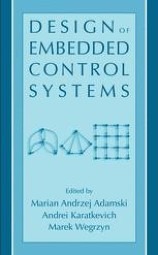
Design of Embedded Control Systems : Models for Capacity Planning in Advanced Manufacturing Systems
A set of original results in the ?eld of high-level design of logical control devices and systems is presented in this book

Design of advanced manufacturing systems : Models for capacity planning in advanced manufacturing systems
The aim of this book is to provide a framework and speci?c methods and tools for the selection and con?guration of capacity of Advanced Manufacturing Systems (AMS). In particular this book de?nes an - chitecture where the multidisciplinary aspects of the designofAMSare properly organized and addressed. The tool will support the decisi- maker in the de?nition of the con?guration of the system which is best suited for the particular competitive context where the ?rm operates or wants tooperate. Thisbookisofinterest for academic researchers in the ?eldofind- trial engineering and particularly indicated in the areas of operations and manufacturing strategy.

Design of adaptive finite Element software : The finite element toolbox ALBERTA
During the last years, scientific computing has become an important research branch located between applied mathematics and applied sciences and engineering. Highly efficient numerical methods are based on adaptive methods, higher order discretizations, fast linear and non-linear iterative solvers, multi-level algorithms, etc. Such methods are integrated in the adaptive finite element software ALBERTA. It is a toolbox for the fast and flexible implementation of efficient software for real life applications, based on modern algorithms. ALBERTA also serves as an environment for improving existent, or developing new numerical methods in an interplay with mathematical analysis and it allows the direct integration of such new or improved methods in existing simulation software.
Design for Manufacturability and Yield for Nano-Scale CMOS
This book presented aspects of manufacturability and yield in a nano-CMOS process and how to address each aspect at the proper design step starting with the design and layout of standard cells and how to yield-grade libraries for critical area and lithography artifacts through place and route, CMP model based simulation and dummy-fill insertion, mask planning, simulation and manufacturing, and through statistical design and statistical timing closure of the design. It alerts the designer to the pitfalls to watch for and to the good practices that can enhance a design’s manufacturability and yield. This book is a must read book the serious practicing IC designer and an excellent primer for any graduate student intent on having a career in IC design or in EDA tool development.

Design for Manufacturability and Statistical Design : A Constructive Approach
Design for Manufacturability and Statistical Design: A Constructive Approach provides a thorough treatment of the causes of variability, methods for statistical data characterization, and techniques for modeling, analysis, and optimization of integrated circuits to improve yield.

Design by Evolution : Advances in Evolutionary Design
This book showcases the state of the art in evolutionary algorithms for design. The chapters are organized by experts in the following fields: evolutionary design and "intelligent design" in biology, art, computational embryogeny, and engineering.

Design Automation Methods and Tools for Microfluidics-Based Biochips
Design Automation Methods and Tools for Microfluidics-Based Biochips deals with all aspects of design automation for microfluidics-based biochips. Experts have contributed chapters on many aspects of biochip design automation. Topics covered include: device modeling; numerical methods and simulation tools; physical design and module placement.

Design and implementation of an array of patch antenna
Wireless technology is one of the main areas of research in global communication systems today and the study of communication systems is incomplete without an understanding of the process and manufacture of antennas. This was the main reason for choosing this project to focus on this area. This paper presents the design and implementation of an antenna array consisting of 4 patch antenna elements that work on 2.4GHz frequency,the substrate FR4, It was analyzed using HFSS (High Frequency Simulator Structure). In order to achieve a gain of 7 db, and a reflection coefficient of s11 of -10db Then the board was printed And he made measurements in the laboratory on the spectrum analyzer and the kit for the antennas As a result of the measurements, we obtained the antenna gain, the antenna radiation pattern, and the s11

Design and Analysis of Simulation Experiments
This is an advanced expository book on statistical methods for the Design and Analysis of Simulation Experiments (DASE). Though the book focuses on DASE for discrete-event simulation (such as queuing and inventory simulations), it also discusses DASE for deterministic simulation (such as engineering and physics simulations). The text presents both classic and modern statistical designs. Classic designs (e.g., fractional factorials) assume only a few factors with a few values per factor. The resulting input/output data of the simulation experiment are analyzed through low-order polynomials, which are linear regression (meta)models. Modern designs allow many more factors, possible with many values per factor. These designs include group screening (e.g., Sequential Bifurcation, SB) and space filling designs (e.g., Latin Hypercube Sampling, LHS). The data resulting from these modern designs may be analyzed through low-order polynomials for group screening and various metamodel types (e.g., Kriging) for LHS.

Demystifying Climate Models : A Users Guide to Earth System Models
This book demystifies the models we use to simulate present and future climates, allowing readers to better understand how to use climate model results. In order to predict the future trajectory of the Earth’s climate, climate-system simulation models are necessary. When and how do we trust climate model predictions? The book offers a framework for answering this question. It provides readers with a basic primer on climate and climate change, and offers non-technical explanations for how climate models are constructed, why they are uncertain, and what level of confidence we should place in them. It presents current results and the key uncertainties concerning them. Uncertainty is not a weakness but understanding uncertainty is a strength and a key part of using any model, including climate models.

Demonstrational Optics ; Part 2 : Coherent and Statistical Optics
Demonstrational Optics presents a new didactical approach to the study of optics. Emphasizing the importance of elaborate new experimental demonstrations, pictorial illustrations, computer simulations and models of optical phenomena in order to ensure a deeper understanding of wave and geometric optics.

Defence Applications of Multi-Agent Systems; International Workshop, DAMAS 2005, Utrecht, The Netherlands, July 25, 2005, Revised and Invited Papers
This book constitutes the thoroughly refereed post-proceedings of the International Workshop on Defence Applications of Multi-Agent Systems, DAMAS 2005, held in Utrecht, The Netherlands in July 2005 as an associated event of AAMAS 2005, the main international conference on autonomous agents and multi-agent systems. The 10 revised full papers presented together with 1 invited article are organized in topical sections on decision support and simulation, unmanned aerial vehicles, as well as on systems and security.

Defect and Material Mechanics ; Proceedings of the International Symposium on Defect and Material Mechanics (ISDMM), held in Aussois, France, March 25–29, 2007
This volume presents recent developments in the theory of defects and the mechanics of material forces. Most of the contributions were presented at the International Symposium on Defect and Material Forces (ISDMM2007), held in Aussois, France, March 25-29, 2007.

Deep Data Analytics for New Product Development
The benefits of reading this book are twofold. The first is an understanding of the stages of a new product development process from ideation through launching and tracking, each supported by information about customers. The second benefit is an understanding of the deep data analytics for extracting that information from data. These analytics, drawn from the statistics, econometrics, market research, and machine learning spaces, are developed in detail and illustrated at each stage of the process with simulated data. The stages of new product development and the supporting deep data analytics at each stage are not presented in isolation of each other, but are presented as a synergistic whole.

Decision Modeling and Behavior in Complex and Uncertain Environments
Devoted to examining new research at the interface of operations research, behavioral and cognitive sciences, and decision analysis. In these 14 self-contained chapters, four themes emerge, providing the reader with a variety of perspectives both theoretic and applied to meet the challenges of devising models to understand the decision-making process. The main broad topics include: the integration of decision analysis and behavioral models / innovations in behavioral models / exploring descriptive behavior models / experimental studies

Data visualization and analysis in second language research
This introduction to visualization techniques and statistical models for second language research focuses on three types of data (continuous, binary, and scalar), helping readers to understand regression models fully and to apply them in their work. Garcia offers advanced coverage of Bayesian analysis, simulated data, exercises, implementable script code, and practical guidance on the latest R software packages.
Data Technology in Materials Modelling
This book discusses advances in semantic interoperability for materials modelling, aiming at integrating data obtained from different methods and sources into common frameworks, and facilitating the development of platforms where simulation services in computational molecular engineering can be provided as well as coupled and linked to each other in a standardized and reliable way.
