



الصفحة 23
الصفحة 23
Managing innovation in organisations : ostering an entrepreneurial approach
Explores how organisations need to manage their innovation processes in order to compete in the global marketplace. Innovation is essential to the ongoing competitiveness of organisations but can be difficult to capture and disseminate. This book states that there needs to be guidelines about how to manage innovation in an organisational context. This includes focusing on different types of innovation from incremental to radical. This book will focus on ways to manage innovation from incorporating it into organisational practices to implementing it into beneficial partnerships.

Managing Dynamic Networks : Organizational Perspectives of Technology Enabled Inter-firm Collaboration
Collaboration of organizations reshapes traditional managerial practices and creates new inter-organizational contexts for strategy, coordination and control, information and knowledge management. Heralded as organizational forms of the future, networks are at the same time fragile and precarious organizational arrangements, which regularly fail. In order to investigate the new realities created by technology-enabled forms of network organizations and to address the emerging managerial challenges, this book introduces an integrative view on inter-firm network management. Centred on a network life cycle perspective, strategic, economic and relational facets of business networking are explored.

Managing diabetic wounds : Strategies for effective treatment
Delves into diabetes itself, covering its definition, various types (Type 1, Type 2, and gestational diabetes), and diagnostic laboratory findings such as blood glucose levels and HbA1c. The concept of diabetic foot is thoroughly explored, including its definition, primary causes such as neuropathy, ischemia, and infection, and crucial aspects of prevention, caution, and risk factors like poor glycemic control and smoking.

Management of Intentional and Accidental Water Pollution
The goals of the workshop included a discussion of the state of the science in identification of new research and approaches for water pollution events and communication of the management of water pollution and sustainability of water resources. Critical to management of accidental and intentional pollution events is the assessment of the risk, an understanding of the hazards and lessons learned from events which may lead to preventative management and control strategies. Public health protection will ultimately be improved by the ability to develop management frameworks which are flexible and adaptable to the specific region, country or watershed problems and concerns and allow for prioritization in the decision making. The integration of scientific information regarding the types of hazards the environmental fate of the chemical/biological, exposure pathways and human and ecosystem impacts may be implemented from both a qualitative or descriptive approach or using a more classical quantitative risk assessment paradigm. Thus the frameworks for assessing the risk and managing the risk may be seen as preventive, early warning and responsive.
Management and Information Technology after Digital Transformation
With the widespread transformation of information into digital form throughout society – firms and organisations are embracing this development to adopt multiple types of IT to increase internal efficiency and to achieve external visibility and effectiveness – we have now reached a position where there is data in abundance and the challenge is to manage and make use of it fully. This book addresses this new managerial situation, the post-digitalisation era, and offers novel perspectives on managing the digital landscape.

Machine Learning for Multimodal Interaction ; 5th International Workshop, MLMI 2008, Utrecht, The Netherlands, September 8-10, 2008. Proceedings
The 12 revised full papers and 15 revised poster papers presented together with 5 papers of a special session on user requirements and evaluation of multimodal meeting browsers/assistants were carefully reviewed and selected from 47 submissions. The papers cover a wide range of topics related to human-human communication modeling and processing, as well as to human-computer interaction, using several communication modalities. Special focus is given to the analysis of non-verbal communication cues and social signal processing, the analysis of communicative content, audio-visual scene analysis, speech processing, interactive systems and applications.

Machine Learning for Multimodal Interaction ; 4th International Workshop, MLMI 2007, Brno, Czech Republic, June 28-30, 2007, Revised Selected Papers
This book contains a selection of revised papers from the 4th Workshop on Machine Learning for Multimodal Interaction (MLMI 2007), which took place in Brno, Czech Republic, during June 28 30, 2007. As in the previous editions of the MLMI series, the 26 chapters of this book cover a large area of topics, from multimodal processing and human computer interaction to video, audio, speech and language processing. The application of machine learning techniques to problems arising in these felds and the design and analysis of software
Machine learning for brain disorders
Organized into five parts. Part One presents the fundamentals of ML. Part Two looks at the main types of data used to characterize brain disorders, including clinical assessments, neuroimaging, electro- and magnetoencephalography, genetics and omics data, electronic health records, mobile devices, connected objects and sensors. Part Three covers the core methodologies of ML in brain disorders and the latest techniques used to study them. Part Four is dedicated to validation and datasets, and Part Five discusses applications of ML to various neurological and psychiatric disorders.
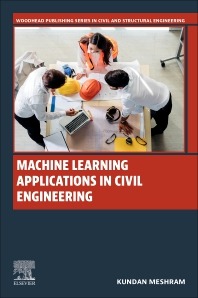
Machine Learning Applications in Civil Engineering
Discusses machine learning and deep learning models for different civil engineering applications. These models work for stochastic methods wherein internal processing is done using randomized prototypes. The book explains various machine learning model designs that will assist researchers to design multi domain systems with maximum efficiency. It introduces Machine Learning and its applications to different Civil Engineering tasks, including Basic Machine Learning Models for data pre-processing, models for data representation, classification models for Civil Engineering Applications, Bioinspired Computing models for Civil Engineering, and their case studies.

Machine learning and its application to reacting flows: ml and combustion
These two fields, ML and turbulent combustion, have large body of work and knowledge on their own, and this book brings them together and explain the complexities and challenges involved in applying ML techniques to simulate and study reacting flows. This is important as to the world’s total primary energy supply (TPES), since more than 90% of this supply is through combustion technologies and the non-negligible effects of combustion on environment. Although alternative technologies based on renewable energies are coming up, their shares for the TPES is are less than 5% currently and one needs a complete paradigm shift to replace combustion sources. The book covers the current state of the art in these two topics and outlines the challenges involved, merits and drawbacks of using ML for turbulent combustion simulations including avenues which can be explored to overcome the challenges.

Machine Ethics : From Machine Morals to the Machinery of Morality
Offers the first systematic guide to machine ethics, bridging between computer science, social sciences and philosophy. Based on a dialogue between an AI scientist and a novelist philosopher, the book discusses important findings on which moral values machines can be taught and how. In turn, it investigates what kind of artificial intelligence (AI) people do actually want.
Low-Power High-Level Synthesis for Nanoscale CMOS Circuits
Low-Power High-Level Synthesis for Nanoscale CMOS Circuits addresses the need for analysis, characterization, estimation, and optimization of the various forms of power dissipation in the presence of process variations of nano-CMOS technologies. The authors show very large-scale integration (VLSI) researchers and engineers how to minimize the different types of power consumption of digital circuits.

Low Thermal Expansion Glass Ceramics
Describes the fundamental principles, the manufacturing process, and applications of low thermal expansion glass ceramics. The composition, structure, and stability of polycrystalline materials having a low thermal expansion are described, and it is shown how low thermal expansion glass ceramics can be manufactured from appropriately chosen glass compositions. Examples illustrate the formation of this type of glass ceramic by utilizing normal production processes together with controlled crystallization. Thus glass ceramics with thermal coefficients of expansion of less than 0.3 x 10(-6)K(-1) can be obtained. Even for the mass production of high-quality cooktop panels (Ceran®., oven windows, and other household appliances a high reproducibility of the properties is achieved. Special glass ceramics (Zerodur®. for technological and scientific applications such as high-precision optics or large astronomical mirrors are likewise discussed. The completely revised edition also features new sections on glass-ceramic applications, with details on their performance, CDC-grinding, and laser gyroscopes containing Zerodur®..

Long-term limnological research and monitoring at Crater Lake, Oregon : A benchmark study of a deep and exceptionally clear montane caldera lake
Crater Lake is located in the caldera of Mount Mazama in Crater Lake National Park, Oregon. The lake has a surface area of about 53 km2 at an elevation of 1882 m and a maximum depth of 594 m – seventh deepest in the world. This special volume represents our current state of knowledge of the status of this pristine ecosystem including its special optical properties, algal nutrient limitations, pelagic bacteria, and models of the inter-relationships of thermal properties, nutrients, phytoplankton, deep-water mixing, and water budgets.

Logos of phenomenology and phenomenology of the logos ; Book Two : The Human Condition in-the-Unity-of-Everything-there-is-alive Individuation, Self, Person, Self-determination, Freedom, Necessity
The Human Condition-in-the-unity-of-everything-there-is-alive, under whose aegis the present selection of essays falls, offers the urgently needed new approach to reinvestigating humanness. While recent advances in the neurosciences, genetics and bio-engineering challenge the traditional abstract conception of "human nature", indicating its transformability, thus putting in question the main tenets of traditional philosophical anthropology, in the new perspective of the Human Creative Condition the human individual is seen in its emergence and unfolding within the dynamic networks of the logos of life, and within the evolution of living types.

Logistics Systems Analysis
It has two new sections, a new appendix, and more than half a dozen new figures. A few references have also been added, Much of the new material is based on work , The financial support of the National Science Foundation and the Volvo Foundations Center of Excellence for the Future of Urban Transportation at U. C. Berkeley is also acknowledged. The new appendix presents the logic behind the traveling salesman and vehicle routing results used in Sec. 4. 2 to describe the transportation ope- tion; Chapter 4 is more self-contained as a result. New section 5. 6 int- duces and evaluates a general method that automatically translates the c- tinuum approximation recipes of Chapters 4 and 5 into discrete system designs. This closes a gap in previous editions. Other additions include an explanation of how to develop system designs that can efficiently acc- modate real-time control strategies to manage uncertainty (new section 4. 6. 3), and extensions of the many-to-many design ideas of Chap. 6

Logical approaches to computational barriers ; 2nd Conference on Computability in Europe, CiE 2006, Swansea, UK, June 30-July 5, 2006, Proceedings
The sources of new ideas and methods include practical developments in areas such as neural networks, quantum computation, natural computation, molecular computation, and computational learning. Applications are everywhere, especially, in algebra, analysis and geometry, or data types and programming. This volume, Logical Approaches to Computational Barriers, is the proce- ings of the second in a series of conferences of CiE that was held at the Depa- ment of Computer Science, Swansea University, 30 June - 5 July, 2006.

LMI Approach to Analysis and Control of Takagi-Sugeno Fuzzy Systems with Time Delay
A fuzzy system is, in a very broad sense, any fuzzy logic-based system where fuzzy logic can be used either asthebasisfor the representation of different forms of system knowledge or the model for the interactions and relationships among the system variables. Fuzzy systems have proven to be an important tool for modeling complex systems for which, due to complexity or imprecision, classical tools are unsuccessful. There have been diverse fields of applications of fuzzy technology from medicine to management, from engineering to behavioral science, from vehicle control to computational linguistics, and so on. Fuzzy modeling is a conjunction to understand the s- tem’s behavior and build useful mathematical models. Different types of fuzzy models have been proposed in the literature, among which the Takagi-Sugeno (T-S) fuzzy model is a rule-based one suitable for the accurate approximation and identi?cation of a wide class of nonlinear systems.

Liposomes as Drug Carriers
Patients have recently suffered from the side effects of a large number of drugs and from the weak pharmacological effect, due to the biokinetics and the difficulty of delivering the drug to the targeted cells, which negatively affected the therapeutic efficacy, creating an opportunity to discover nanometric carriers to load the active drug substances, so we covered in this research the most famous and widely used nanocarriers which are liposomes. We touched in some detail its composition, types, the relationship of structure to influence, methods of preparation, its delivery mechanism for the drug, and at the end of the research, we attached various applications in the field of therapeutic diagnostics and its role in cosmetics, cancers and many other fields.
Linsuffisance cardiaque aiguë = Acute heart failure
Acute heart failure is one of the oldest described medical conditions. However, although its clinical symptomatology is fairly obvious and known to everyone: dyspnea, liver pain, crackles on auscultation, the epidemiology has only been explored for very recent years. In all of the cardiology and resuscitation books of the past 40 years, acute heart failure has been considered a catch-all ranging from acute simple lung edema in hypertensive crisis to cardiogenic shock following heart attack. myocardium. It was all called "acute heart failure." This book is based on the recent Recommendations of the European Society of Cardiology and the European Society of Intensive Care Medicine which advocate the designation "Acute heart failure syndrome" in which the decompensation of heart failure chronic, hypertensive surge, cardiogenic shock, right heart failure, and high output heart failure are separate entities.
